Brown v. Board of Education National Historical Park

Visited on: Tuesday, October 24, 2023
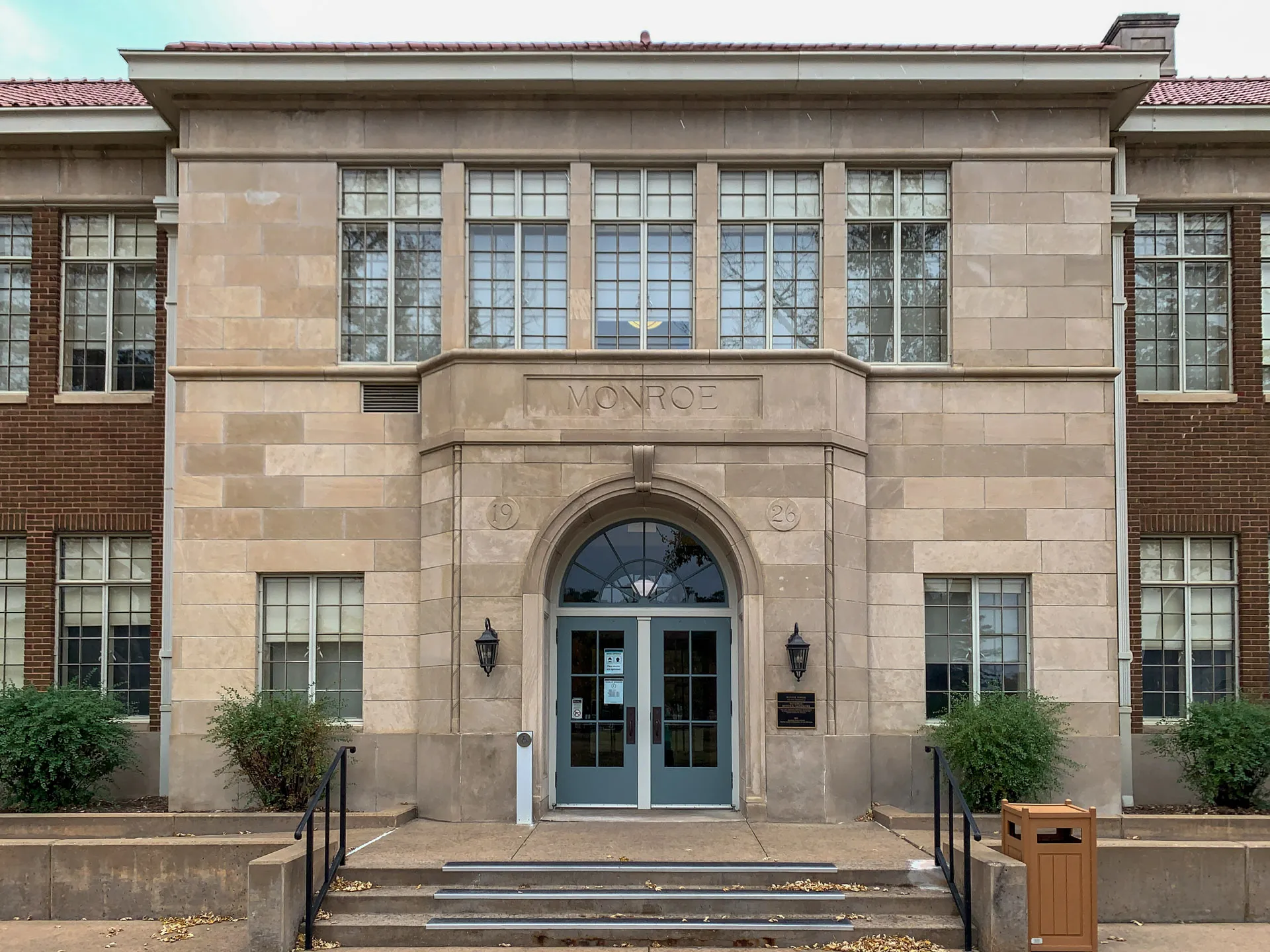
Exterior of a historic building with "Monroe" engraved above the entrance. The structure features large rectangular windows, a central double door, and symmetrical design with light-colored stone facade contrasted by darker brick sections. Two lampposts flank the doorway, and bushes adorn the sides.
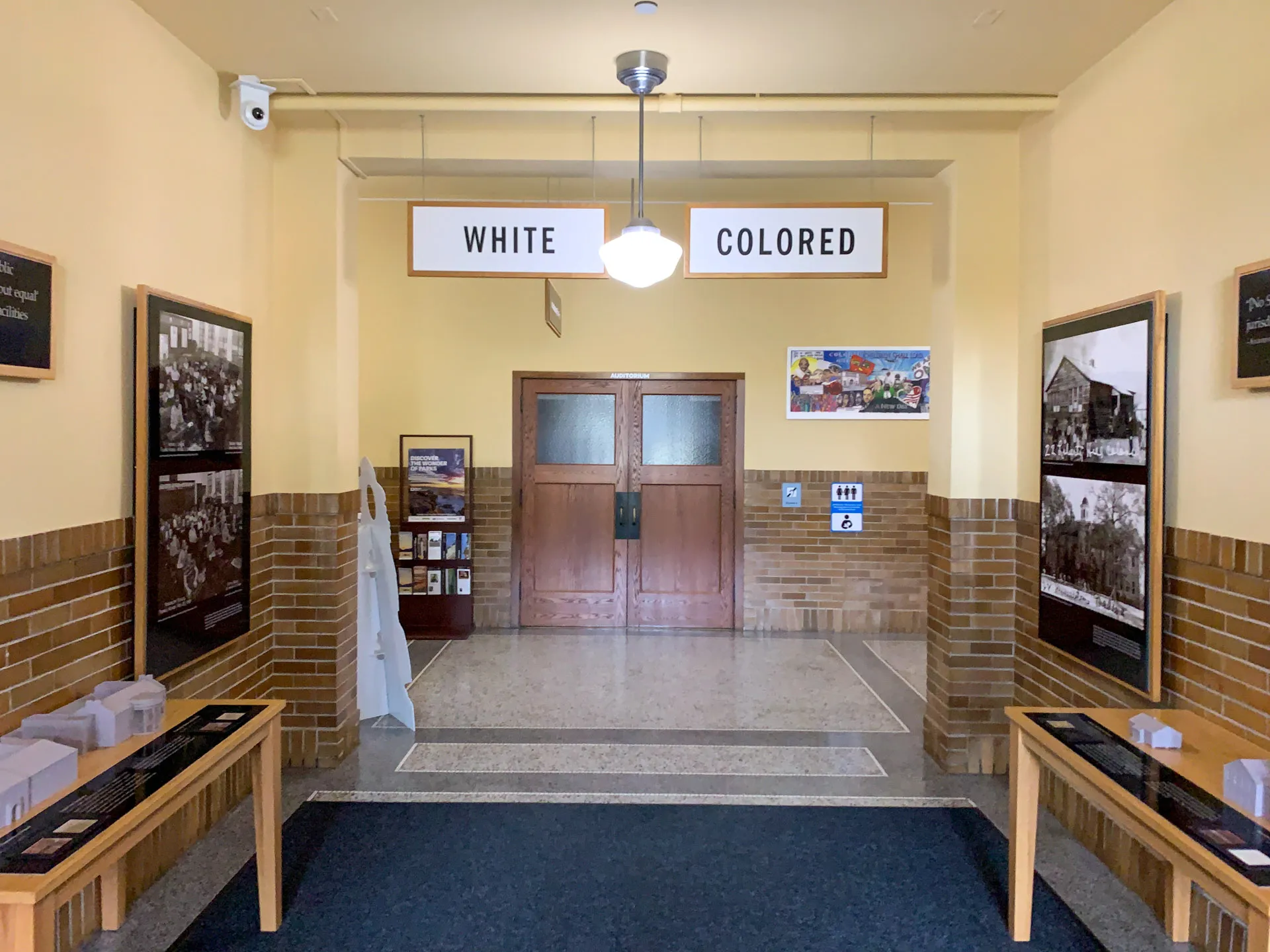
A hallway with a vintage setting displays a historical exhibition. Signs reading "WHITE" and "COLORED" hang from the ceiling, representing racial segregation. The space has beige walls, wooden doors, and historical photos and information panels on both sides.

The Brown v. Board of Education National Historical Park stands as a powerful symbol of the fight for racial equality in America. Located in Topeka, Kansas, this site commemorates the landmark Supreme Court decision of 1954 that declared state laws establishing separate public schools for black and white students to be unconstitutional.

This historic ruling was a pivotal moment in the Civil Rights Movement, signifying a legal and moral turning point in the struggle against segregation and discrimination in the United States.

The image shows the exterior of the Brown v. Board of Education National Historical Park. A brick building with a red roof is in the background. In the foreground, there's a brick sign with the park's name and the National Park Service emblem, set on a grassy area with trees.
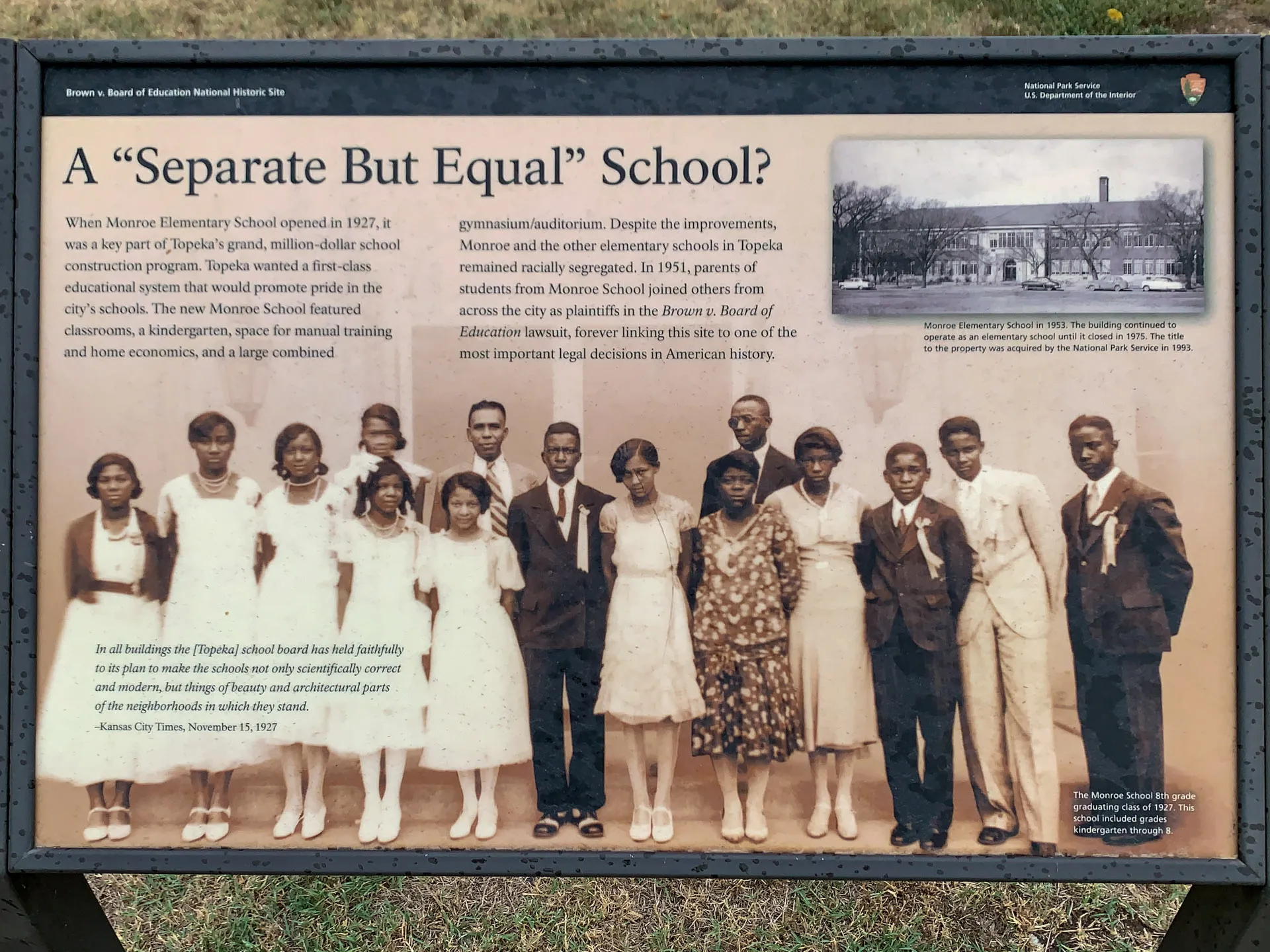
A historical plaque titled "A 'Separate But Equal' School?" with a sepia-toned group photo of 13 African American students and a teacher in formal attire. The plaque discusses Monroe Elementary School and its role in the Brown v. Board of Education case, highlighting segregation.

The significance of Brown v. Board of Education extends far beyond its immediate impact on public education. It laid the groundwork for subsequent civil rights advancements, challenging the deep-rooted notion of “separate but equal” that had been upheld in the infamous Plessy v. Ferguson decision of 1896. By affirming that segregation violated the Equal Protection Clause of the 14th Amendment, the case provided a legal and moral precedent for dismantling institutionalized racism across various sectors, inspiring activists to push for further reforms.

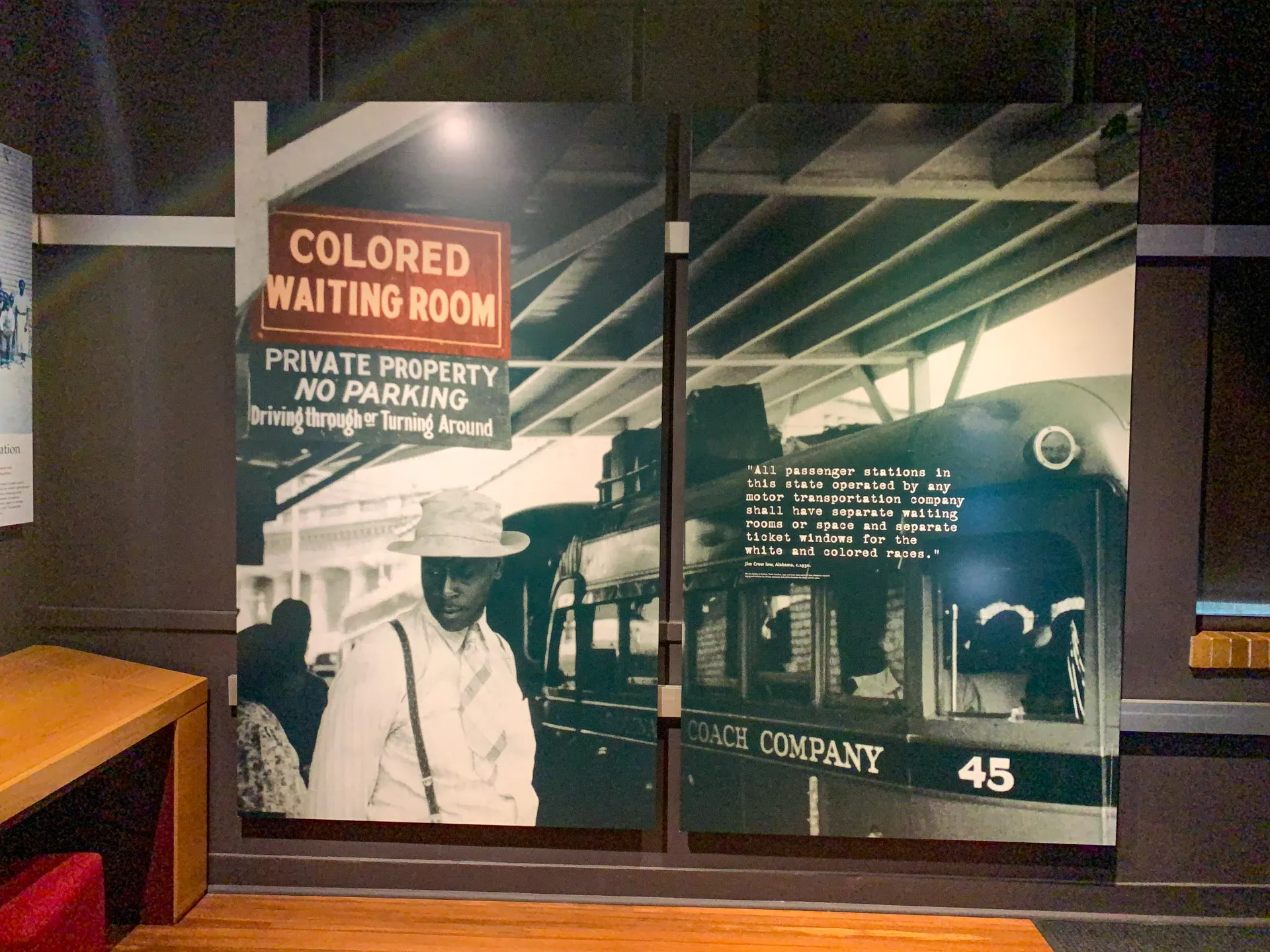
A historical exhibit photo shows a "Colored Waiting Room" sign under a station roof. A man in light clothing and a hat stands nearby. A bus with "Coach Company" and the number 45 is to the right. Text on the bus advises passengers on segregated waiting areas during segregation.
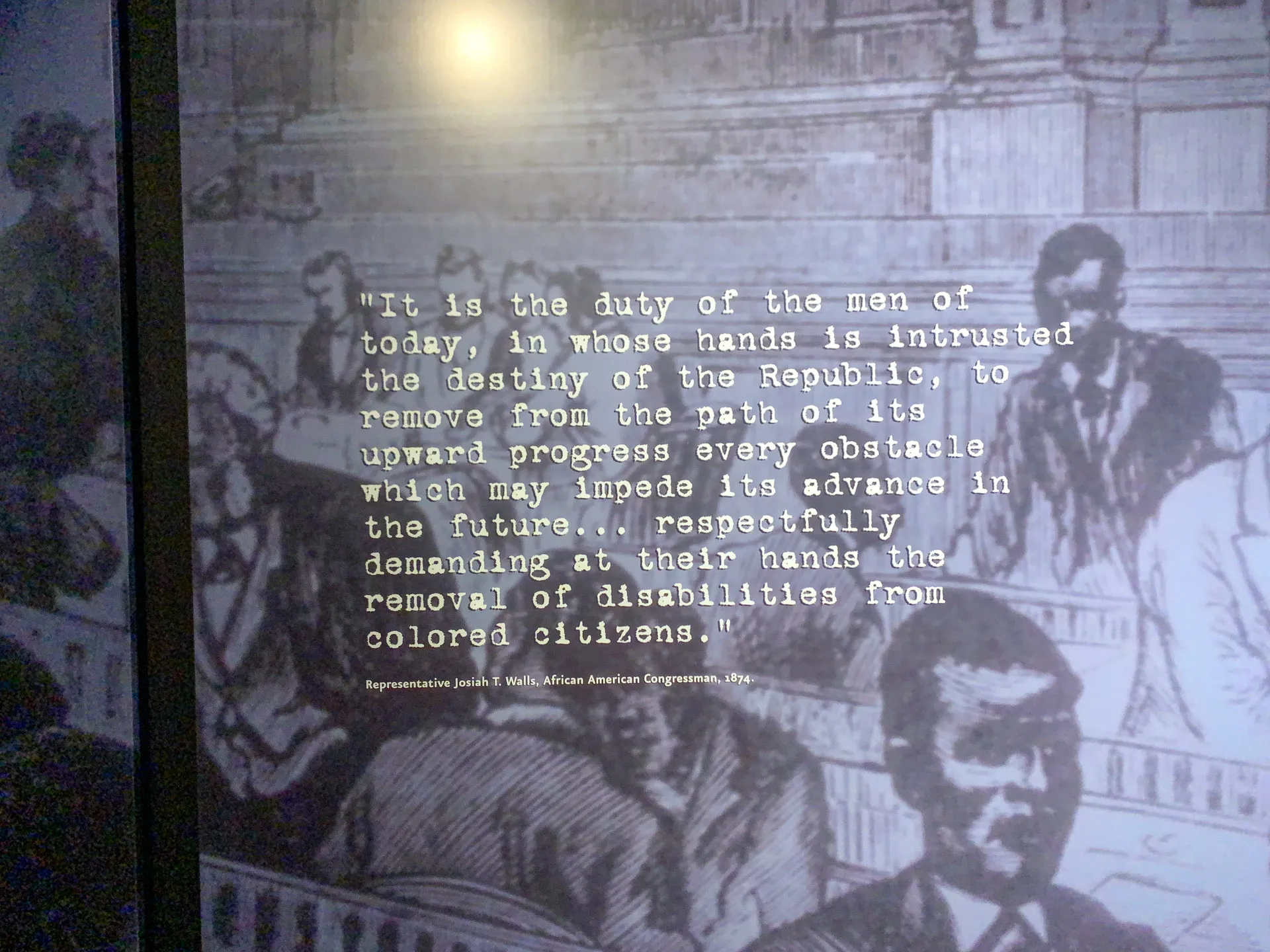
A black and white historical image depicts a group of men seated in a formal setting, likely a government chamber. Overlaid is a quote about duty and removing obstacles for colored citizens, attributed to Representative Josiah Walls, an African American Congressman from 1876.

Despite these monumental achievements, the legacy of Brown v. Board of Education reminds us that the journey toward true equality is far from complete. Current events reveal that racial disparities persist in education, housing, employment, and the criminal justice system. In many American schools today, segregation is still prevalent, often due to economic and residential factors. This highlights the ongoing struggle to achieve not only de jure equality—equality under the law—but also de facto equality—equality in everyday life.

The Brown v. Board of Education National Historical Park serves as a crucial reminder of both how far we have come and how much work remains to be done. It encourages us to reflect on the progress achieved through collective action and underscores the importance of continuing to confront and address systemic inequities. As we honor this significant milestone in American history, it challenges us to remain vigilant and proactive in advocating for a more just and inclusive society for all.

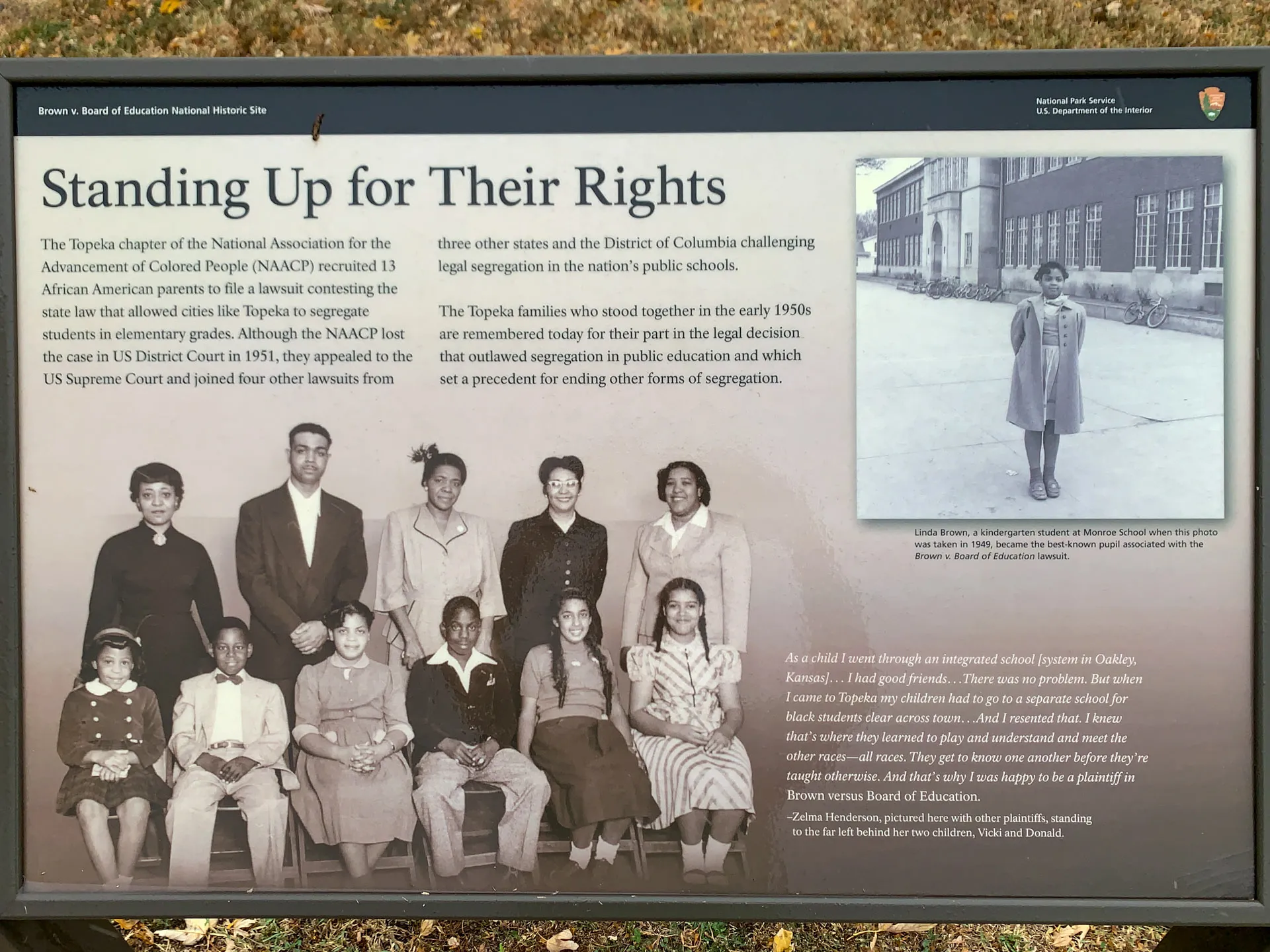
A historical information sign titled "Standing Up for Their Rights." It features a black-and-white photo of students and families involved in desegregation lawsuits, accompanied by text about their legal battles. The sign includes another photo of Linda Brown on a sidewalk.
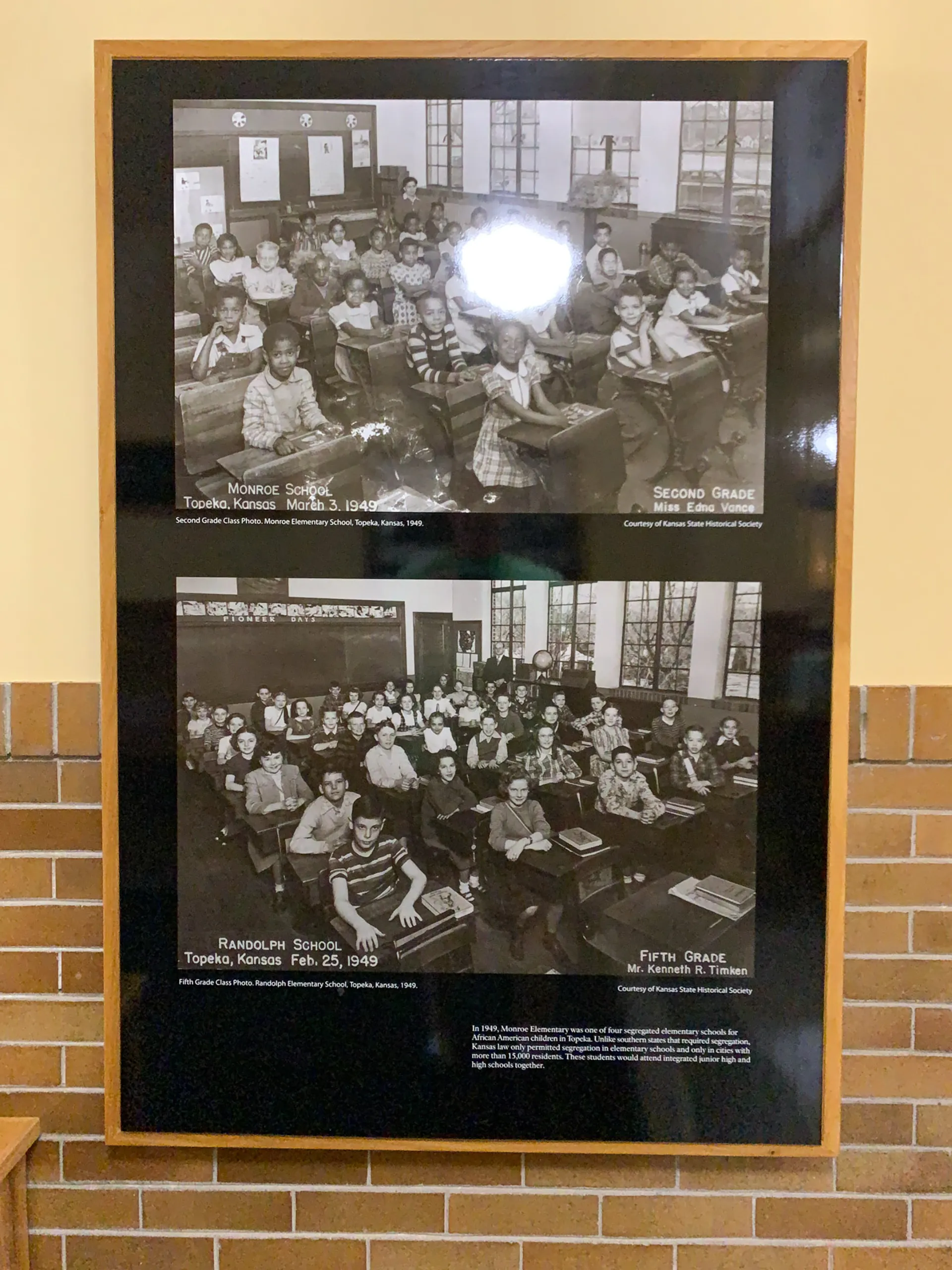
Two black-and-white photos in a frame. The top photo shows a classroom with young children at Monroe School, Topeka, Kansas, in 1949. The bottom photo features a fifth-grade class at Randolph School, also in Topeka, dated February 23, 1949. Both images depict orderly classrooms.
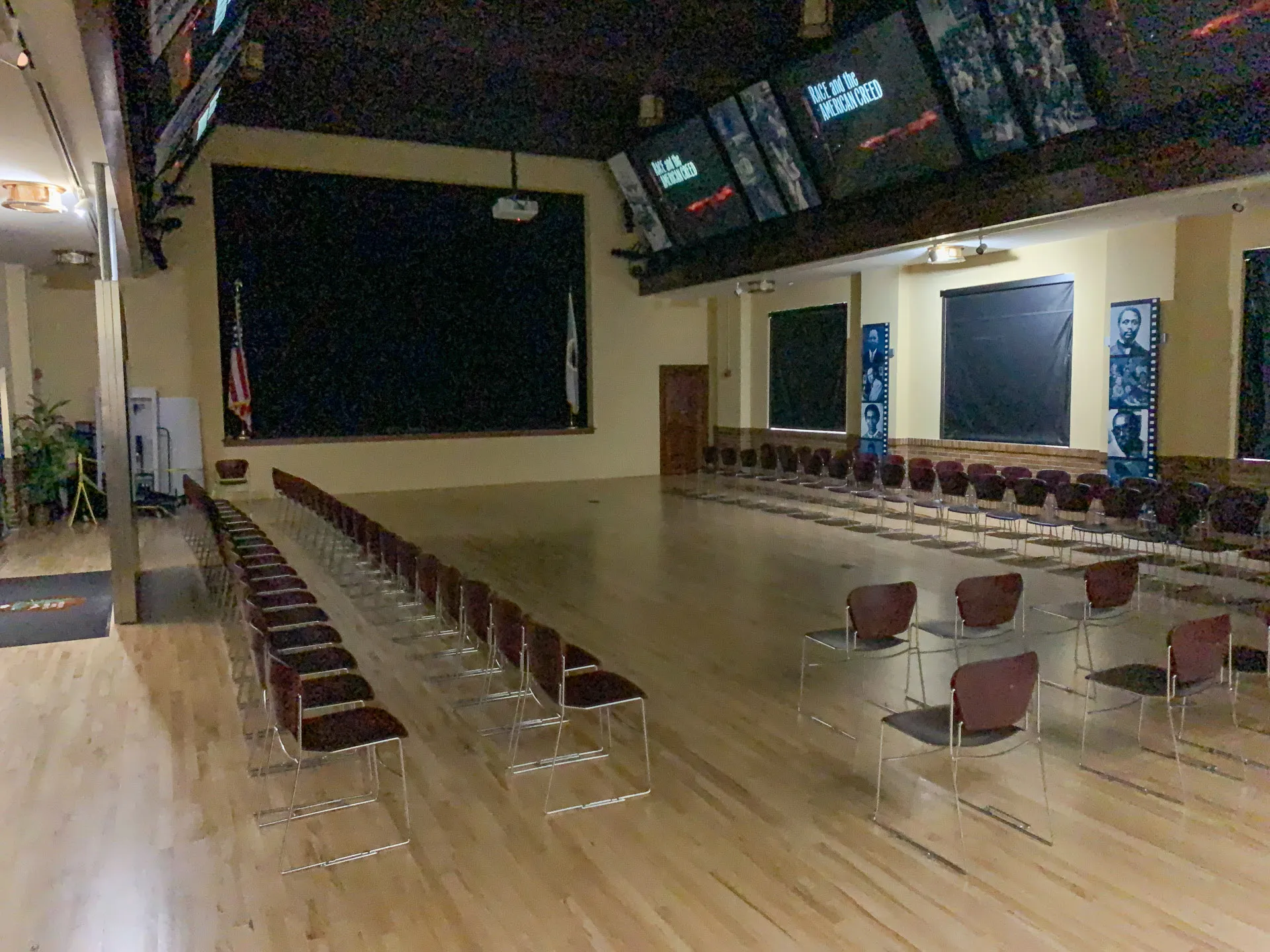
A dimly lit auditorium with rows of empty chairs facing a stage with a large black screen. The wooden floor reflects the muted lighting. Two vertical banners with historical images are visible on the right wall, and an American flag stands near the stage on the left.
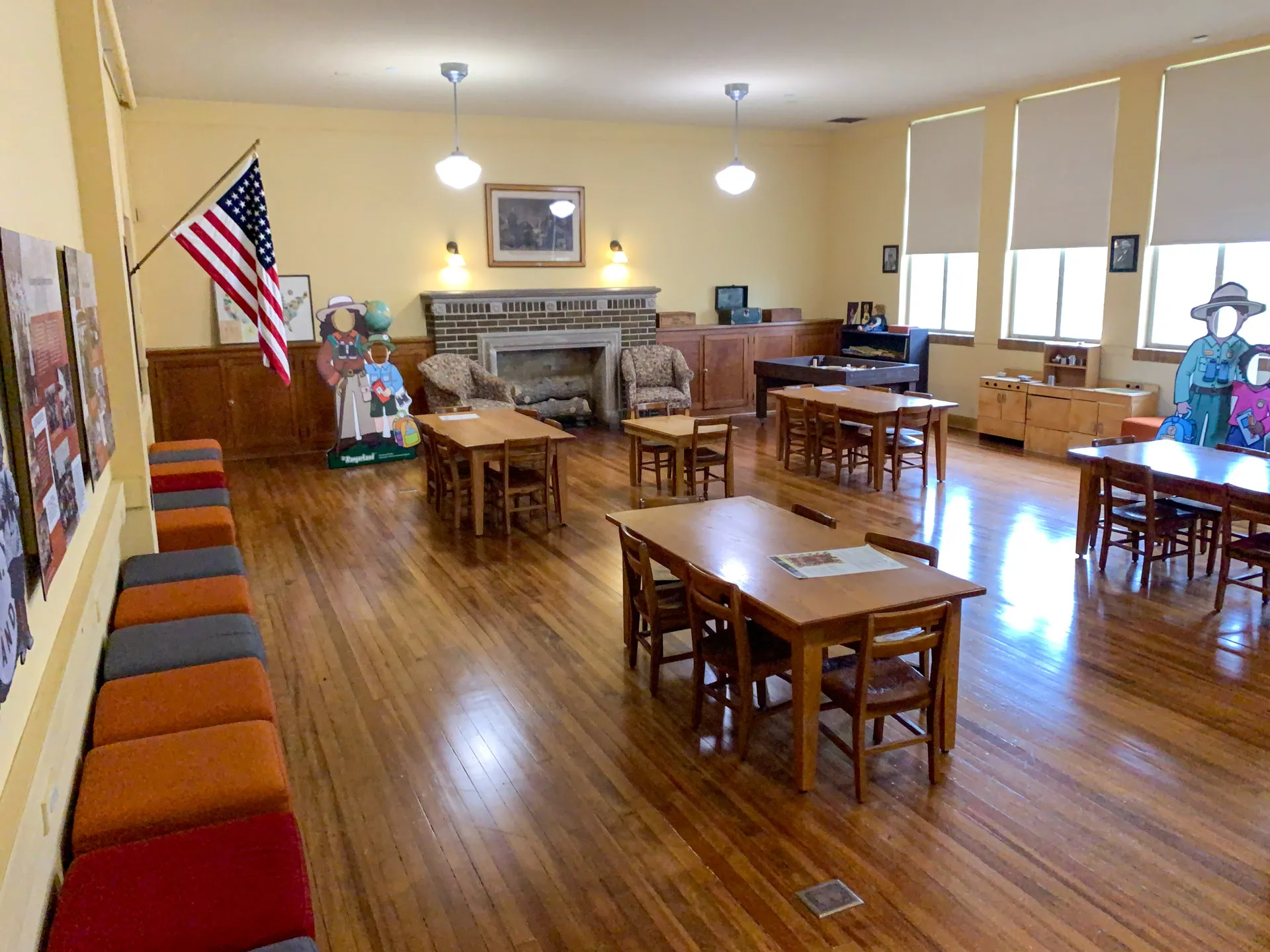
A large, empty classroom with wooden flooring and beige walls features several wooden tables and chairs. An American flag stands in the corner. Colorful murals of children and three illuminated ceiling lights add decor. Windows with blinds line the wall, letting in natural light.
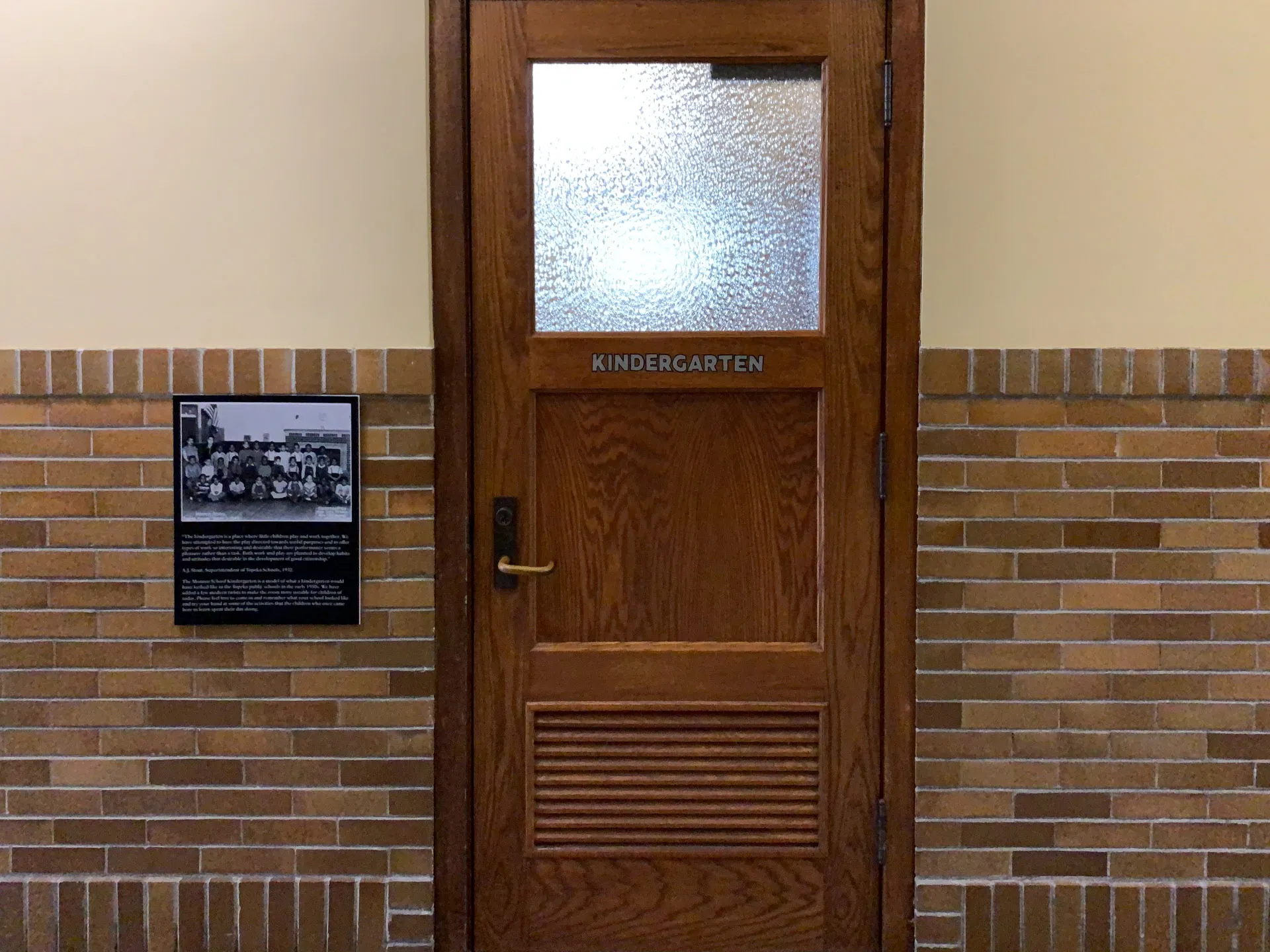
A wooden door labeled "KINDERGARTEN" with a textured glass window is set in a brick wall. To the left, a black plaque with a historic photo and text is mounted on the wall. The lower part of the door features horizontal vents. The wall has dark brown bricks with lighter grout.
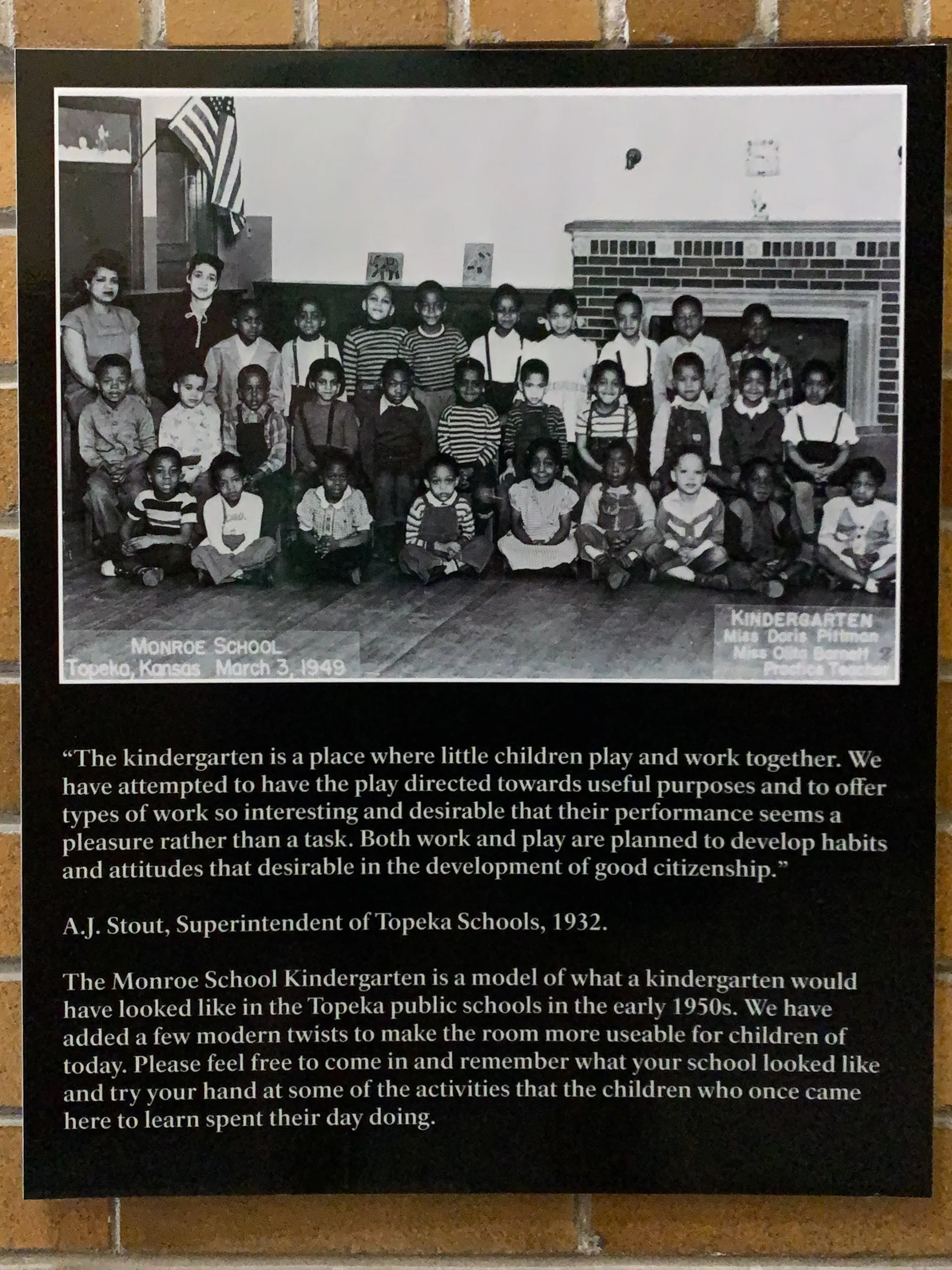
A black and white photo shows a diverse group of young children sitting and standing in three rows inside a classroom at Monroe School, Topeka, Kansas, dated March 3, 1949. The accompanying text describes the importance of play in early education and its role in developing good citizenship.
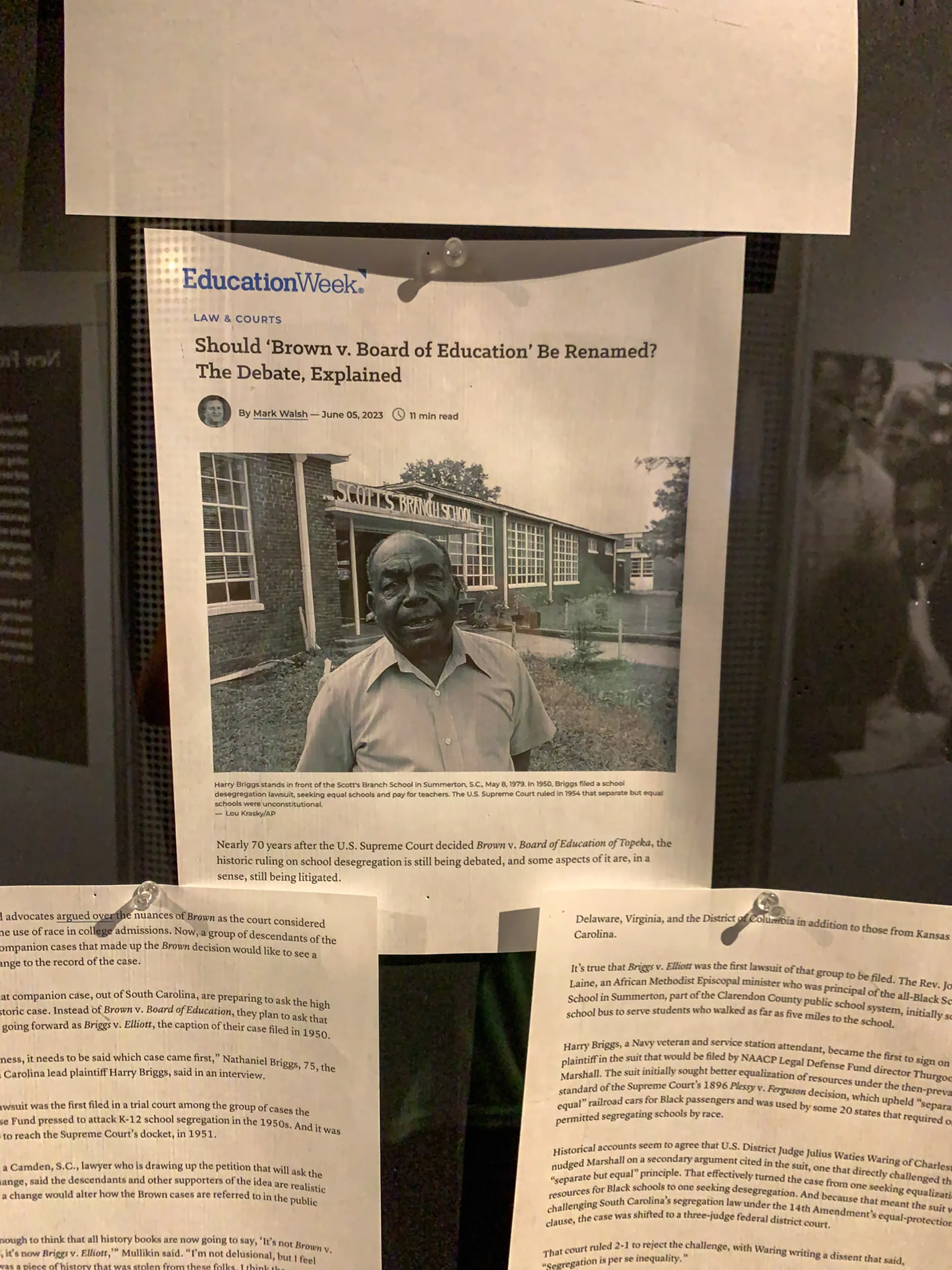
A display features a printed article from Education Week titled "Should 'Brown v. Board of Education' Be Renamed? The Debate, Explained." It includes a large black-and-white photo of a man standing in front of a building. Additional text documents are pinned below.
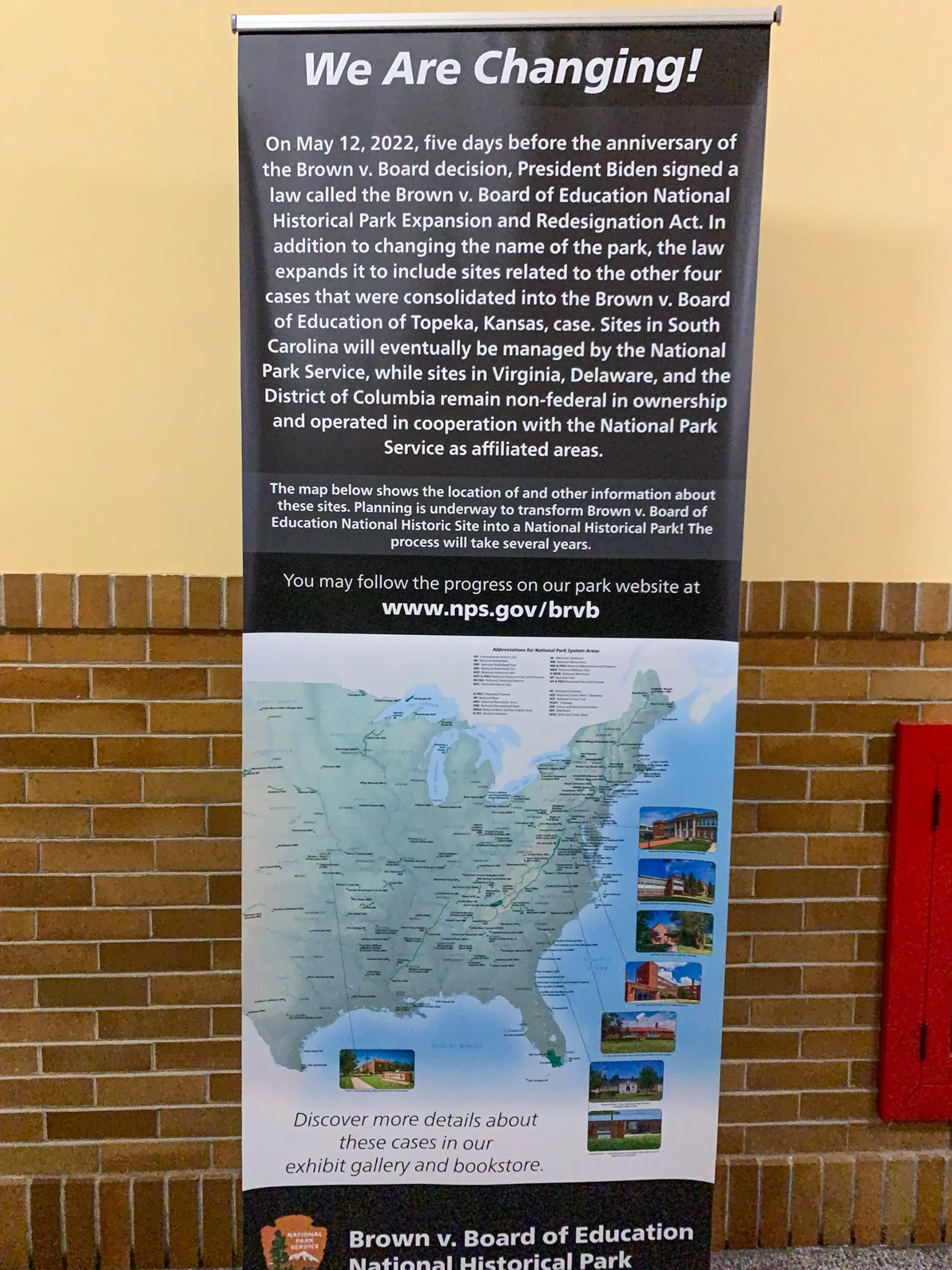
A display banner with a map of the eastern United States highlights various National Park sites. Text at the top announces changes to the Brown v. Board of Education National Historic Park. A website link for more information is included at the bottom. A brochure is attached below.
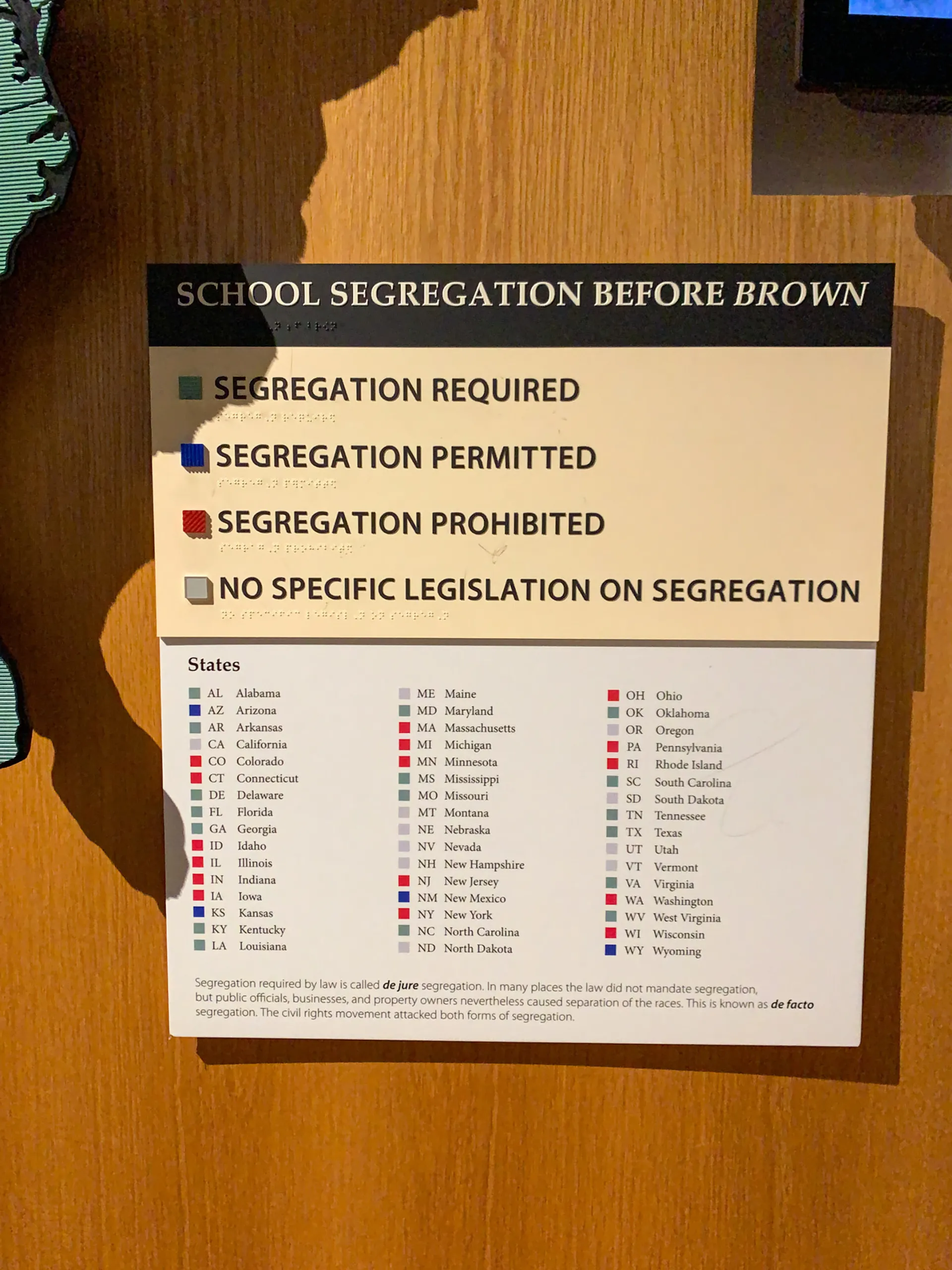
A sign titled "School Segregation Before Brown" lists U.S. states under categories: segregation required, permitted, prohibited, and no specific legislation, indicated by colored squares. The categories separate states based on their segregation laws before the Brown v. Board decision.
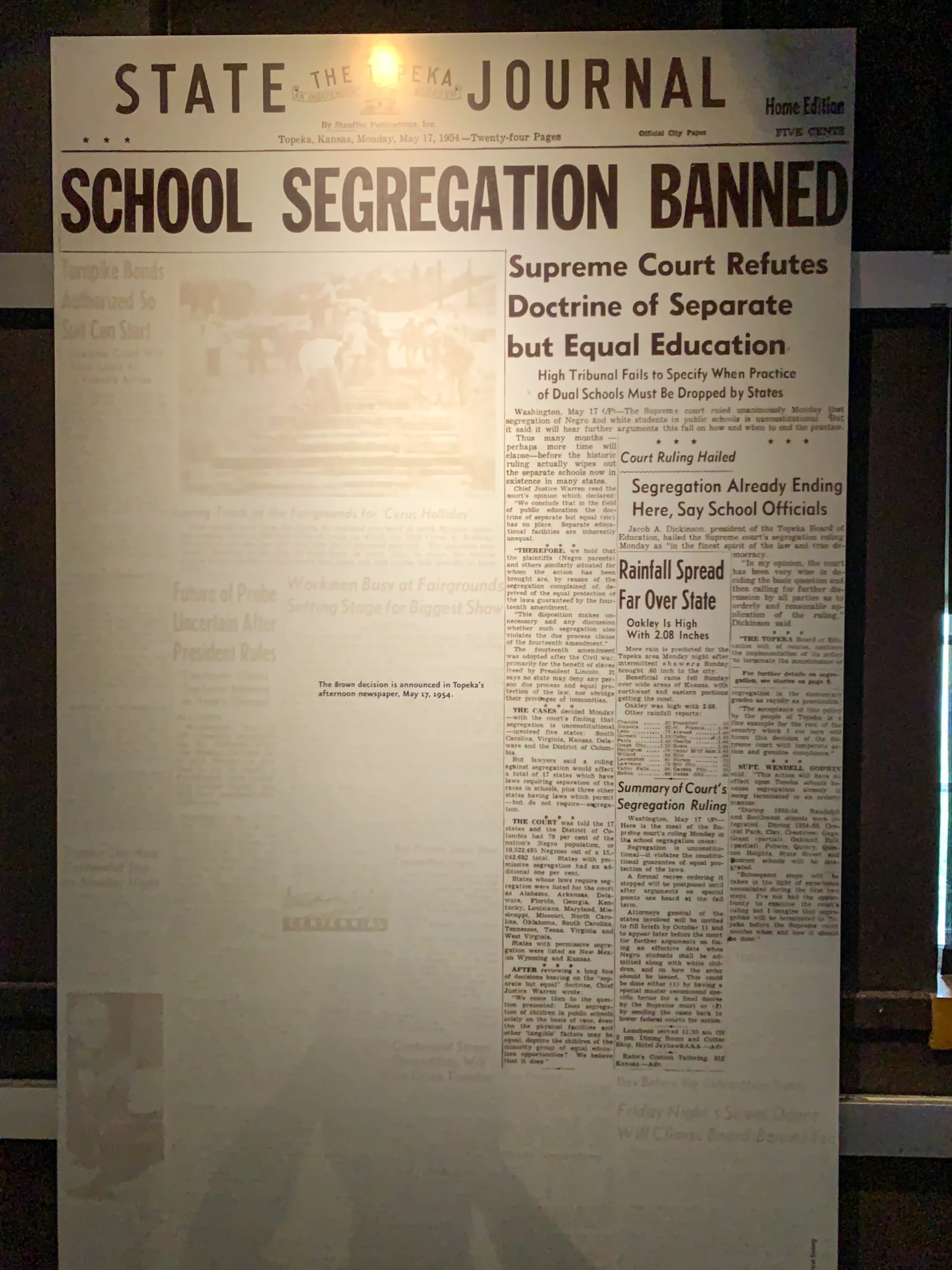
Front page of The Topeka State Journal with the headline "School Segregation Banned." The article discusses the Supreme Court's refutation of the "separate but equal" doctrine, emphasizing changes in school segregation policies. The page includes additional smaller articles and images.
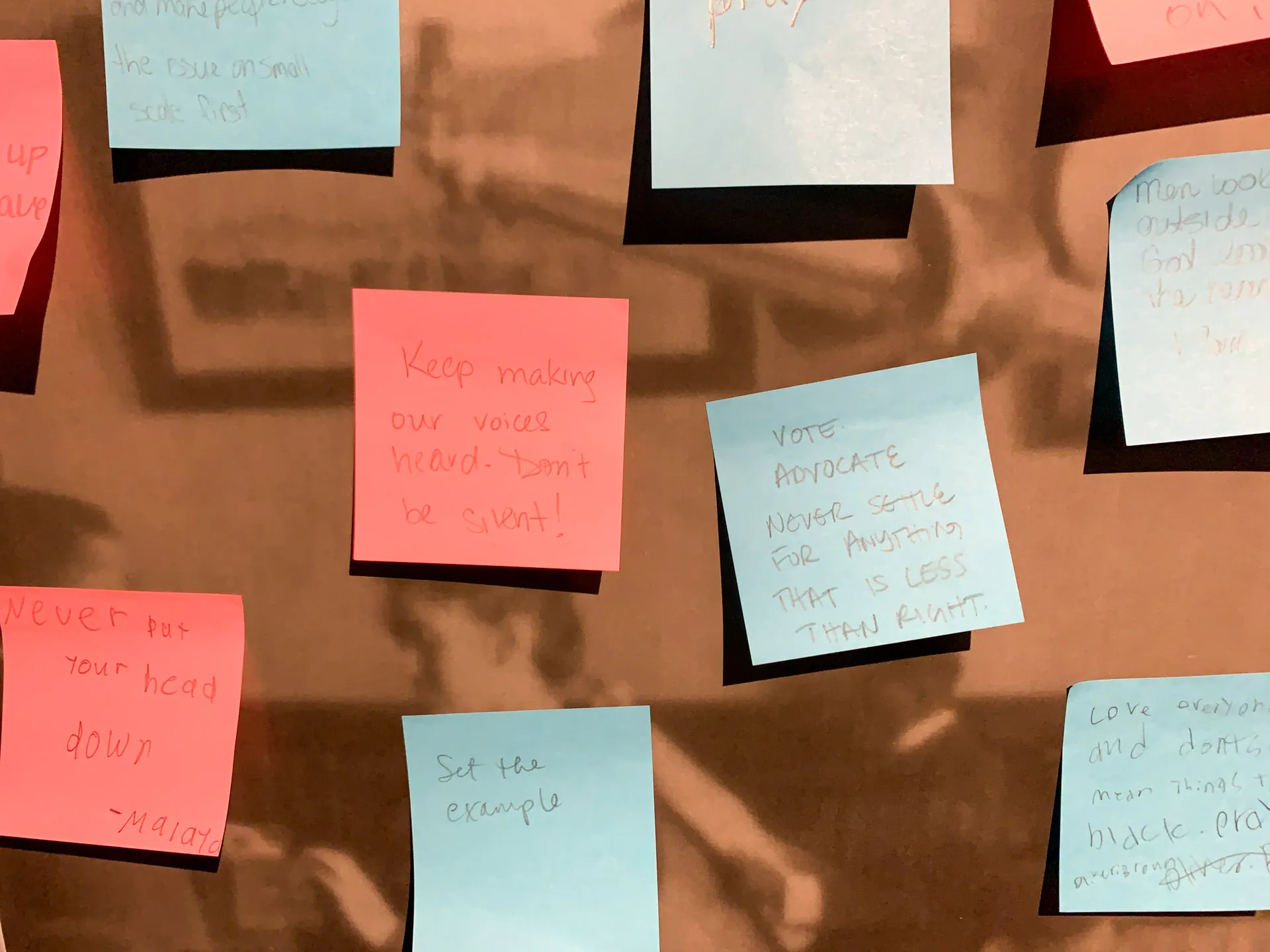
A close-up of a bulletin board covered with various colored sticky notes. The notes include messages like "Keep making our voices heard. Don't be silent!" on a pink note and "Vote, advocate, never settle for anything that is less than right!" on a blue note. Shadows are visible in the background.
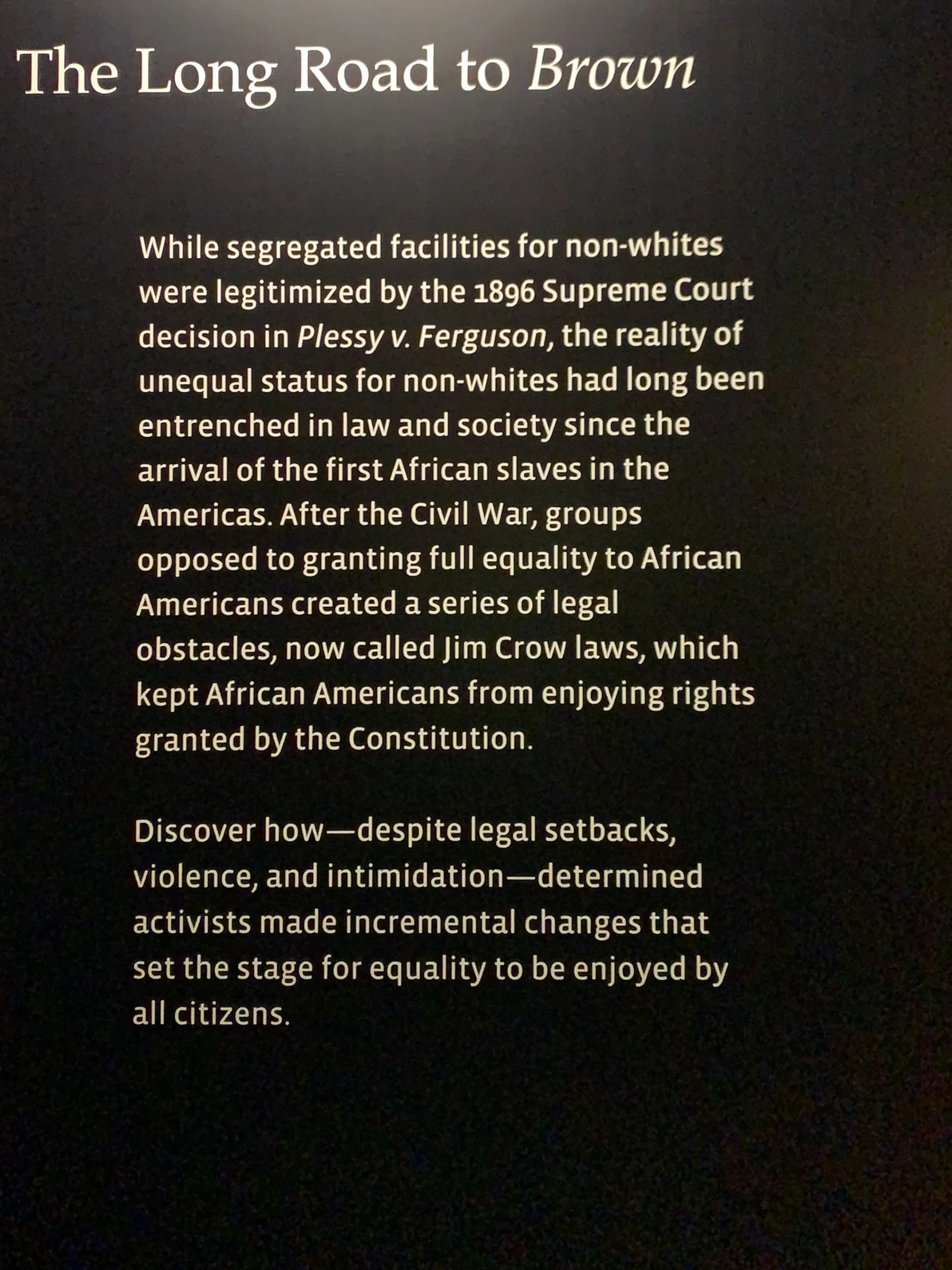
Black text on a dark background titled "The Long Road to Brown" discusses historical legal setbacks for African Americans post-Plessy v. Ferguson, mentioning Jim Crow laws and the eventual fight for equality despite intimidation and discrimination.
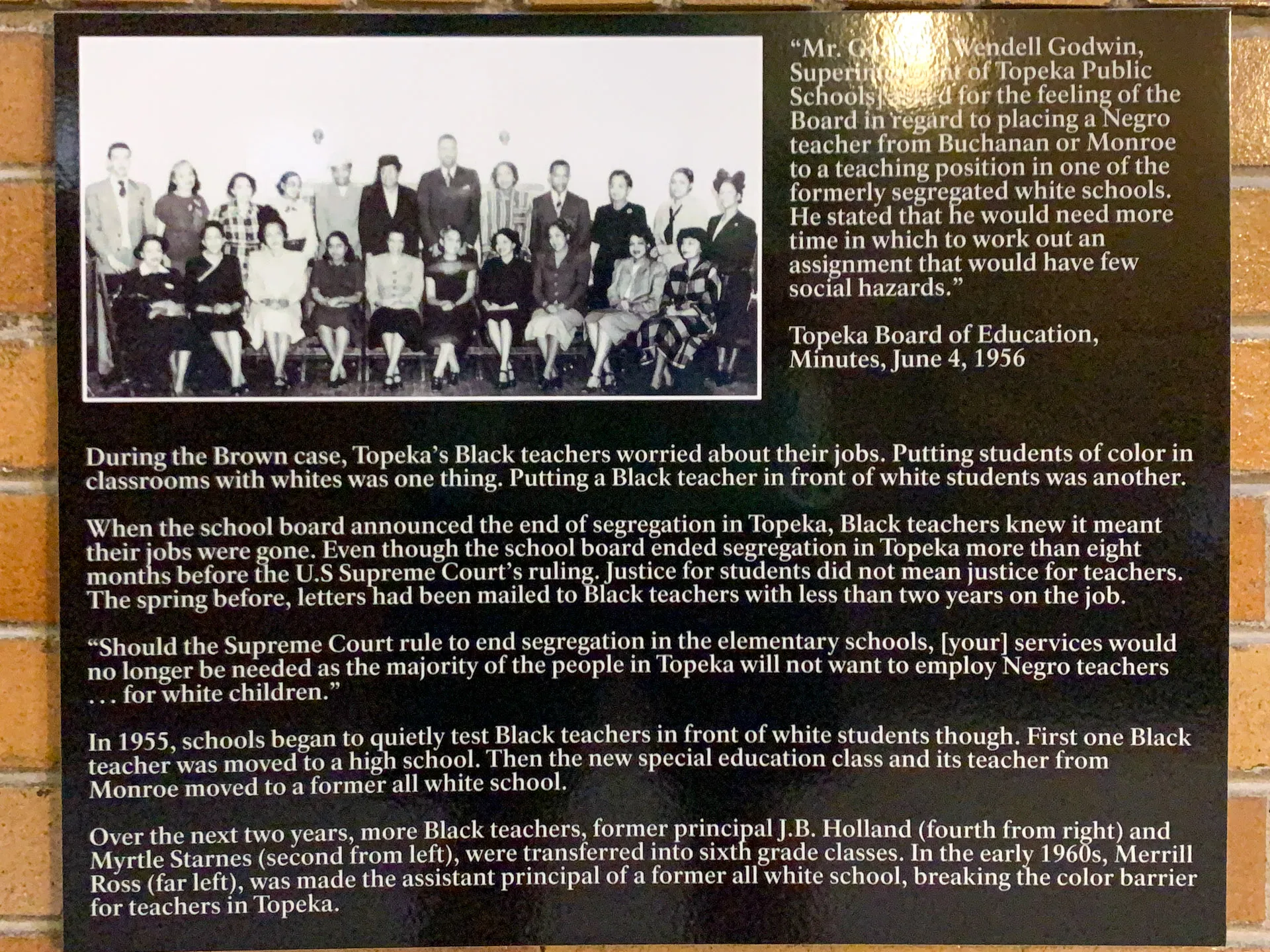
A historical display featuring a brick wall background with an educational plaque. The plaque includes a quote from the Topeka Board of Education dated June 4, 1956, mentioning a Supreme Court case and discussing racial integration in schools. The plaque is surrounded by black and white photos.
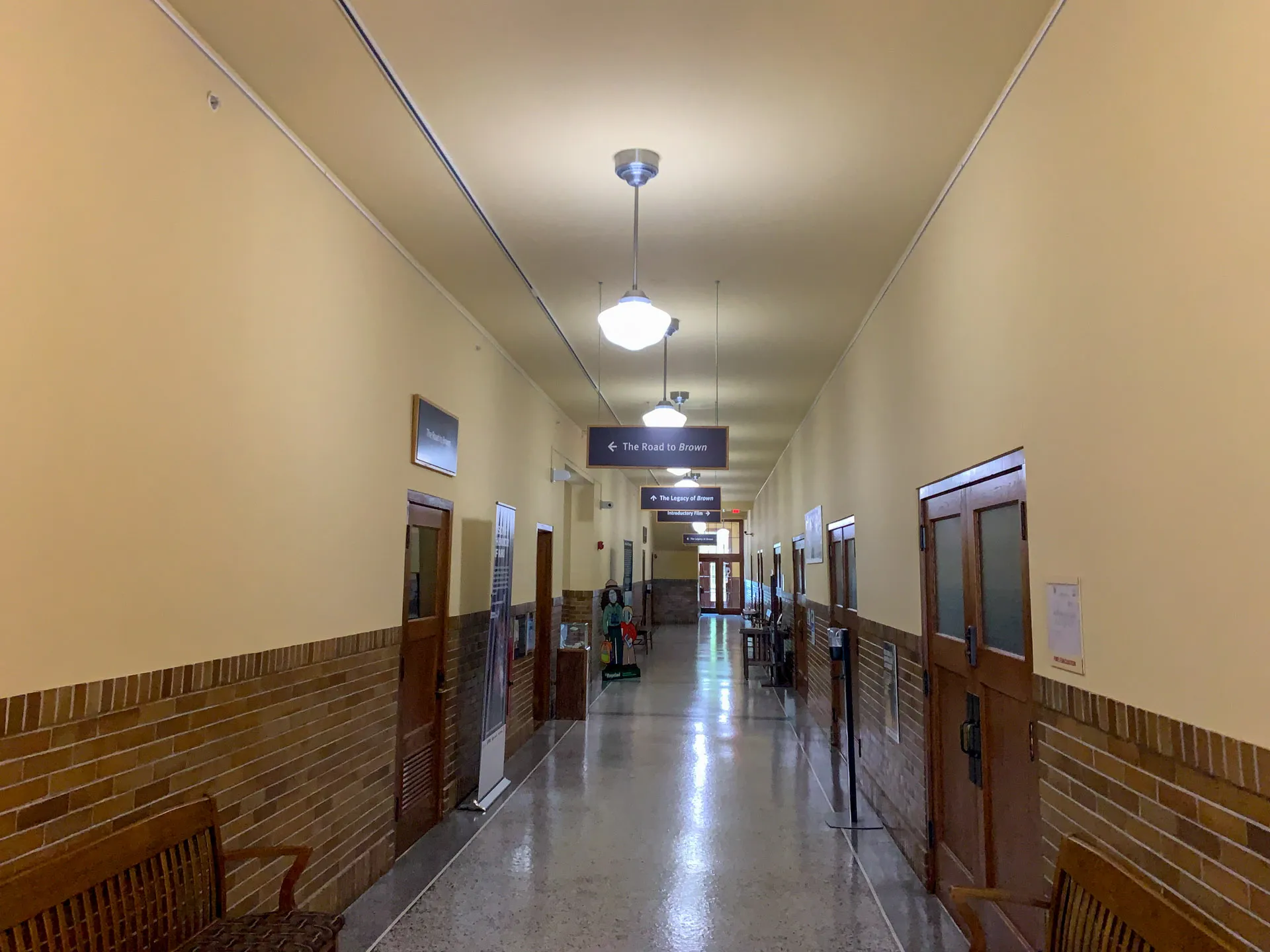
A quiet indoor hallway with cream walls and a shiny tiled floor. Wooden doors with glass panels line the corridor, and a brick accent runs along the lower wall. Overhead, several lights illuminate the space. A sign hangs from the ceiling near the center of the image.
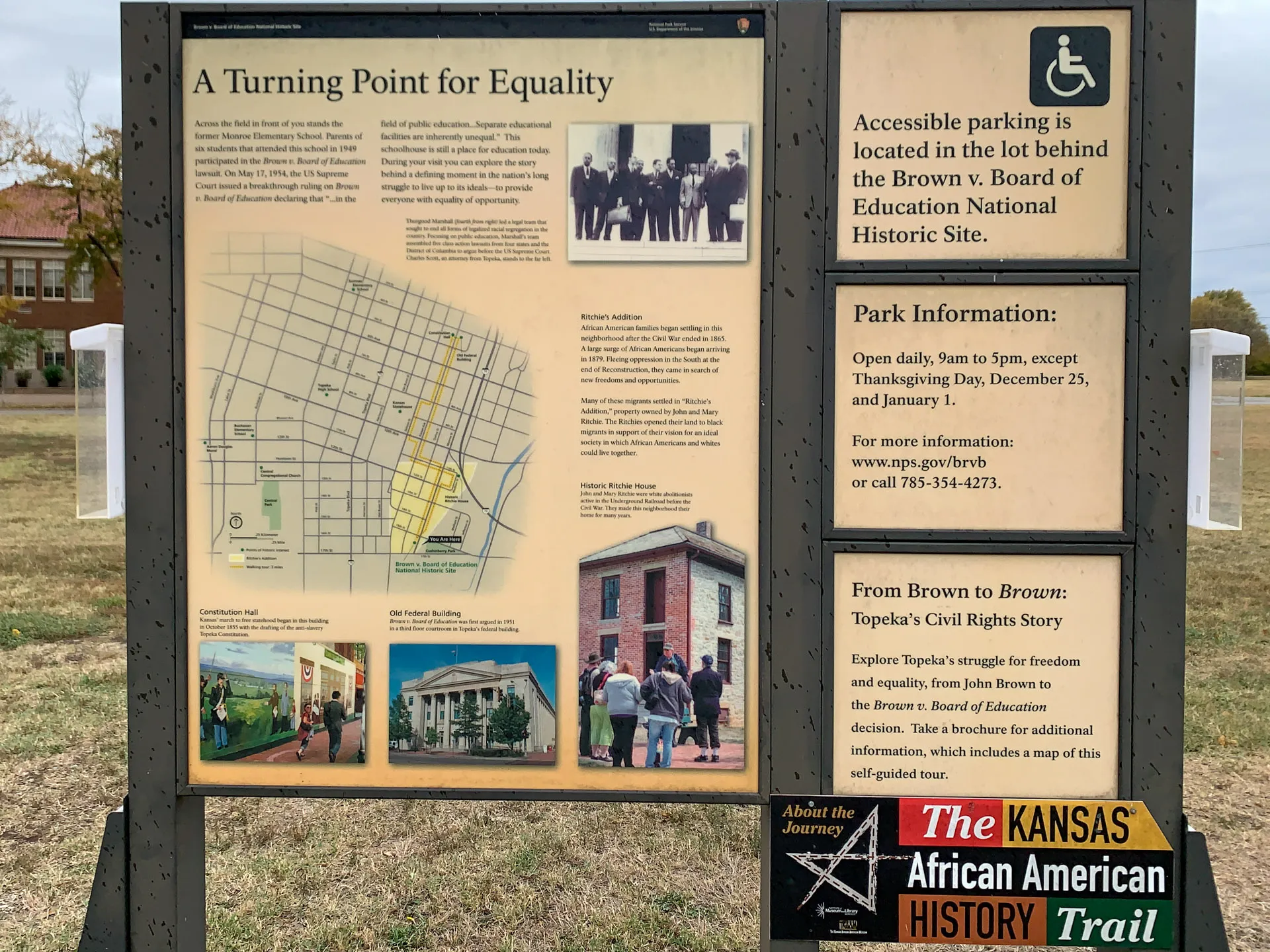
Informational display at the Brown v. Board of Education National Historic Site. Includes text about equality, a historic map, images of related events, and park information. Sign mentions parking access and has logos for the Kansas African American History Trail.

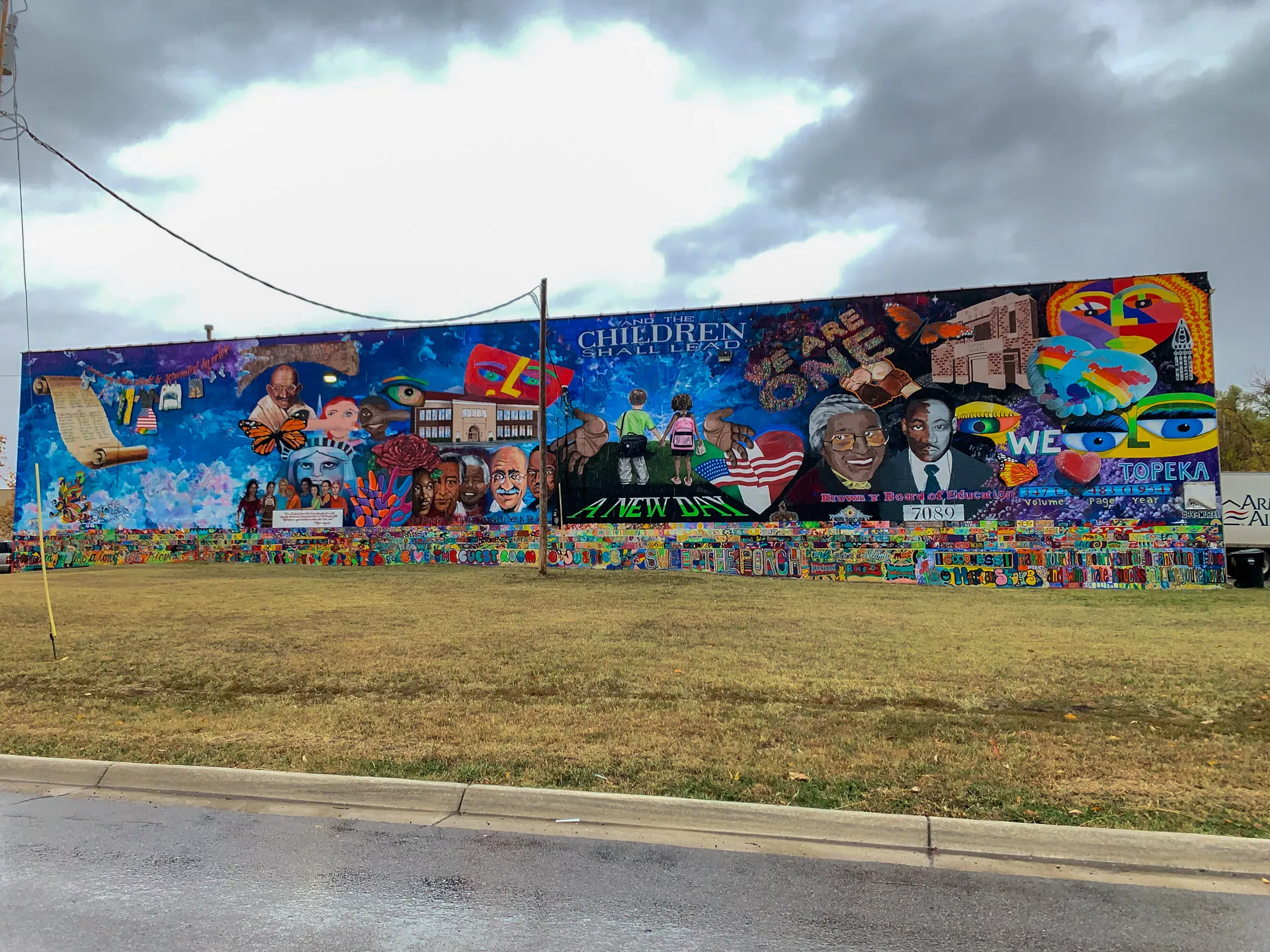
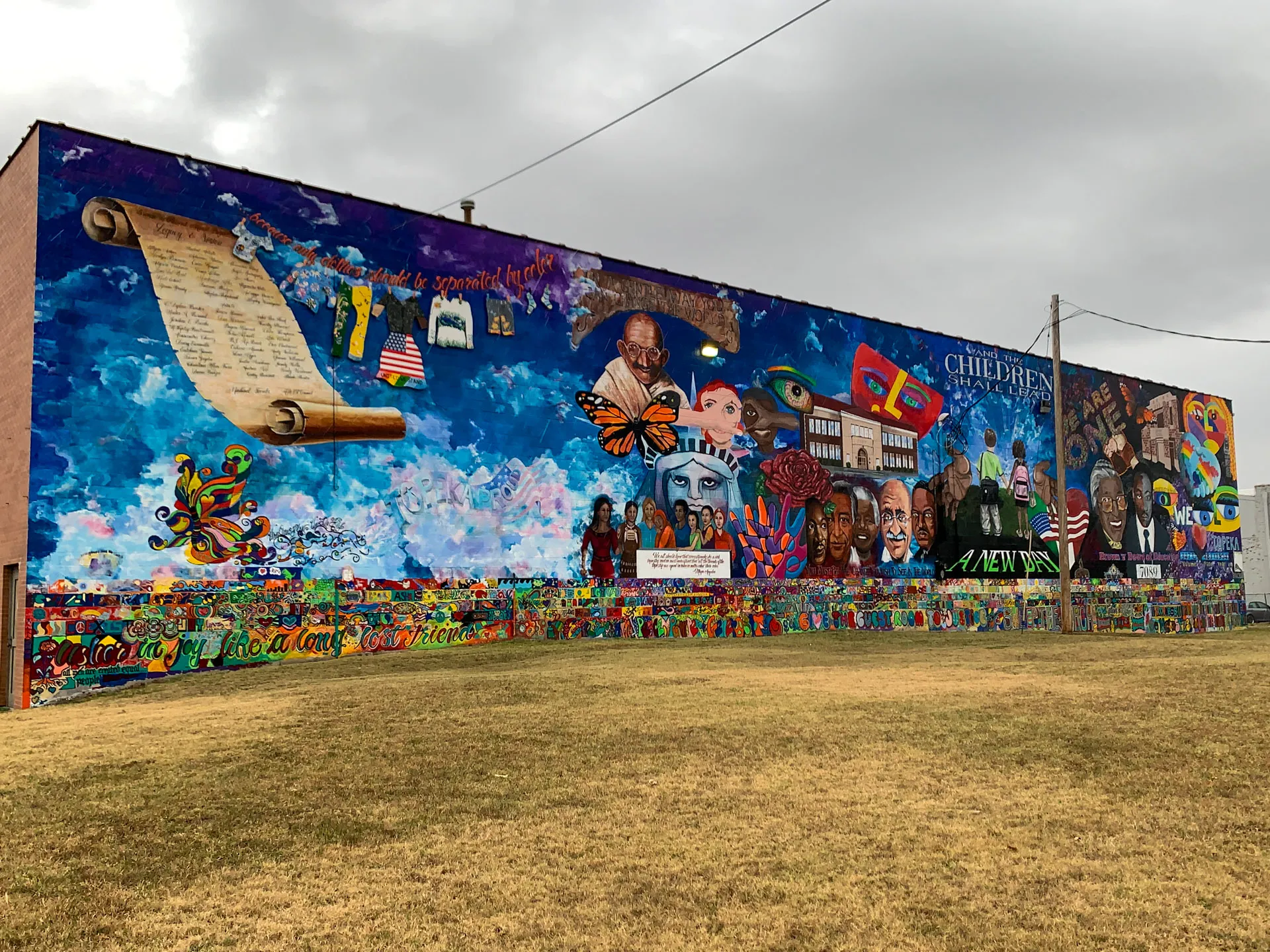
I love the mural painted on the building nearby.

A large outdoor mural on a building facade features colorful imagery including children, diverse faces, musical elements, and symbolic elements like peace signs and butterflies. The mural conveys themes of unity, peace, and community engagement. The foreground shows a grassy area and street.
A large, colorful mural on a brick wall features historical figures, a scroll, and vibrant symbols. The sky is depicted with clouds and a butterfly. Diverse faces and scenes convey themes of unity and progress. The grass in the foreground contrasts with the overcast sky above.

There are many places that I know I will revisit as I continue my travels. This site is absolutely one of those places.