Fort Larned National Historic Site

Visited on: Friday, June 21, 2024

My last stop on my way from visiting my mom in Colorado to spending some time with my dad in Wichita, Kansas, was at the Fort Larned National Historic Site.

Like practically everything in the national park system, this site is as true as possible to the time, and chock-full of educational information and displays. The walk to the fort is about a 1/4 mile from the parking lot with some helpful signage along the way.

A wooden signpost at a road intersection indicates distances to various locations, including Fort Larned, Fort Hays, Fort Harper, and Santa Fe. A white car is visible in the background.
Informational sign about the Great Wagon Road to the Southwest, Santa Fe Trail in 1821-1880. The sign includes historical details, a map, and images of a coin, trade routes, and a covered wagon.

The fort was built to protect travelers on the Santa Fe Trail, but interestingly, it does not have walls like many frontier forts. 

Illustration of Native Americans on horseback charging toward a fort with explanatory text about Fort Larned's history and defense structures. A small inset map shows the location of the fort.
Informational poster titled "A Soldier Town" detailing the history of Fort Larned, Kansas, with images of historical figures, a labeled diagram of the fort, and descriptions of daily life in the 1860s.
Information board detailing activities and points of interest at a historical military post on the Santa Fe Trail. Descriptions include a visitor center, walking tours, cannon demonstrations, and wildlife.

You are greeted by a state coach wagon as you come into the fort from the parking lot, and almost immediately, you begin to realize that this place is much bigger than you may have previously thought.

A red wooden stagecoach with a beige canvas top is displayed on green grass near a brown brick building with green shutters. The sky is partly cloudy.

The site itself is immaculately cared for, and in many ways, it feels like you’ve been transported back to the 1800s.

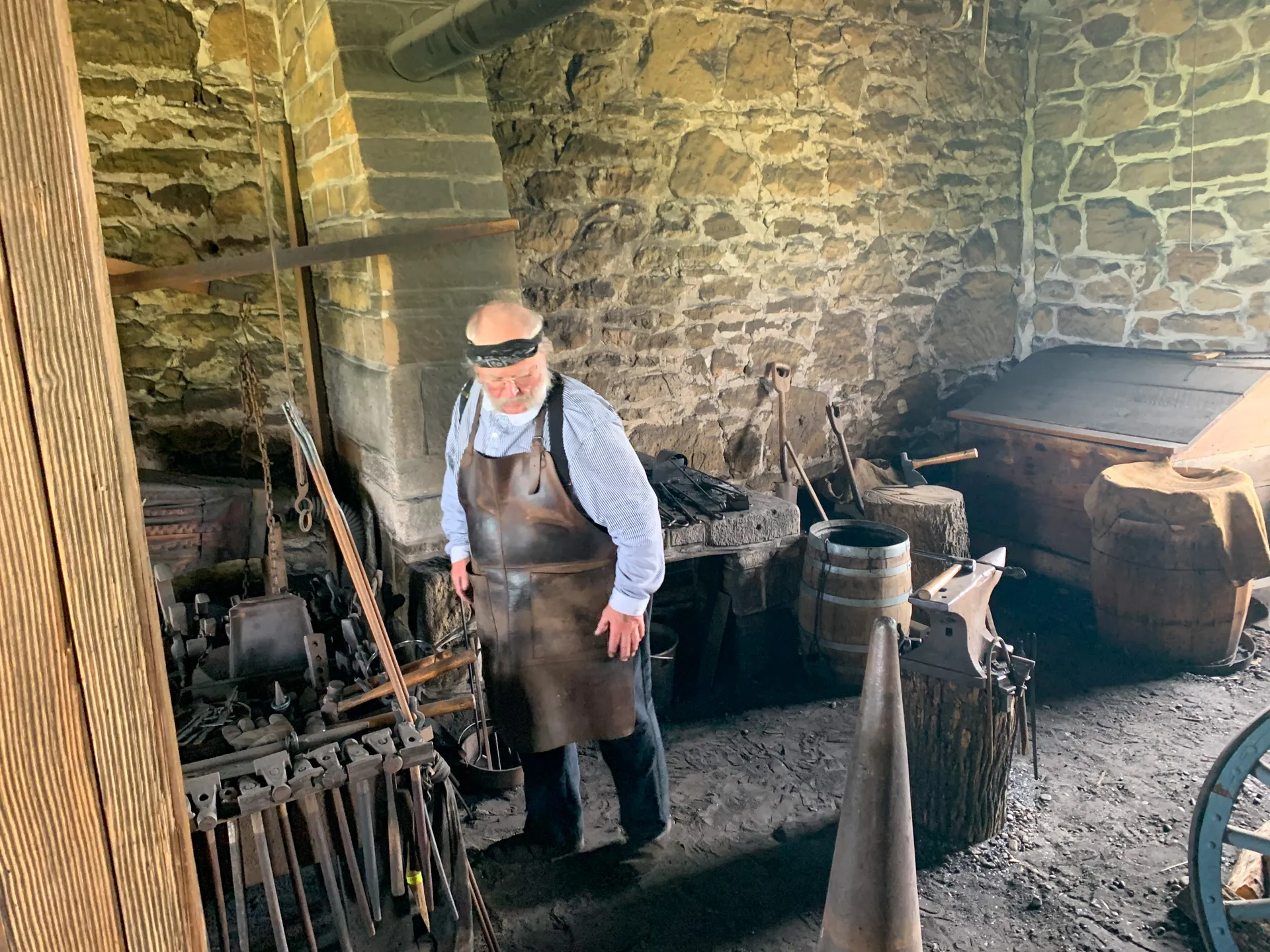
While I absolutely enjoyed the site, the movie about it, and the visitor center, I was really enthralled with the opportunity to watch a blacksmith make a wall hook for me. 

The blacksmith is a full-time employee of the National Park Service and gets to do this all the time! There was a family with three young boys at the site at the same time as I was, and they spent almost a half hour with the blacksmith. I just love how the service finds people to share their passion with future generations.

An older man, wearing a cap and apron, stands facing a lit forge in a blacksmith workshop with various tools and equipment around him.
A blacksmith wearing a protective face shield and apron works in a rustic stone forge with an anvil, barrels, and various tools surrounding him.
A blacksmith works at a forge in a stone-walled workshop, surrounded by tools and equipment including a wagon wheel and bellows.

The completed product…

A hand holding a small, metal hook with a rounded end and a hole at the top, poised in an indoor setting with wooden surfaces in the background.

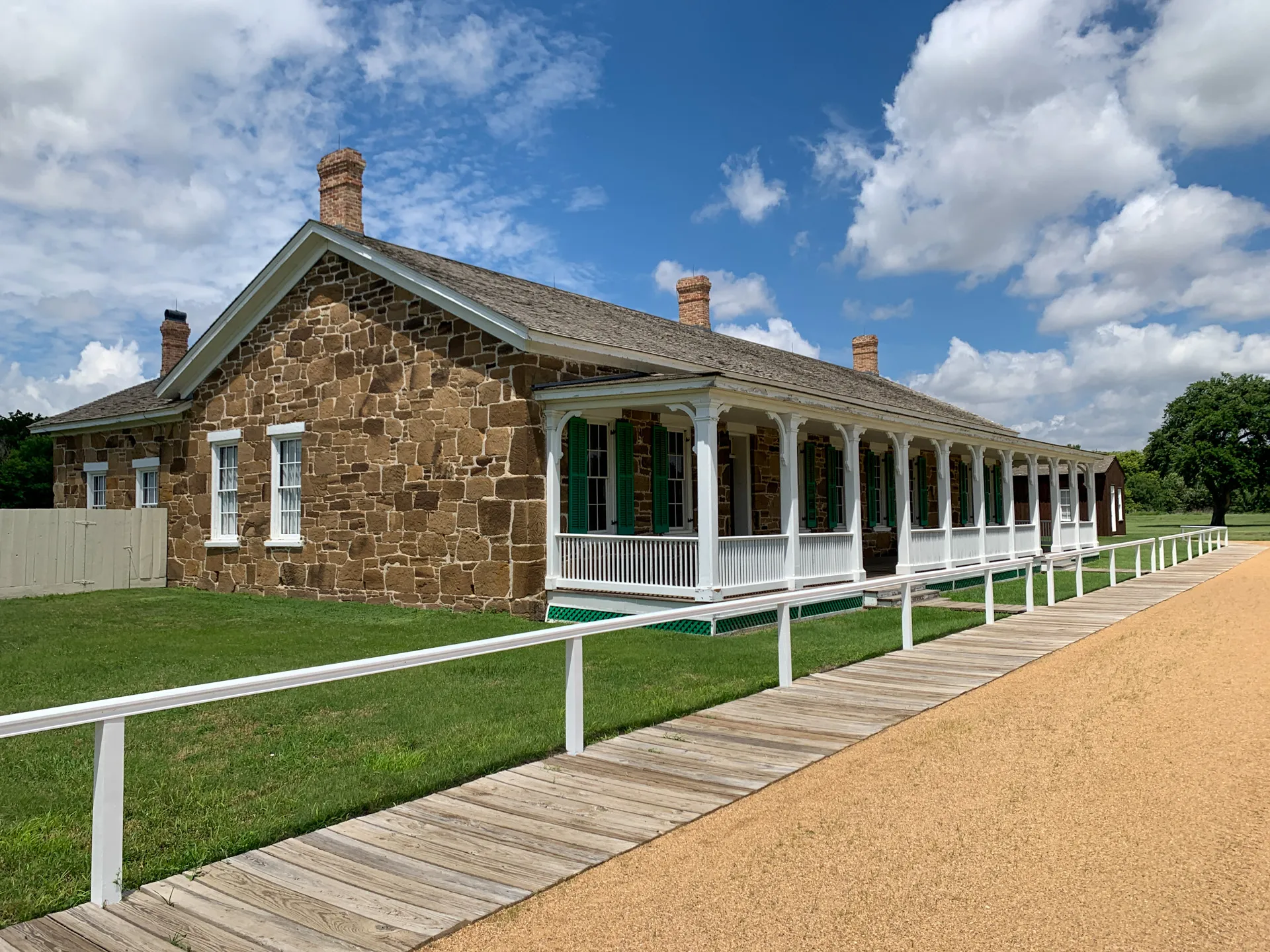
When you first head into the fort, the easiest thing to do is turn left and start visiting the officers’ quarters. They have really informative signage that tells you a bit about the officer that may have stayed there and a bit about what you’re looking at

A long, single-story brick building with white railings and green shutters sits under a partly cloudy sky, with a wooden walkway and gravel path in the foreground.
Informational sign titled "Room to Spare" about Captain William Forewood's living quarters, featuring a photo of him and details about his accommodations and interests.
A Victorian-style room with an ornate rug, wooden chairs around a table, a vintage wood stove, a red couch, bookshelf, and wall-mounted taxidermy. The table holds various items including books and glassware.
A dimly lit bedroom with a wooden bed, cluttered desk by the window, chair, and various personal items. Pale green walls and a large patterned rug cover the floor.
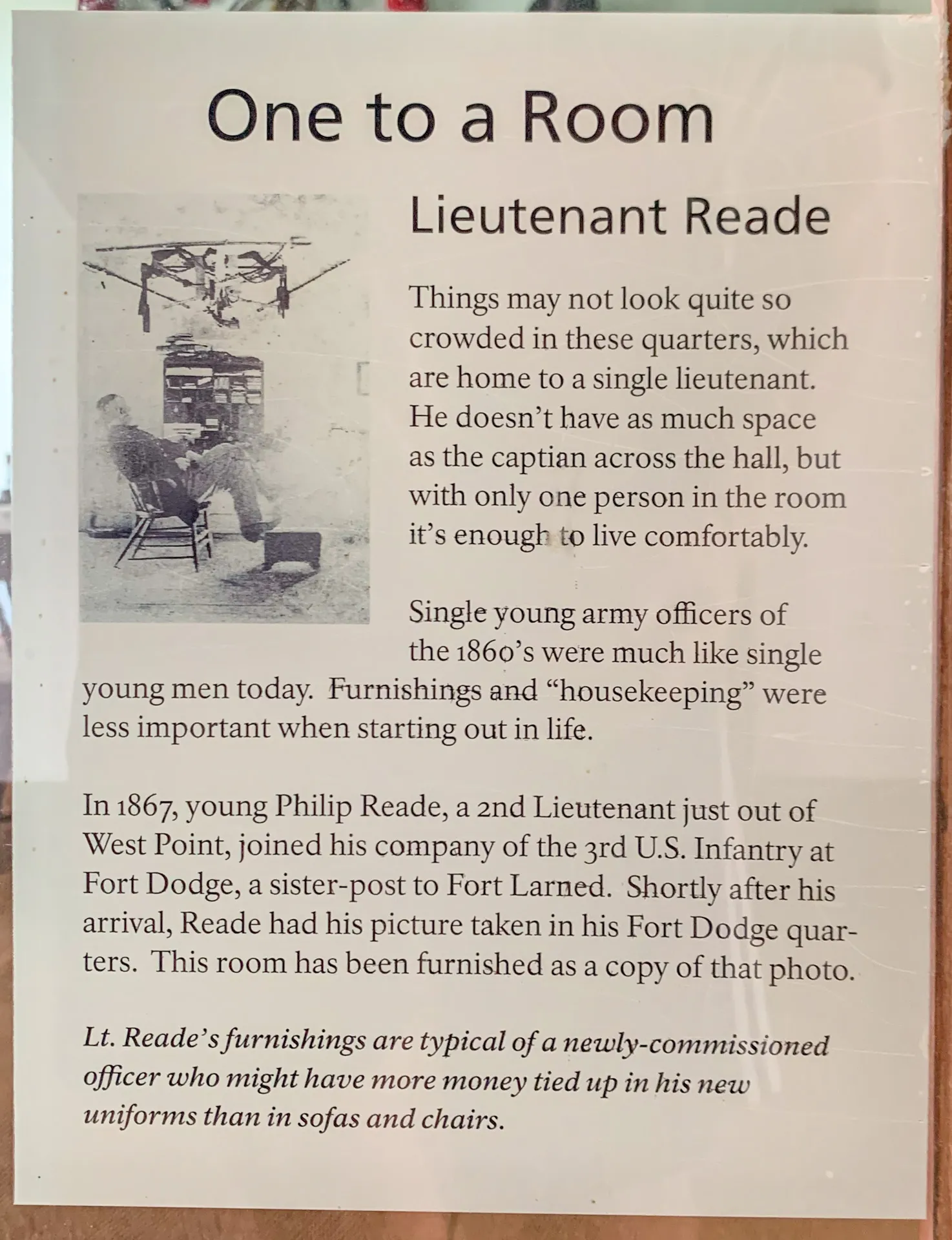
Image of a historical placard titled "One to a Room." It describes Lieutenant Read's 1860s room with sparse furnishings. Lieutenant Read, joining after West Point, prioritized uniform expenses over room decor.
A vintage room with a wood-burning stove, bookshelves, a desk with books, chairs, and an assortment of historical items on the walls and shelves, including rifles and kitchenware.
A display board titled "Close Quarters" about Lieutenant Campbell, describing cramped living conditions for soldiers and their families at Fort Larned in 1869. Image of Lieutenant Campbell included.
A cluttered, vintage bedroom with an unmade bed, a wood-burning stove, a dresser with a mirror, a chair, and various household items. The room features wooden furniture and a woven rug.
A long porch with a wooden floor, white columns, and green window shutters overlooks a field with a red wagon in the distance.

One of the interesting things about the stone walls of the fort is that many of the residents engrave their names into the walls and the dates they lived at the fort.

A stone wall with various engraved names and dates, notably "Helen Buchanan 1902" is prominently visible. Other markings and initials are etched around it.
A stone wall with various names and dates engraved into the bricks. A window is visible on the right.
A historical document titled "More Elbow Room" explains how single lieutenants George Raulston and August Kaiser shared their quarters at Fort Larned, with a preference for comfort over style.
A small room with a checkered table, chairs, wood stove, wall-mounted deer head, clock, and various items on tables. A window with red and blue curtains adds light to the space.
Informative sign about Captain Parker, explaining his suggestion for summer uniforms for soldiers involving straw hats and flannel blue blouses. The sign discusses practical and morale benefits.
A wooden table in a hallway holds various items including framed art, glassware, and small decorations, with wooden doors and a carpet visible in the background.
A vintage piano with a music sheet on top is in a room decorated with antique furniture, including a wooden chair, a table with a lace cover, and a green patterned carpet.
A wooden bed with a green quilt is positioned by windows with light curtains. Nearby are boots, a wooden chest, and a small stove.
A kitchen with a wooden table, two chairs, open shelves with dishes, a closed door, and a doorway leading to another room. The floor is brown wood, and there's a blue and white checkered cloth on a table corner.

And onto the next building for more officers’ quarters.

A long, single-story stone brick building with a wooden porch and green shutters sits under a partly cloudy sky. A wooden walkway and gravel path run alongside the building.
A historical plaque titled "Plains Memories" details Lieutenant Thompson's experiences with Native American artifacts and a wolf attack while stationed on the frontier. The room displays related souvenirs.
A room with a small table covered by a cloth, two chairs, a wood-burning stove, and various items on the wall, including hats and fishing equipment, with wooden floors and a fur rug.
A small room with a wood stove, a wooden chair, a dresser, a bed partially covered with clothes, and various items. A window with light coming through is on the left wall.
A document titled "Living the Good Life? Lieutenant Cook," discussing Lt. Cook's comfortable army posting at Fort Larned with his amenities and above-average living conditions from 1867 to 1870. .
A Victorian-style room with antique furniture including a sofa, chairs, a table set with small items, and a stove with framed pictures on the walls.
A rustic bedroom featuring a wood-burning stove, a four-poster bed adorned with a patterned bedspread, a dresser with a mirror, and several items of clothing and household objects scattered around.
A room with yellow walls, featuring a bed with a colorful quilt, a wooden dresser with a mirror, a wood-burning stove, and several pieces of furniture including a table set for tea and chairs.
A photograph of a historical exhibit titled "Living out of a Box" featuring information about Lieutenant Bell and his assignment to Fort Larned in 1868, including a brief history of the Buffalo Soldiers.
A room with various historical artifacts including rifles, a flag, boxes, and furniture. Items are scattered on a bed and desk, reflecting a preserved or curated historical setting.
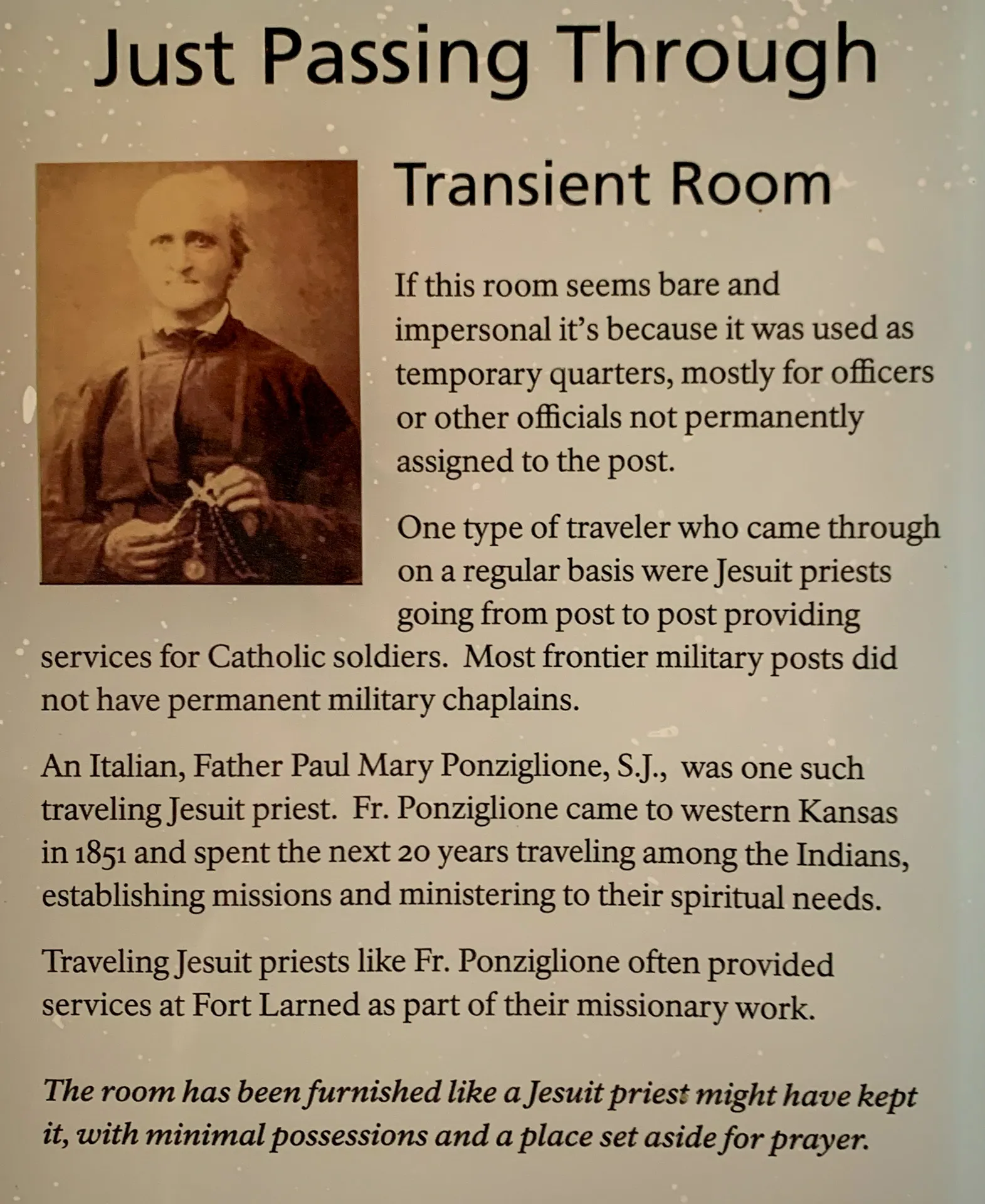
An informational plaque about a transient room used by Jesuit priests, including Father Paul Ponziglione, to provide services for Catholic soldiers in Kansas in 1851.
A plain room with a single bed, a wood-burning stove, a small desk, a chair by the window, and various personal items scattered. There is a rug and white sheet covering the floor.

Now onto the barracks and other buildings in the fort.

Informational historical plaque about Infantry Barracks, describing the function and layout of squad room and orderly room in the quarters built in 1868 for troops at Fort Larned.
A room with double-decker bunk beds lined up, each with folded blankets and pillows; rifles mounted on the wall above the beds.
A military-style dormitory with rows of bunk beds, neatly folded blankets, and headgear. Rifles are stored in racks along the back wall. Benches and tables are positioned in the center of the room.
A small, neatly organized room with two single beds, a wooden table, chairs, a wood-burning stove, and clothing hanging by a window. Various personal items are placed on the table and beds.
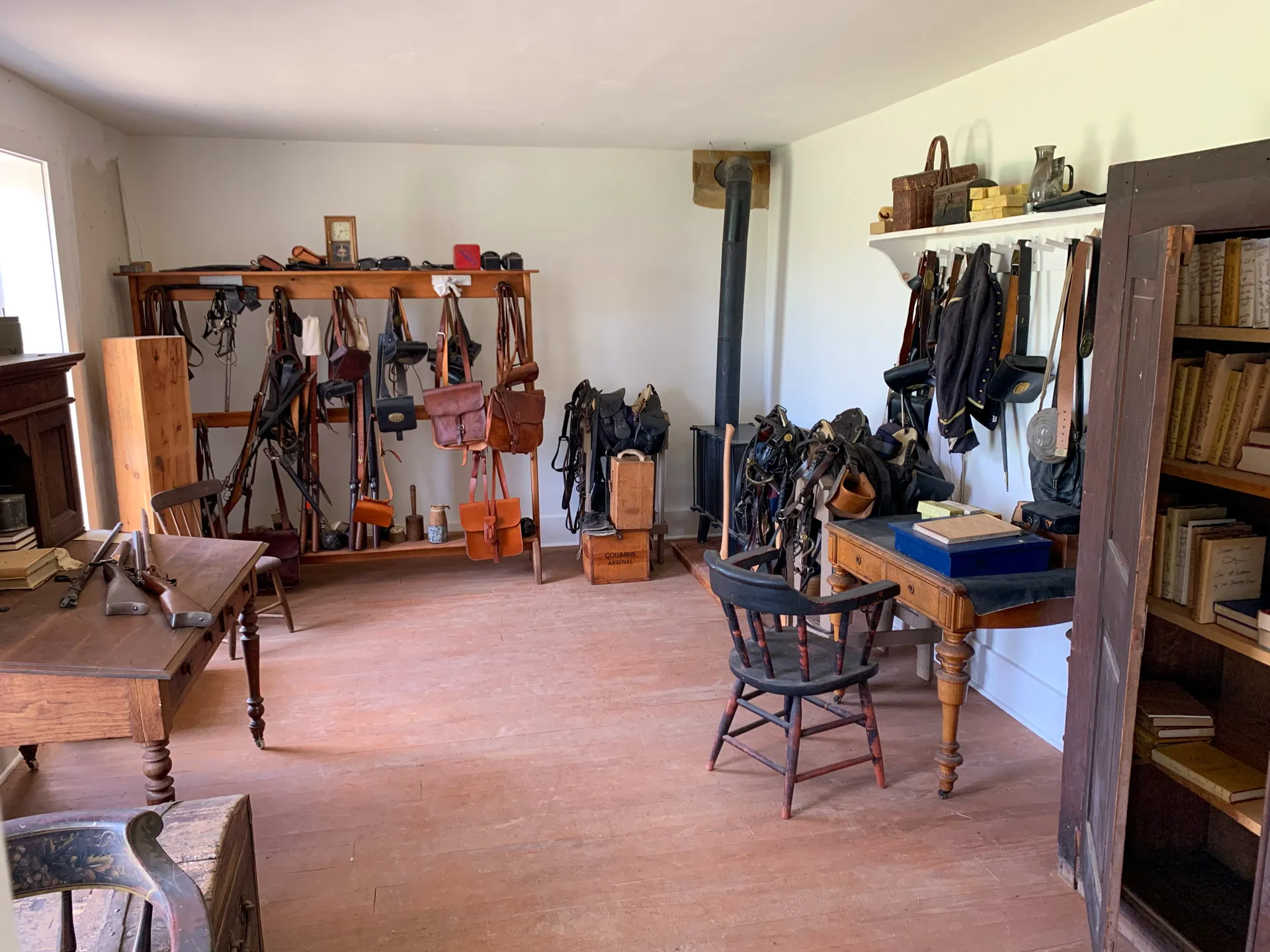
A neatly arranged room with shelves of books and bags, a desk with papers, and various leather goods hanging. There's a wood stove in the corner and a wooden chair near a table.
A vintage kitchen with a wood-burning stove, hanging pots and pans, shelves with jars and utensils, a wooden table with kitchen accessories, and firewood stacked beside the stove.
A rustic brick wood-fired oven at Fort Larned National Historic Site with two black iron doors and a wood storage area underneath. The room has a wooden table in front of the oven and old tools hanging on the wall.
A room with wooden racks filled with loaves of bread covered by white netting. A cast iron stove and lantern are in the foreground.

Doctor’s office and hospital

A room with yellow flooring features a table, a wooden crib, a bookcase, and a desk by the window. Various bottles and jars are seen on the desk.
A simple doctors office with two desks, two chairs, shelves with folded linens, and a canvas cot near the door, lit by natural light from a window.
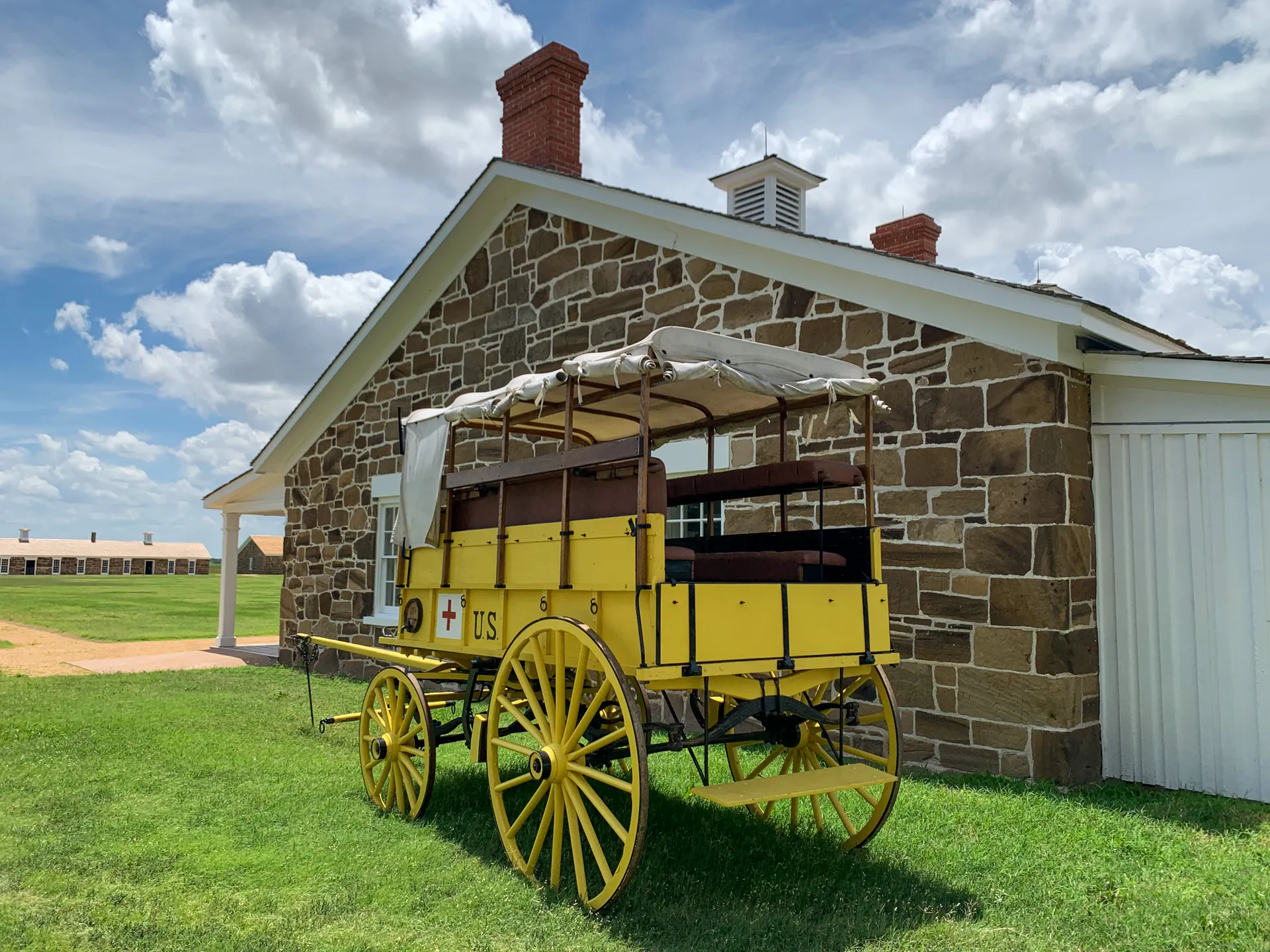
A yellow horse-drawn wagon with a white cover, labeled "US" and marked with a red cross, is parked in front of a stone building on a grassy area under a partly cloudy sky.

Armory

A historical cannon, olive green in color, with large wooden wheels is displayed indoors against a stone wall background.
A historical storage room with wooden crates, barrels, and ammunition boxes. Two old cannon carriages are seen in the background near a stone wall.
Wooden crates stacked against a stone wall on a wooden floor inside a rustic building.

Wearhouse and storage

Two antique horse-drawn carriages displayed in a rustic, wooden-beamed room with stone walls and large windows letting in natural light. A rope barrier surrounds the exhibits.
A wooden structure with labeled storage compartments for various uniform items such as sack coats, blouses, and other equipment, organized by size and type, under a pitched roof.

Parade grounds

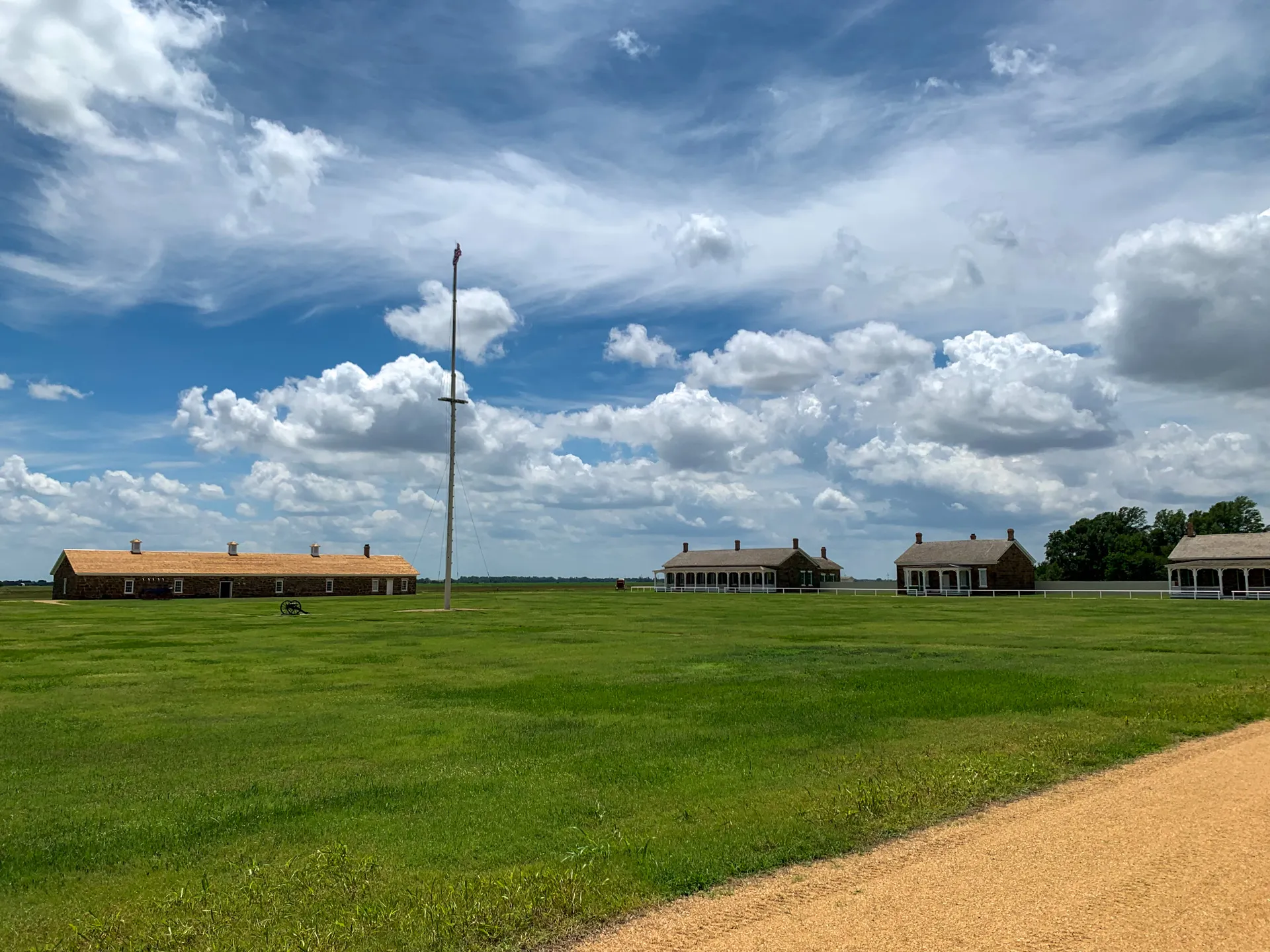
A grassy field with several buildings in the background. A flagpole stands in the middle of the field. A dirt path runs along the right side under a partly cloudy sky.
A historic cannon with large wooden wheels is displayed on a wooden platform, set on a grassy field with historical buildings in the background.
A gravel path leads to a tall flagpole surrounded by buildings under a partly cloudy sky, situated on an open green field.
A blue covered wagon with large wooden wheels sits on a grassy field in front of a long building under a partly cloudy sky.
A tall flagpole with an American flag stands against a partly cloudy sky, with two brick buildings and green grass in the background.

Visitor center and museum

An informative display titled "Changing Lives on the Plains" detailing the history of Fort Larned established by the United States Army, with multilingual greetings on the side.
A blue sign titled “Trading Land for Supplies” describes the US government's exchange of food, goods, and land rights with Plains Indian groups.
A sign titled "Take a Closer Look Underground" details the role of native prairie grasses and their root systems in the ecosystem, emphasizing their ability to store food, water, and provide animal habitats.
A display at a museum titled "Invasion or Opportunity?" provides historical information about the Arapaho, Cheyenne, Comanche, Kiowa, and Plains Apache lands, and the impact of European settlers from 1700 to 1848.
Display of a covered wagon, wooden barrels, crates, and historical artifacts including tools and saddles in a museum exhibit.
A historical map labeled "COMANCHERÍA (1750-1850)" with a display titled "BALANCE OF POWER" describing the Comanche empire's influence over power shifts created by European settlers on the Plains.
Display case containing a ceremonial tomahawk, a beaded necklace with teeth and a peace medal. The case includes explanatory plaques about the symbols of peace and Buffalo Peace Medal.
A display case contains two rifles, a handgun, four arrows, a quiver, and a leather satchel. Informational plaques are placed between the items.
Display featuring historical artifacts and information about Plains Indian raids, including an oval photograph of an Indigenous man and a red informational panel titled "Why Raid?" with explanatory text.
A display panel shows a historical black-and-white photo of Native Americans, a portrait of an individual, and text titled "Promise or Threat?" discussing Native Americans' views on treaties and relations with the US.
A historical map showing the route taken by Private Adolph Hunnus, passing several army forts along the Santa Fe Trail in 1877. The map highlights key locations from Fort Leavenworth to Fort Hays.
A stone club on display in a glass case at a museum. The exhibit is titled "An Effective Weapon" and includes descriptive text about the tool's historical use.
A dimly lit interior of a teepee, featuring traditional Native American decorations and a holographic image of a person in traditional attire sitting inside.
Historical display titled "Defense & Survival 1859-1865" showing images and text recounting events from the Sand Creek Massacre, including quotes and depictions of Native Americans and soldiers.
A display case featuring antique rifles, a revolver, swords, and a bayonet, with informational plaques describing each weapon's historical significance.
An informational display titled "A New Era" detailing historical events from 1865 to 1869 at Fort Larned, including the end of the Civil War, peace treaties, and the fort's development.
A museum exhibit showing a horse with mounted gear and a mannequin dressed in a union cavalry uniform. Text panels discuss Black and White soldiers during the era 1865-1870.
Display featuring a historical black-and-white photograph of a man, an image of a stone building, and text panels detailing the construction and significance of the building and the man's achievements.
Display showing historical photographs and information about women at Fort Larned, including a sepia-toned group photo of women and children, and informational text panels.
Wooden shelves display historical items including bottles, blankets, cooking utensils, and various goods with informational plaques detailing sutler stories and costs.
A large taxidermy bison is displayed against a backdrop of a bison herd in a natural habitat, with informational panels in the foreground.

Schoolhouse

A classroom with blue tables, wooden floor, a blackboard, a window, and cabinets along the walls.
A small classroom with blue wooden tables and benches, a wood stove, shelves with books, and large windows letting in natural light.

Cemetery and Memorial

A tall stone obelisk stands on a grassy field with a plaque at its base. Trees and a building are visible in the background under a partly cloudy sky.
Bronze plaque detailing the history of a monument erected by the Third Infantry in 1867 to honor fallen soldiers, moved to the Larned Cemetery in 1887, and returned to its original site in 2009.
A cemetery with rows of gravestones on a grassy field, set against a backdrop of buildings and a partly cloudy sky.
A bronze plaque dedicated to soldiers who died while serving at Fort Larned, listing their names and ranks. It also acknowledges unknown soldiers and a Cheyenne brave. The plaque is set outdoors on a lawn.

Such a wonderful place to learn about the past!

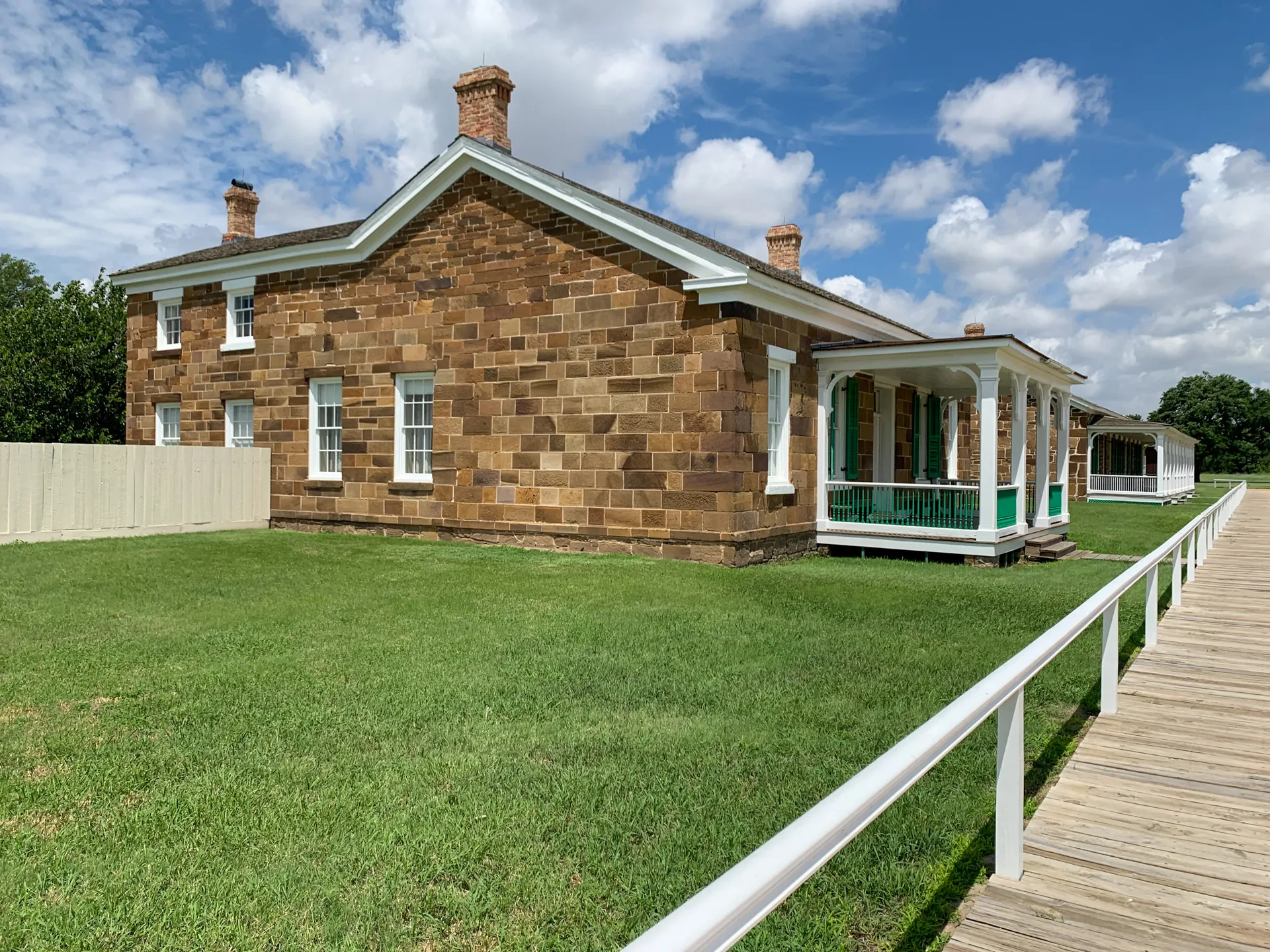
A historic stone building with a green porch, white trim, and a boardwalk leading to the entrance, set against a backdrop of a grassy lawn and partly cloudy sky.