
Carlsbad Caverns is where time itself seems to be etched into the rock. Its story unfolds over millions of years, shaped by geological forces, ancient cultures, and modern discovery.
Prehistoric Beginnings
Carlsbad Caverns’ story began over 265 million years ago when the area was covered by a shallow inland sea known as the Delaware Basin. A massive limestone reef, the Capitan Reef, formed along the edges of this sea, created by the accumulation of sponges, algae, and other marine organisms. As the sea receded, this reef was buried under layers of sediment and minerals. When tectonic forces uplifted the land, acidic groundwater dissolved portions of the limestone, creating the vast cavern system we know today.
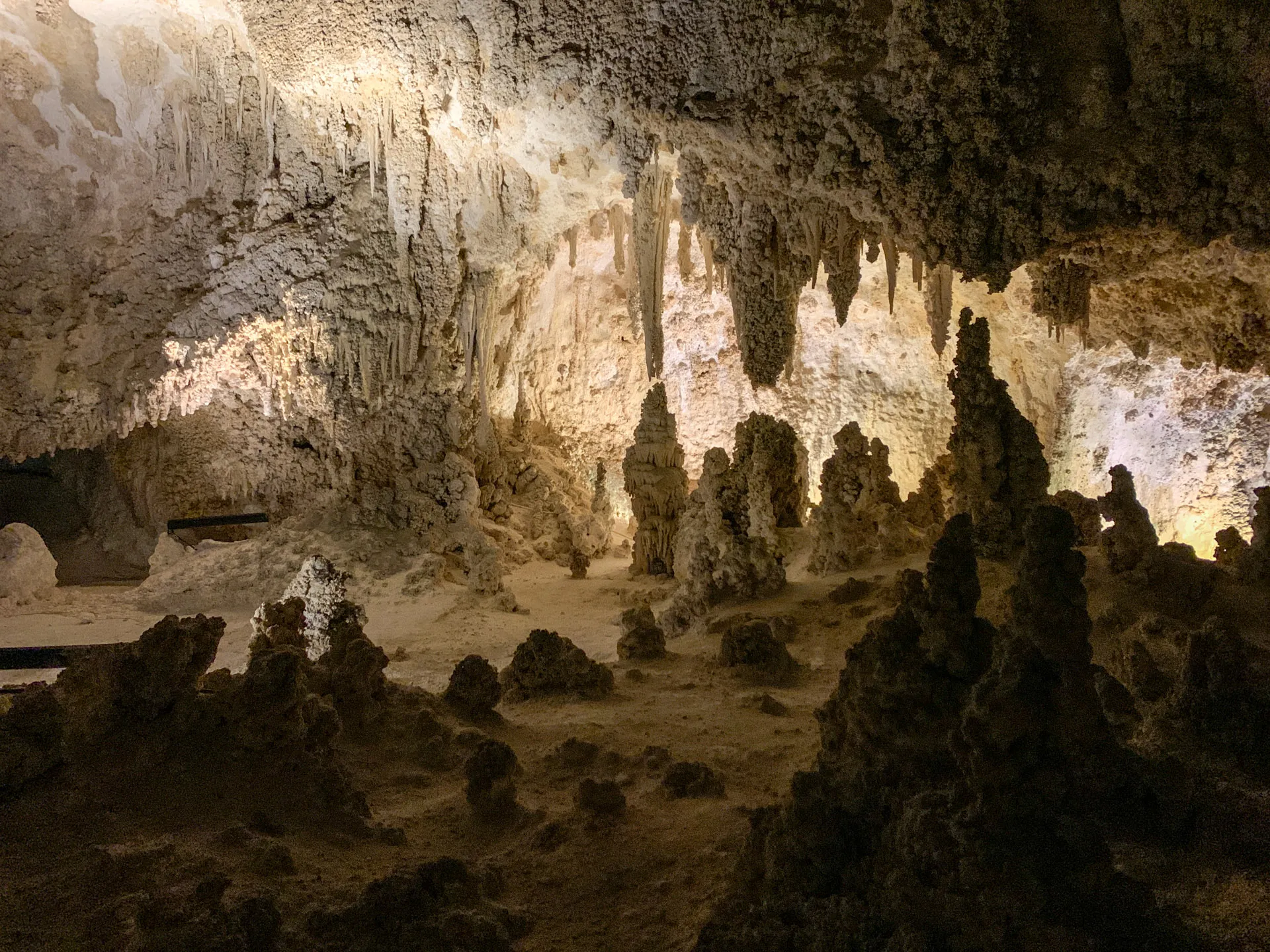
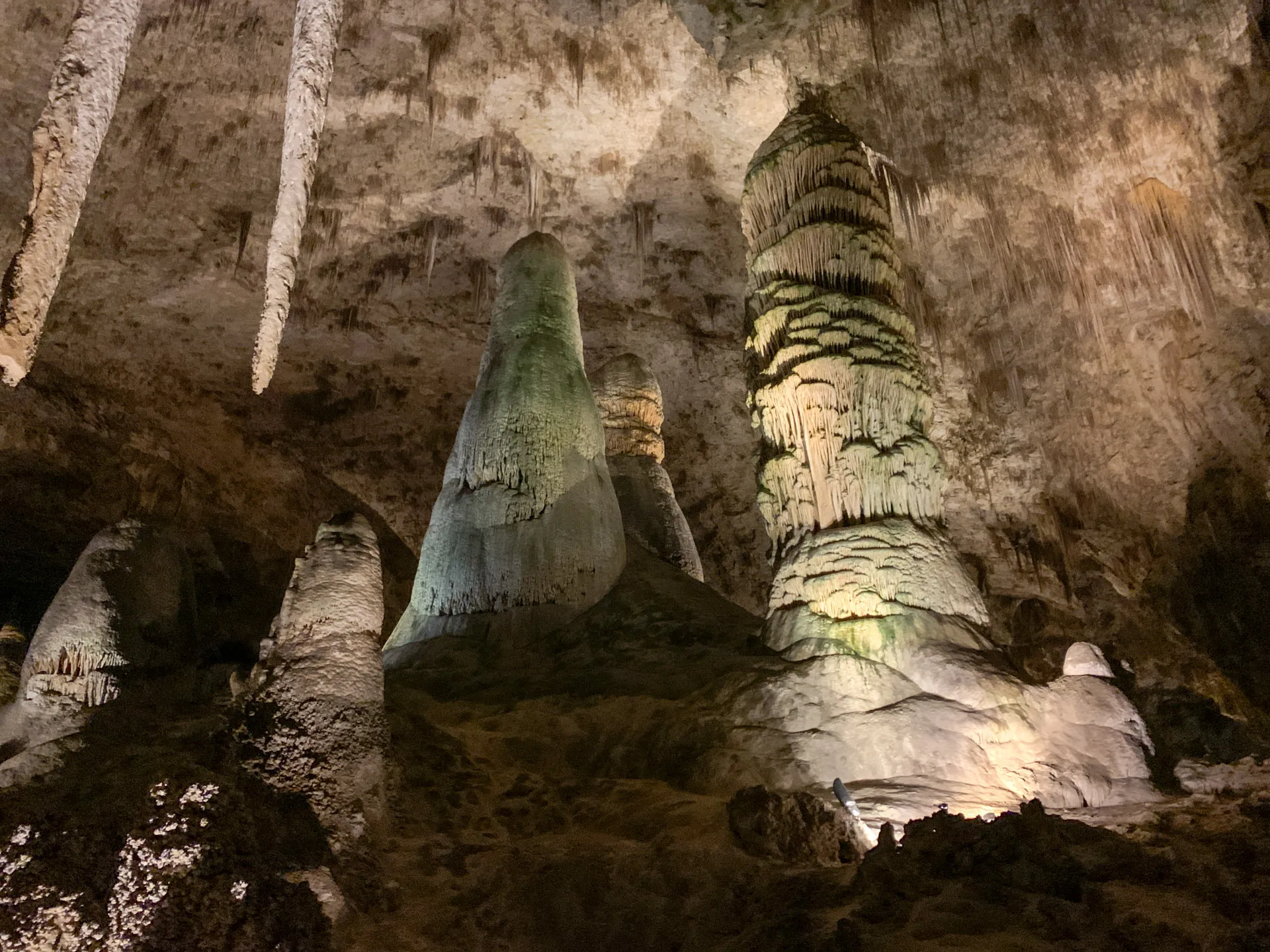
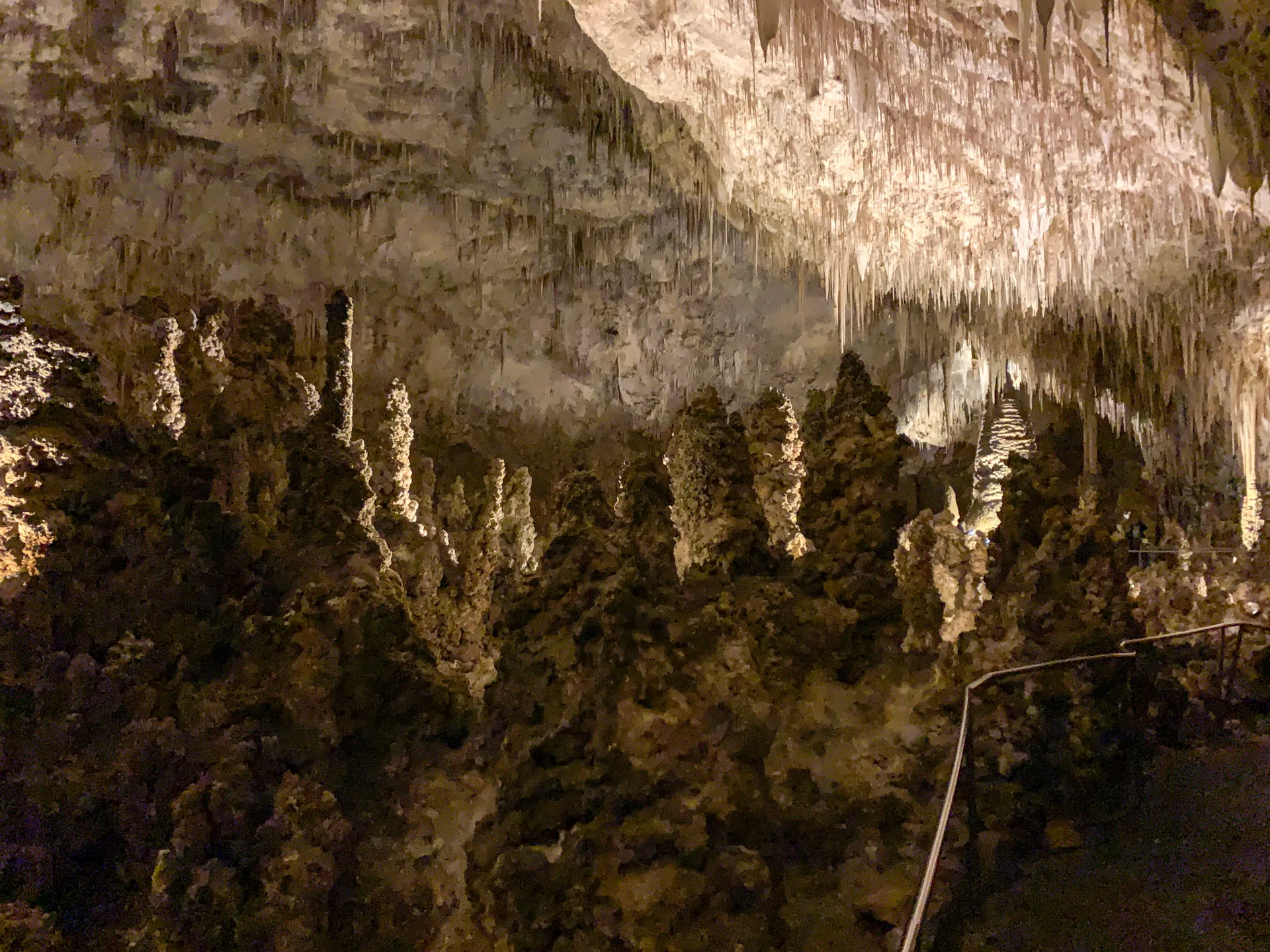
Millions of years later, tectonic forces lifted the reef above sea level. Rainwater, combined with hydrogen sulfide from deep oil and gas deposits, seeped through cracks in the limestone. The resulting sulfuric acid dissolved the limestone, creating large chambers and tunnels. Unlike most caves, which are carved by carbonic acid from surface water, Carlsbad Caverns were primarily shaped by this sulfuric acid process — a rare geological phenomenon that left behind expansive chambers adorned with stunning stalactites, stalagmites, and intricate rock formations.
🦣 Ancient Life and Ice Age Visitors
Long after the caverns formed, Ice Age animals roamed the region. Fossils of creatures like mammoths, saber-toothed cats, and giant ground sloths have been found near the caverns.
As the Ice Age ended, early human inhabitants arrived in the area. Evidence of human presence, including stone tools and fire pits, has been discovered near the cave entrances, dating back at least 10,000 years. These early peoples likely viewed the caverns with reverence and caution, recognizing them as sacred places or potential shelters.
Native American Presence
Before European settlers arrived, the region was home to various Native American tribes. For these early inhabitants, the caverns likely held spiritual significance — where the earth seemed alive, whispering in the wind that swirled through the gaping entrance.
The Mescalero Apache and other indigenous peoples have long regarded the caverns as sacred. Oral traditions speak of spirits dwelling within the dark recesses of the earth. The caverns may have been used for ceremonies, vision quests, or as sources of raw materials for tools and pigments.
Rock art and pictographs found near the caverns suggest that Indigenous people passed down stories about the mysterious depths for generations. Some Apache legends describe the caverns as the dwelling places of powerful spirits or portals to the underworld.
Spanish Explorers and Settlers
By the 1500s, Spanish explorers entered the region. They referred to the caverns as part of the larger “La Cueva del Diablo” (Cave of the Devil), fearful of the darkness and eerie sounds echoing from within. However, no extensive exploration occurred during this period. The caverns remained largely untouched except for occasional visits by indigenous groups and local settlers.
The Modern Discovery: The Bat Witness
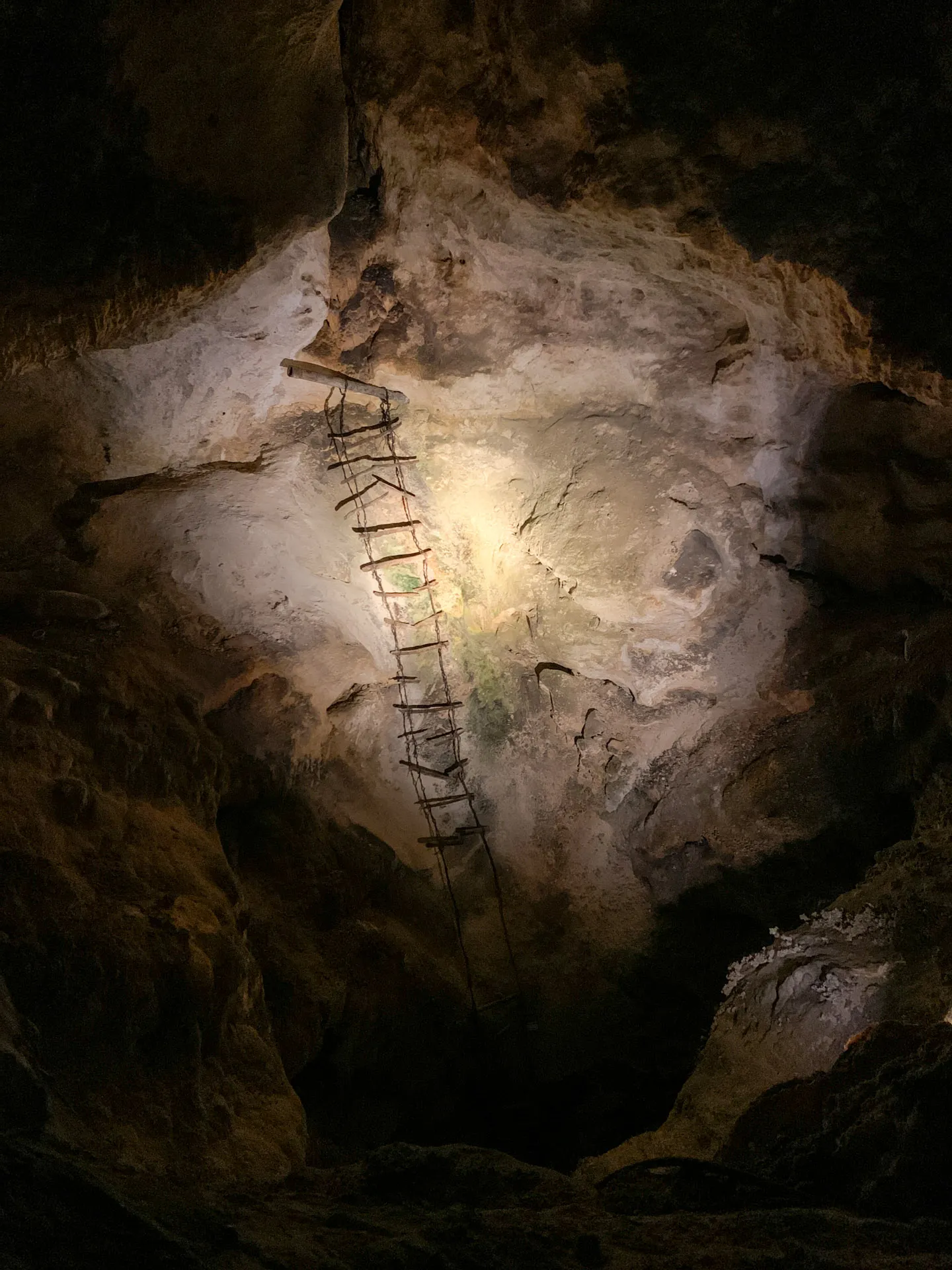
The modern chapter of Carlsbad Caverns began with a young cowboy named Jim White in the early 1890s. While riding the desert plains, White saw what he thought was a plume of black smoke rising from the ground. Curious, he approached and discovered that the “smoke” was a massive cloud of bats emerging from the cave entrance at dusk — an estimated 500,000 Mexican free-tailed bats.
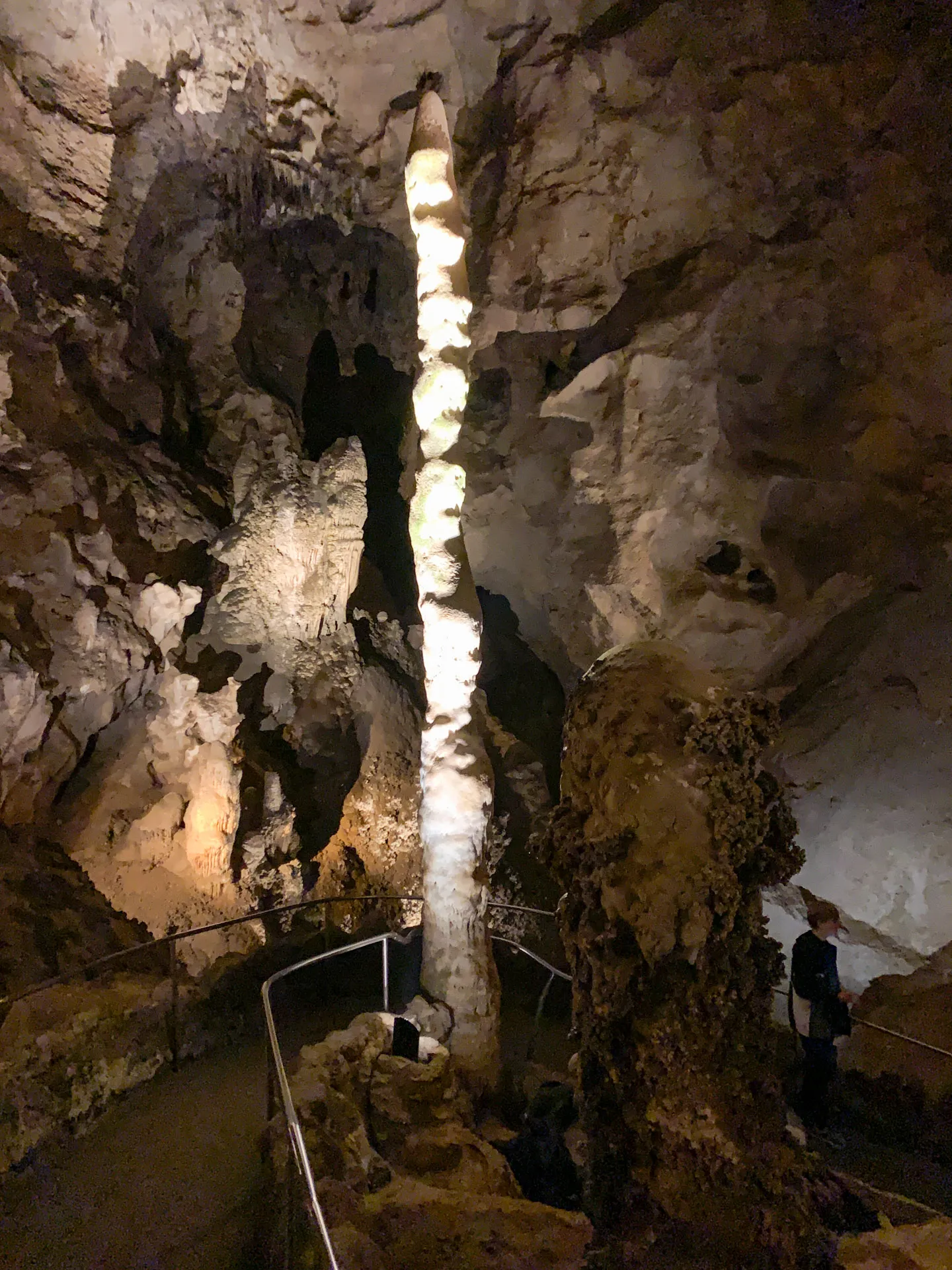
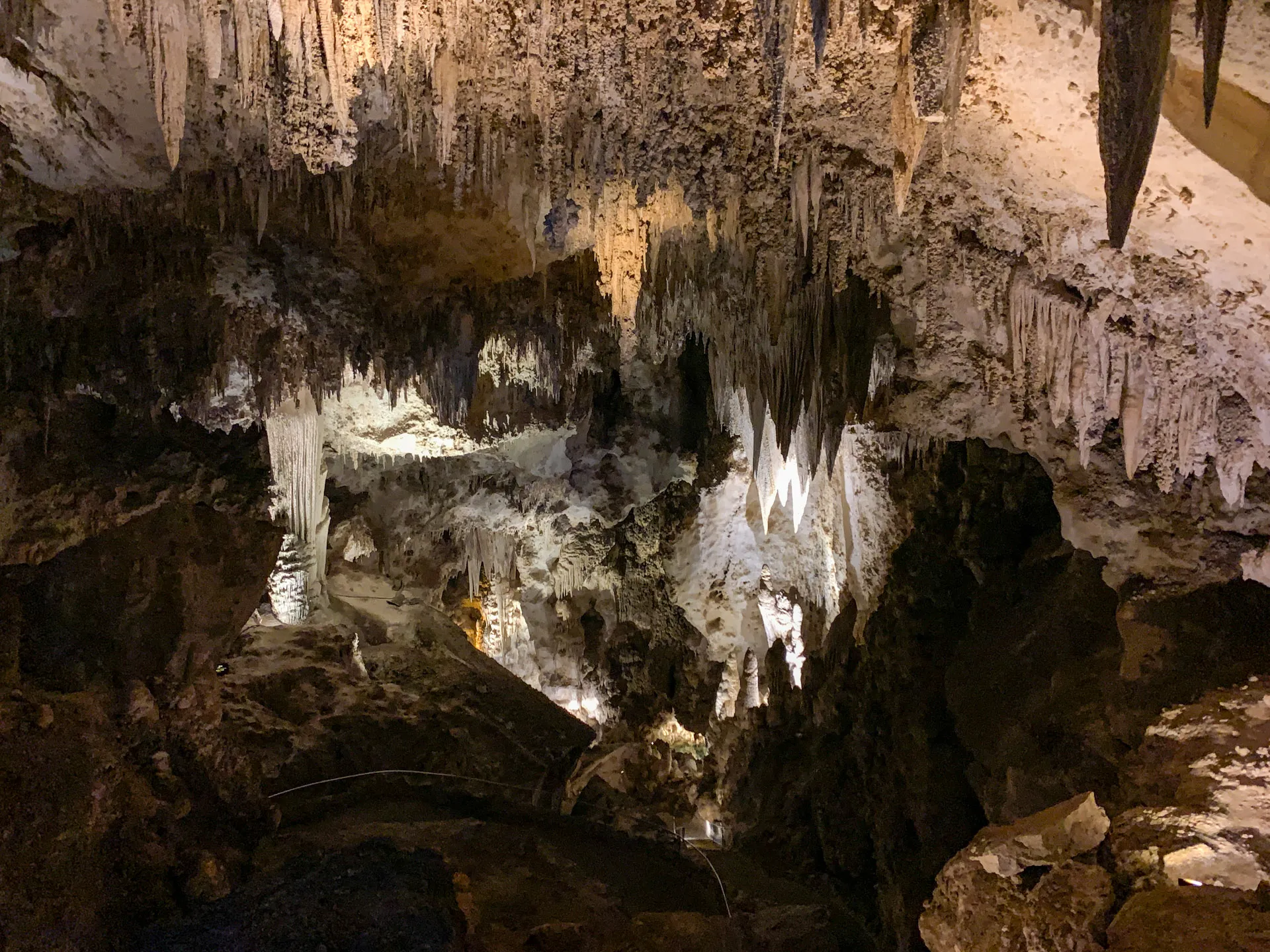
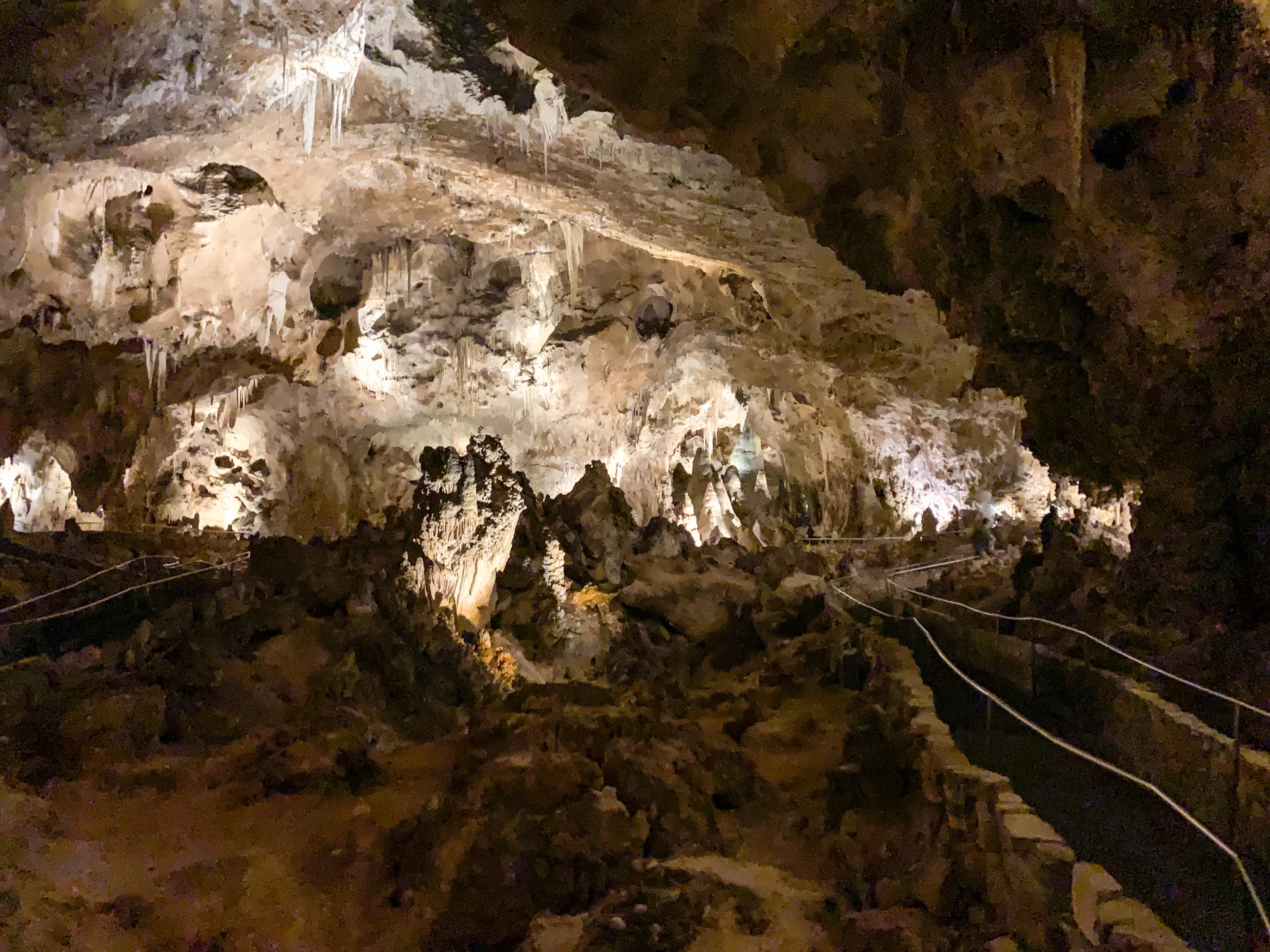
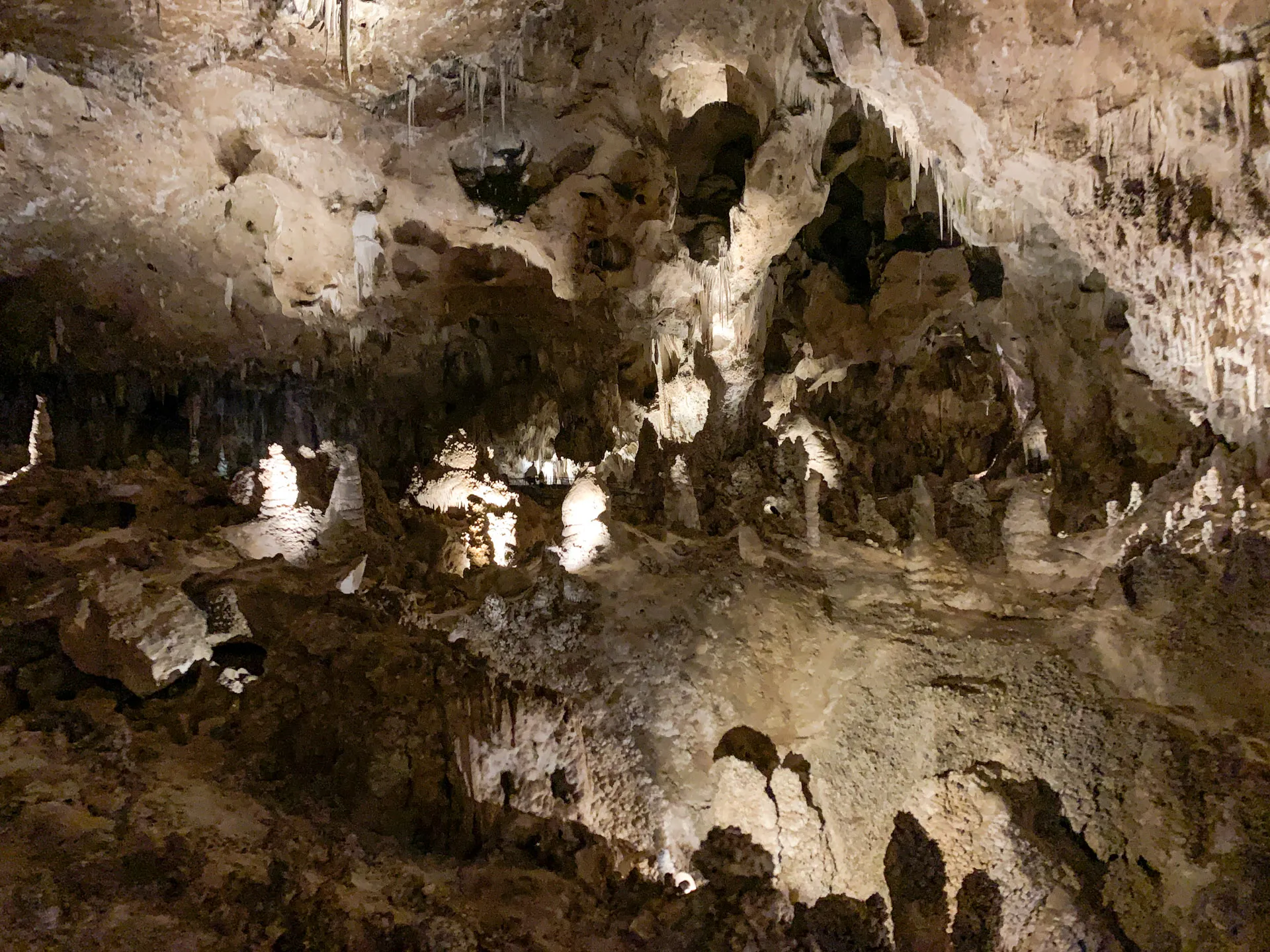
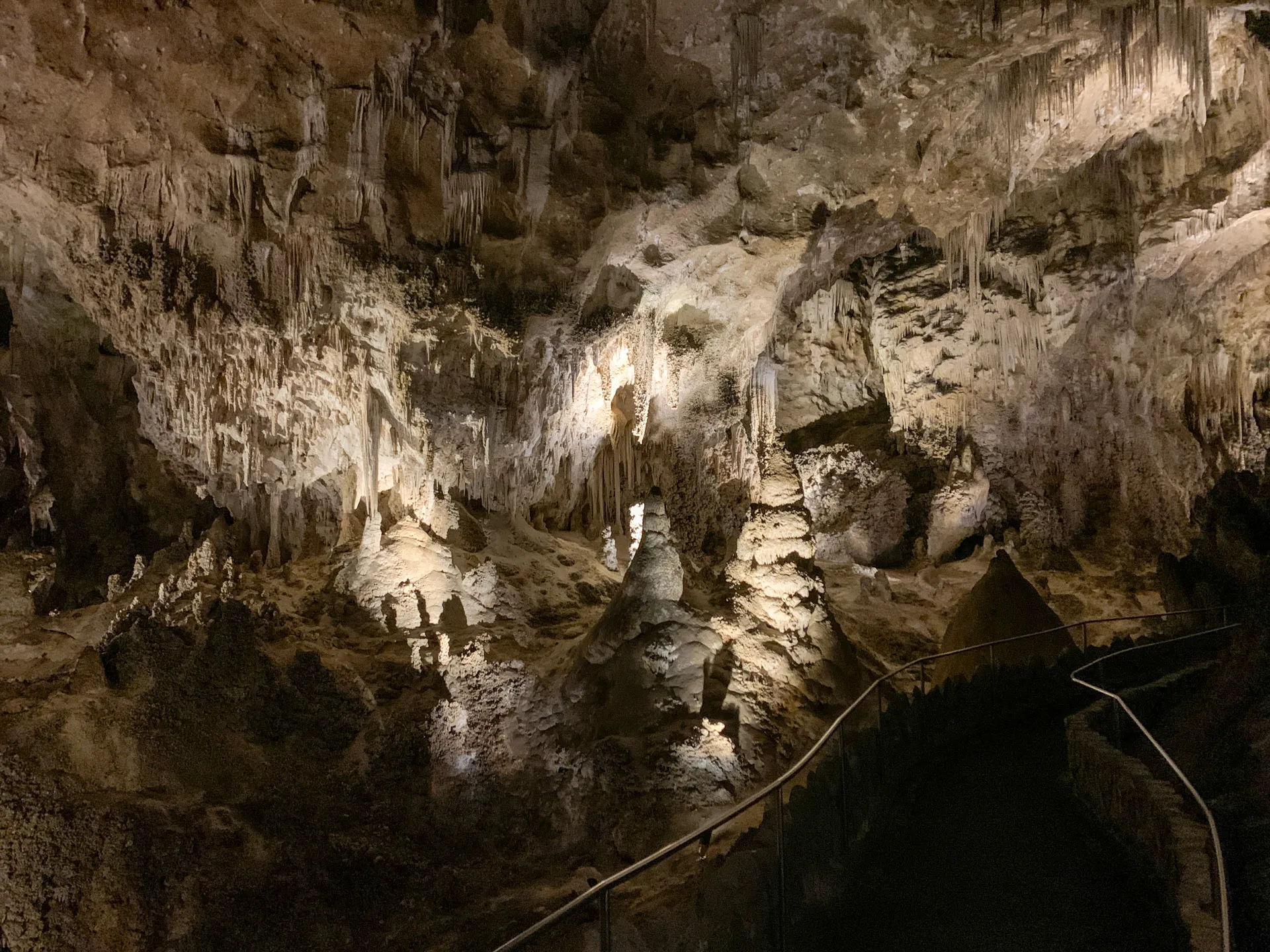
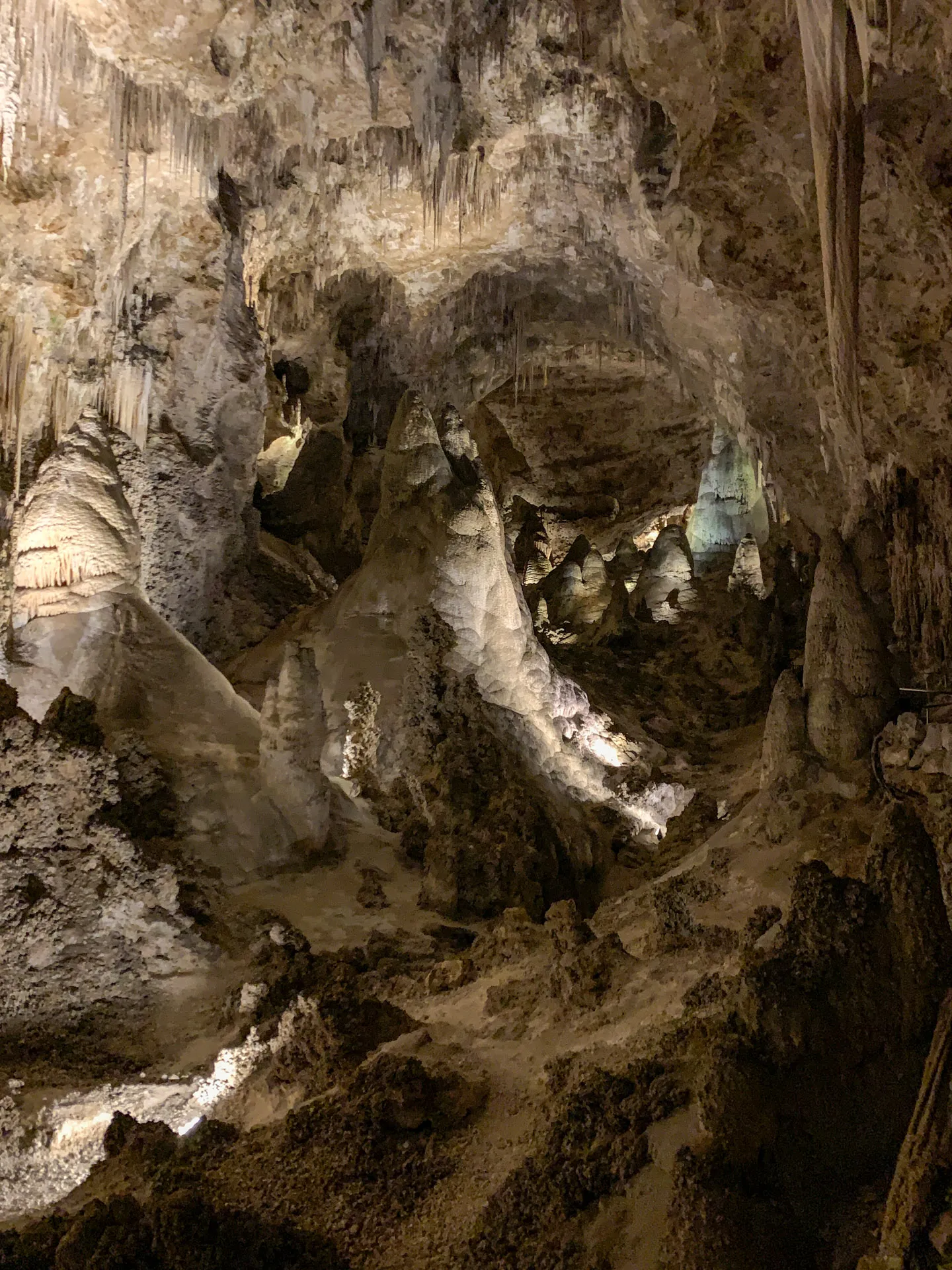
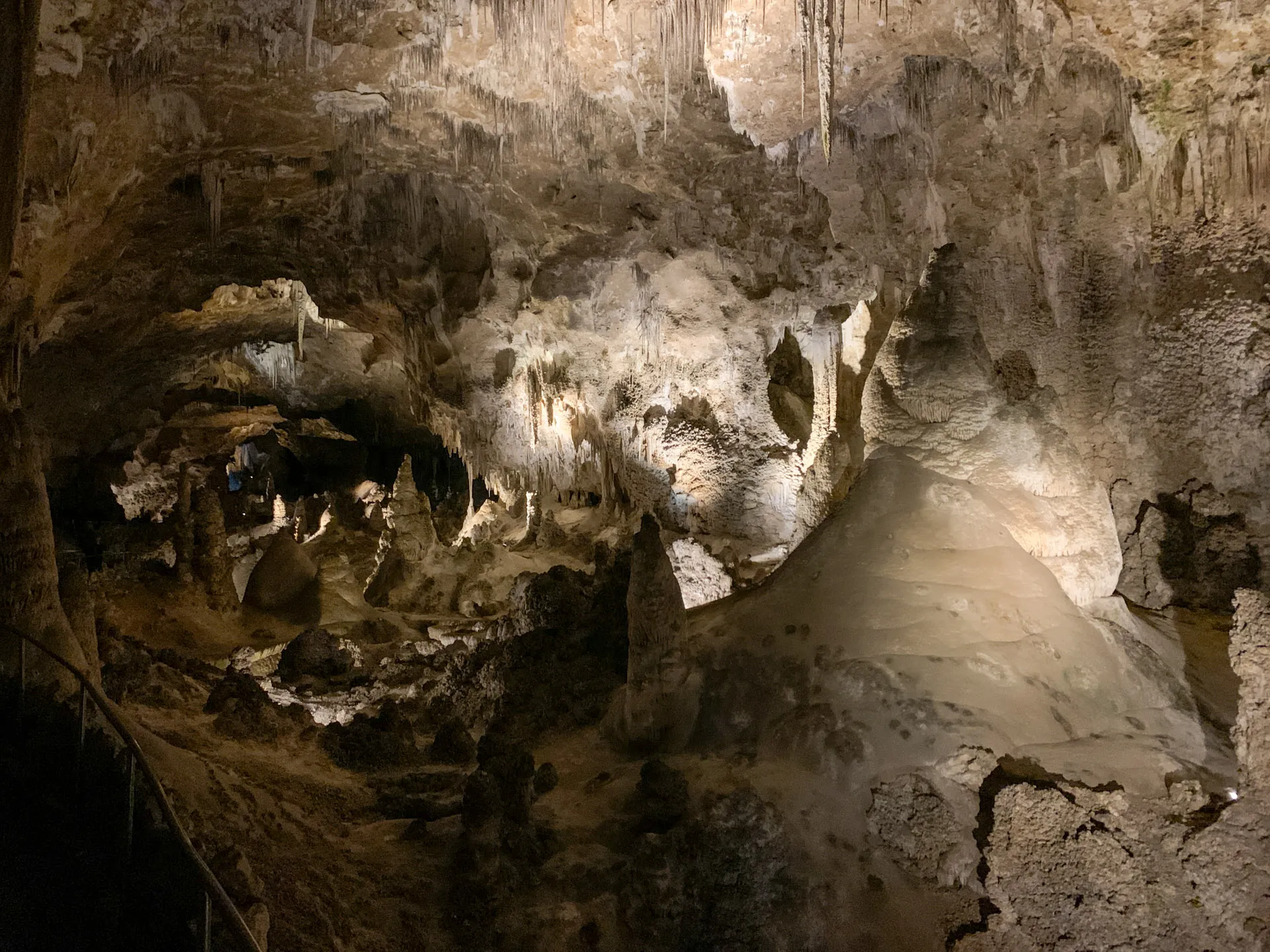
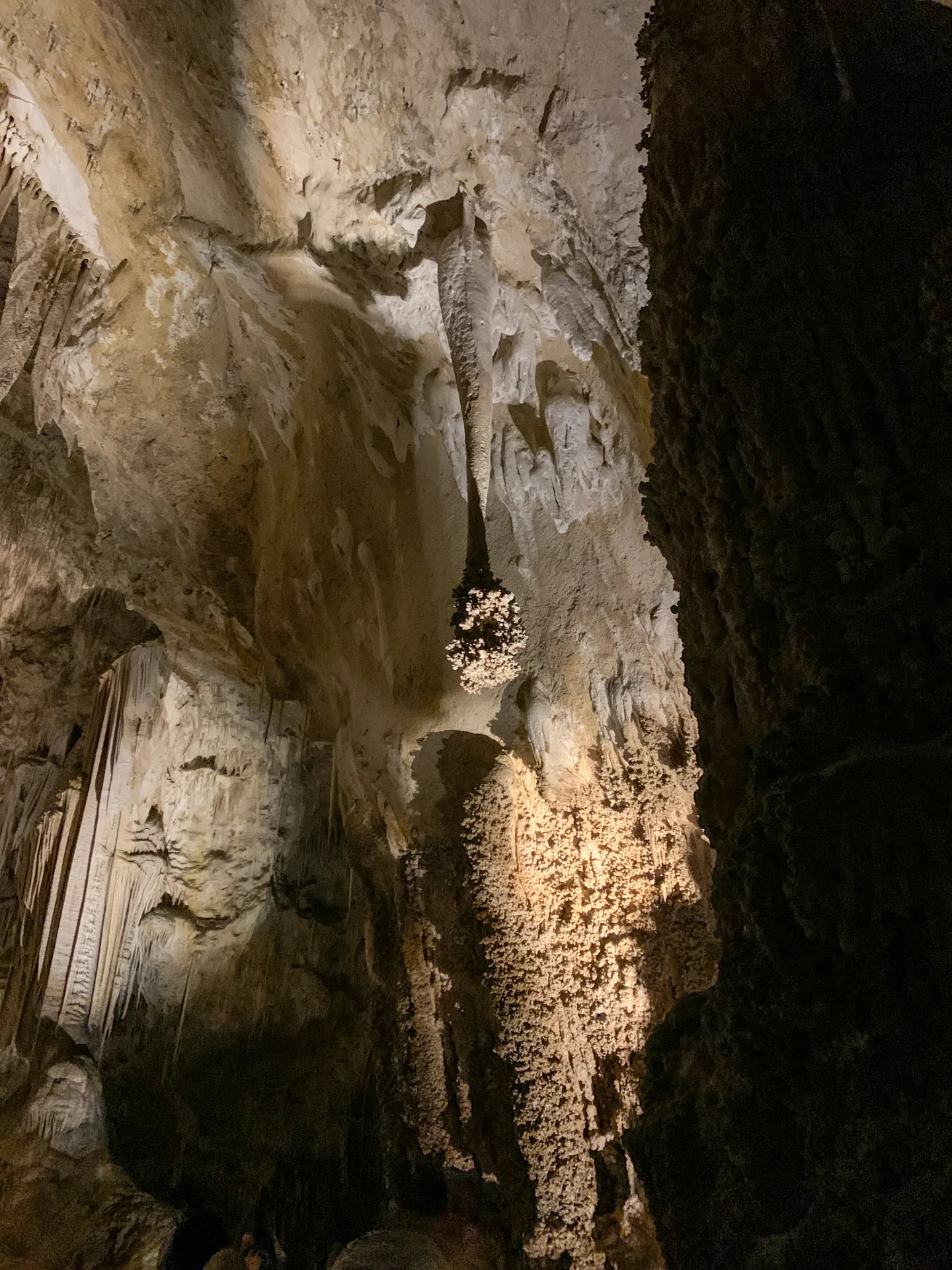
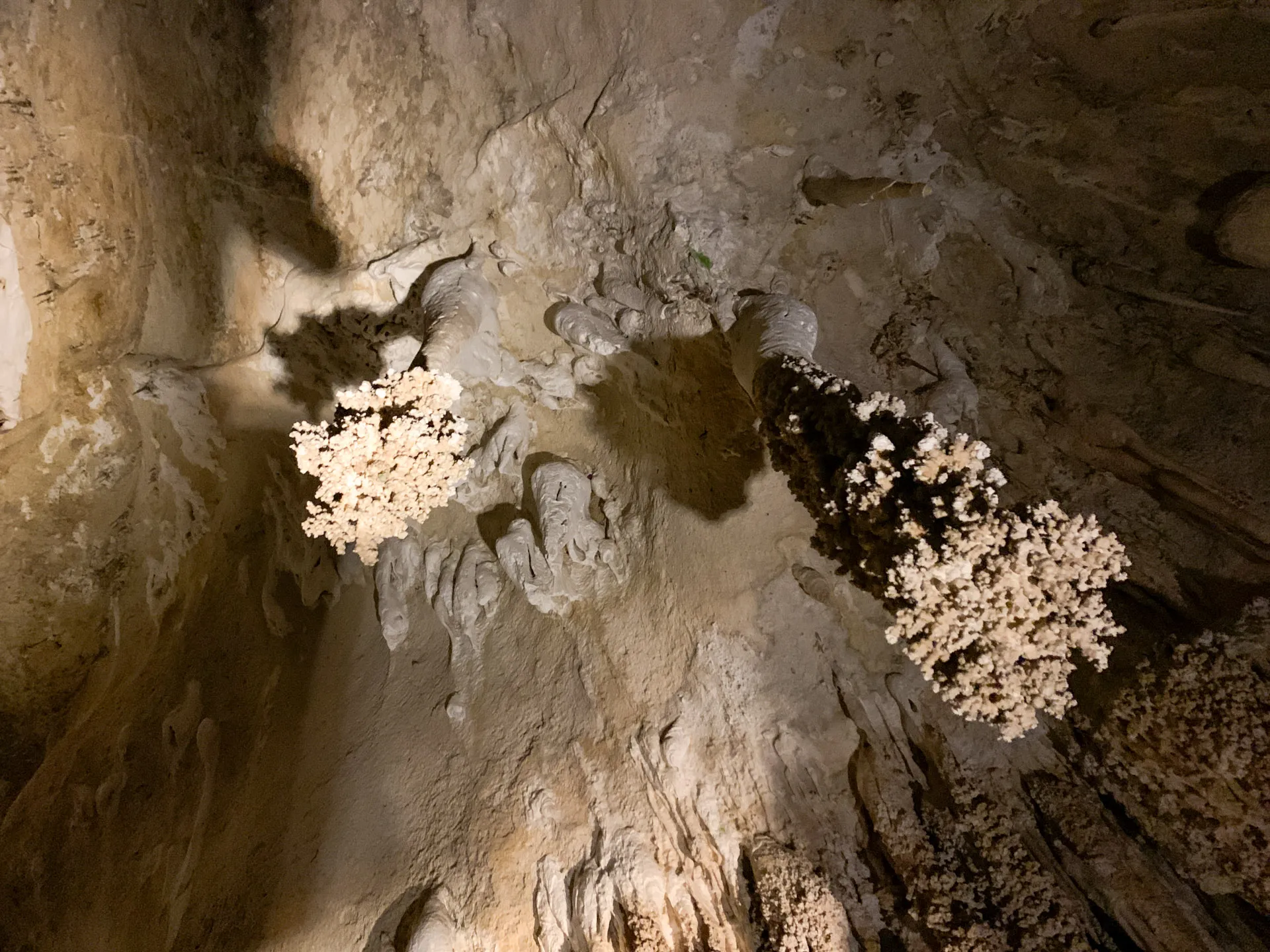
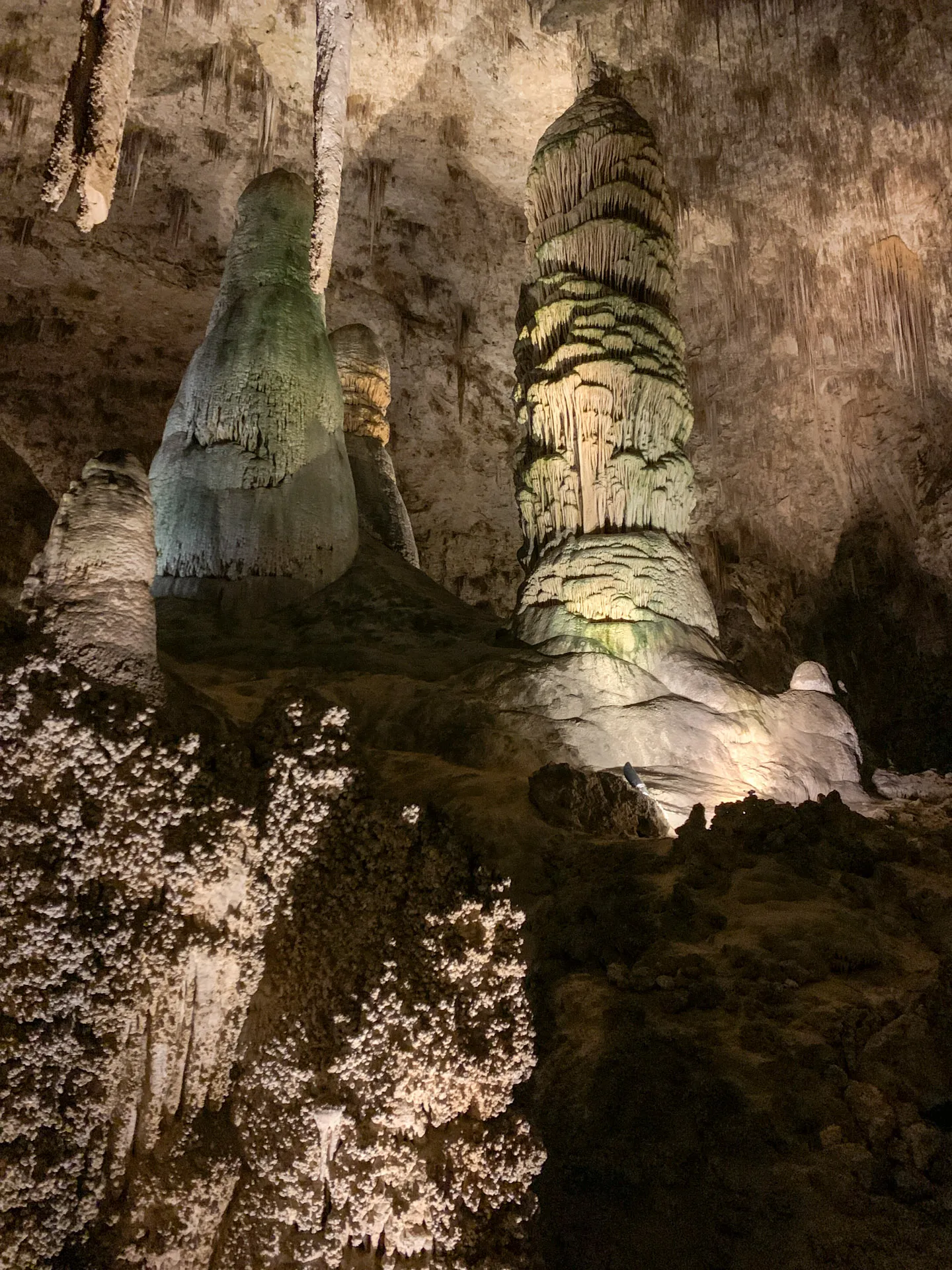
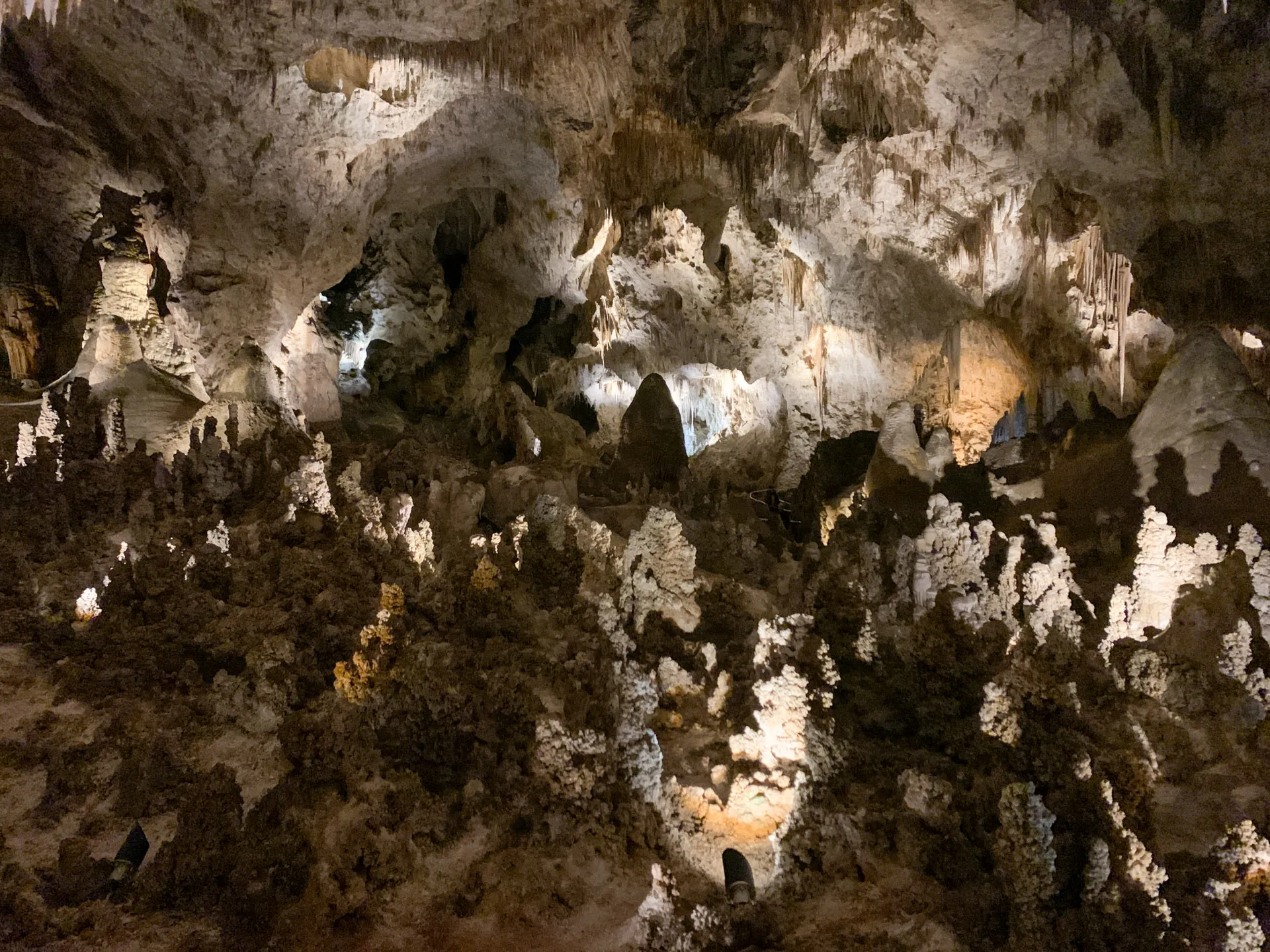
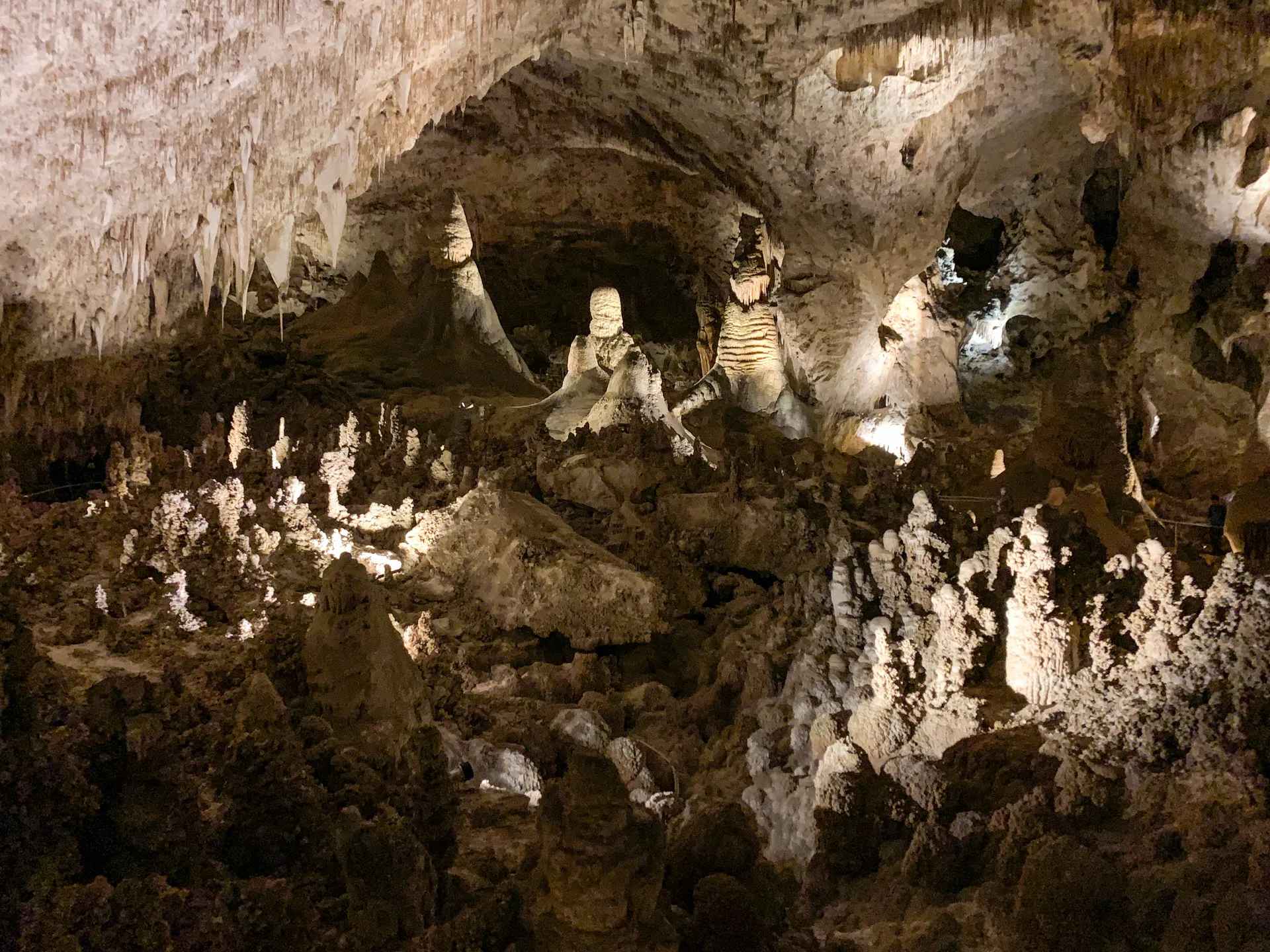
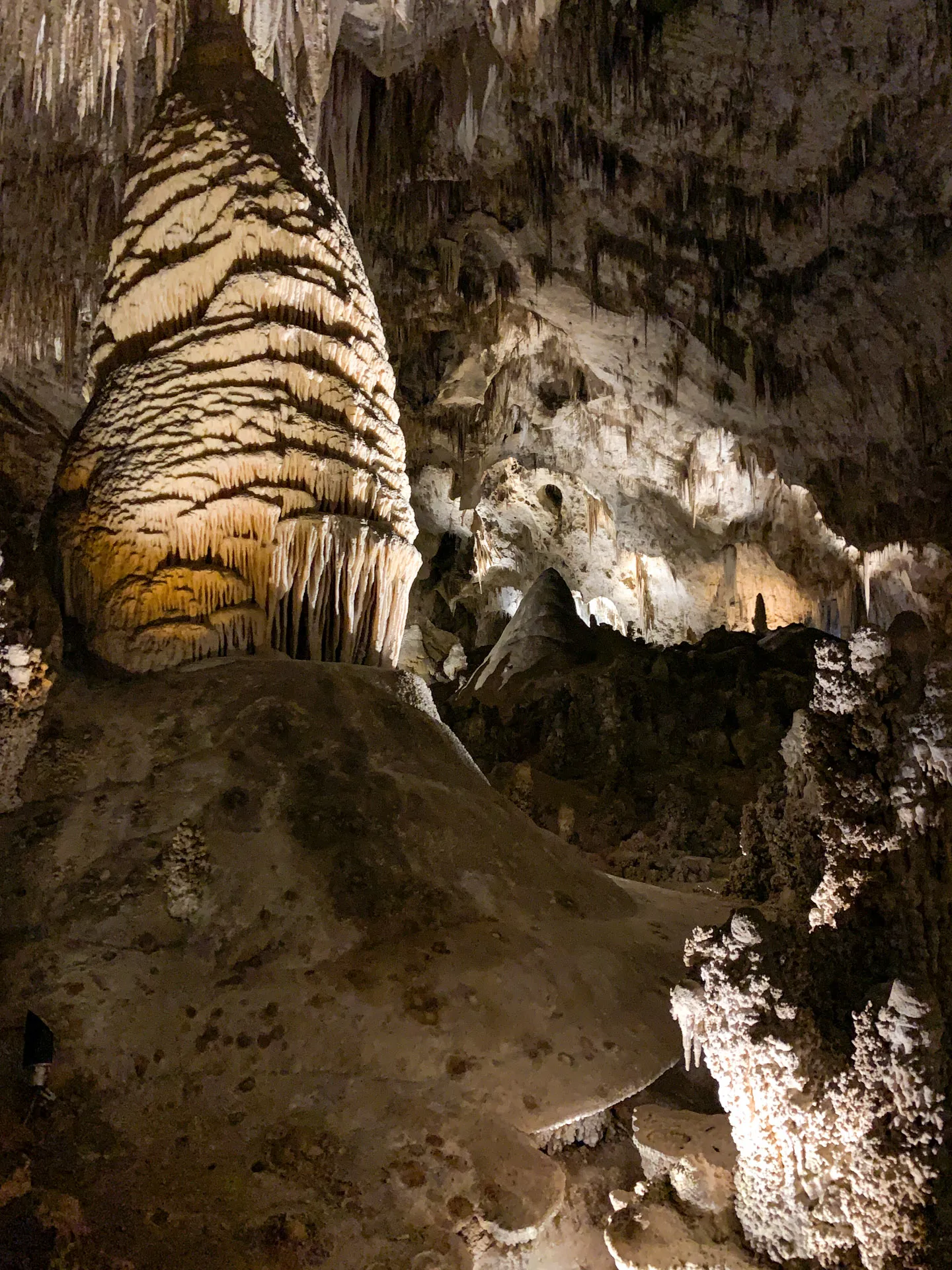
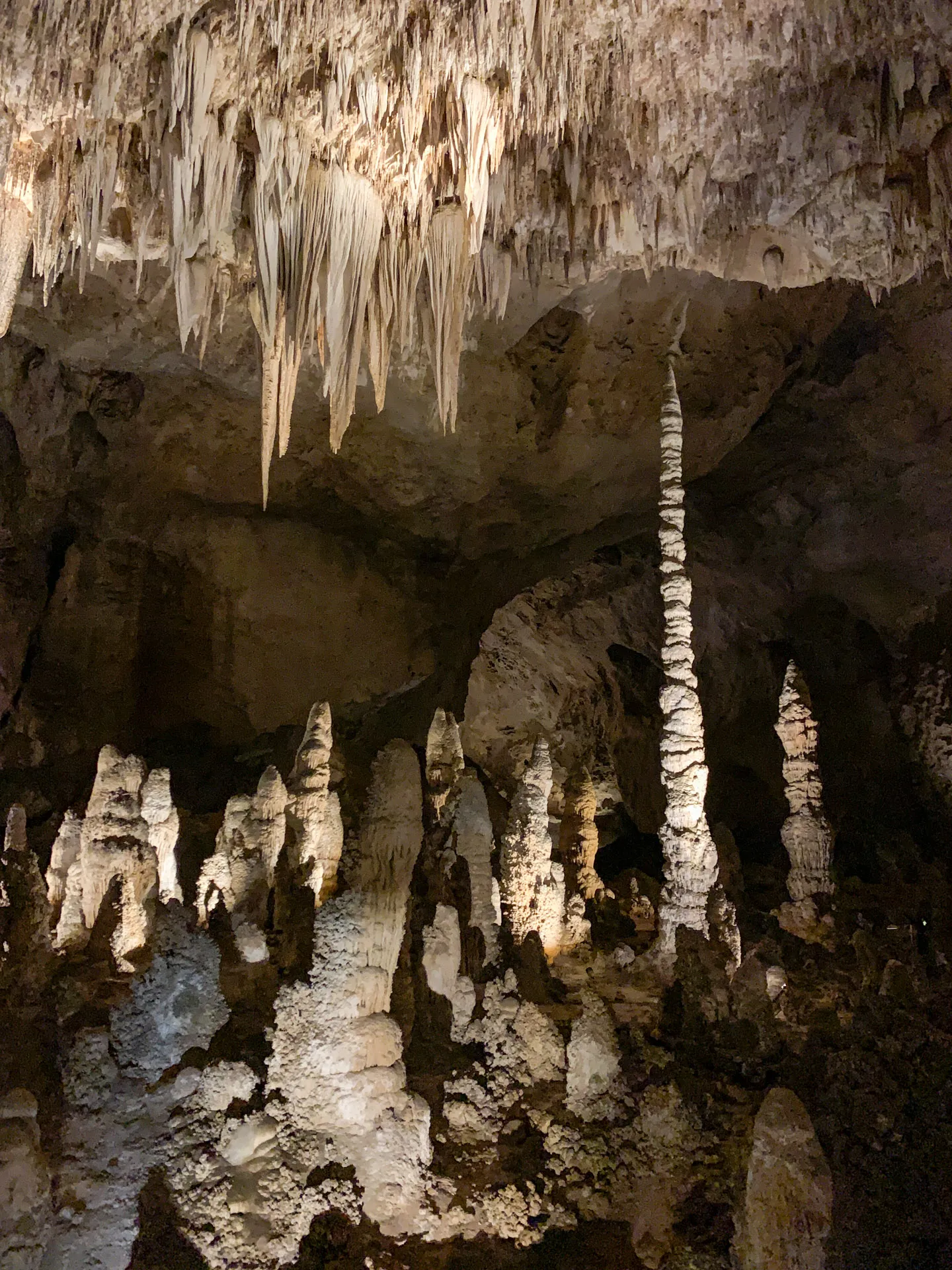
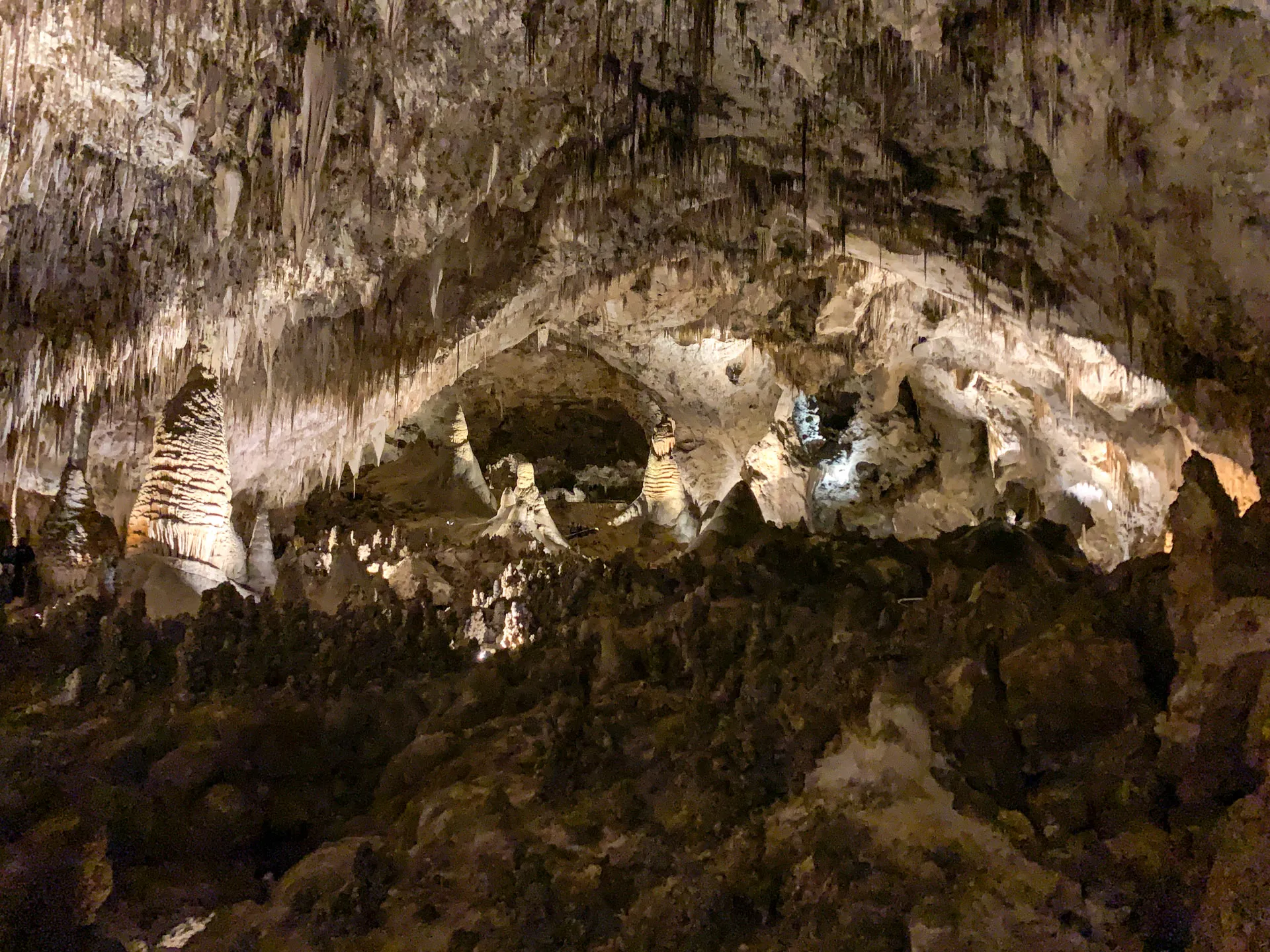
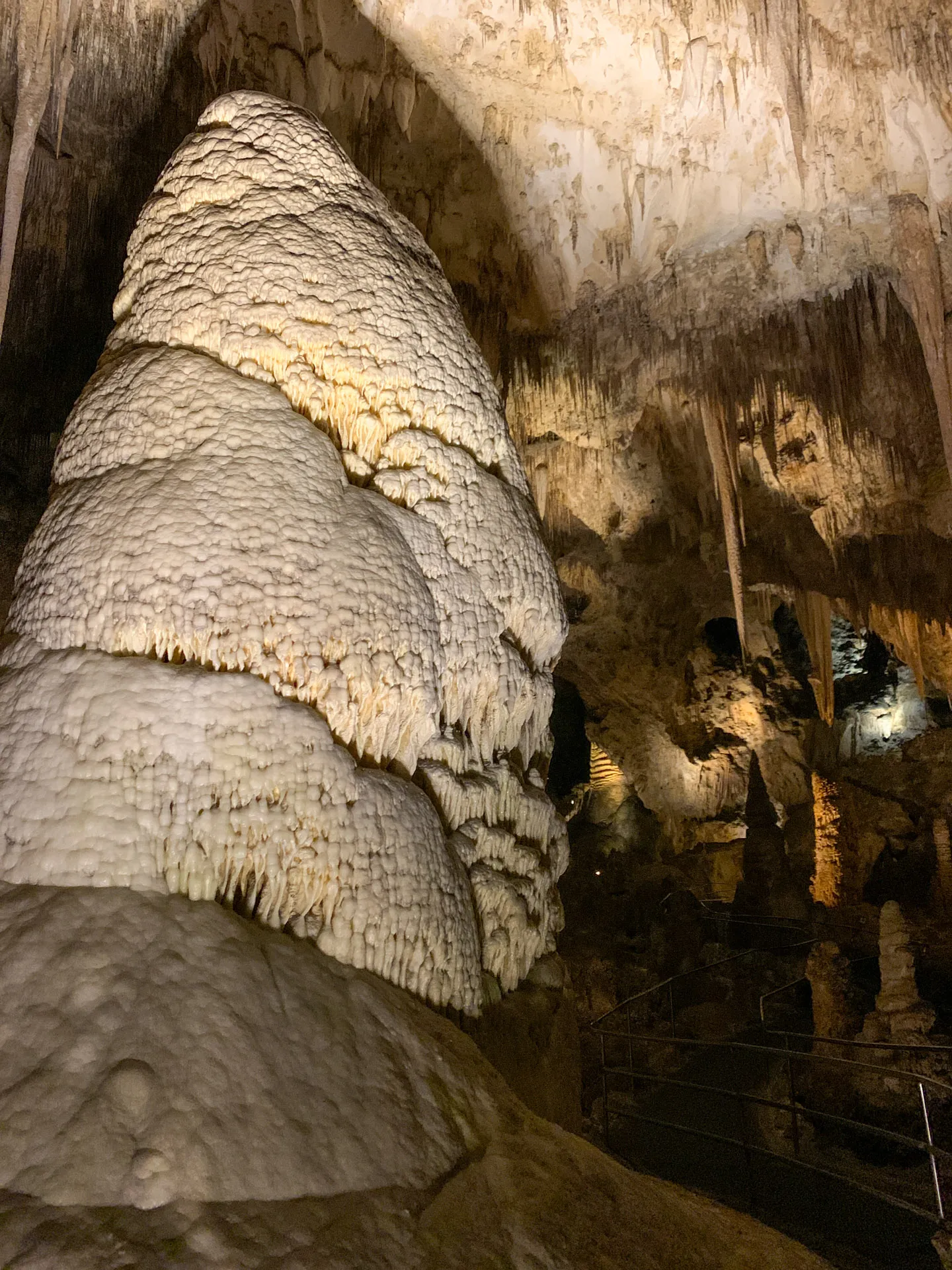
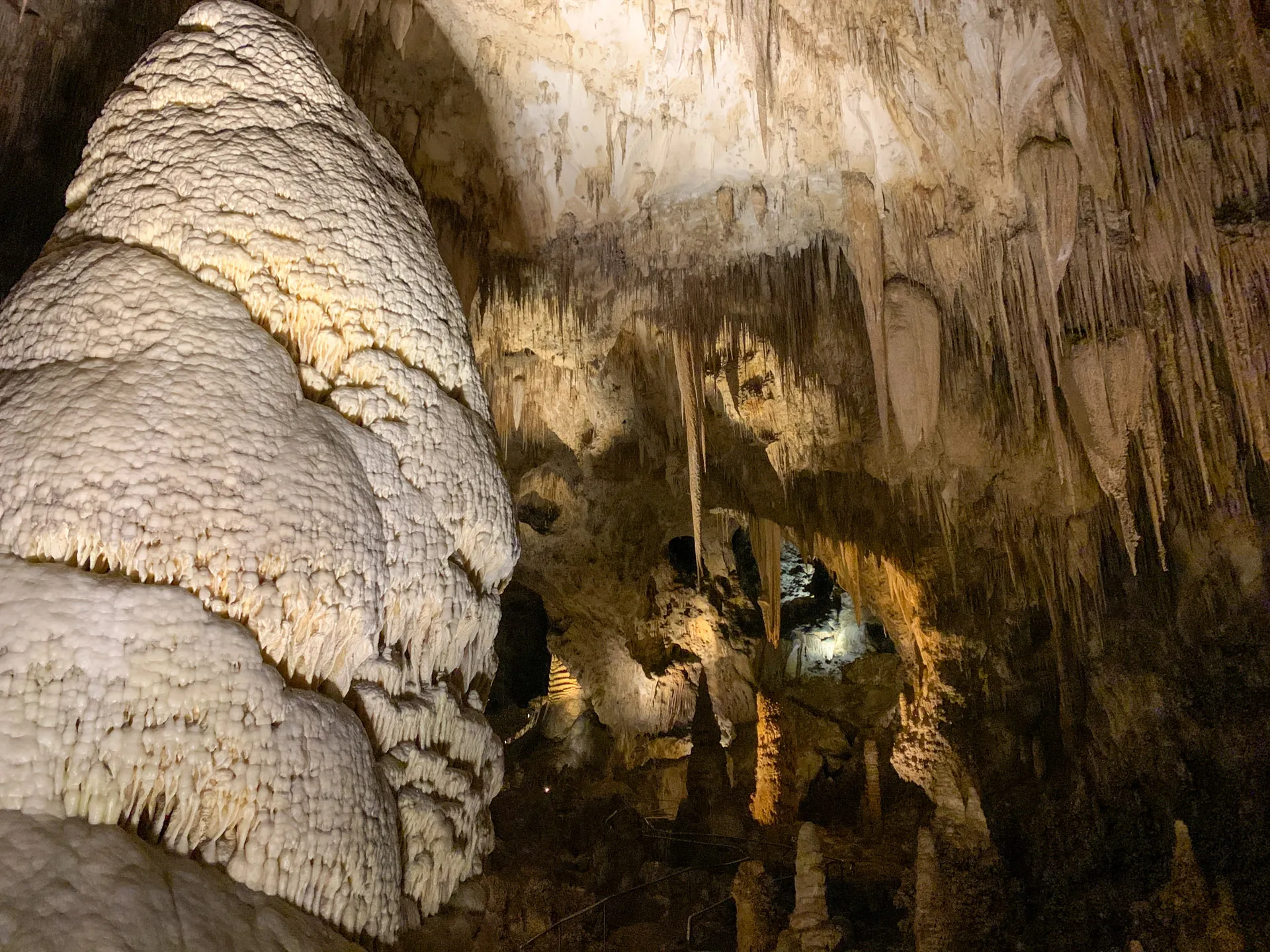
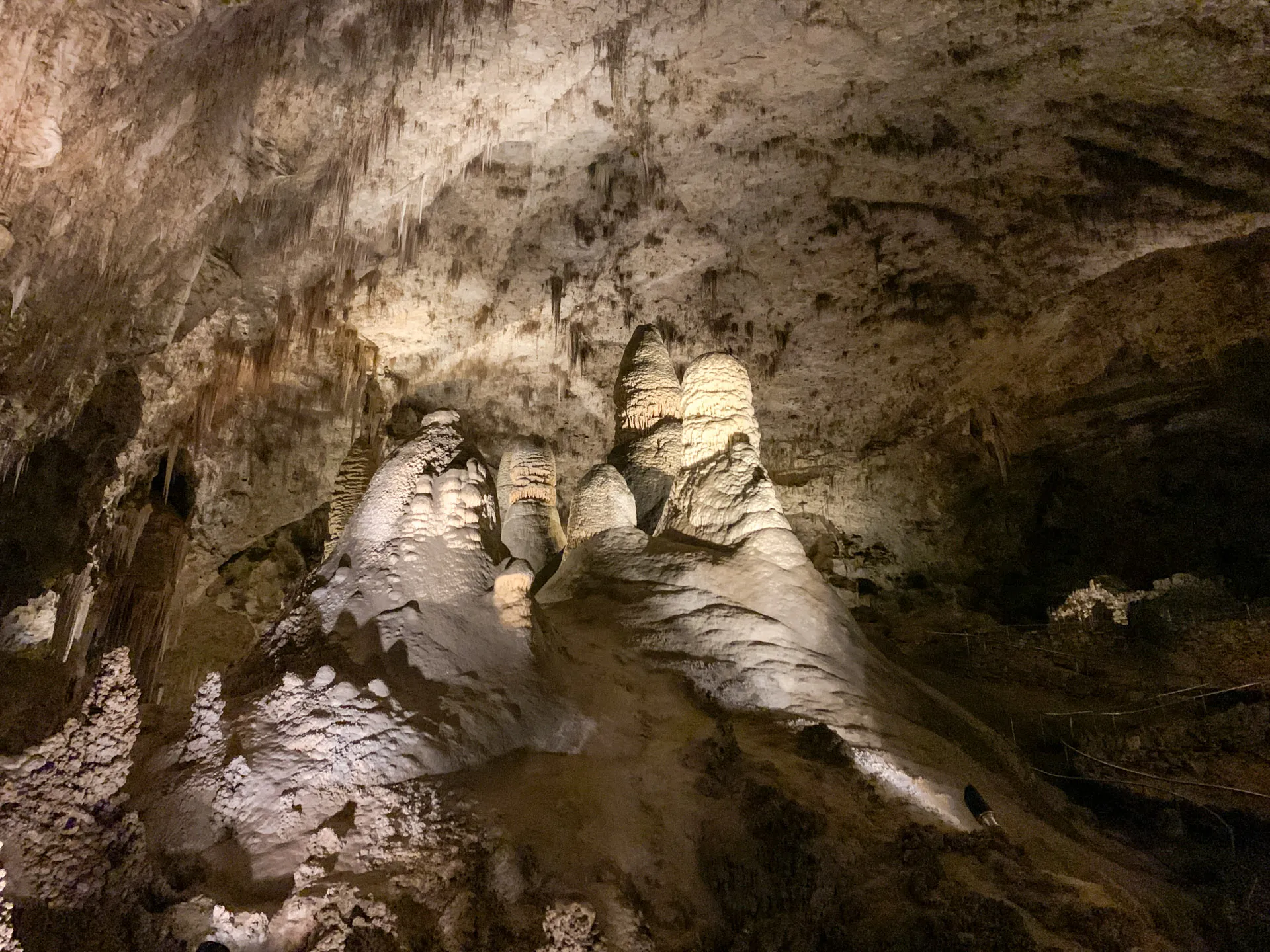
White was compelled to explore. Armed with a homemade wire ladder and a kerosene lantern, he descended into the darkness. What he saw stunned him: massive chambers filled with glistening stalactites and stalagmites, soda straws, draperies, and delicate gypsum crystals. He named the largest room the Big Room — a chamber so vast that it remains one of the largest underground chambers in the world.
In 1923, Carlsbad Caverns was designated a National Monument, and by 1930, it became a National Park. The Civilian Conservation Corps played a crucial role in developing safe pathways, allowing visitors to experience the underground marvel for themselves.
The Caverns Today
Today, Carlsbad Caverns National Park boasts over 119 known caves, with The Big Room being the most famous chamber — a colossal space large enough to fit six football fields. Visitors can descend into this underground wonderland by elevator or hike the steep Natural Entrance Trail, retracing Jim White’s steps.
The caverns remain home to a thriving bat population, which continues to dazzle visitors each summer evening during the bat flight program, a mesmerizing experience where thousands of bats emerge at dusk to hunt insects.
A World Heritage Site
In 1995, Carlsbad Caverns was designated a UNESCO World Heritage Site due to its exceptional geological formations, the unique sulfuric acid dissolution process, and its cultural significance.
Today, Carlsbad Caverns boasts over 119 known caves, with more still being discovered. Visitors can descend more than 750 feet below the surface via an elevator or hike the steep Natural Entrance Trail to experience the scale and wonder Jim White first saw.
🦇 Bats and Natural Wonder Today
Each summer evening, visitors gather at the cavern entrance to witness the Bat Flight, where thousands of Mexican free-tailed bats spiral out of the cave at dusk in search of insects. It’s a timeless ritual — the same sight Jim White saw over a century ago — connecting modern explorers to the ancient rhythms of nature.
Heading into the Darkness
As I headed toward the entrance of the caverns, I was reminded that coming in winter means you don’t get to see the bats. The opening of the caverns has an amphitheater to watch the bats exit the caverns in the summer evenings.
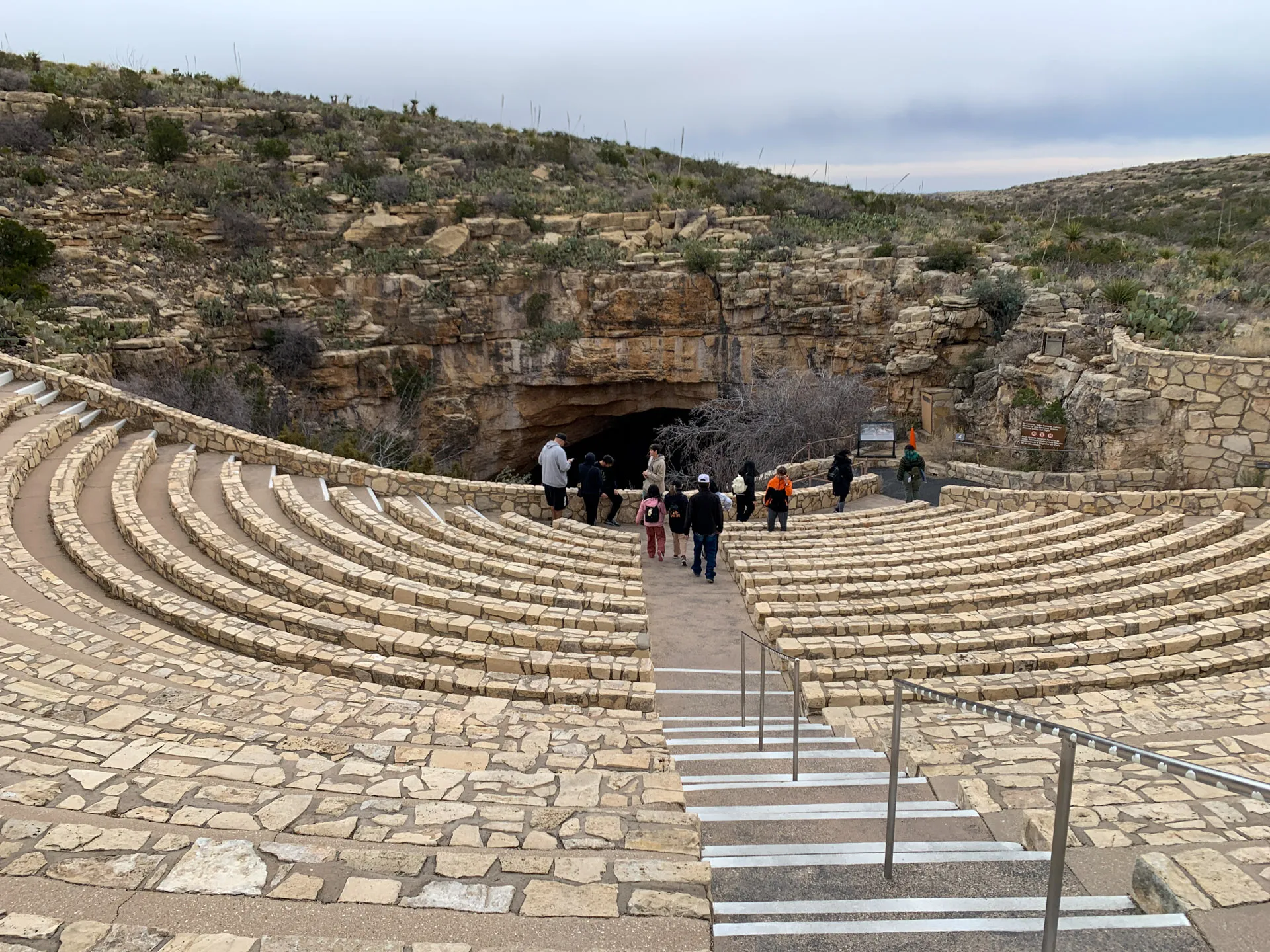
Immediately, I was struck by the size of the opening.

But the decent had just begun. To reach the Big Room, I would have to climb down the equivalent of 75 stories. Once I passed the mouth of the opening, I was amazed at how much further I had to go to be inside.

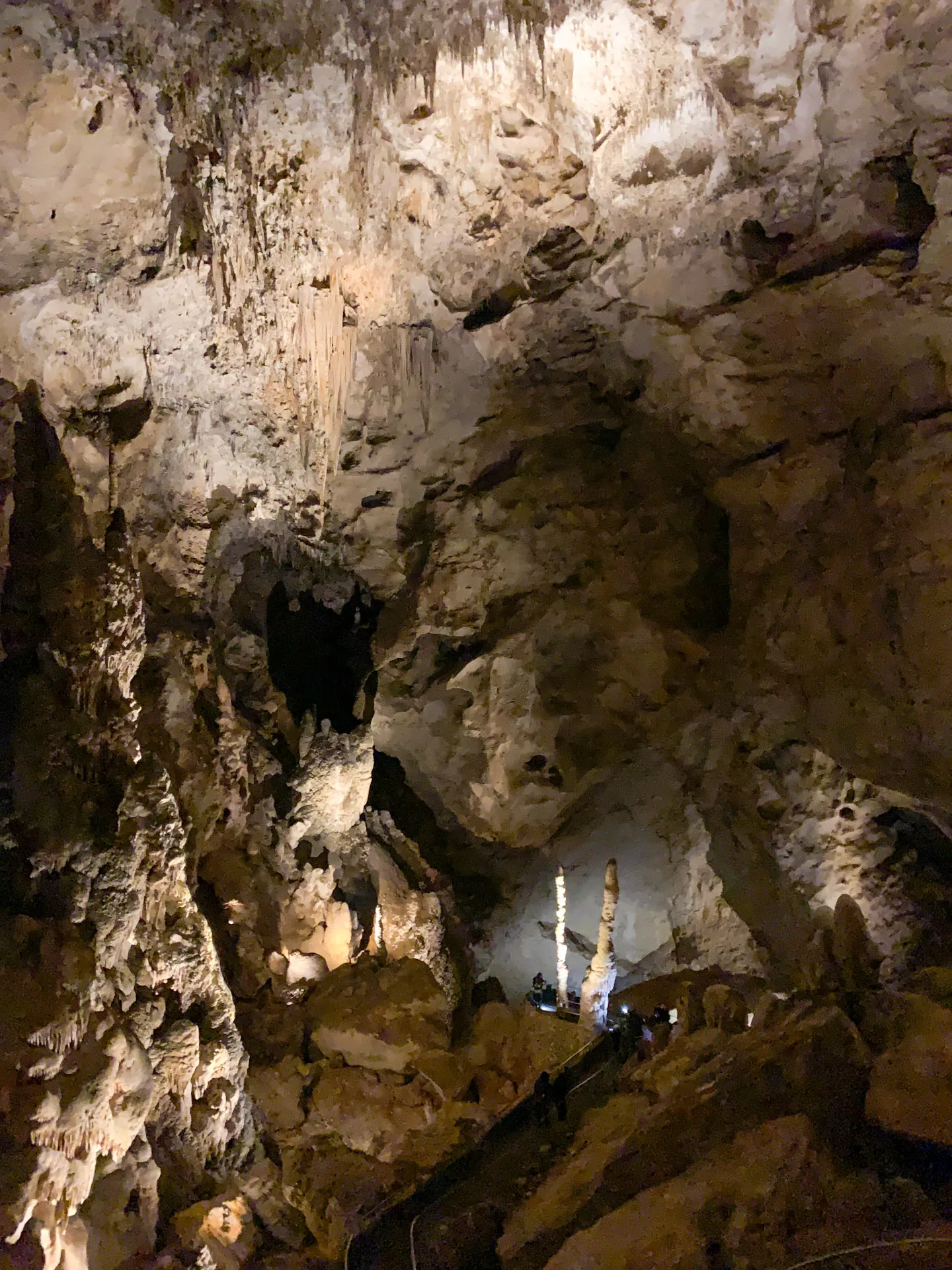
Once inside, there was still some natural light for a while and I began to get a feel for the massive scale of these rooms underground.

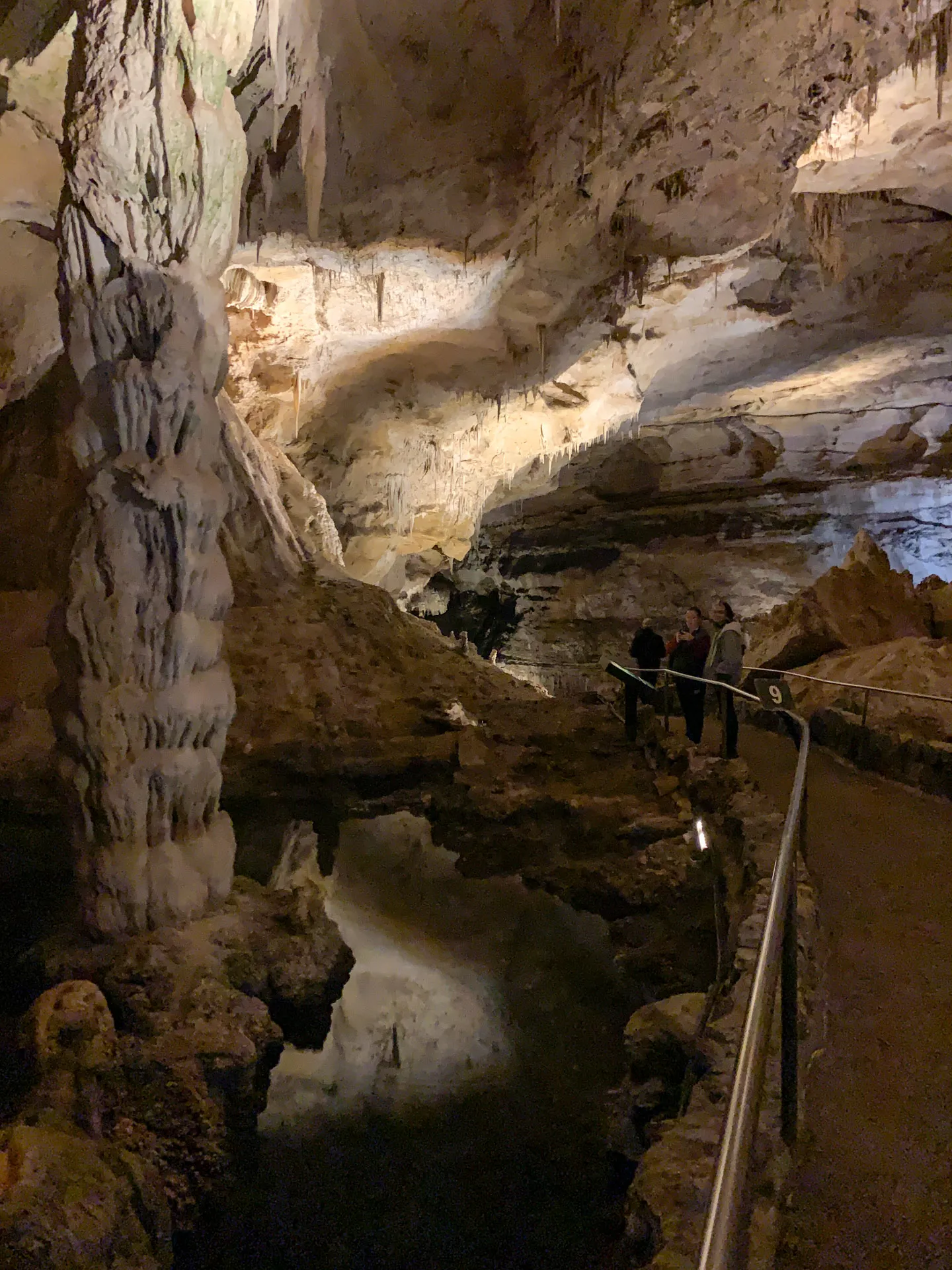
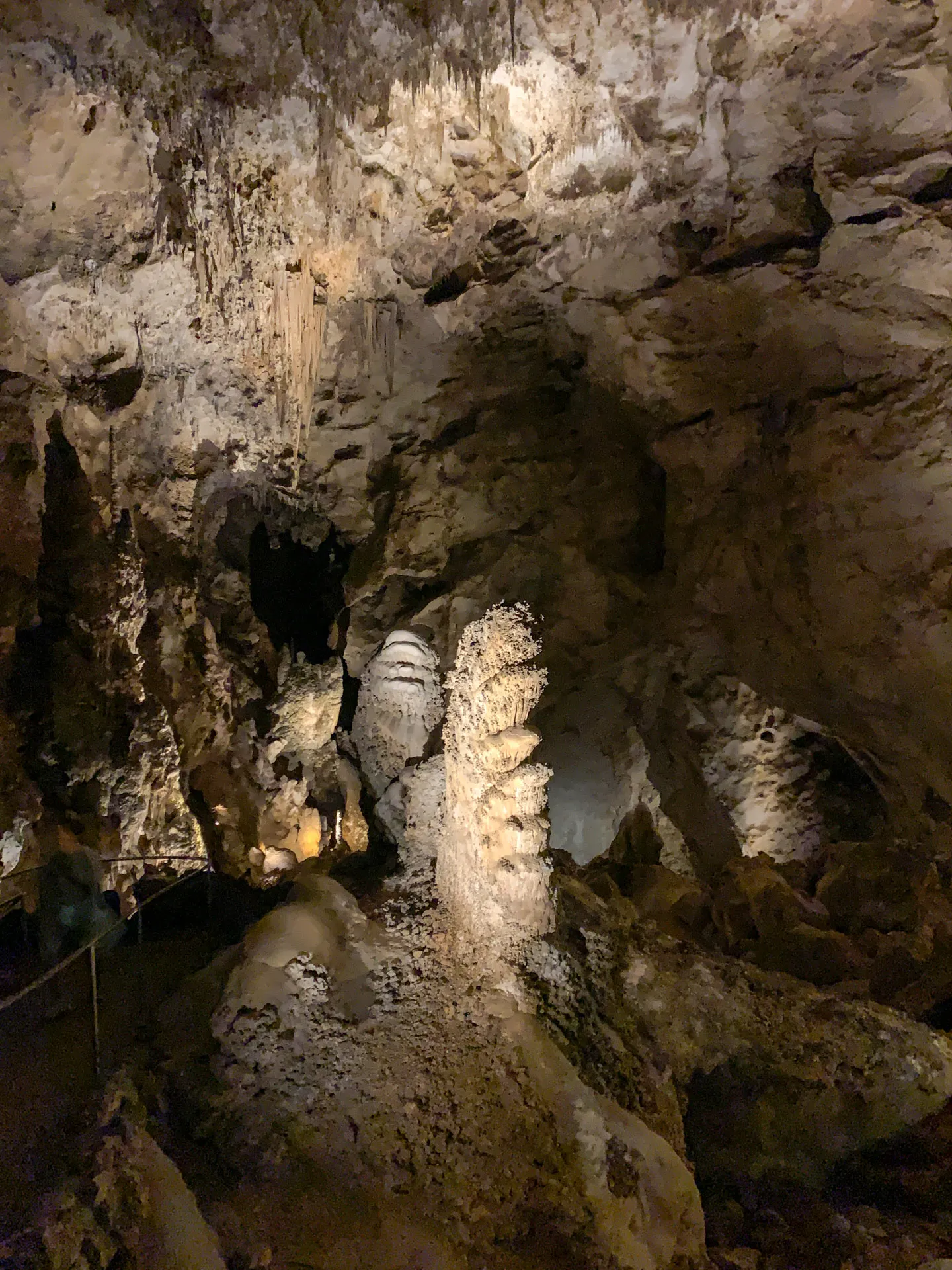
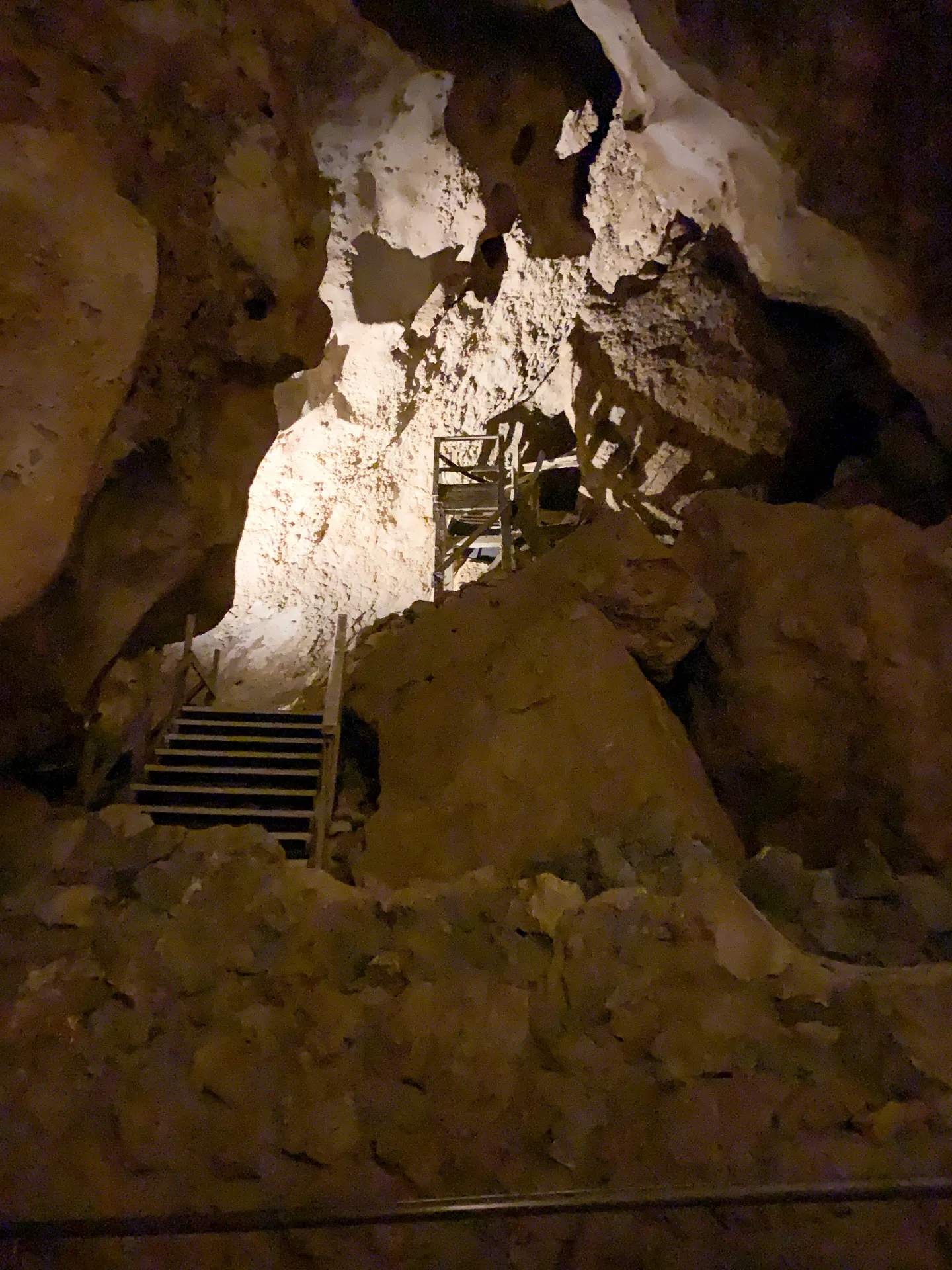
The path winds steeply downward through narrow switchbacks and rocky walls. The smell of damp earth and limestone surrounded me as I passed by jagged rock formations and shadowy crevices.
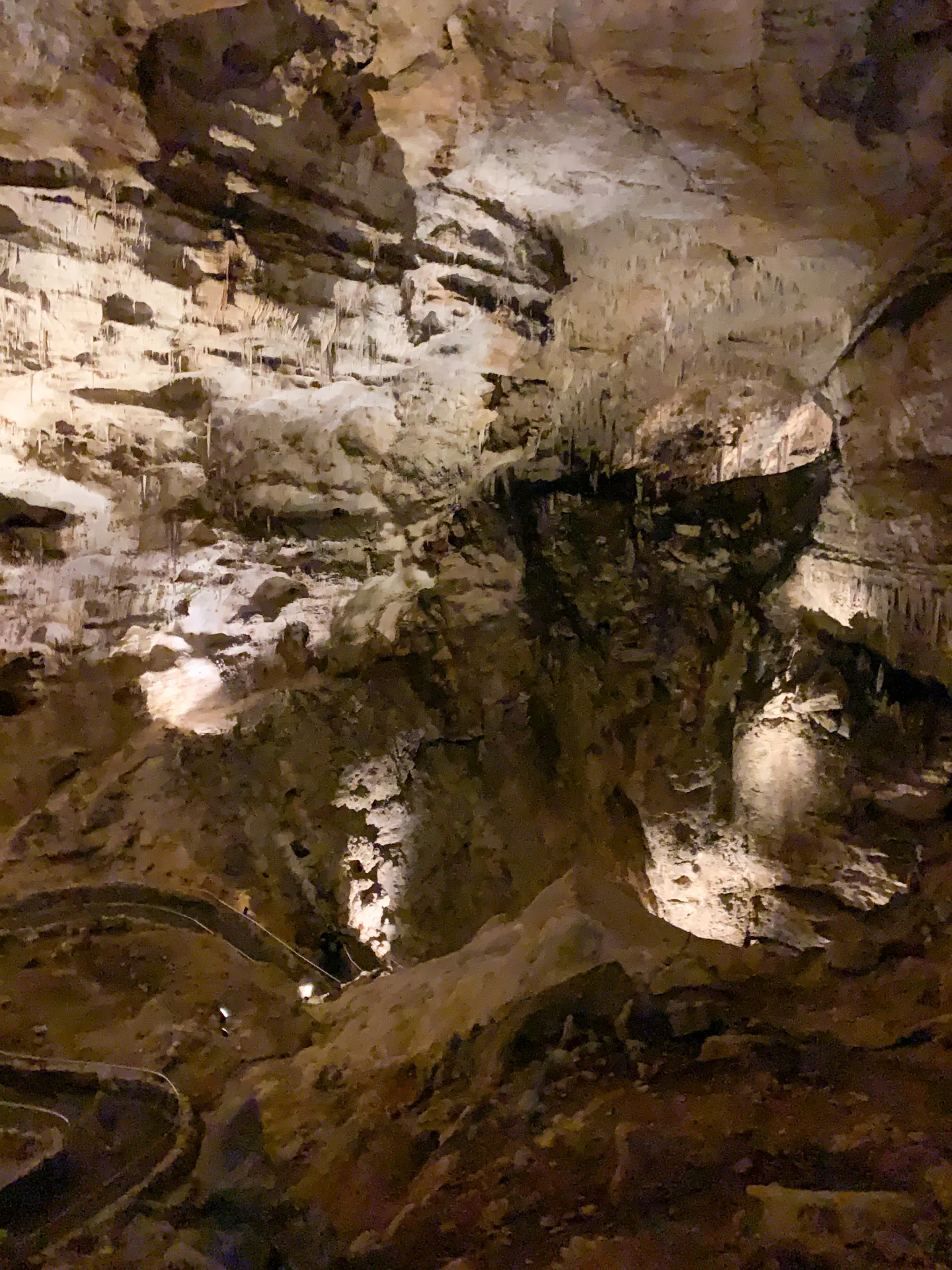
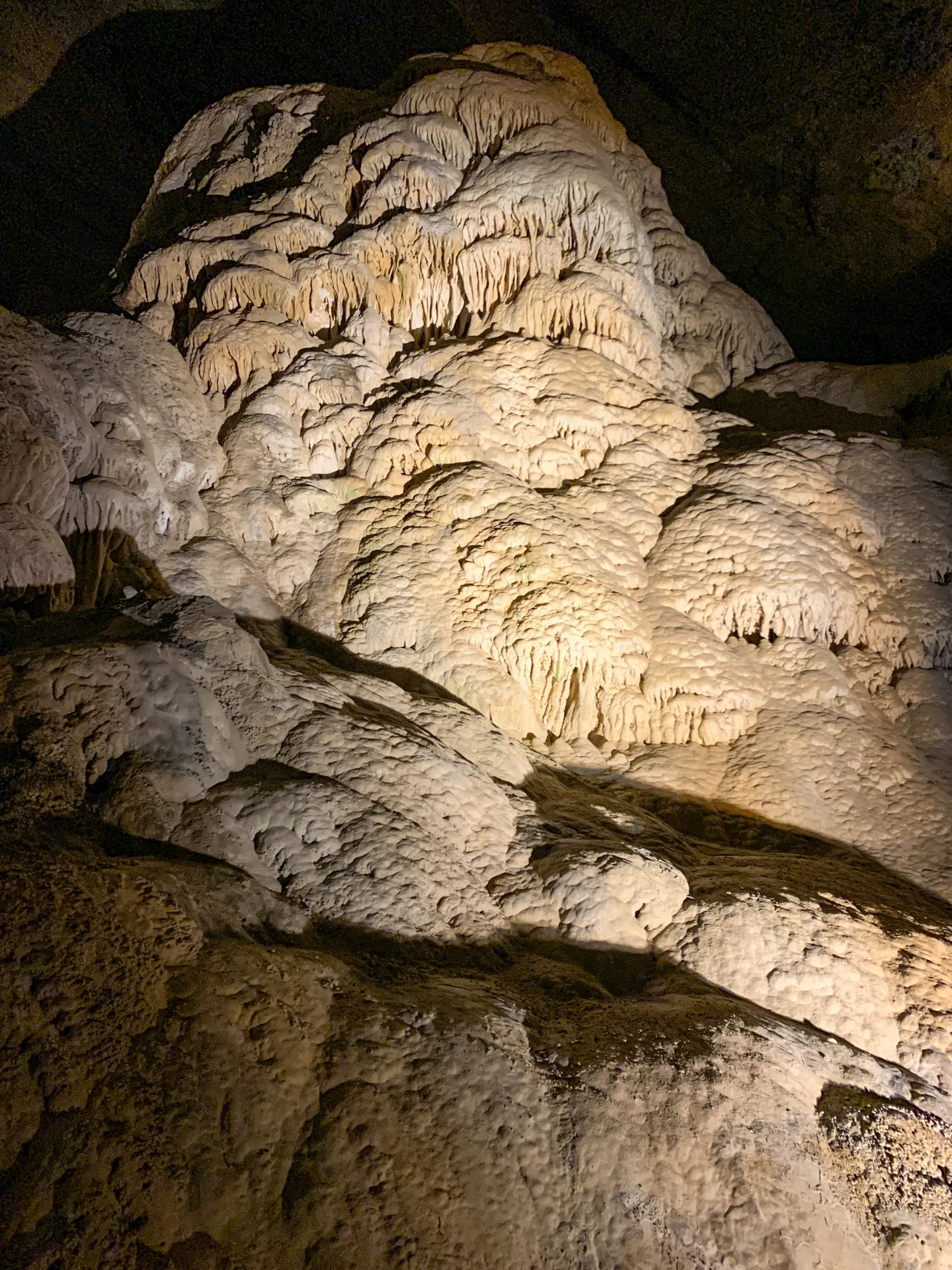
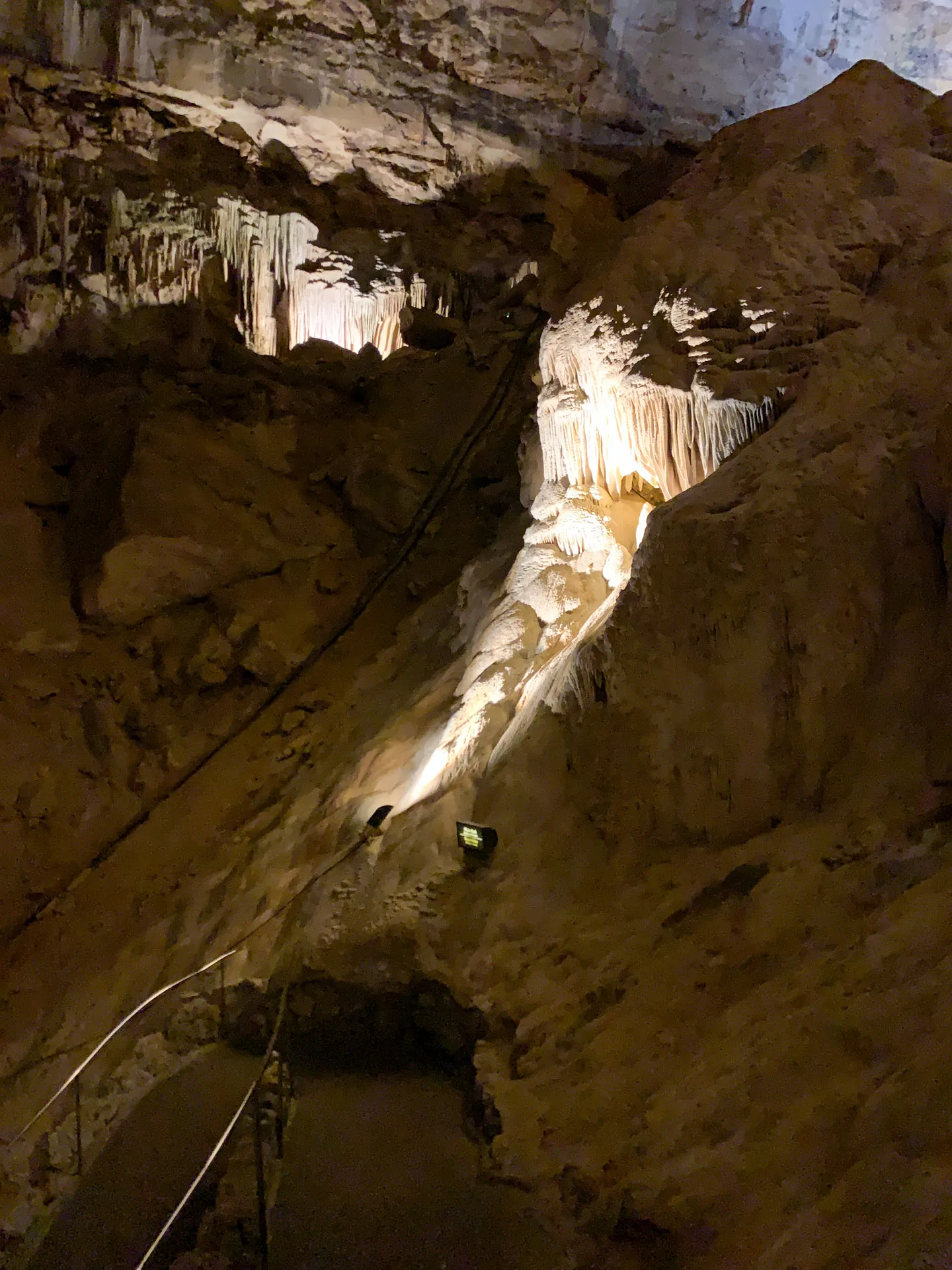
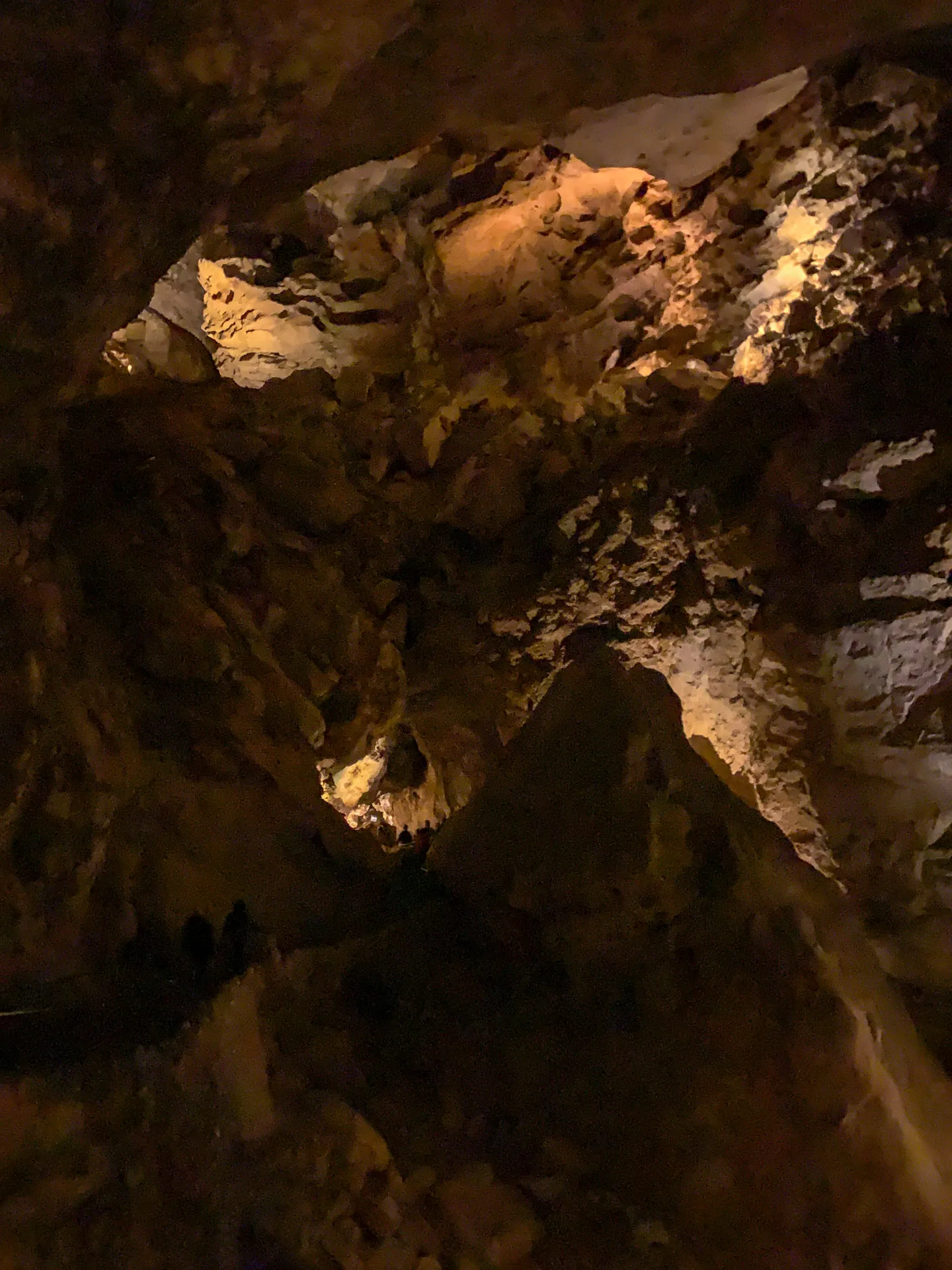
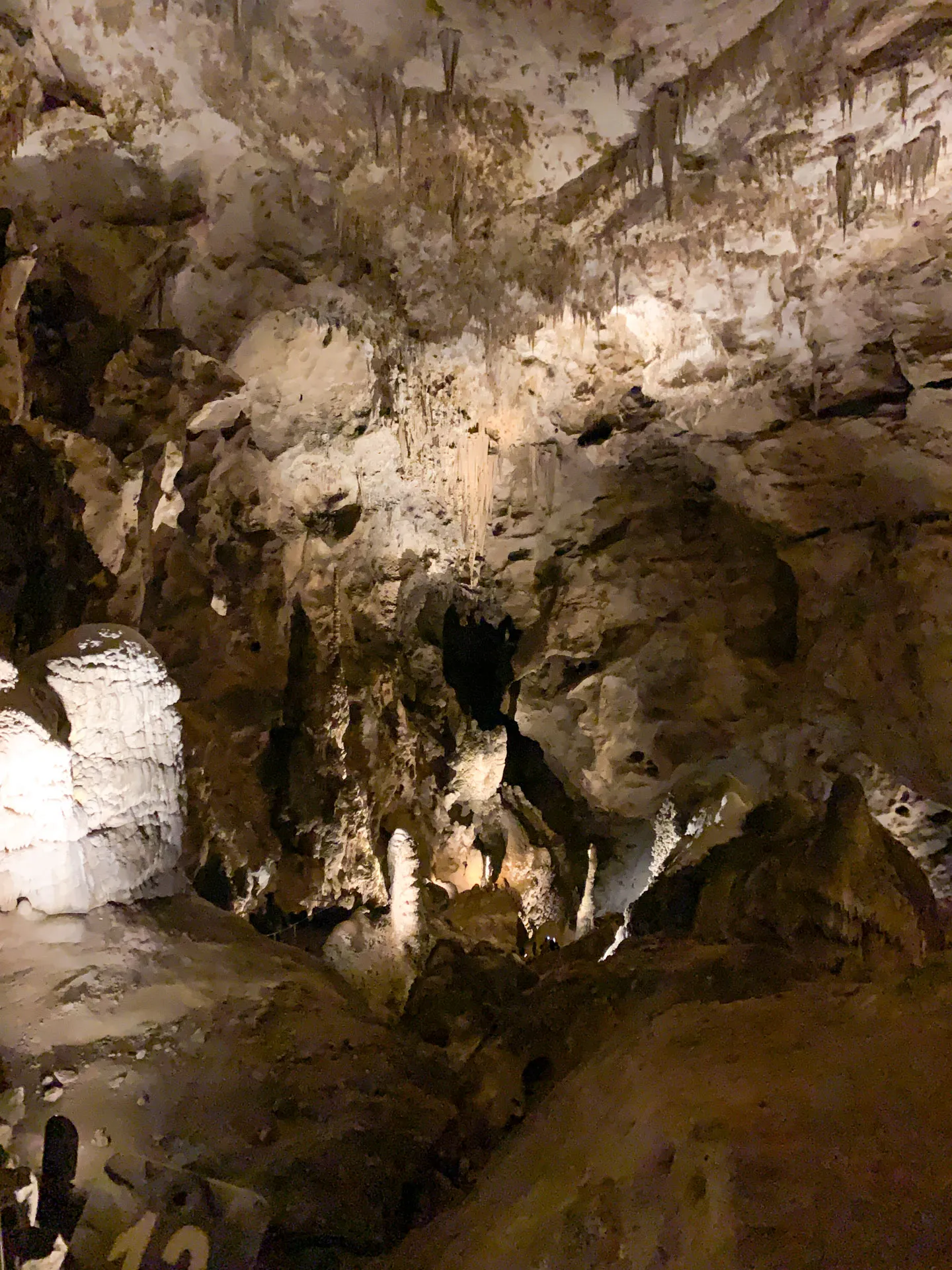
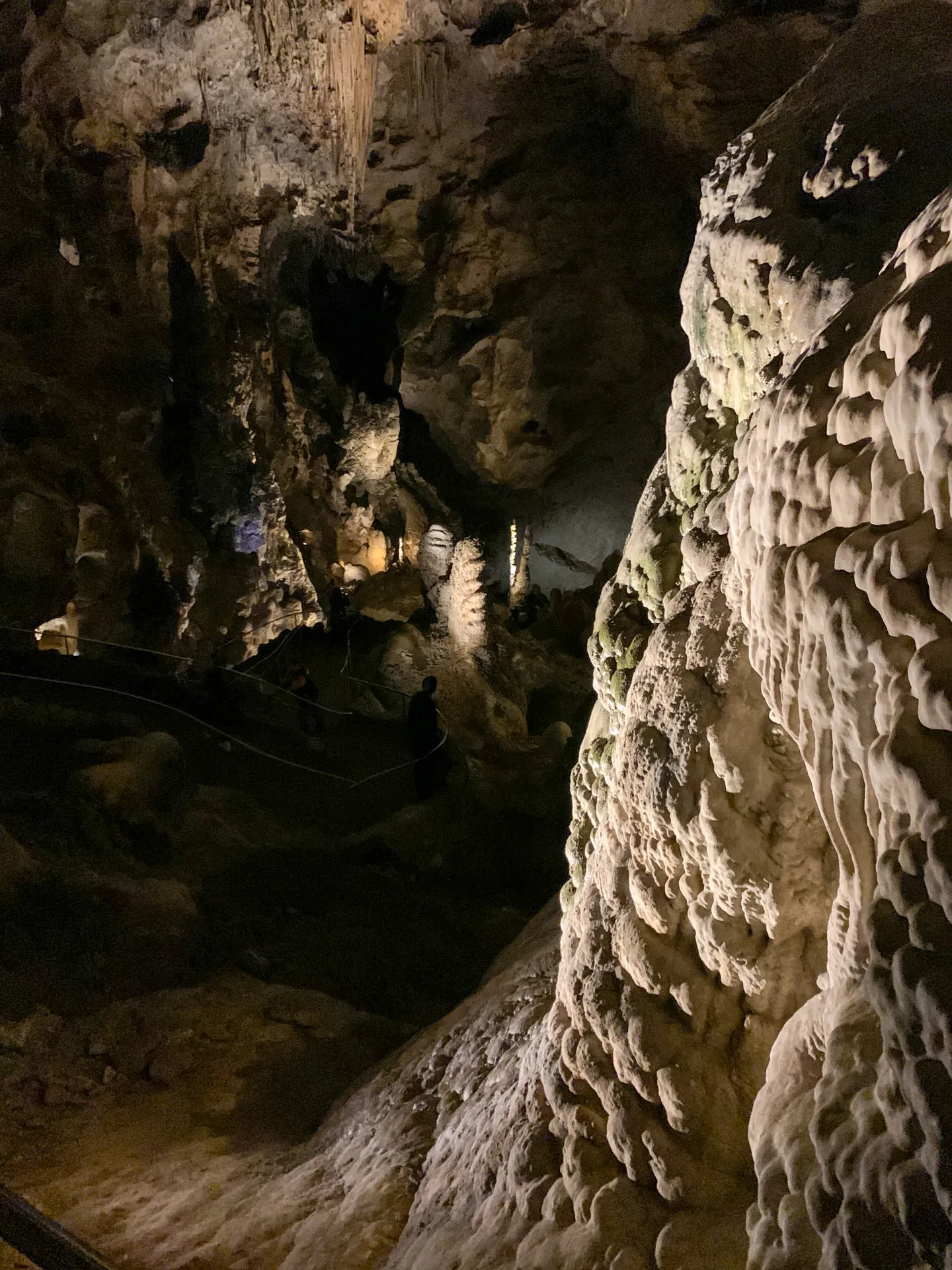
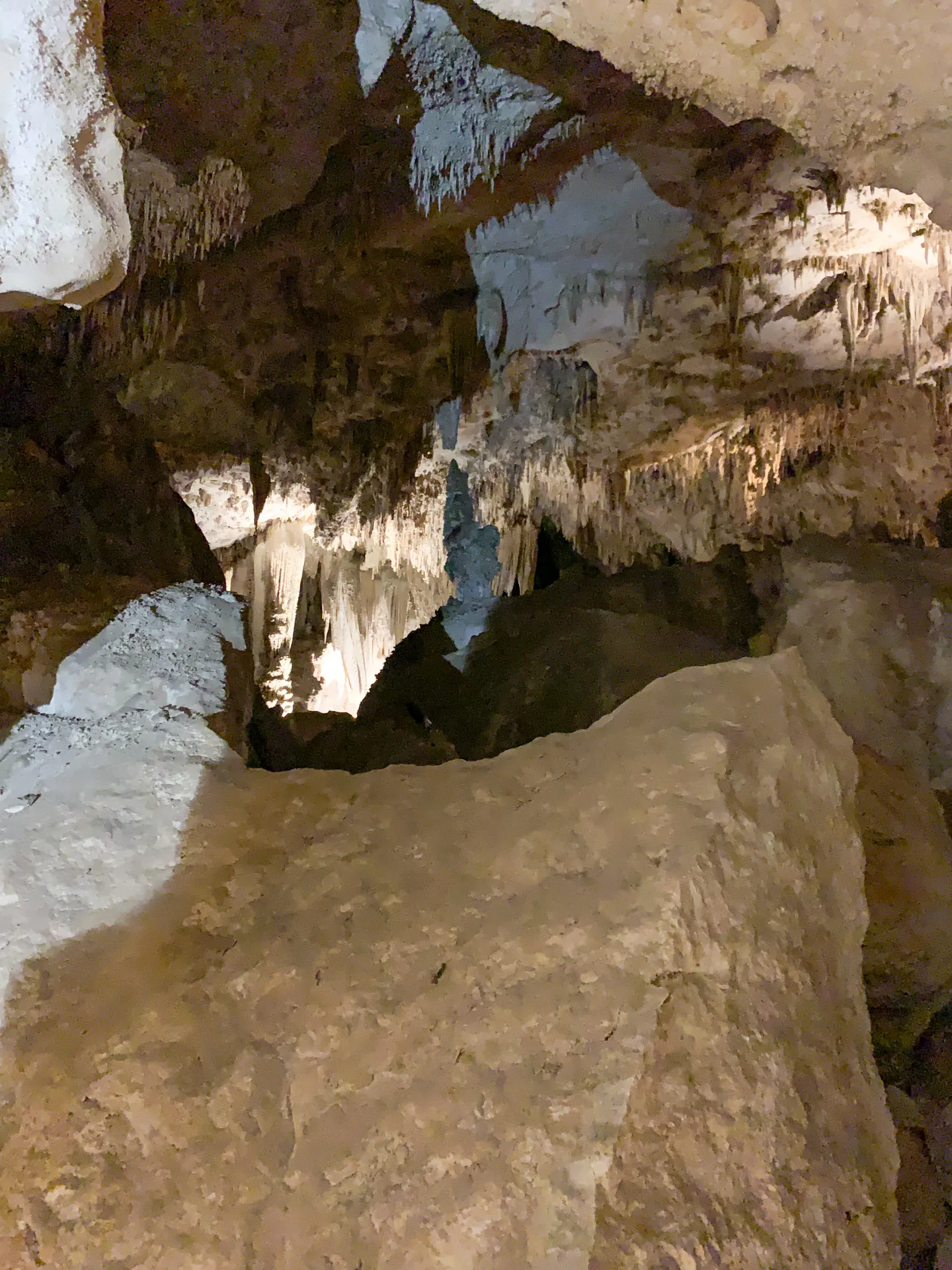
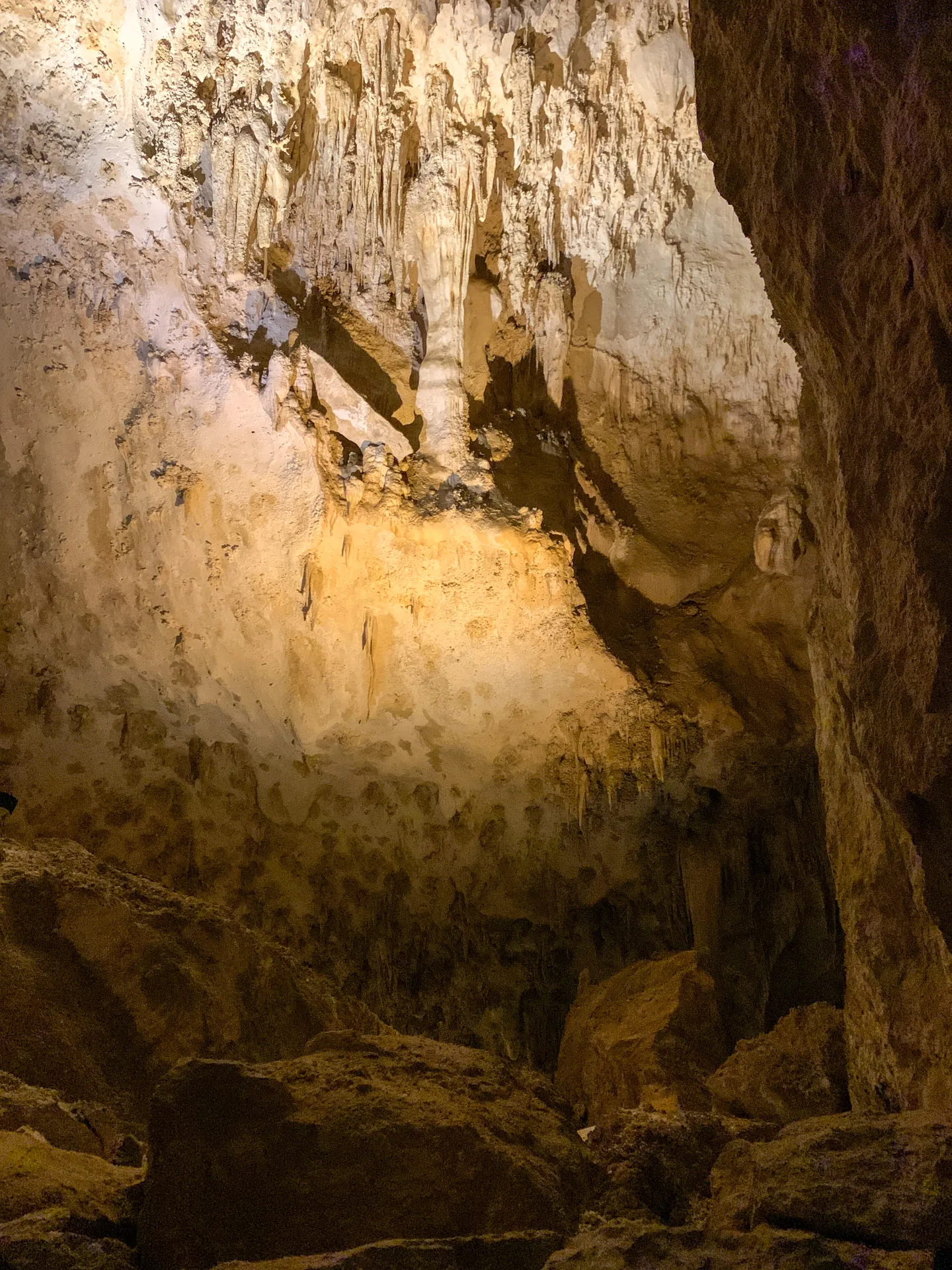
While a newer camera would have served me better, I still snapped dozens of pictures in this otherworldly space. I spent a couple of hours slowly walking the path, reading the placards and imagining what it must have been like for the early explorers. Honestly, I’m happy to have come when I did. I like the electric lights, walkways, and rangers answering questions.


Carlsbad Caverns: A Living Legacy
Carlsbad Caverns remains a place of mystery and awe. The immense geological forces that shaped the caverns, the spiritual significance to native peoples, and the courage of early explorers all contribute to the rich and layered story of this underground wonder. Today, it stands as a testament to the natural and cultural history of the Americas — a place where time, nature, and human curiosity meet deep beneath the earth’s surface.