My travels often take me to unusual places. Or perhaps I should more accurately state that I travel to unusual places on purpose.
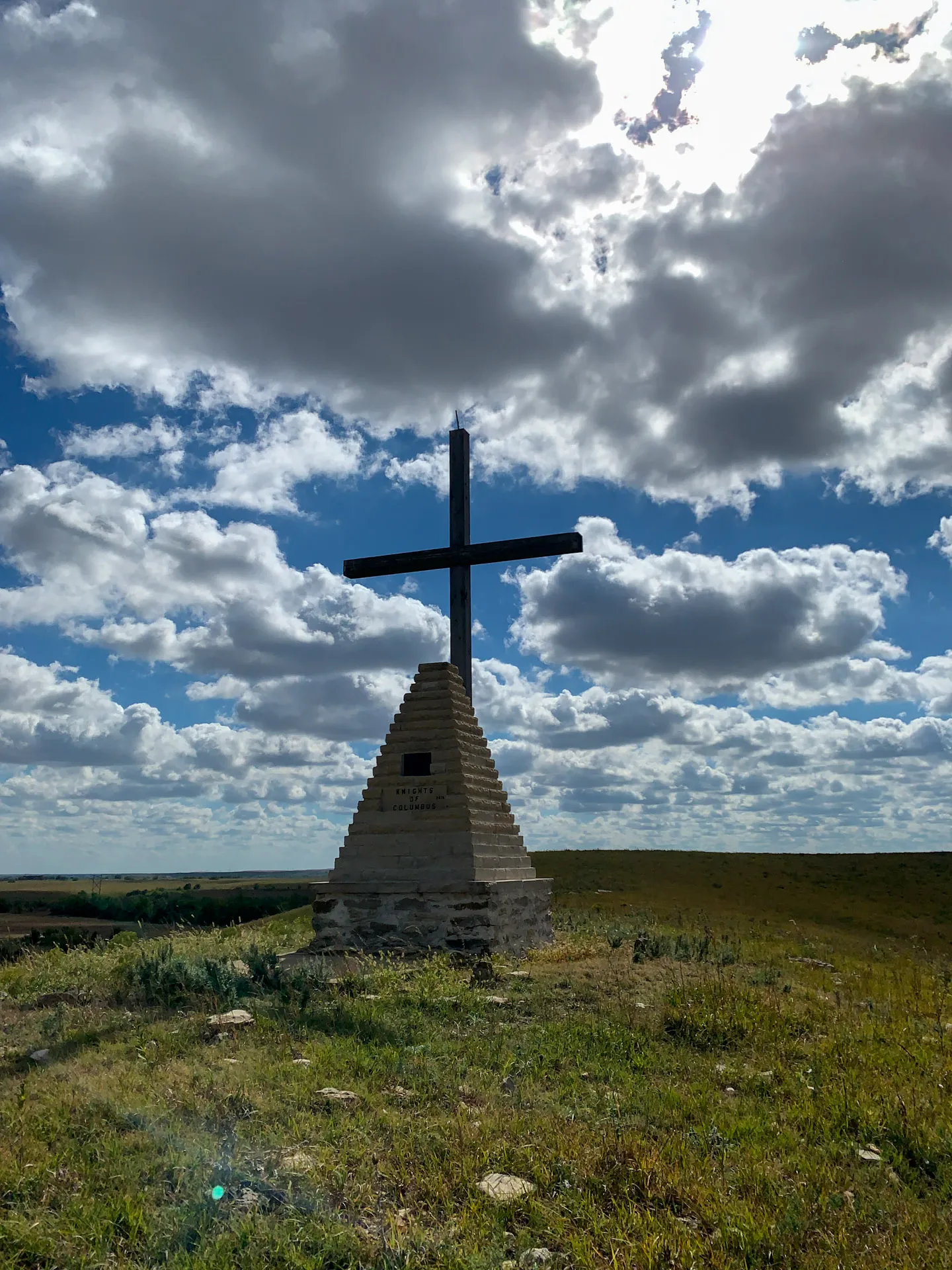
Deep in the heart of Kansas lies a tribute to one of the earliest missionaries in the United States, Father Juan Padilla.
The Journey to a Remote Landmark
The Father Juan Padilla Monument, nestled in the serene countryside of Lyons, Kansas, is a destination that requires a bit of determination to reach. If you’re not paying attention, you will miss the tiny sign by the sign of the road pointing you down a dusty dirt road.
Traveling through the vast plains, you can feel the weight of history and the echoes of early explorers who once traversed this land. The monument is a solitary witness to the endeavors of Father Padilla, who was among the first European missionaries to set foot on American soil.

The Story of Father Juan Padilla
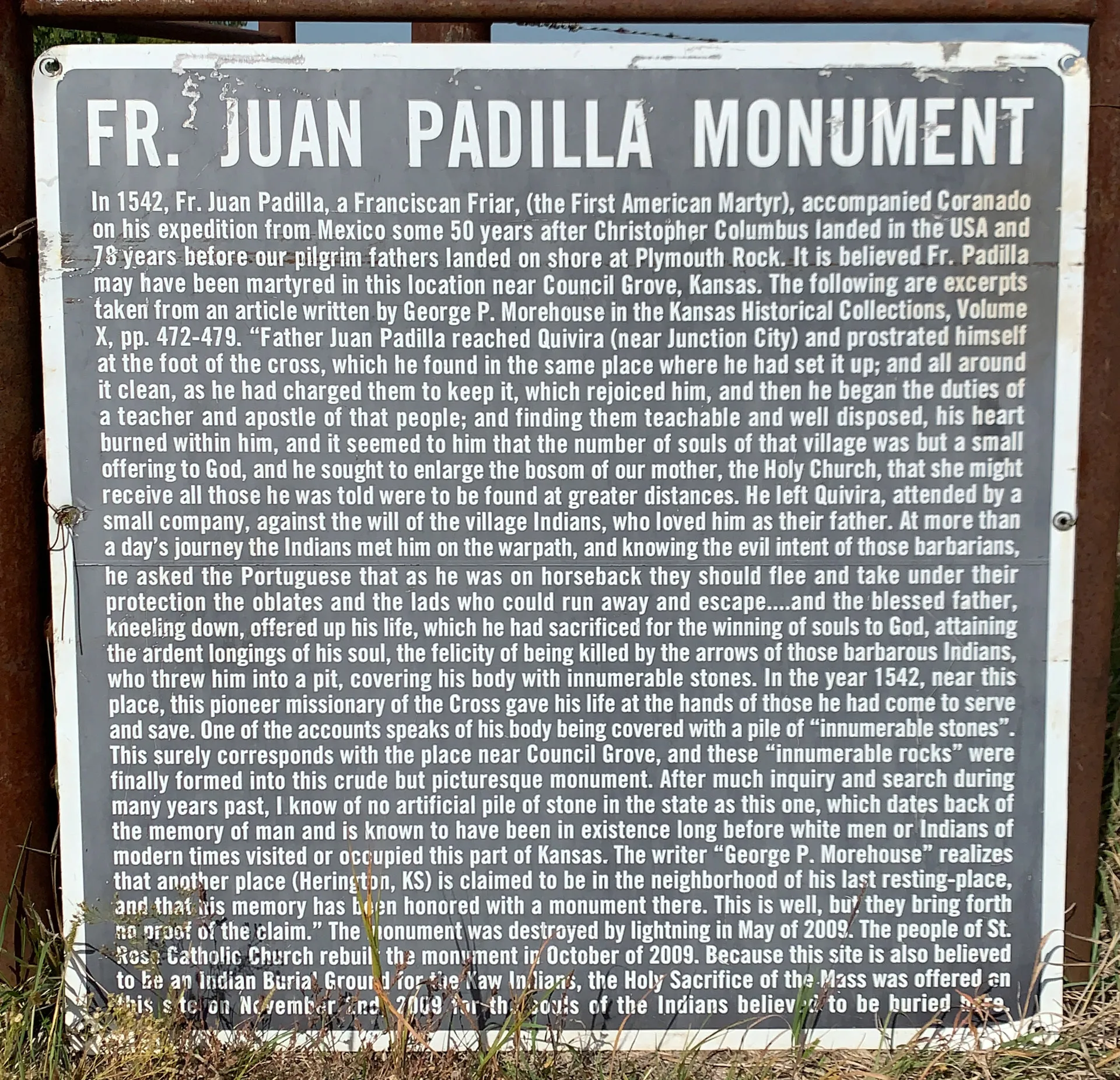
Father Juan Padilla was a pioneering missionary who traveled with the famed explorer Francisco Vásquez de Coronado. His journey was marked by the desire to spread his faith and establish connections with the indigenous peoples. His mission ended in martyrdom, making him one of the earliest Christian martyrs in what is now the United States.
Father Juan Padilla, a Franciscan missionary who traveled to the Americas in the early 16th century, had a significant impact on the native populations, particularly in what is now the southwestern United States.
As one of the first Christian missionaries to venture into this region, he accompanied the expedition of Francisco Vásquez de Coronado in search of the fabled Seven Cities of Gold. Though the expedition failed to find these mythical cities, Padilla’s presence marked one of the earliest attempts to spread Christianity among the indigenous peoples.
His mission was part of a broader Spanish effort to convert Native Americans to Christianity. Padilla’s work laid the groundwork for future missions. However, it also symbolized the beginning of cultural upheaval for most native communities, introducing new religious practices that conflicted with indigenous traditions and sometimes leading to tension and resistance.
Father Padilla’s legacy is complex, reflecting both genuine spiritual dedication and the colonial ambitions of the Spanish Empire. After Coronado’s expedition, Padilla chose to stay in the region to continue his missionary work among the native tribes. His commitment to spreading Christianity ultimately cost him his life; he was killed by members of a tribe he sought to convert, believed to be Kansa or Wichita, around 1542.
This event highlights the challenges and dangers faced by missionaries during this period and underscores the resistance among native populations to foreign influence and religious imposition.
Despite these challenges, Padilla’s mission paved the way for subsequent missionary efforts, contributing to the long-term cultural transformation of indigenous societies in the Americas. However, this transformation often came at a significant cost, as it frequently involved the erosion of native cultural identities and autonomy and ultimately was part of the greatest genocide in human history.