Council Grove

Visited on: Wednesday, October 11, 2023

Council Grove, Kansas, is a small town rich in history and charm, nestled in the heart of the Flint Hills region. Known for its significant role as a stop along the historic Santa Fe Trail, this quaint community offers a glimpse into America’s pioneer past. The town’s name itself is derived from a treaty council held in the grove of trees between U.S. commissioners and the Osage Nation in 1825, marking it as a place of historical significance.

Walking through Council Grove, visitors can explore numerous historical landmarks that capture the spirit of the Old West. The Last Chance Store, an original trading post from the 1850s, stands as a reminder of the town’s bustling days as a trail stop. Nearby, the Kaw Mission State Historic Site offers insights into early missionary efforts and Native American education during the mid-19th century.
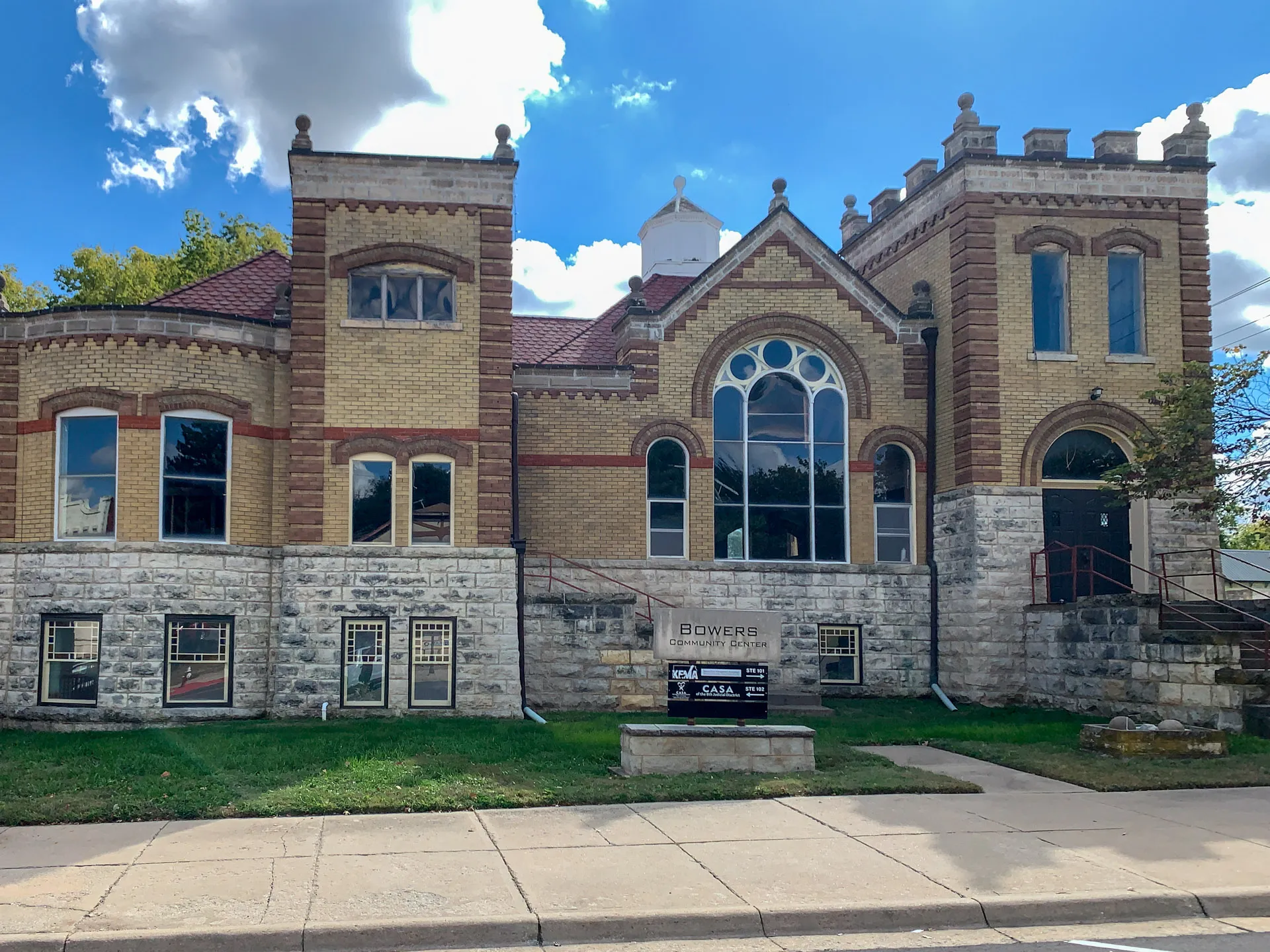
A historic, castle-like building with tan brick and stone foundation, featuring arched windows and a crenelated roofline. A brick pattern adds visual interest. A sign in front reads "Bowers." The building is set against a partly cloudy sky, with a sidewalk and street in the foreground.
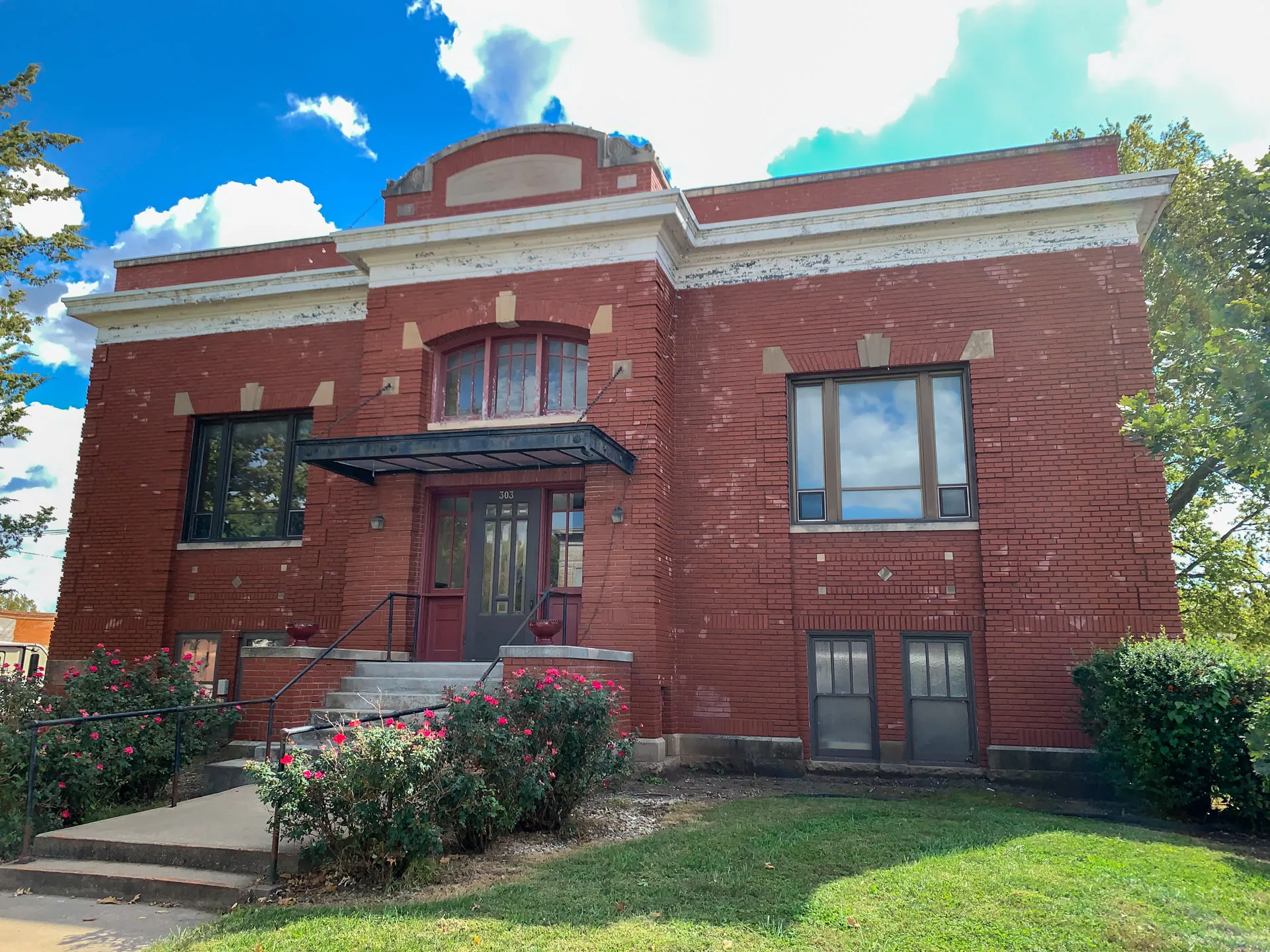
A historic red brick building with a central entrance, featuring a dark awning and stairs leading up. Two trees frame the structure, with neatly trimmed bushes and vibrant pink flowers in front. The sky is bright blue with fluffy white clouds, adding to the scene's charm.
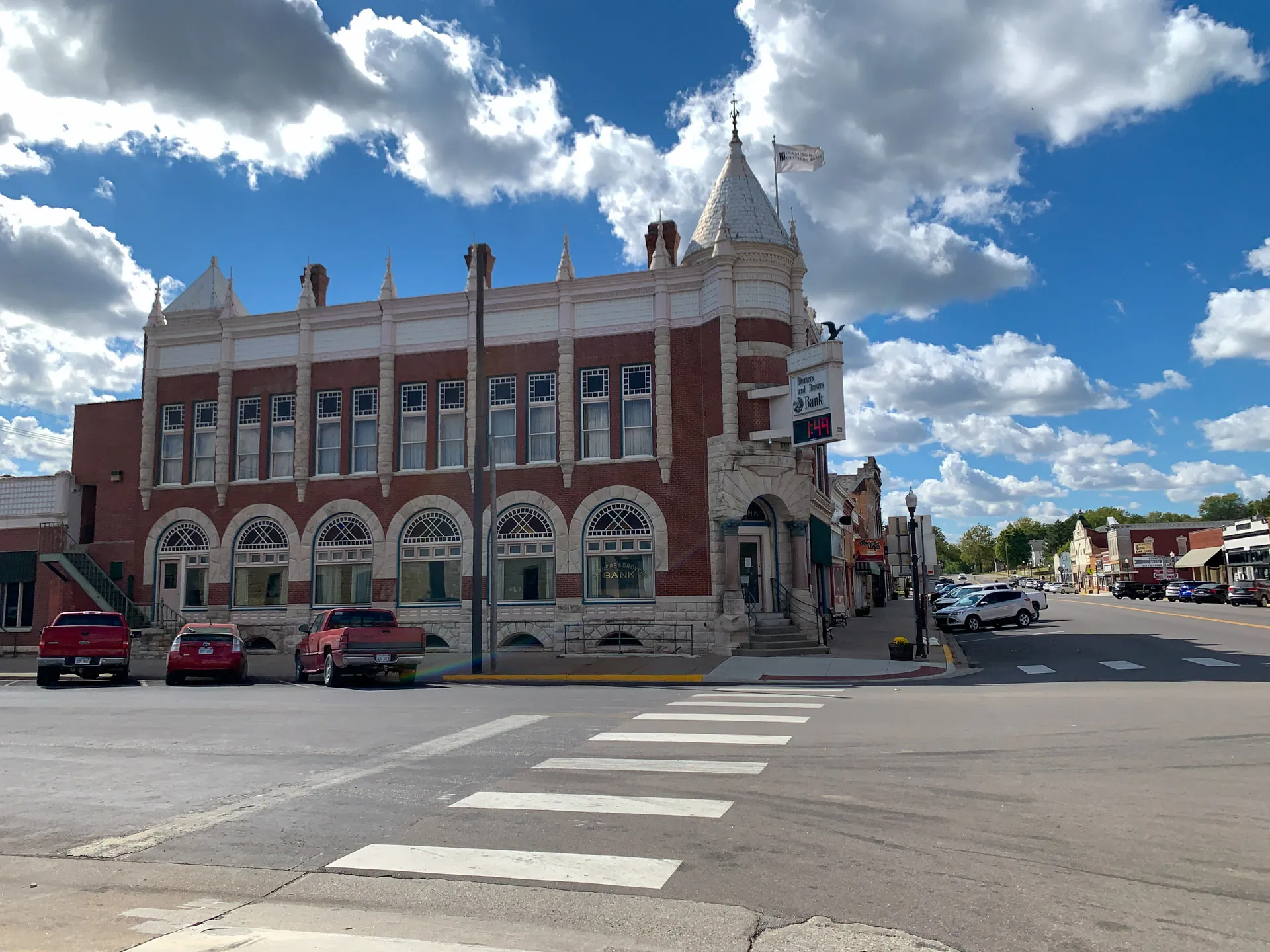
A historic, ornate brick building with arched windows and a turret stands on a street corner under a blue sky with fluffy clouds. Several parked cars line the street, which features a white crosswalk in the foreground. The building houses a jewelry store, as indicated by a visible sign.
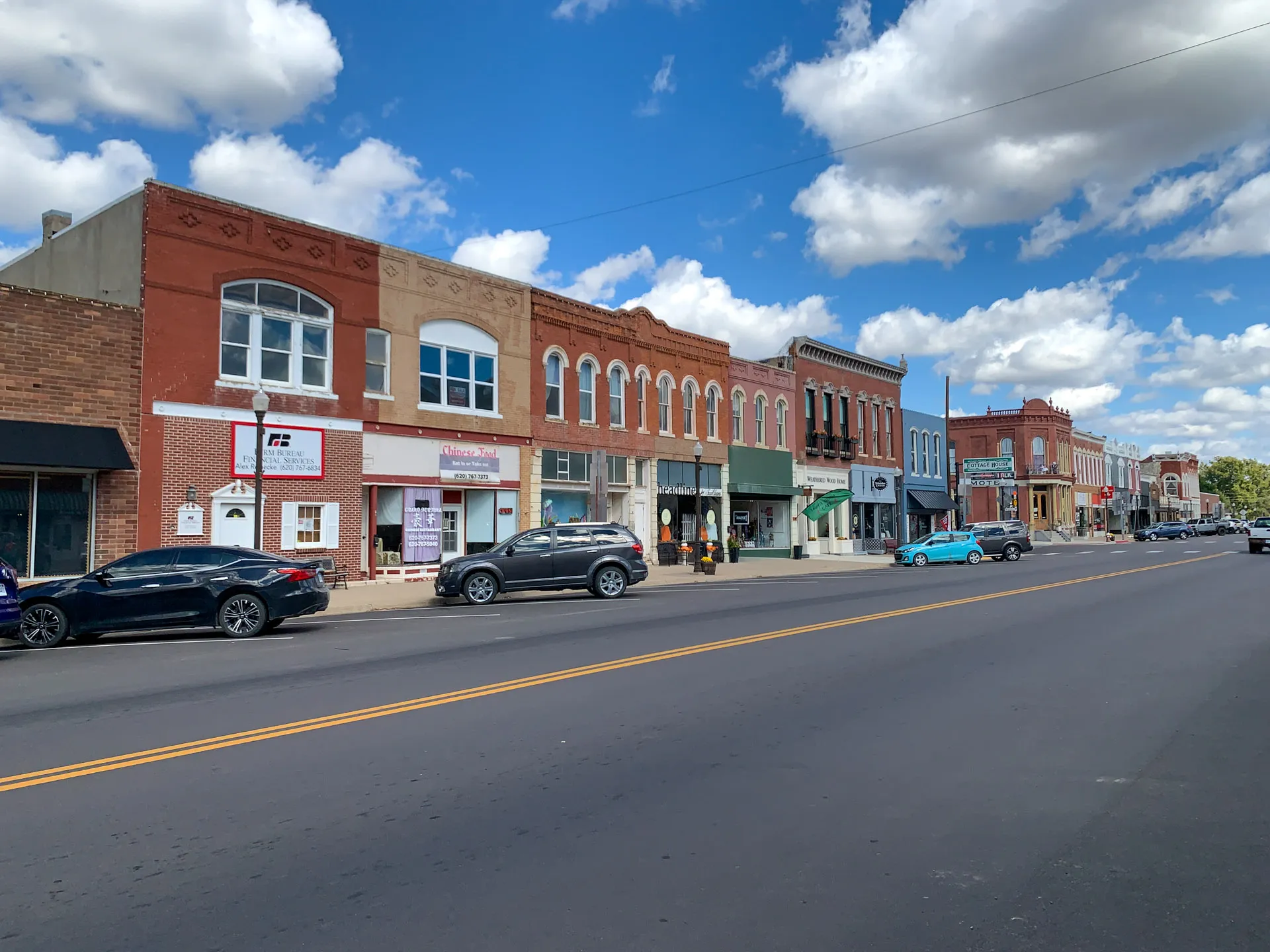
A vibrant small-town street lined with historic brick buildings under a blue sky dotted with fluffy clouds. Cars are parked alongside the road, and people are strolling along the sidewalk, creating a lively yet relaxed atmosphere. The architecture features ornate facades and varied designs.
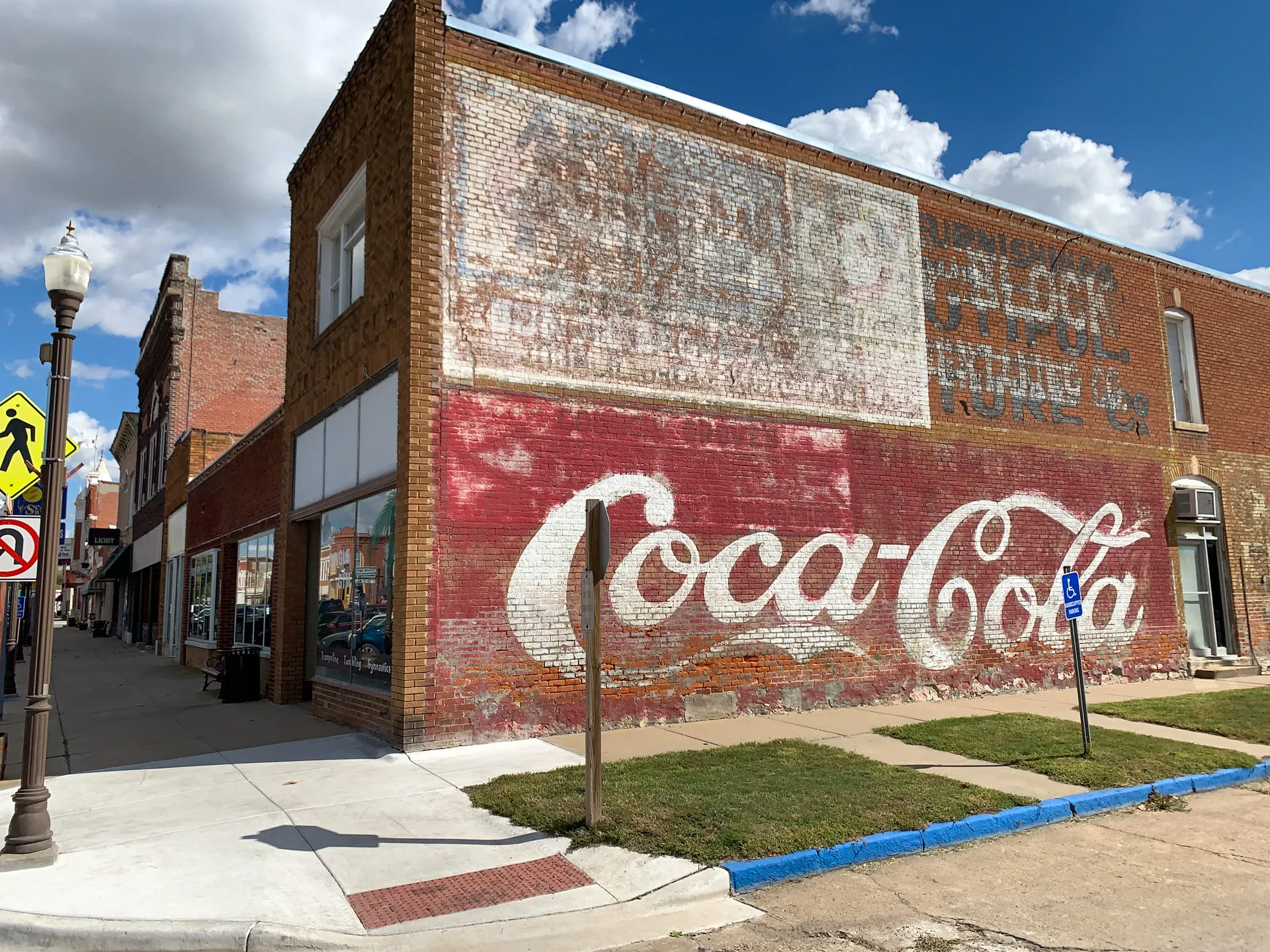
A vintage brick building features a large, faded Coca-Cola mural. The mural covers the side wall in red and white. The street corner includes a sidewalk with reflective store windows and a lamppost. A bright blue sky with fluffy clouds is visible above.
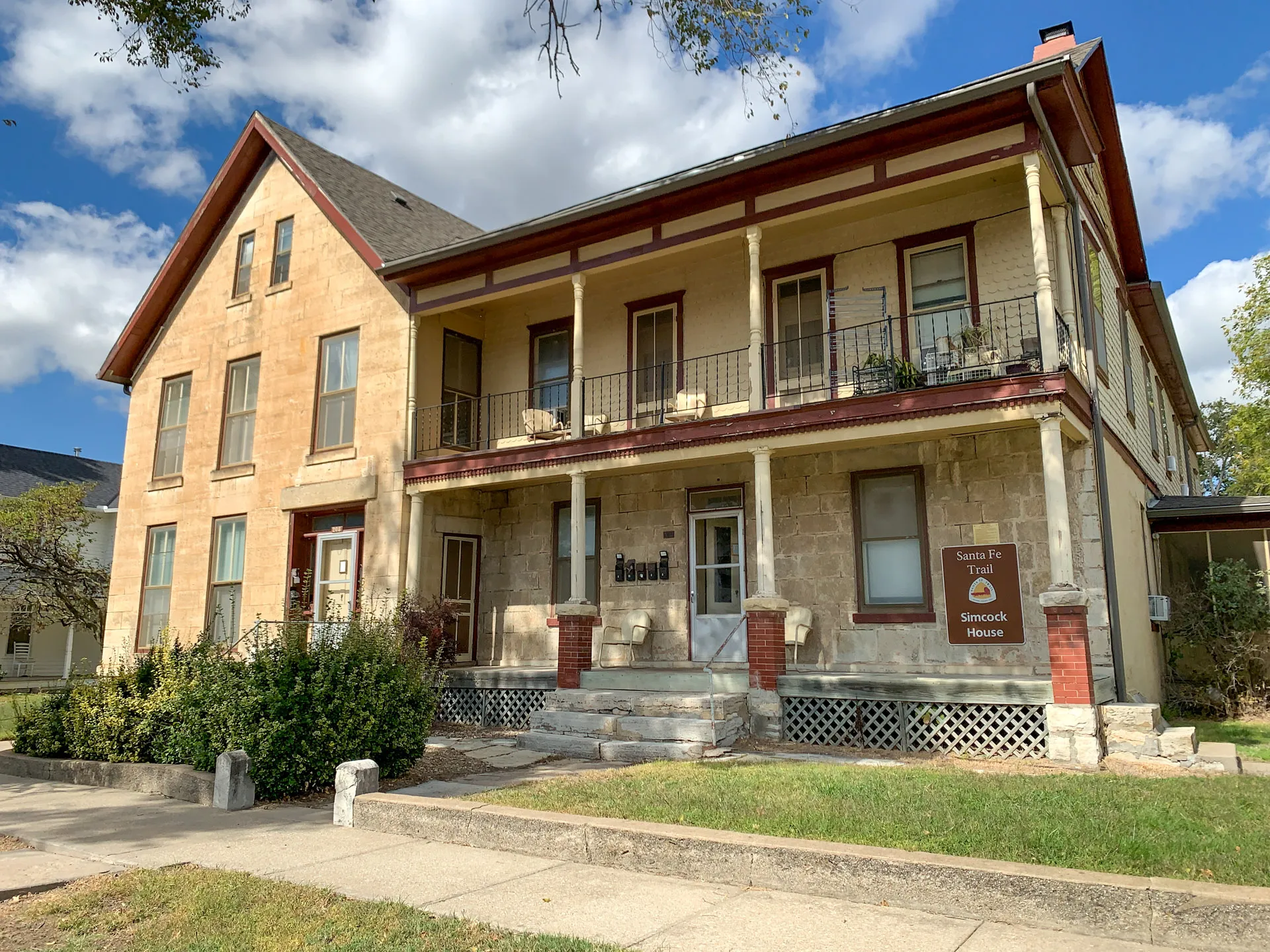
Historic limestone building with two stories, red trim, and a covered balcony. A sign reads "Simeon & Jane Stewart House." The front yard has shrubs, concrete steps, and a pathway. The sky is partly cloudy, enhancing the classic facade.
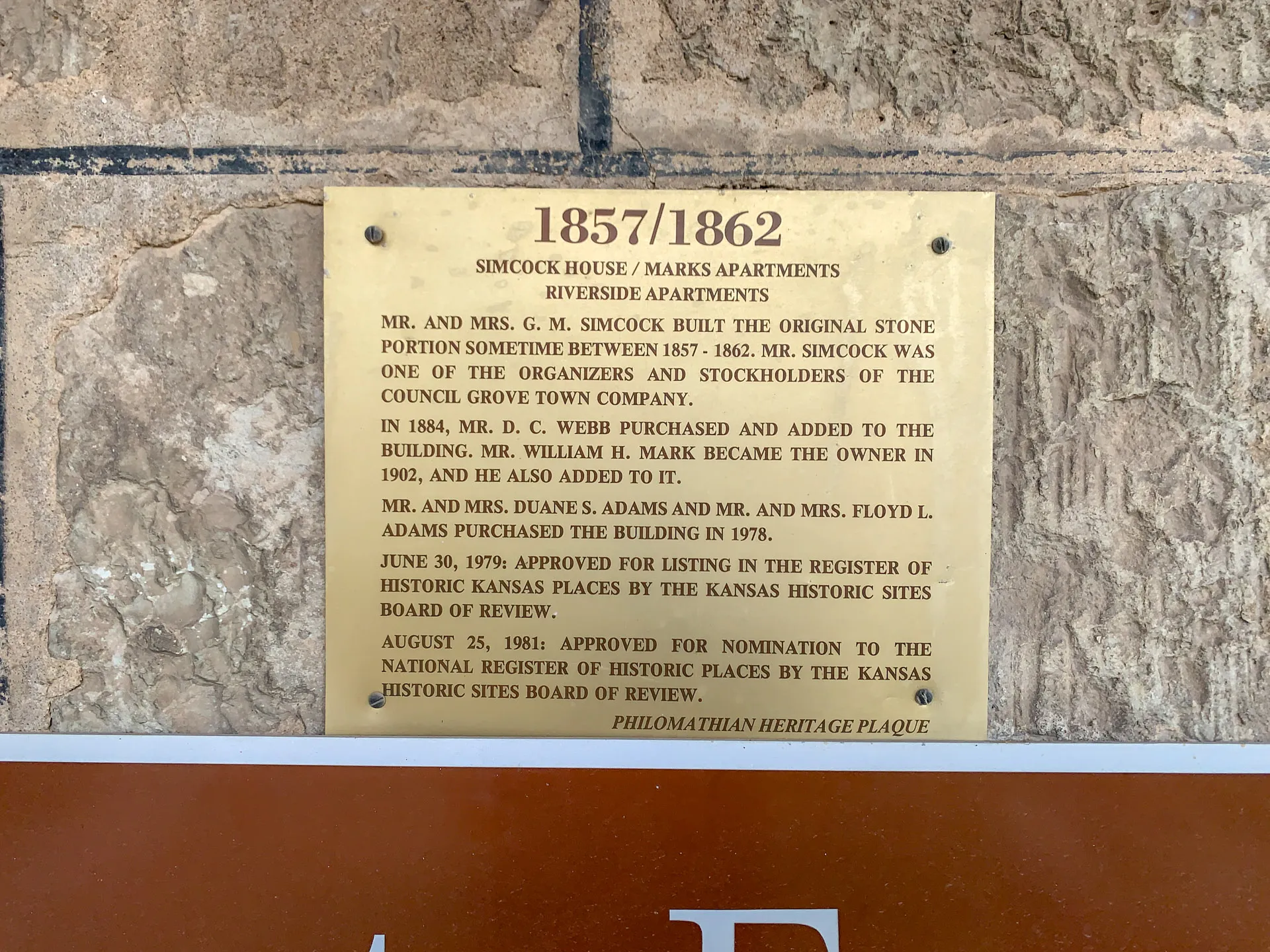
A rectangular brass plaque mounted on a stone wall. It details the history of the Simcock House/Marrs Apartments, mentioning owners and renovations from 1857 to 1979. The plaque notes nominations for historic registers in 1979 and 1981 by the Kansas Historical Society.
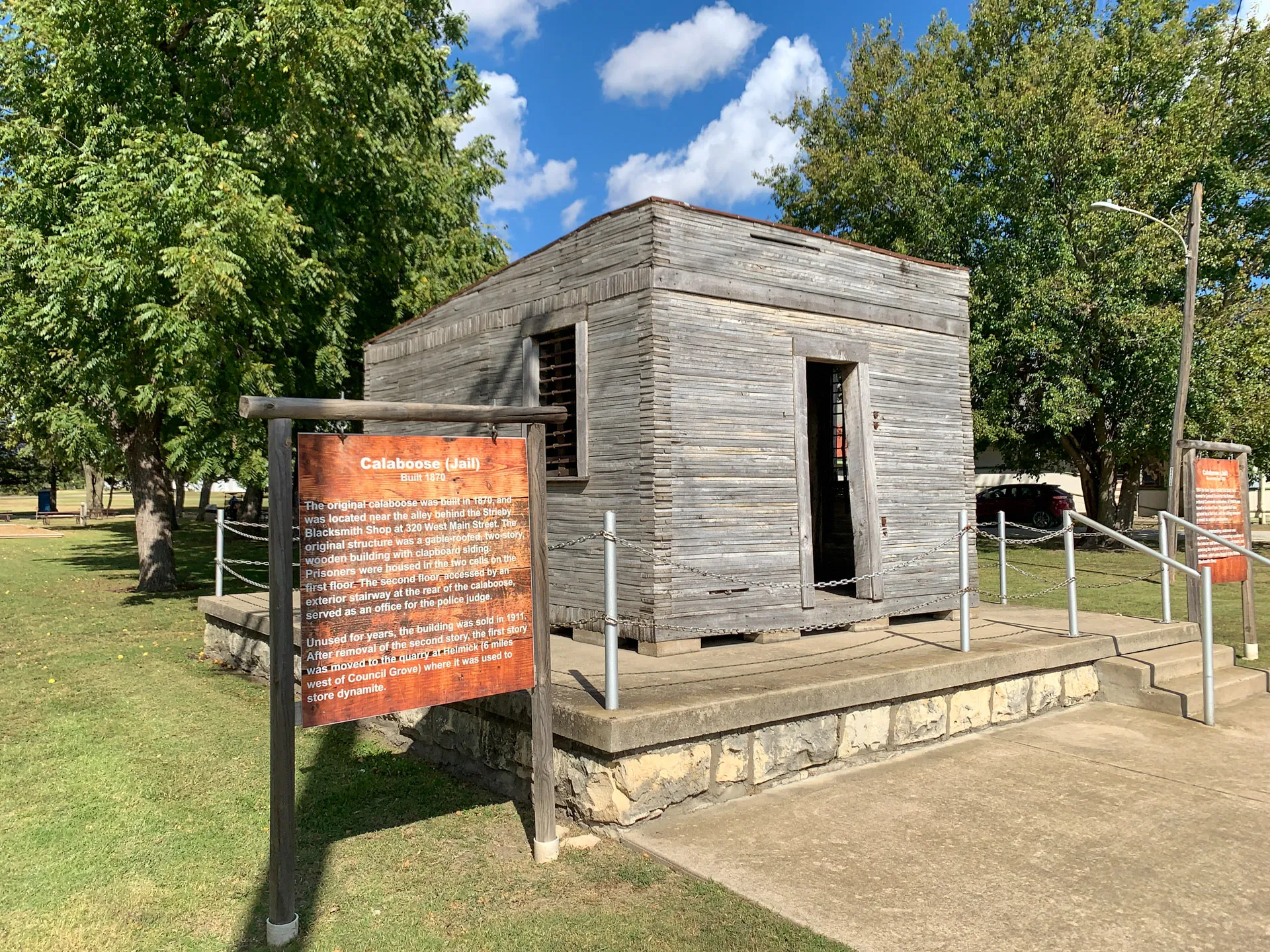
A small, weathered wooden jail building, known as Calaboose, is set on a stone foundation under a bright blue sky. A brown informational sign is displayed in the foreground, and the area is surrounded by trees and grass. A path leads to the entrance, which is secured by a chain barrier.
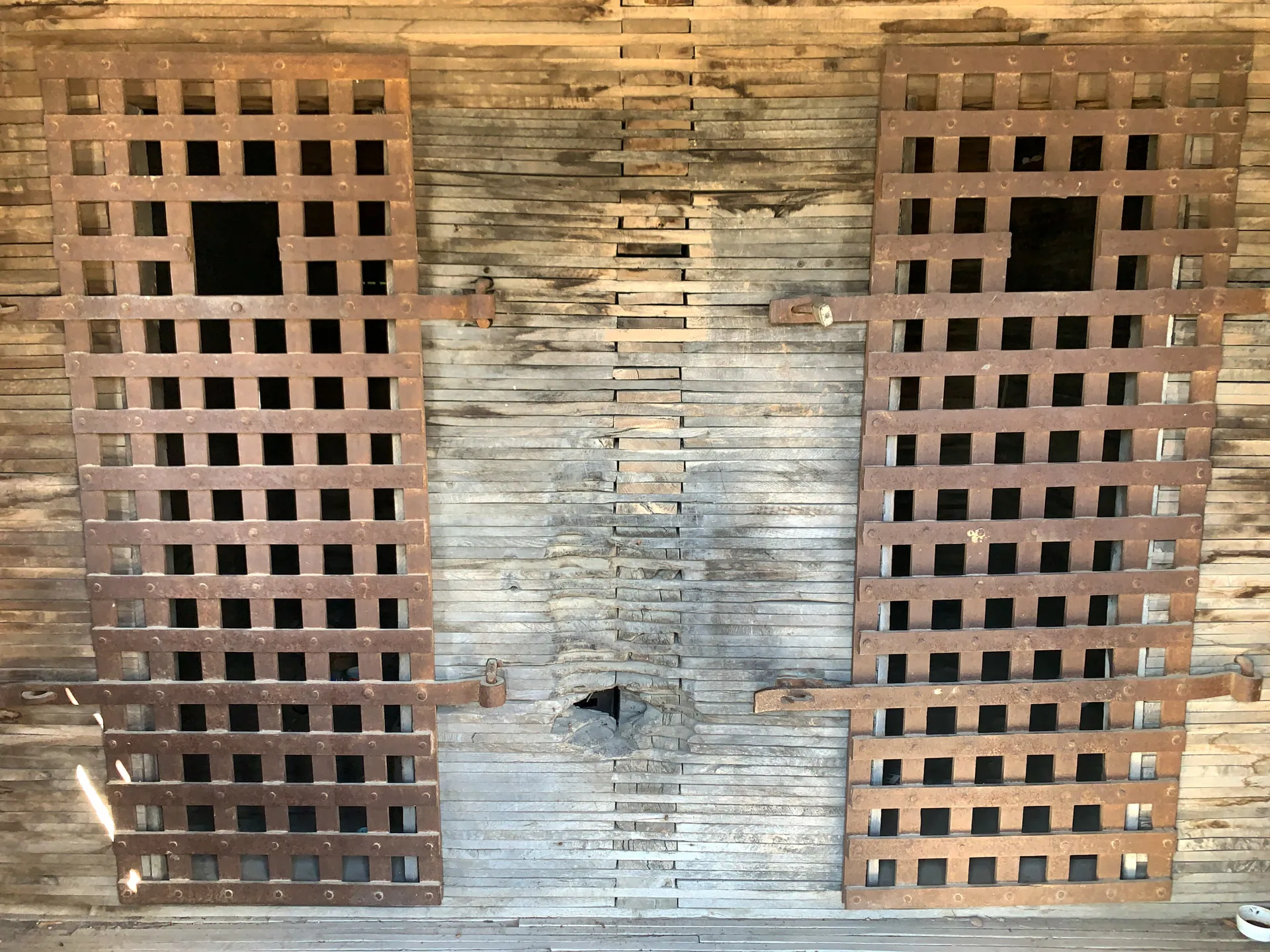
Rustic wooden wall with two large, rusty metal grates, each with square openings. The grates are mounted side by side, secured with metal latches. A small hole is present between them at the bottom of the wall, revealing wear and age. The slats are unevenly spaced and discolored.
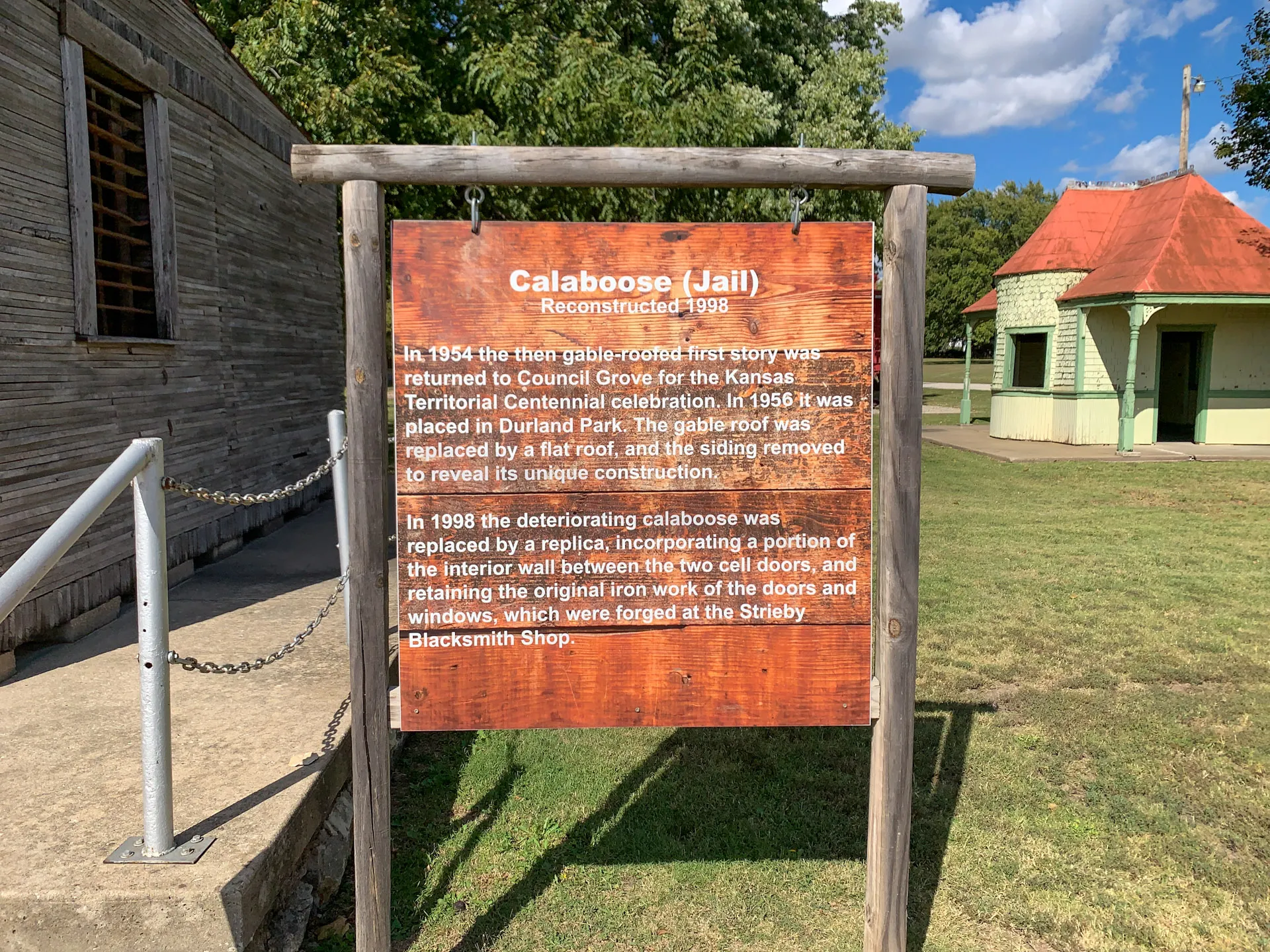
A wooden sign in front of a wooden building reads: "Calaboose (Jail) Reconstructed 1998." It details the history of the jail, mentioning its use in the 1954 Kansas Territorial Centennial and reconstruction in 1998. A park with a green lawn and a red-roofed structure is visible in the background.
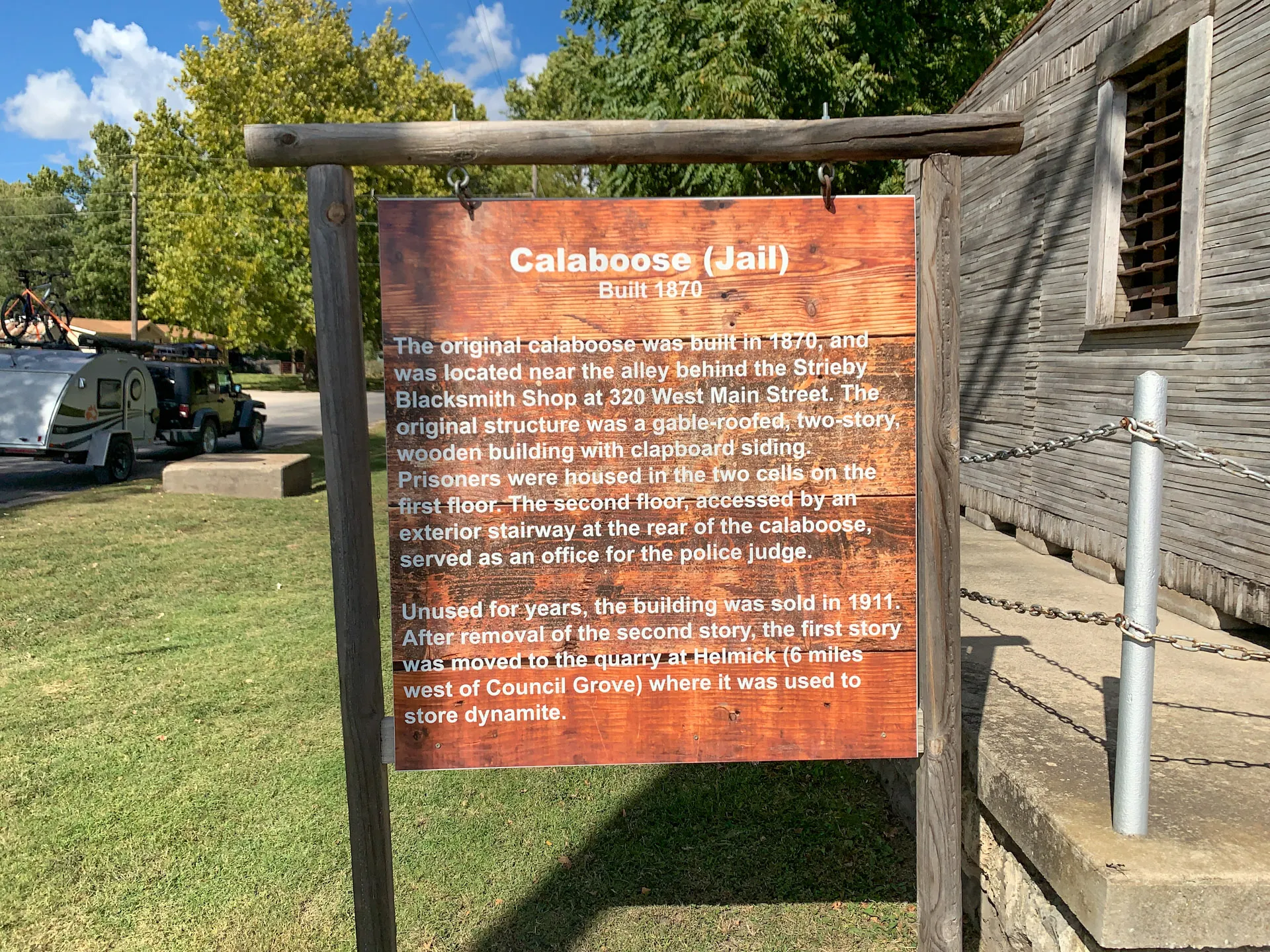
A wooden sign titled "Calaboose (Jail) Built 1870" stands against a sunny backdrop, detailing the history and features of an old jail, including its original structure and later use as a storeroom for dynamite. A pickup truck and trees are visible in the background.
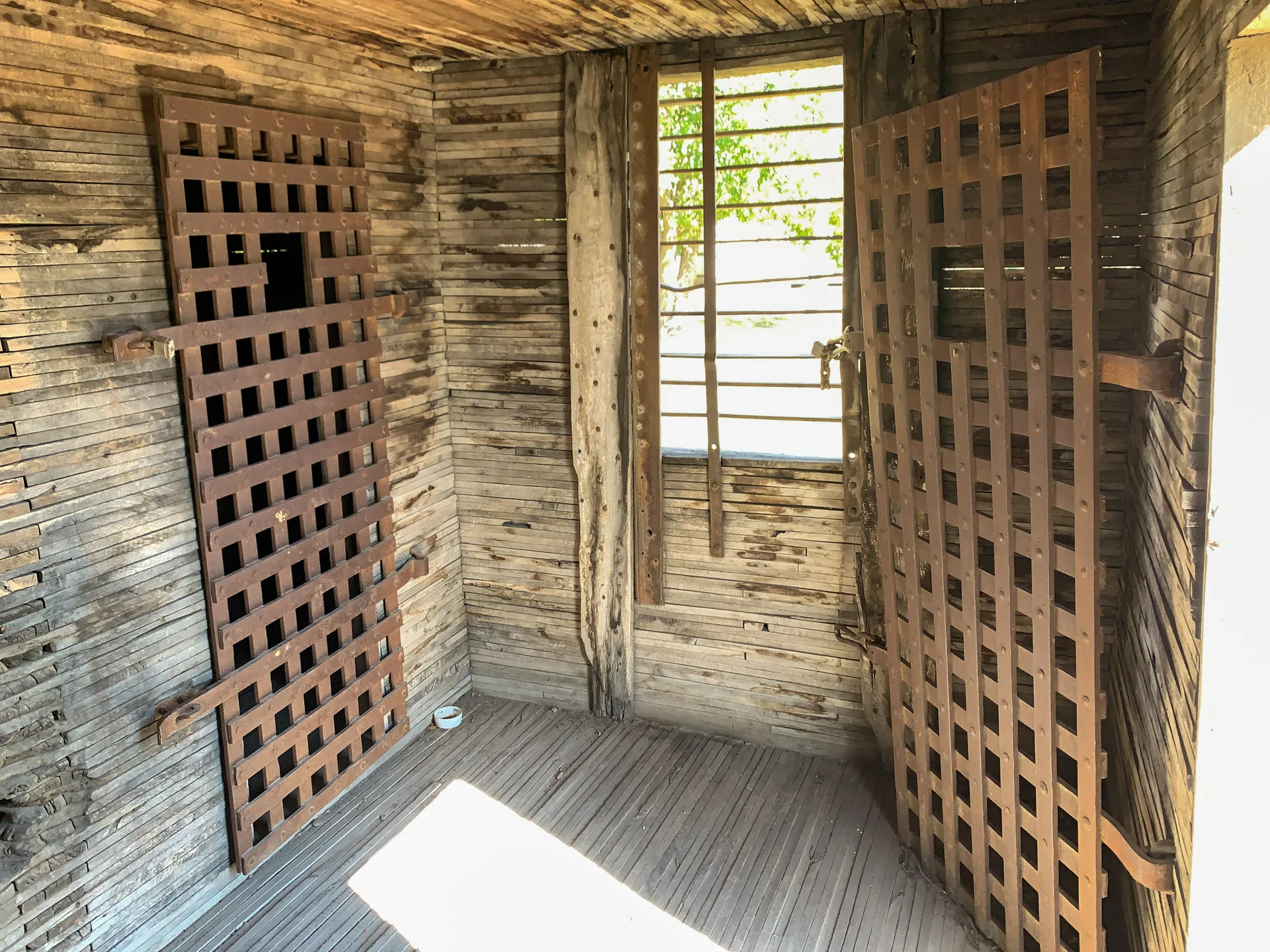
A small wooden jail cell with two barred doors is shown. The walls and floor are made of weathered wood. One door is ajar, and there is a barred window with sunlight streaming in, casting shadows. A small metal tin is on the floor near the open door.
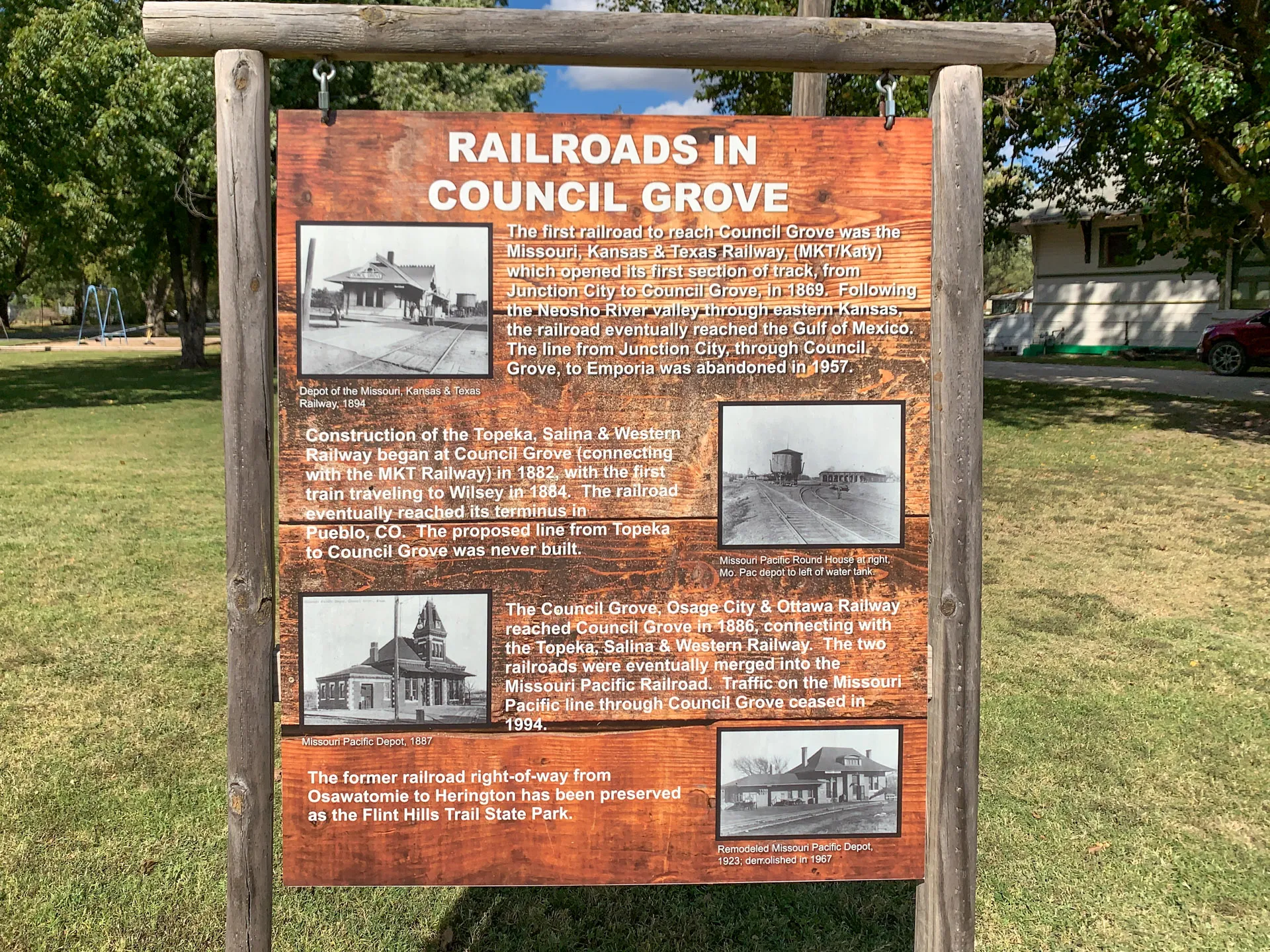
A wooden sign in a park titled "Railroads in Council Grove," with historical text and black-and-white photos depicting old trains and stations. It describes the development and importance of the Missouri-Kansas-Texas and Council Grove railroads. Trees and grass are visible in the background.
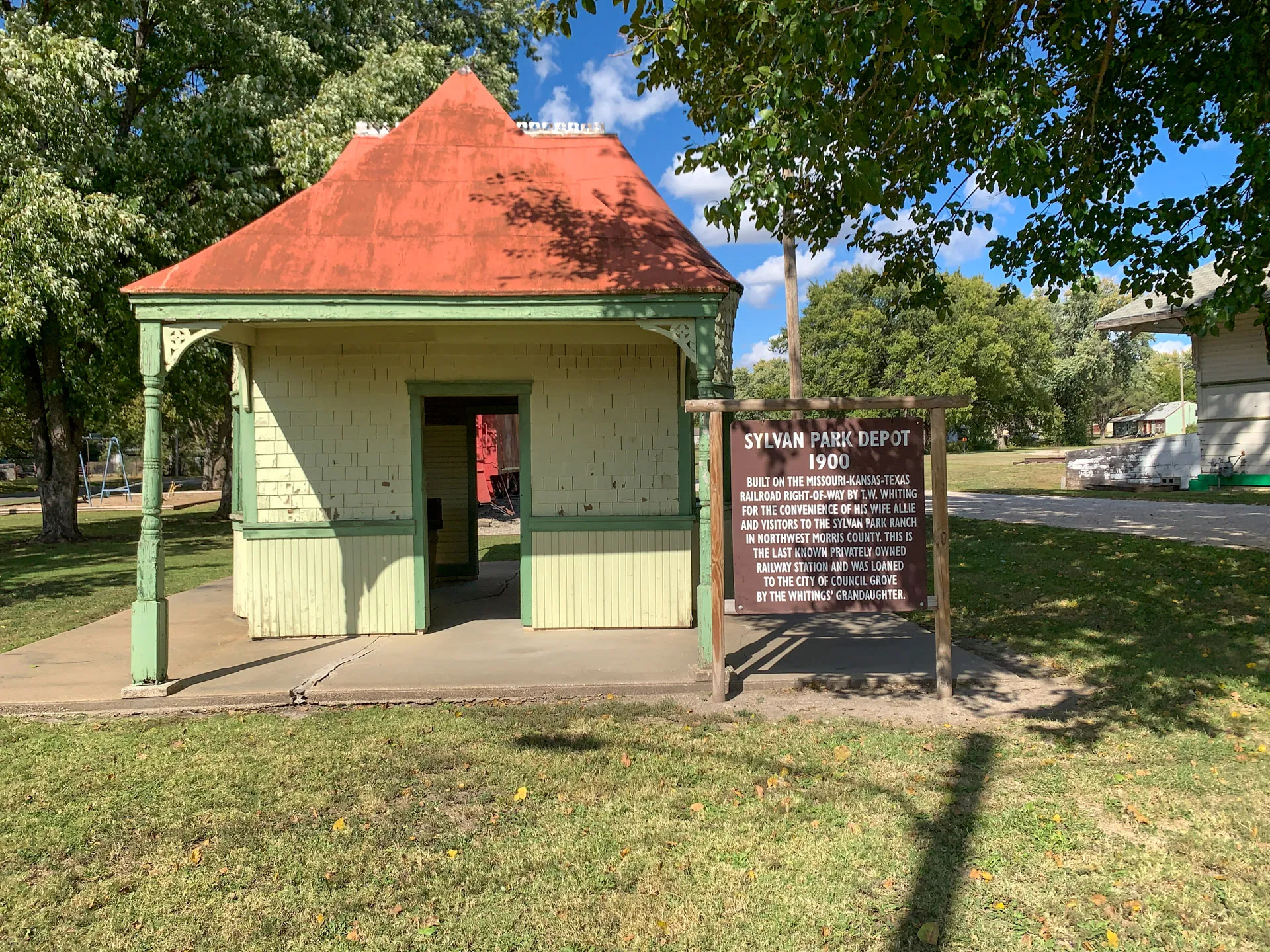
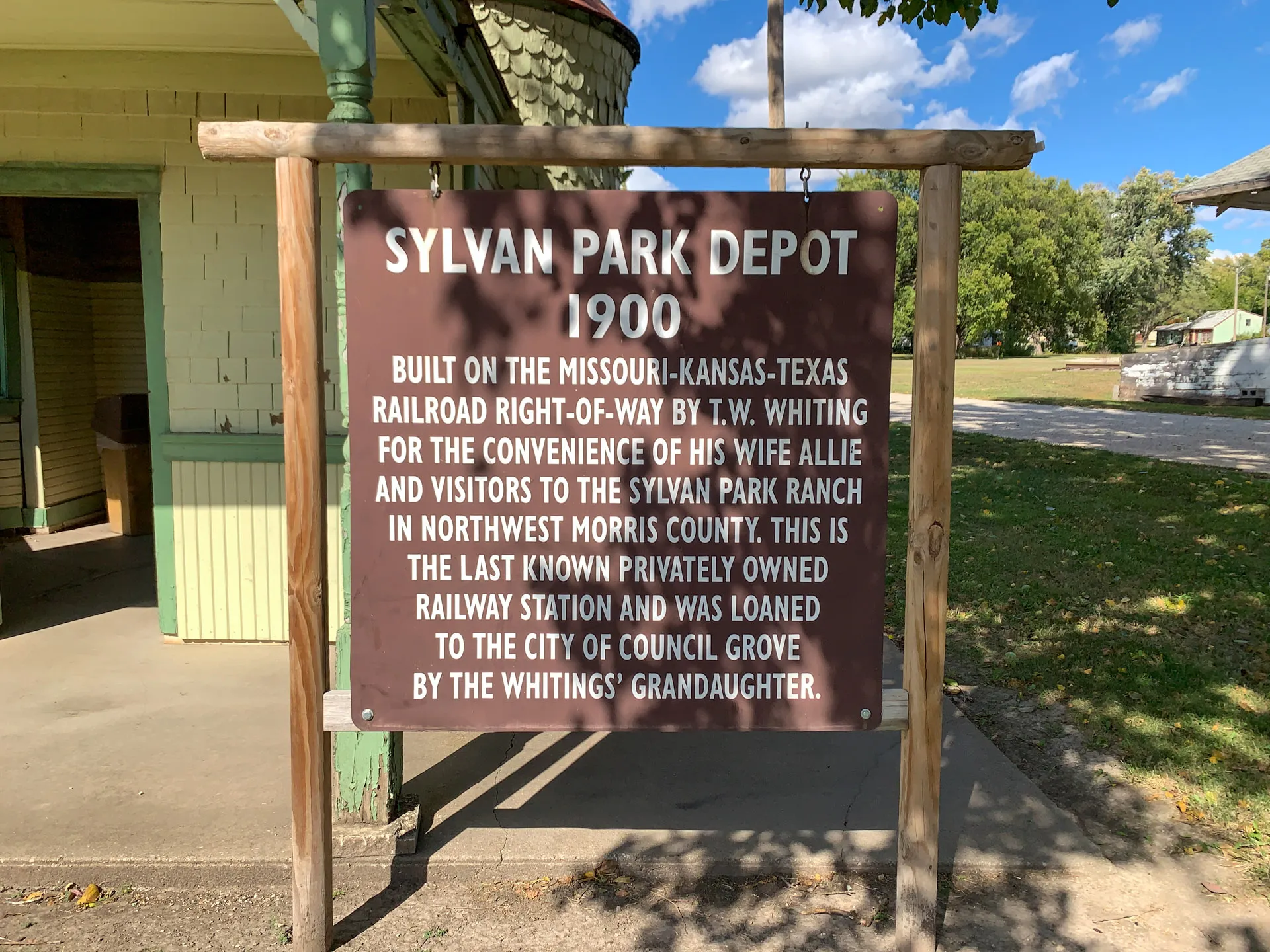
A small historical building with a red roof and green walls stands in a park. A wooden sign next to it reads "Sylvan Park Depot 1900," with additional text detailing its history. The area is grassy with trees and a clear blue sky in the background.
A wooden sign reads: "Sylvan Park Depot 1900. Built on the Missouri-Kansas-Texas railroad right-of-way by T.W. Whiting for the convenience of his wife Allie and visitors to the Sylvan Park Ranch in northwest Morris County. This is the last known privately owned railway station and was loaned to the City of Council Grove by the Whitings' granddaughter." It stands outside a building under a bright blue sky with trees and grass in the background.
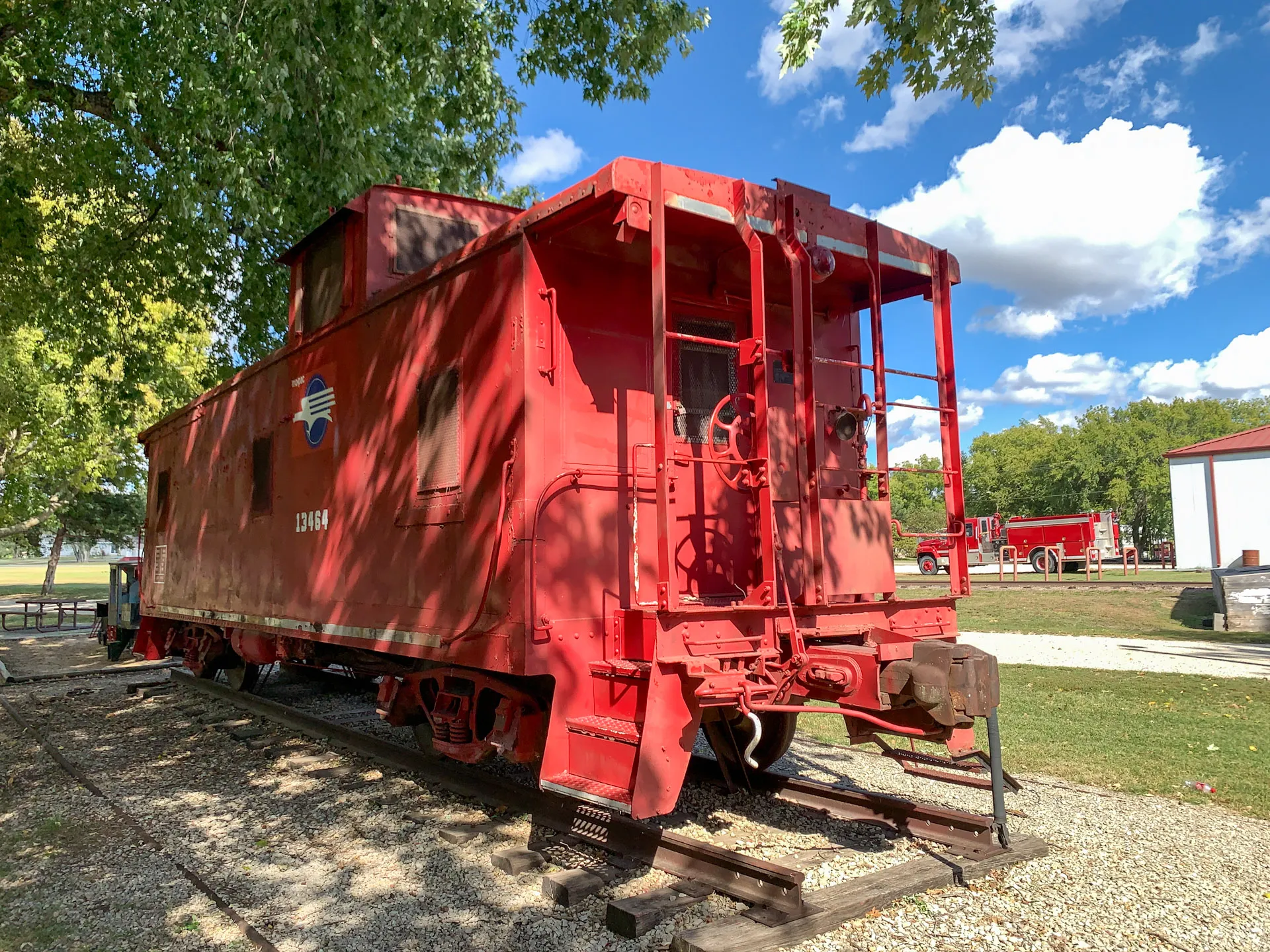
A bright red caboose is situated on short railway tracks in a park-like setting. The sky is clear with a few clouds, and trees provide shade. Nearby, a red building and some grass are visible. The caboose features a small cupola on top, with ladders on the ends and the number 12484.
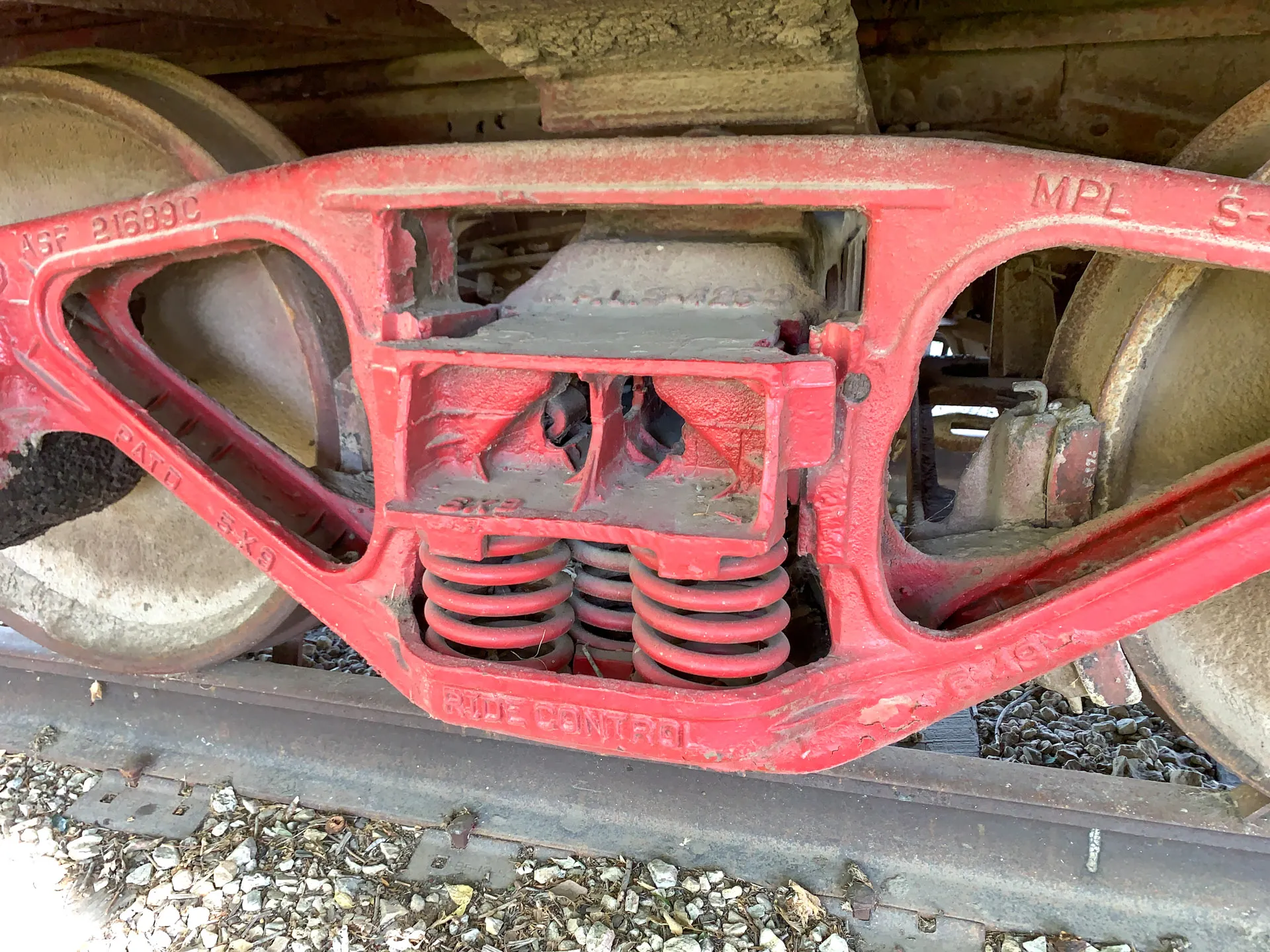
Close-up of a red train wheel and suspension assembly. The metal structure includes a pair of coil springs, with visible wear and grime. The words "Ride Control" and other numbers are embossed on the metal. Gravel and train tracks are seen below.
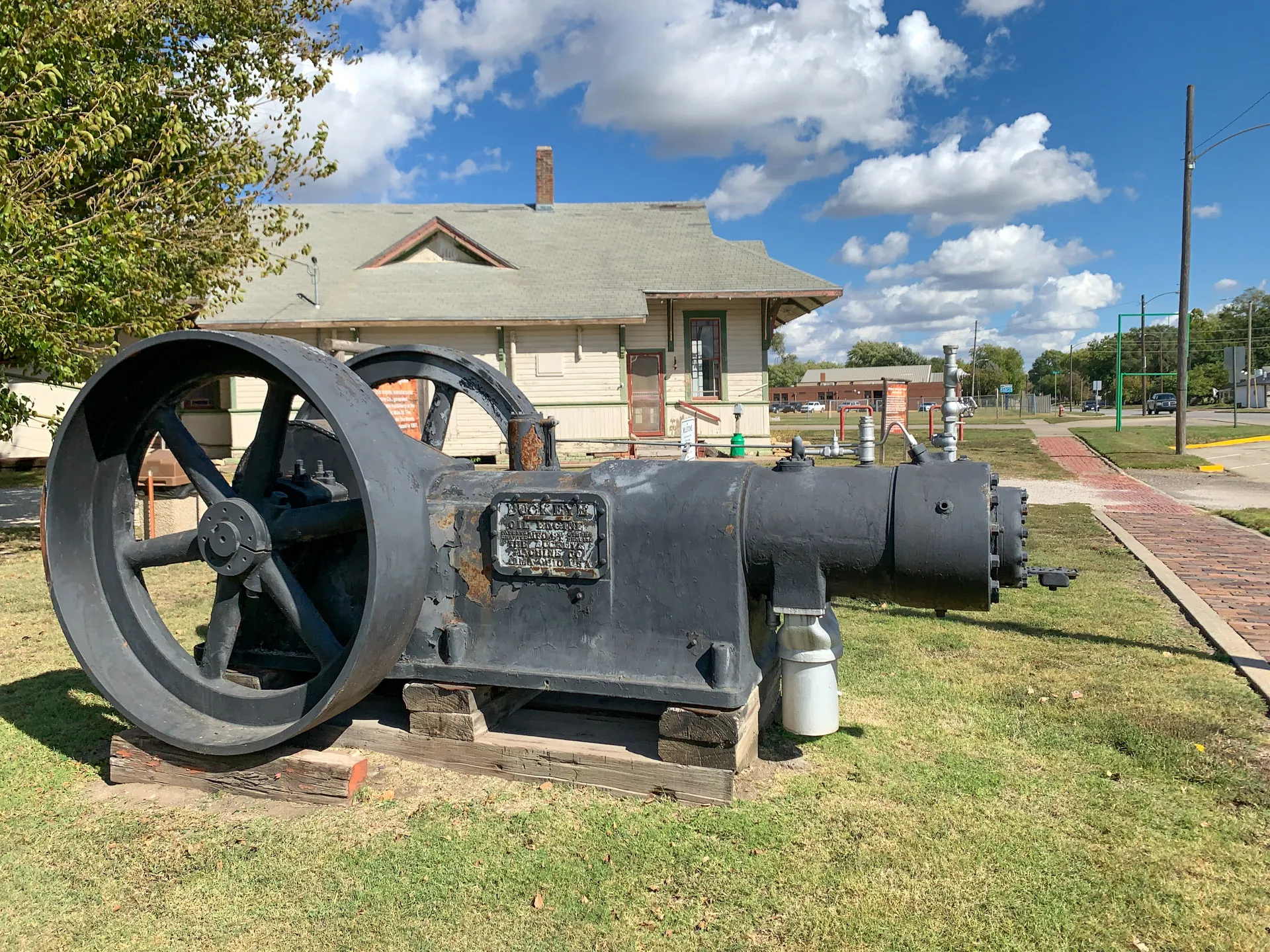
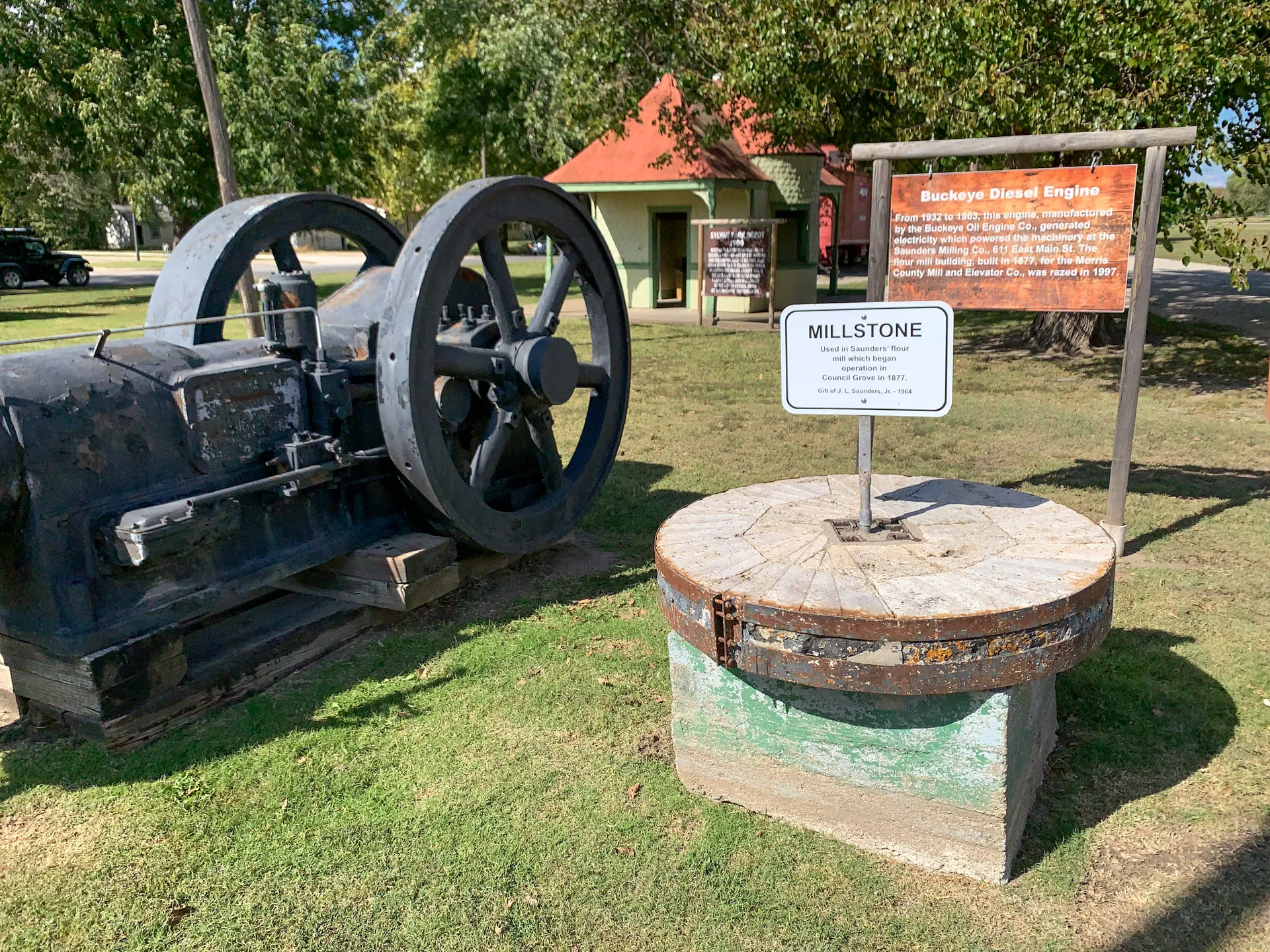
A large, vintage industrial engine sits on wooden blocks outdoors, surrounded by grass. A historic building is in the background under a blue sky with scattered clouds. The engine is metallic with a prominent flywheel. A small white container is placed next to it.
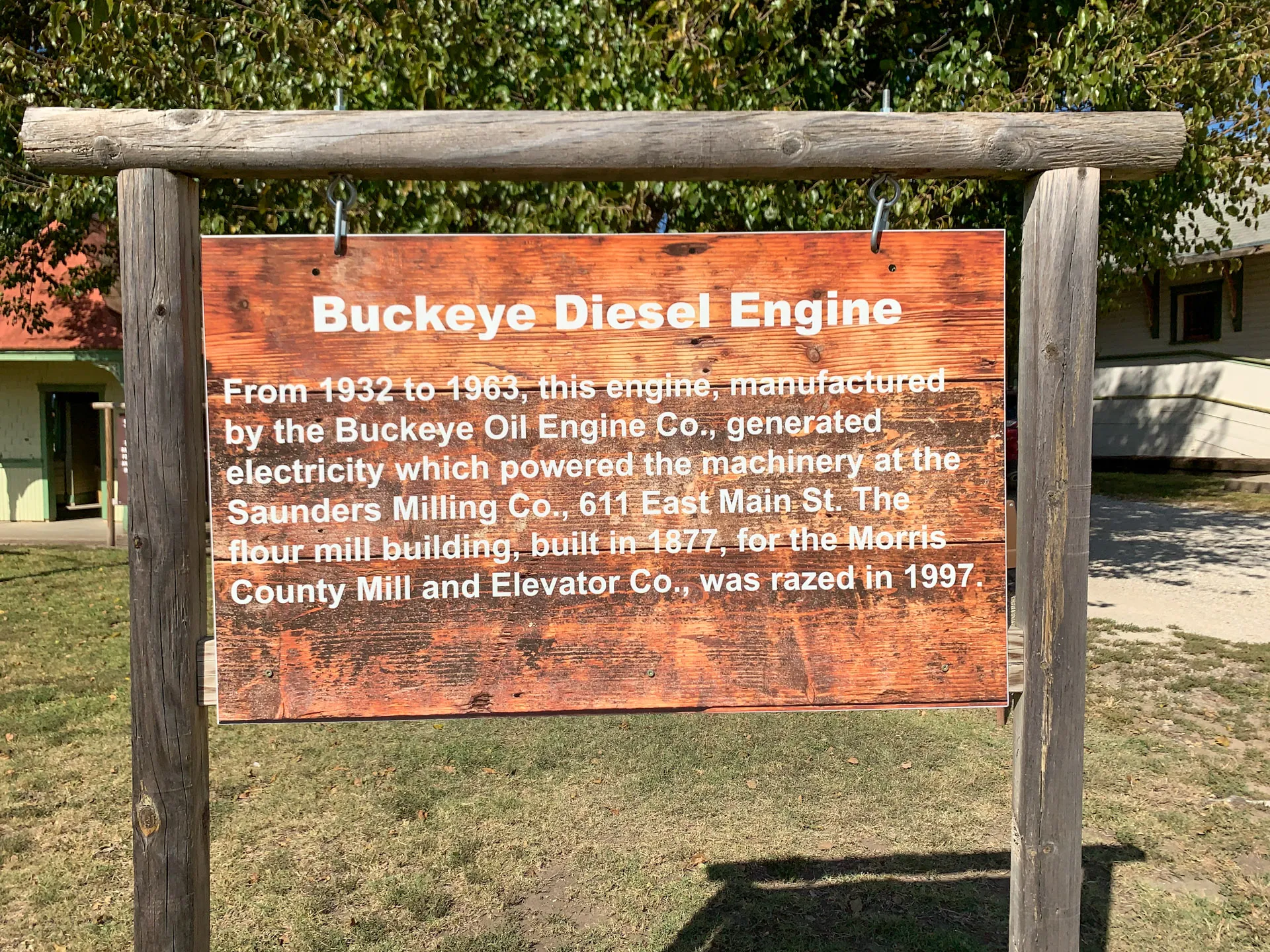
A wooden sign under a tree displays white text. It reads: "Buckeye Diesel Engine: From 1932 to 1963, this engine, manufactured by the Buckeye Oil Engine Co., generated electricity which powered the machinery at the Saunders Milling Co., 611 East Main St. The four mill building, built in 1877, for the Morris County Mill and Elevator Co., was razed in 1997." The sign is part of an outdoor display.
An outdoor display features an old Buckeye diesel engine on the left and a millstone on the right. The engine is black and weathered, with a large wheel. A sign behind it provides historical information. Trees and a small building are visible in the background under clear skies.
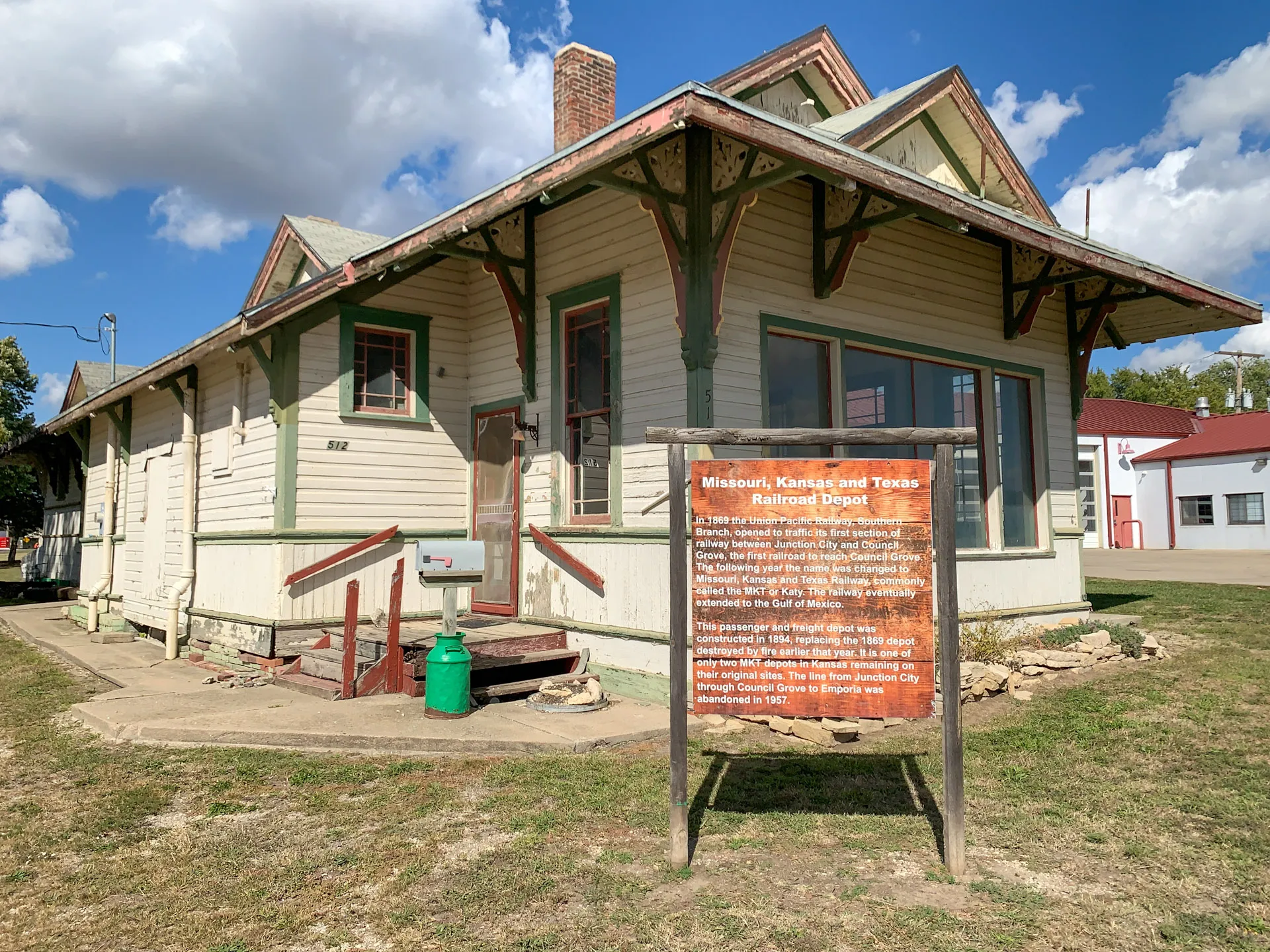
Old wooden railroad depot with a gabled roof, beige siding, and green trim. A historical marker in front provides information about the Missouri, Kansas, and Texas Railroad Depot. The sky is clear with scattered clouds and there's a small red building in the background.