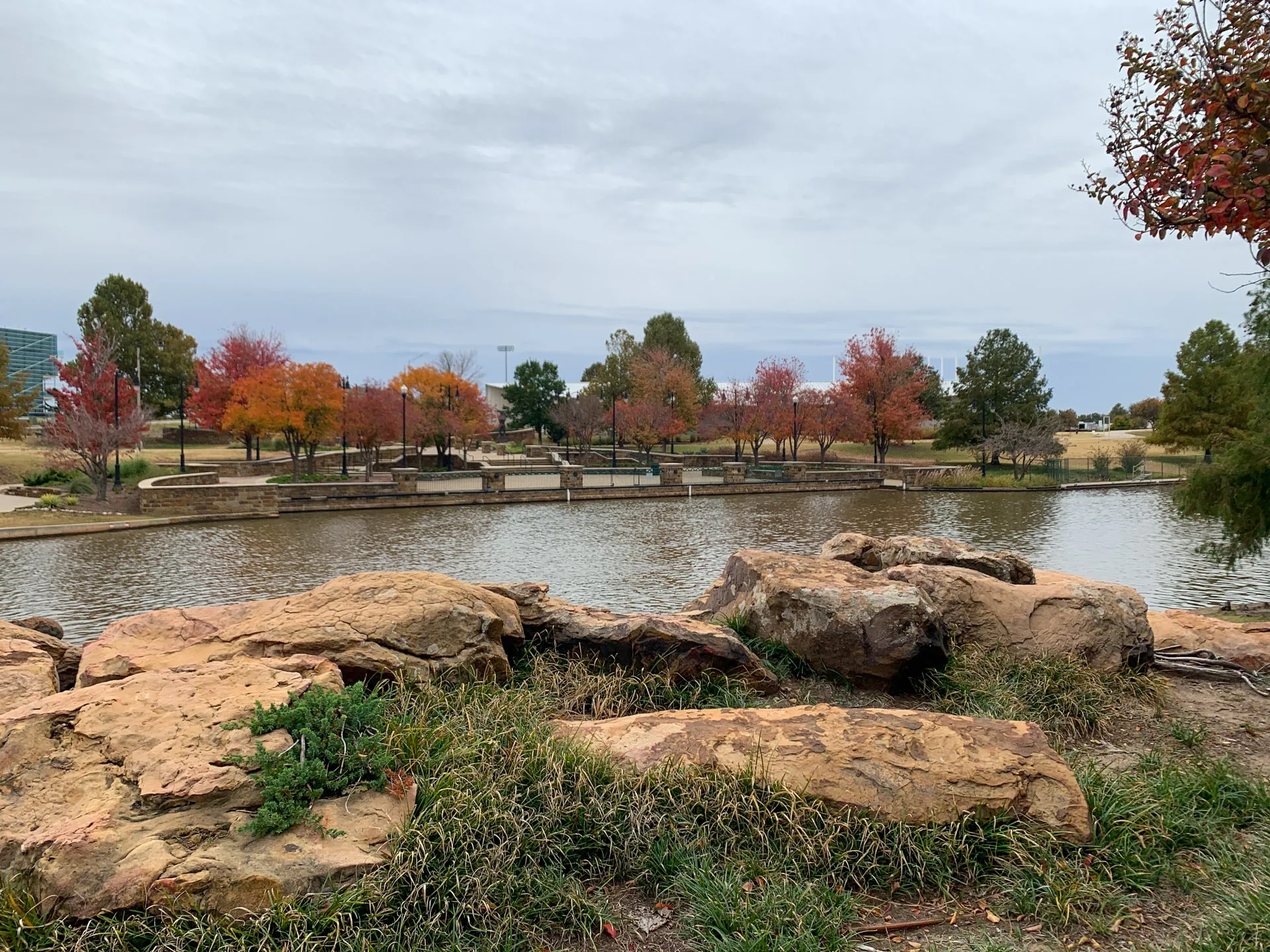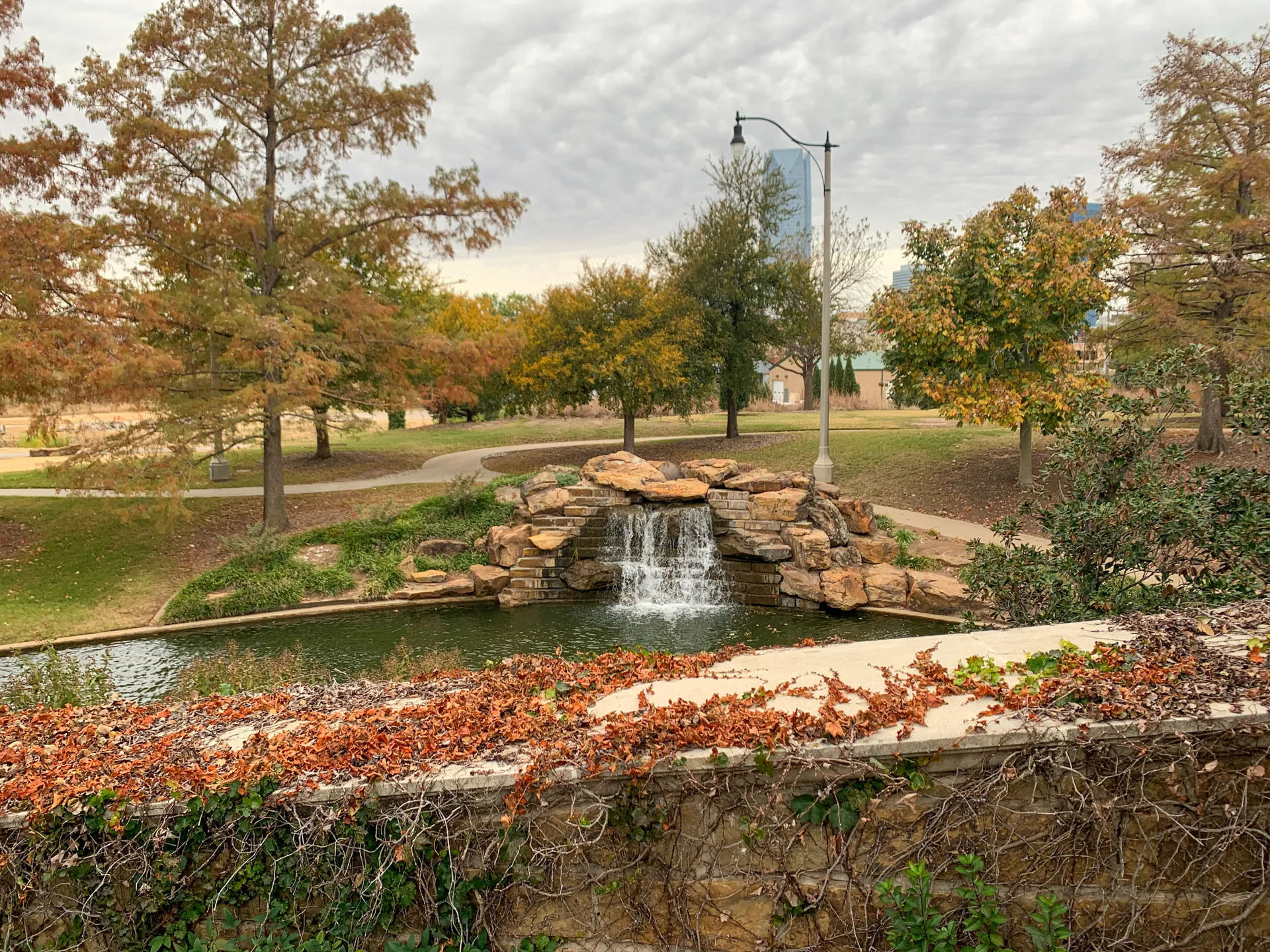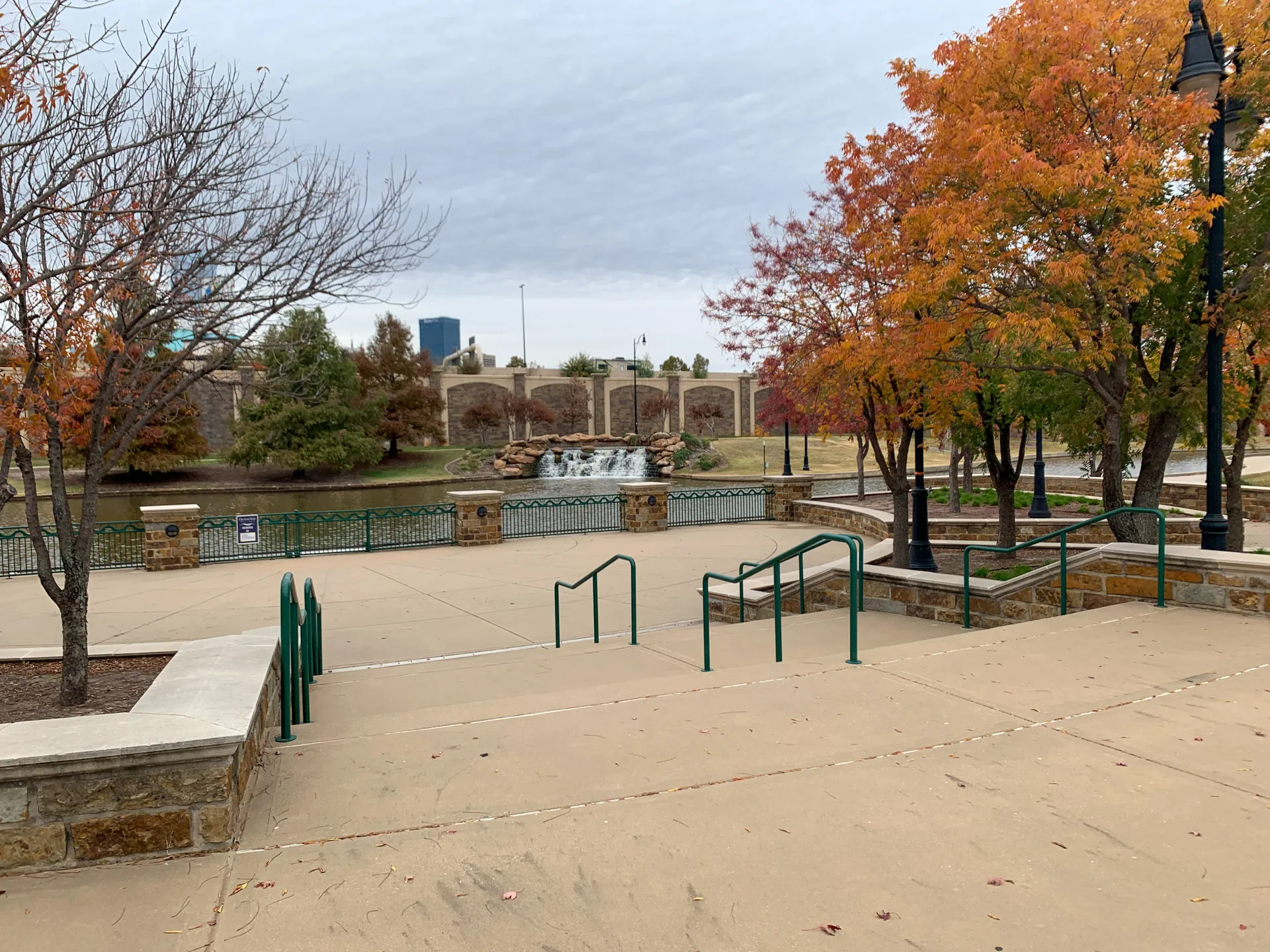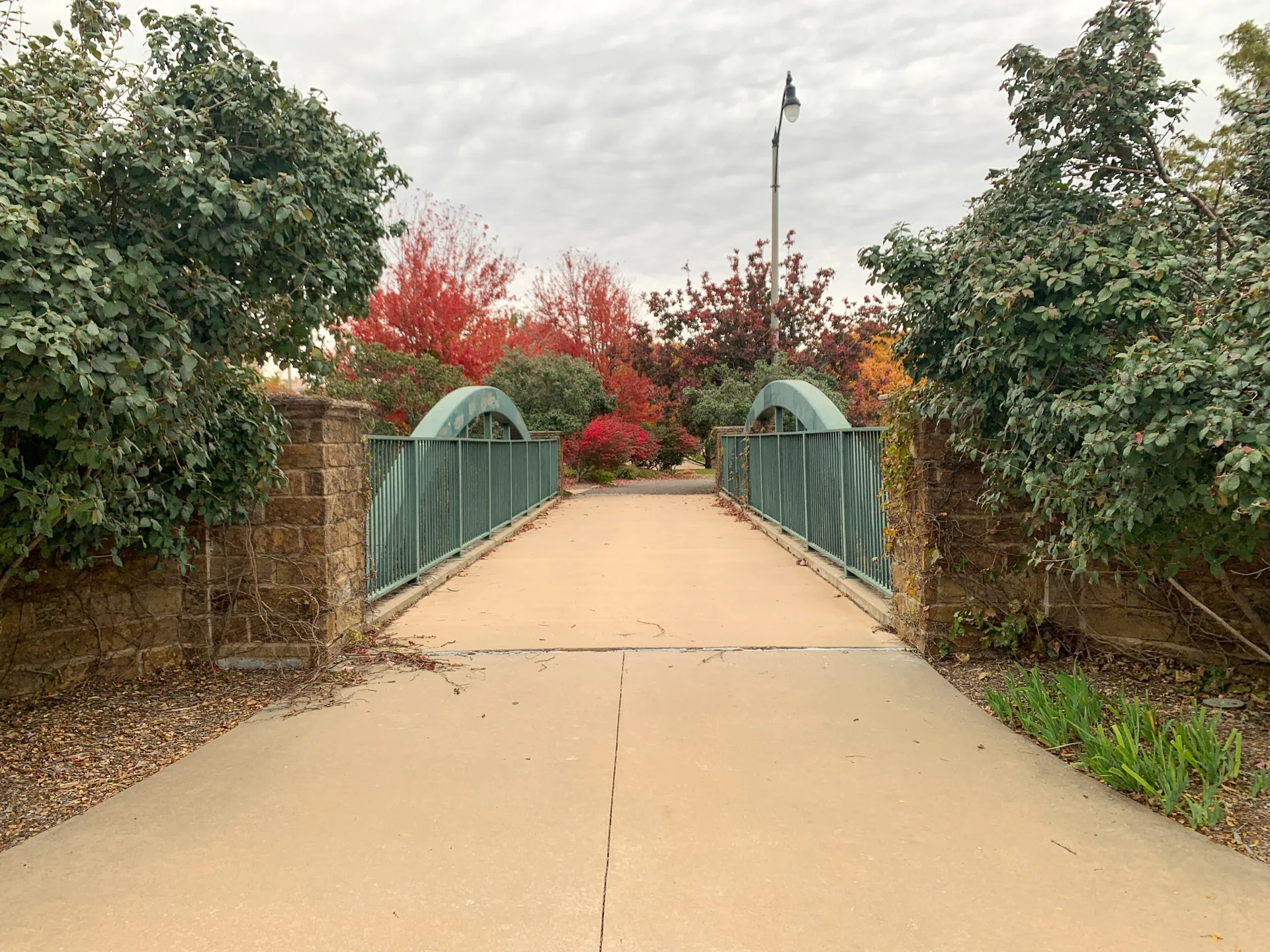
In the heart of Oklahoma City, along the Bricktown Canal, bronze riders thunder across the plains in a moment frozen in time. This is the Centennial Land Run Monument, one of the world’s largest bronze sculptures, and it tells a story of ambition, chaos, and the making of a state.
On April 22, 1889, at high noon, a cannon fired—and with it, a frenzied rush began. Some 50,000 settlers surged into the Unassigned Lands of central Oklahoma to claim their piece of the American dream. The first of several land runs, it opened up 2 million acres of former Native American territory to non-Native settlement. They came on horseback, in wagons, on foot—staking claims to land that had once been promised to others.
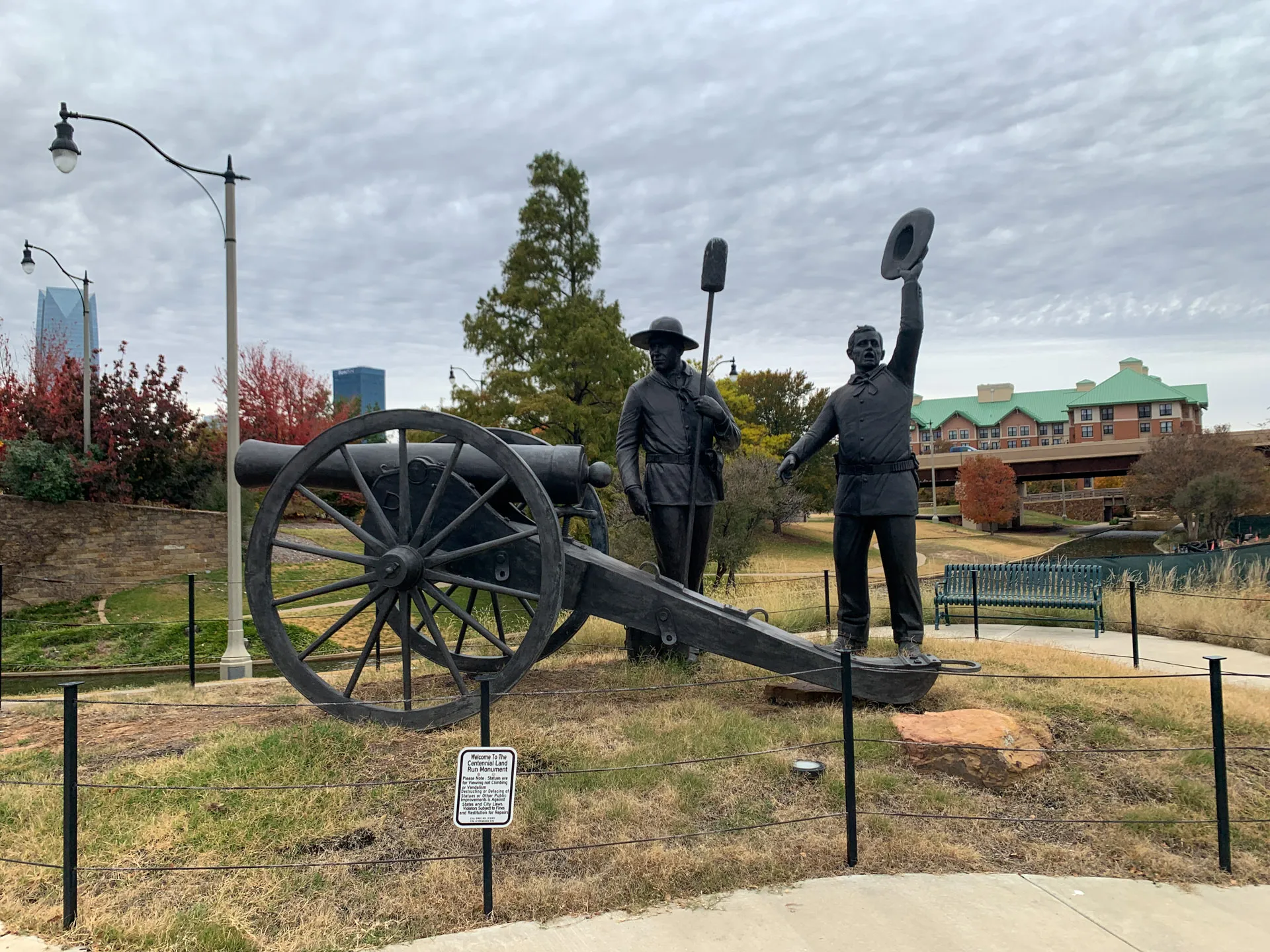
The land they rushed into had been promised—guaranteed—to Native nations forcibly removed to Indian Territory decades earlier. Treaties were broken. Promises dissolved. The very concept of “unassigned lands” was a political creation, erasing Indigenous presence and sovereignty from the map.
For the tribes who had endured the Trail of Tears and resettlement, this was another betrayal—another wave of settlers rushing in, sanctioned by law, to occupy land once again taken from them.
Fast-forward a hundred years. To commemorate the centennial of that land run, sculptor Paul Moore began an ambitious work: a larger-than-life monument capturing the adrenaline, energy, and raw emotion of that moment in 1889. Horses rear, wagons tip, and men and women strain forward—frozen in motion yet alive with purpose.
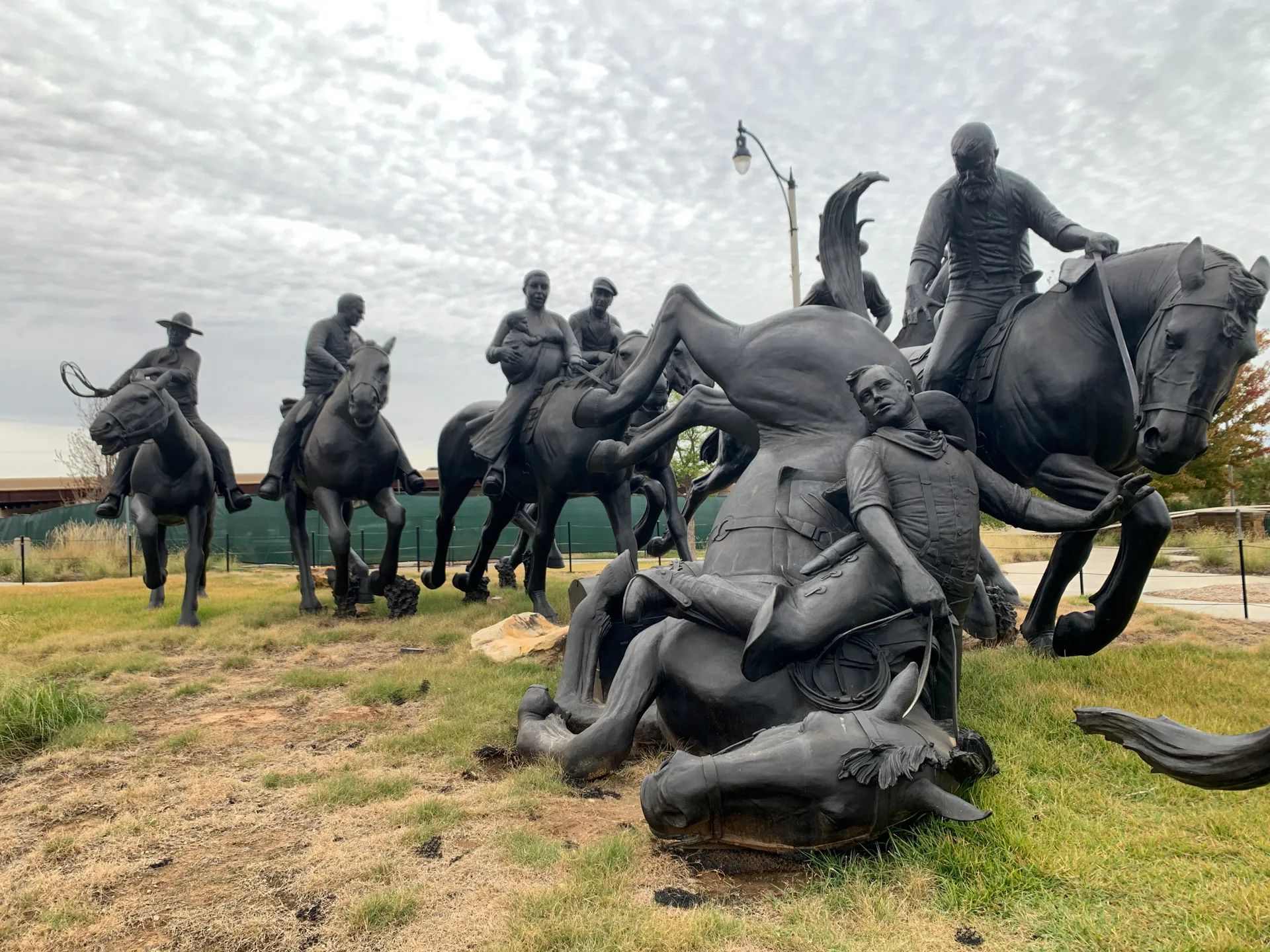
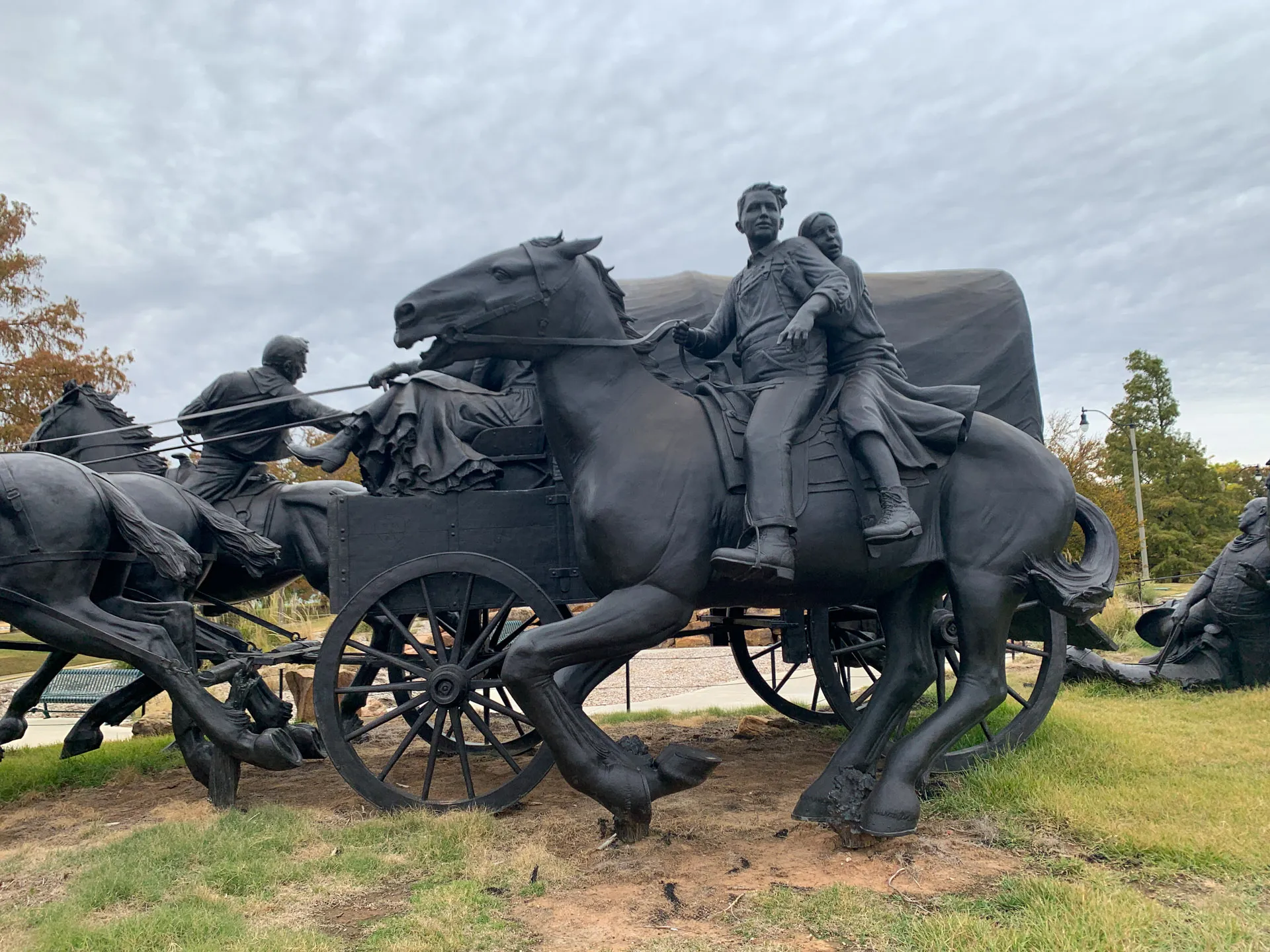
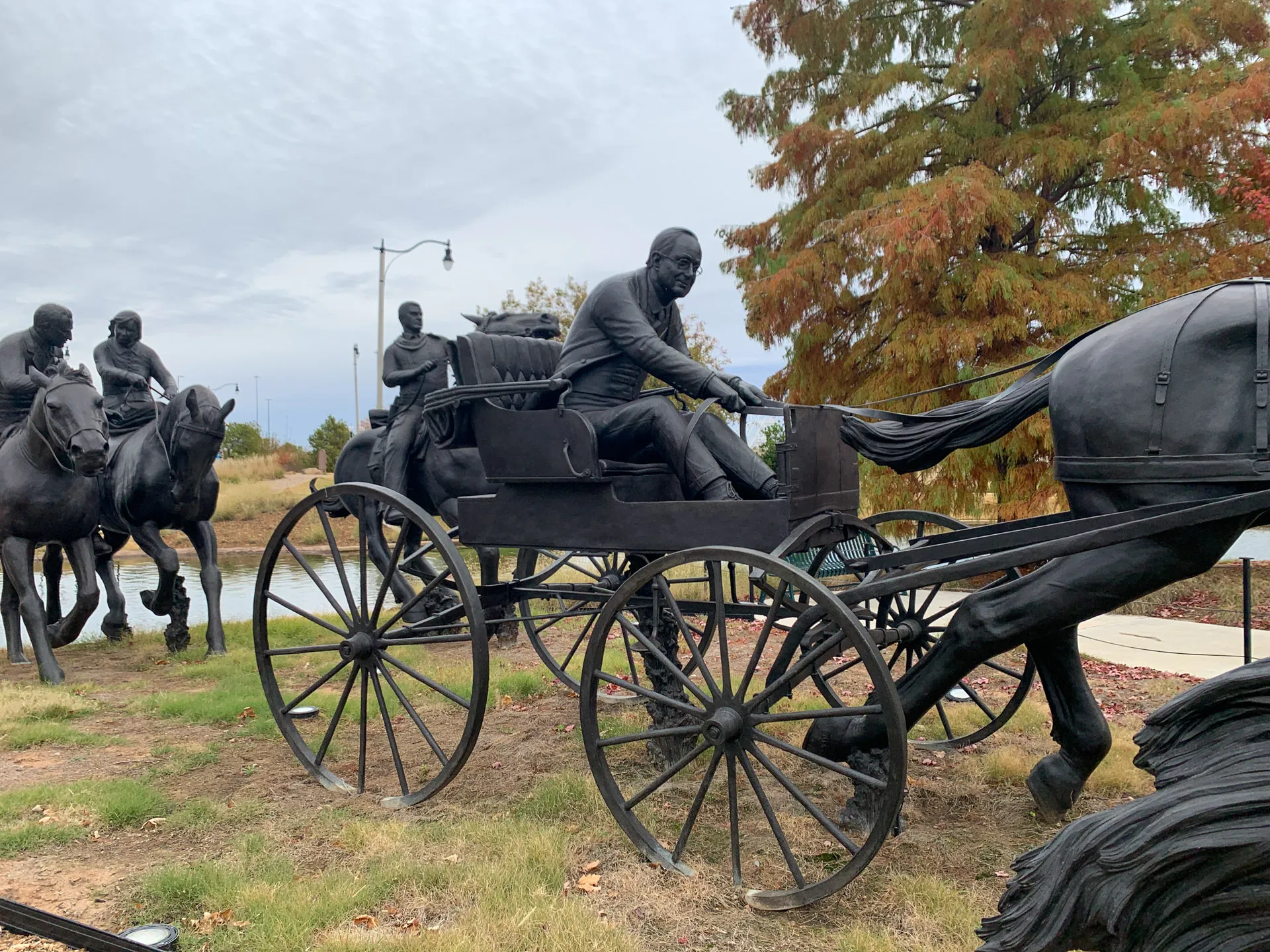
The scale is epic. The monument spans 365 feet, with 45 figures galloping westward in an open plaza. It’s not just a celebration—it’s a conversation about history, settlement, displacement, and the unrelenting American push for expansion.
Standing there, you don’t just see history—you feel the wind in the horses’ manes, the dust beneath the wagon wheels, and the urgency in the eyes of settlers chasing hope.
It’s a reminder: every piece of land tells a story. And some stories still echo across the prairie.
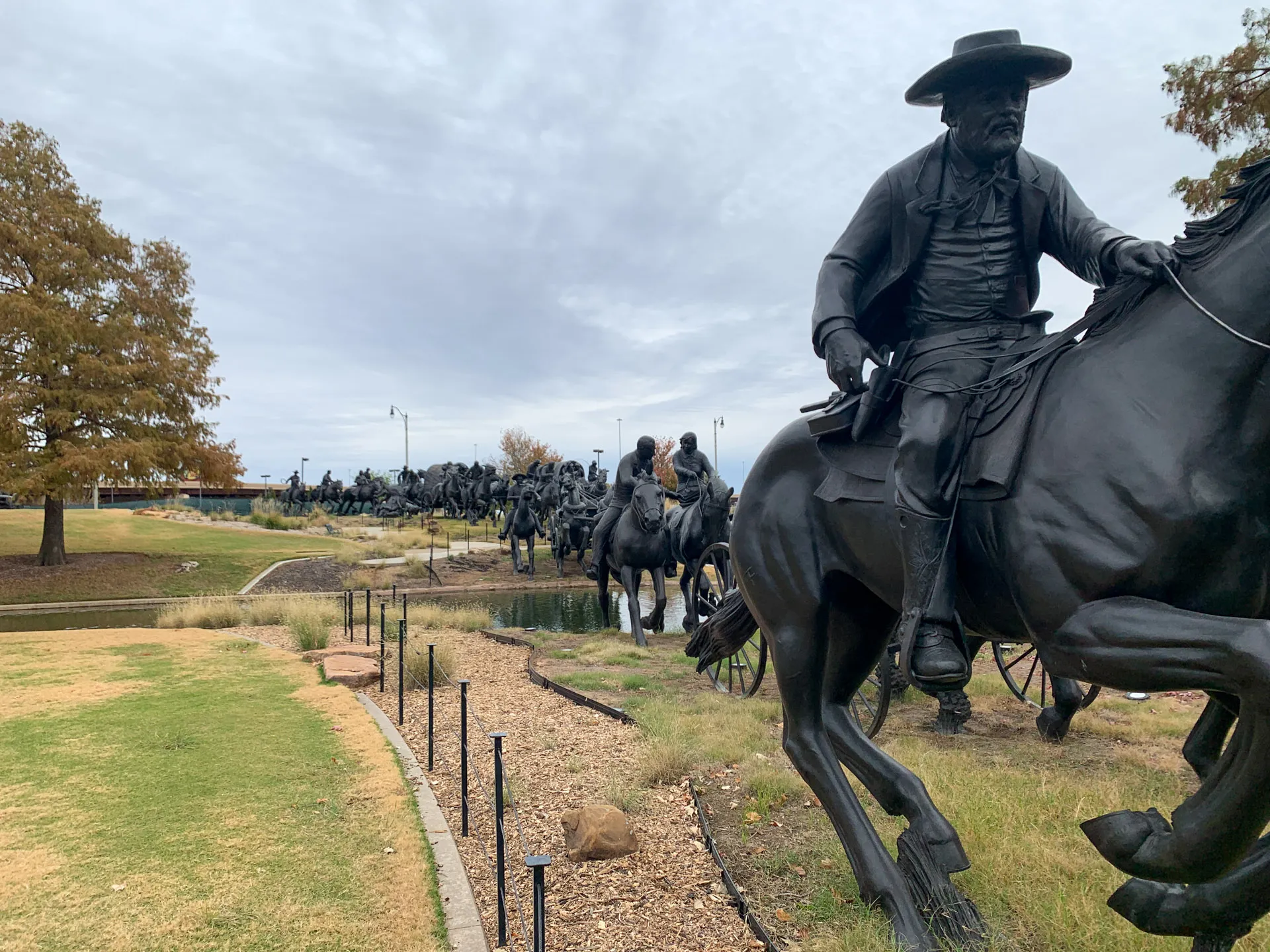
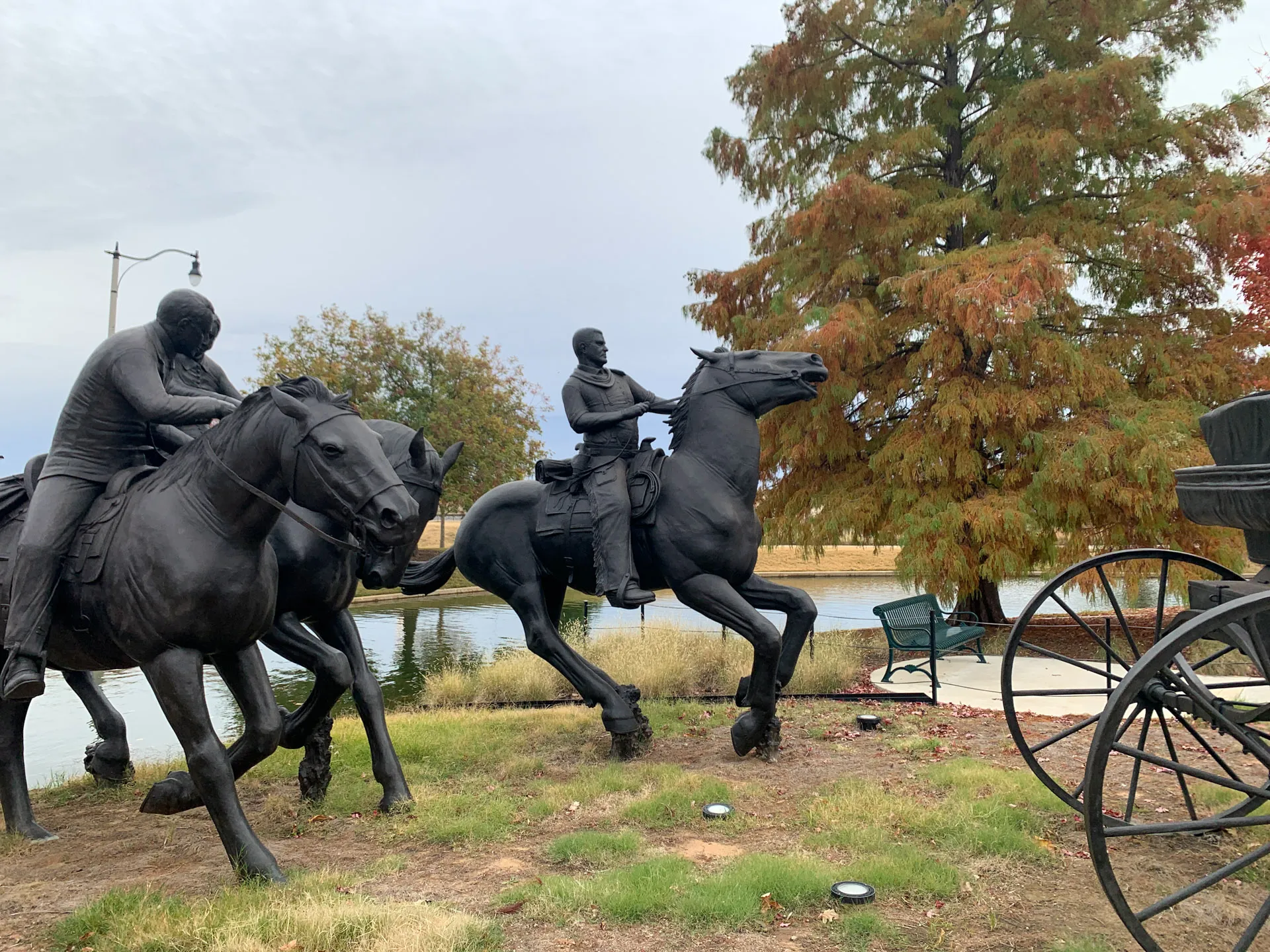
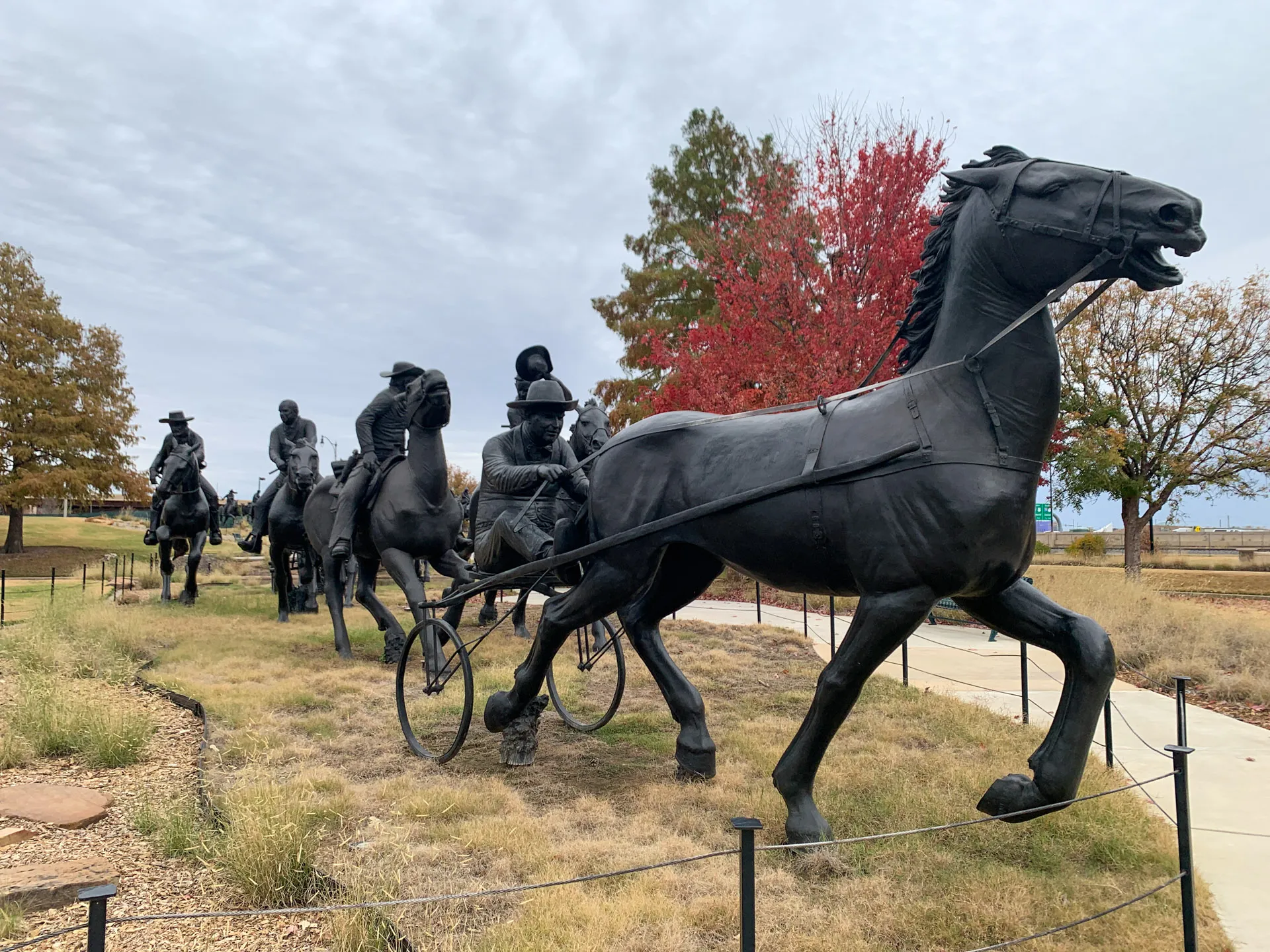
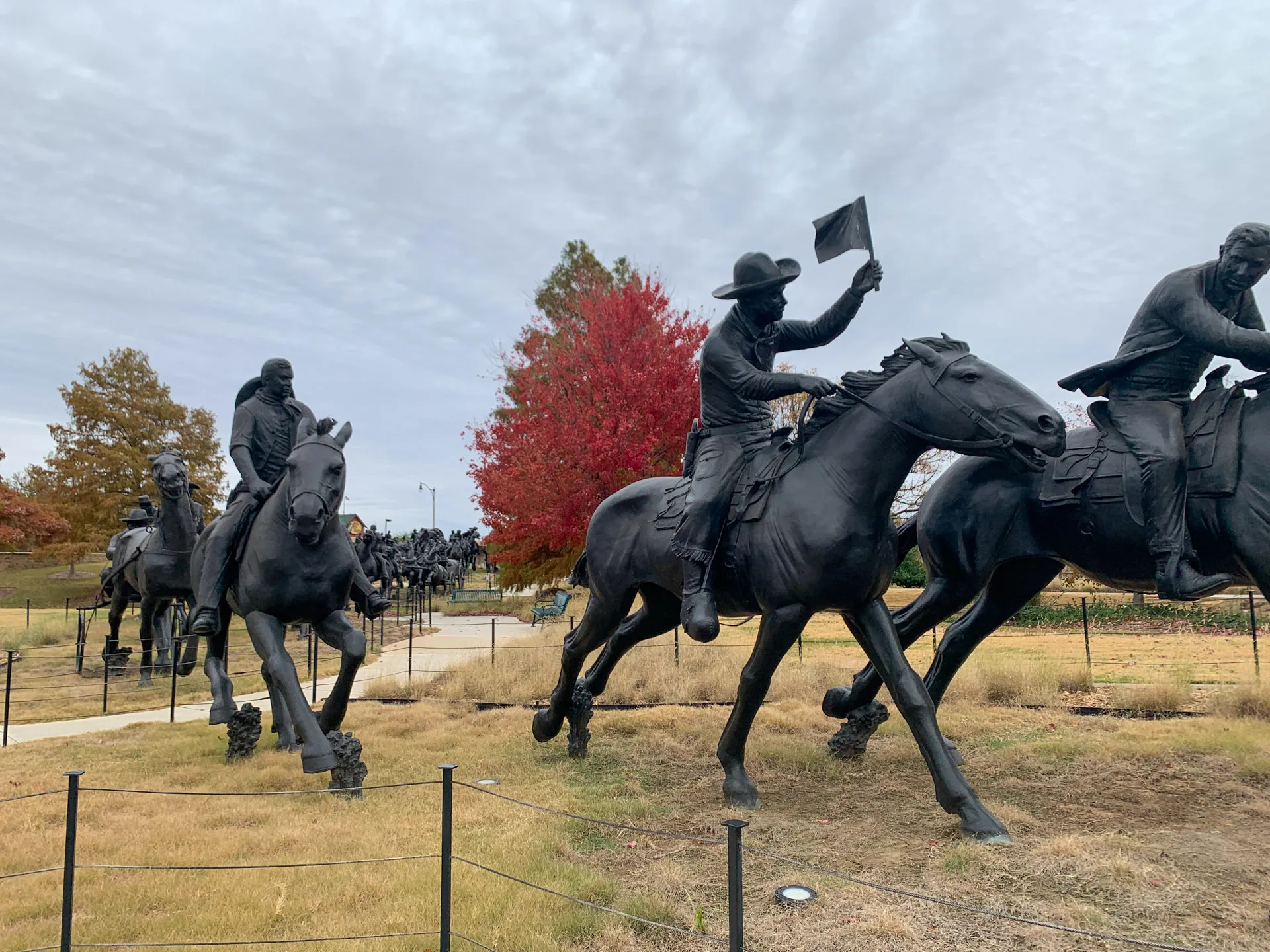
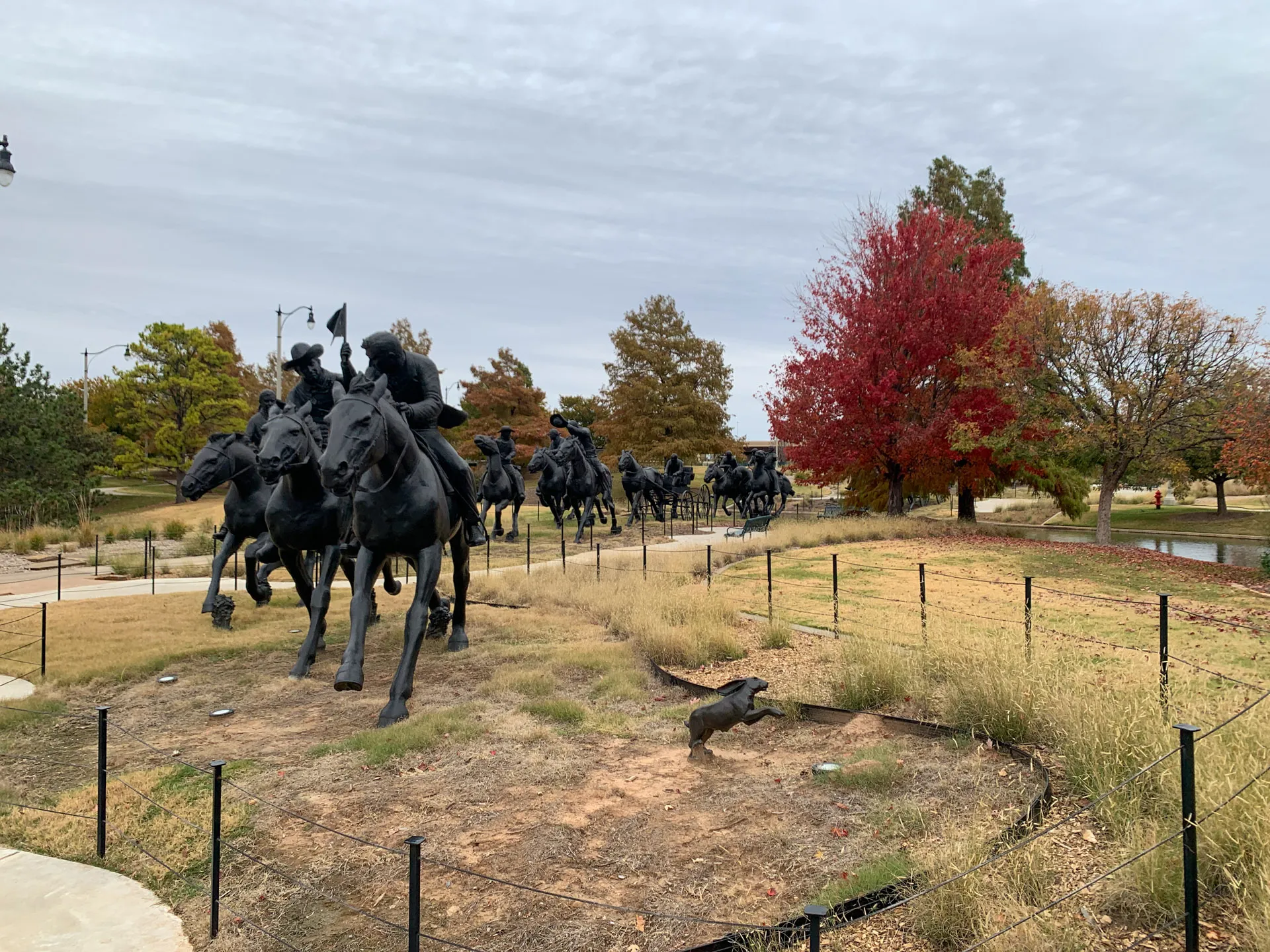
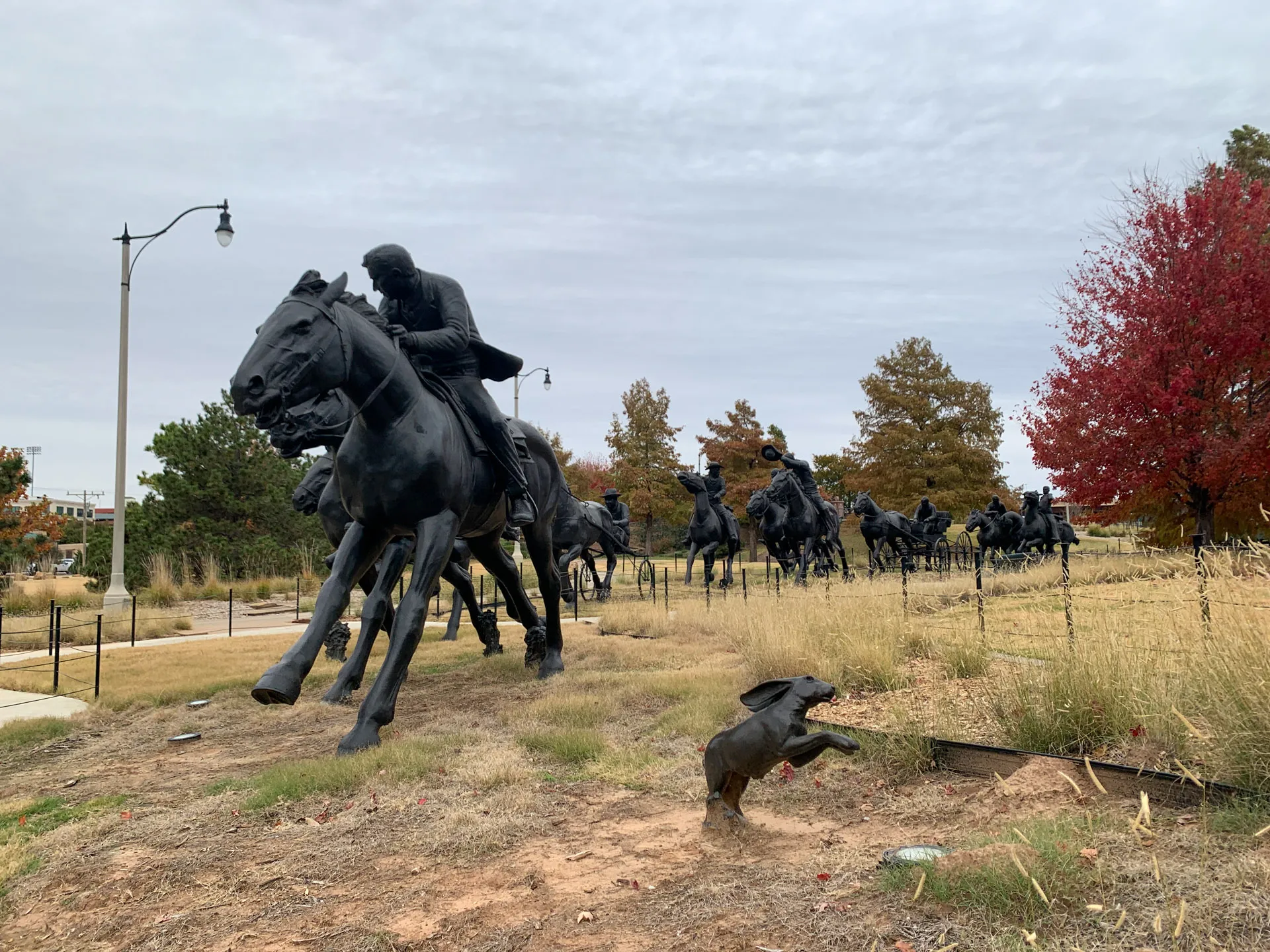
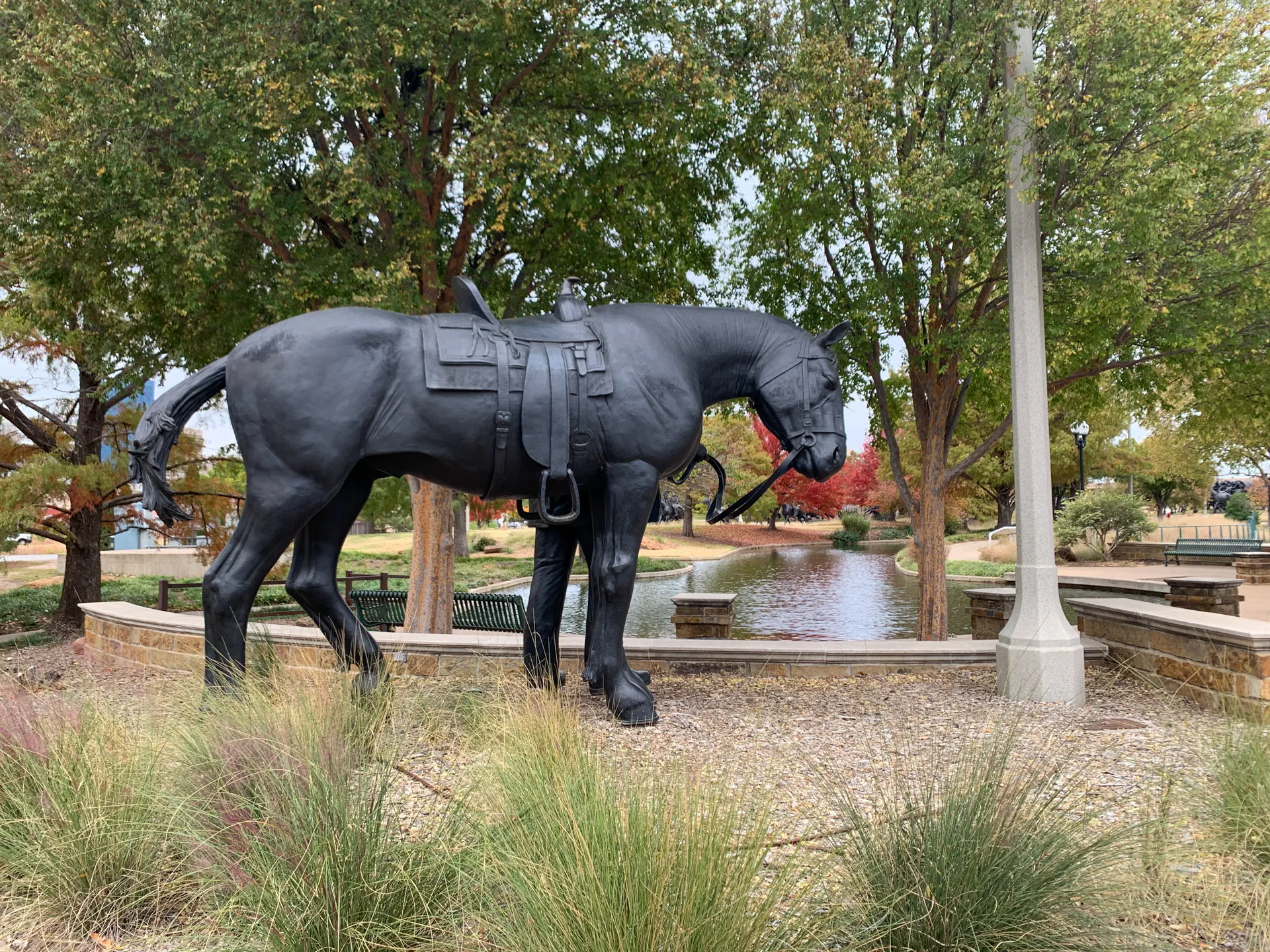
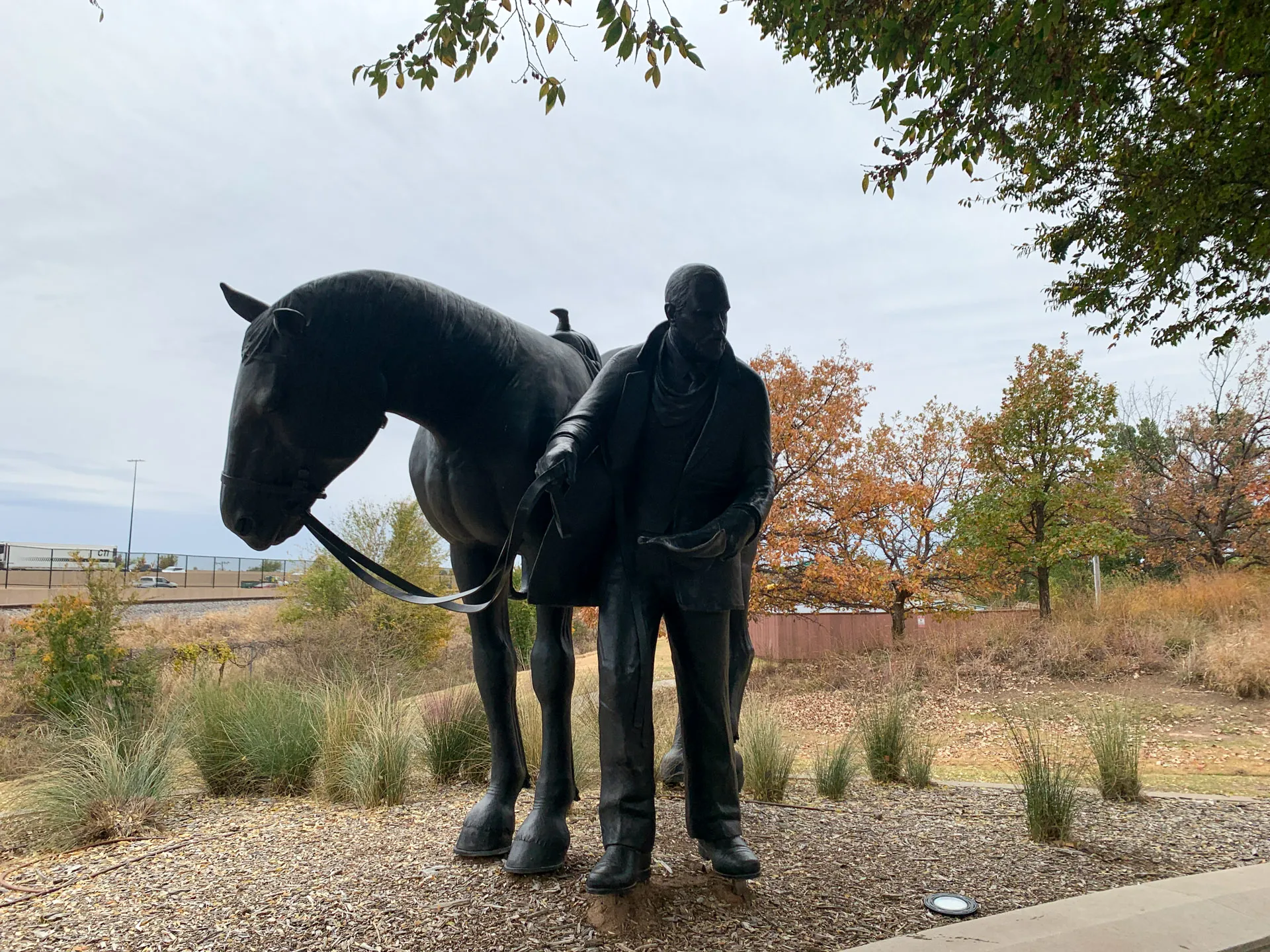
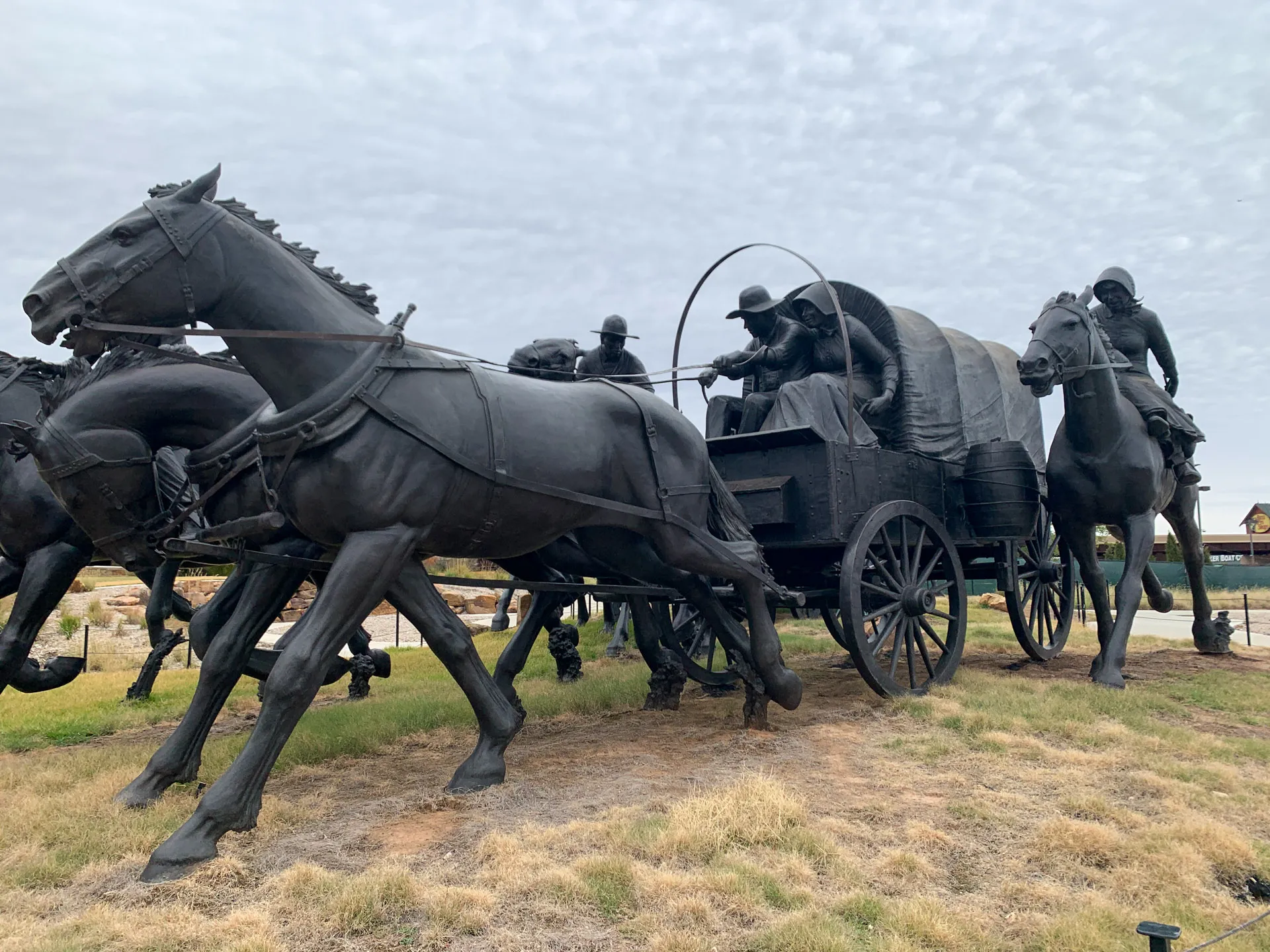
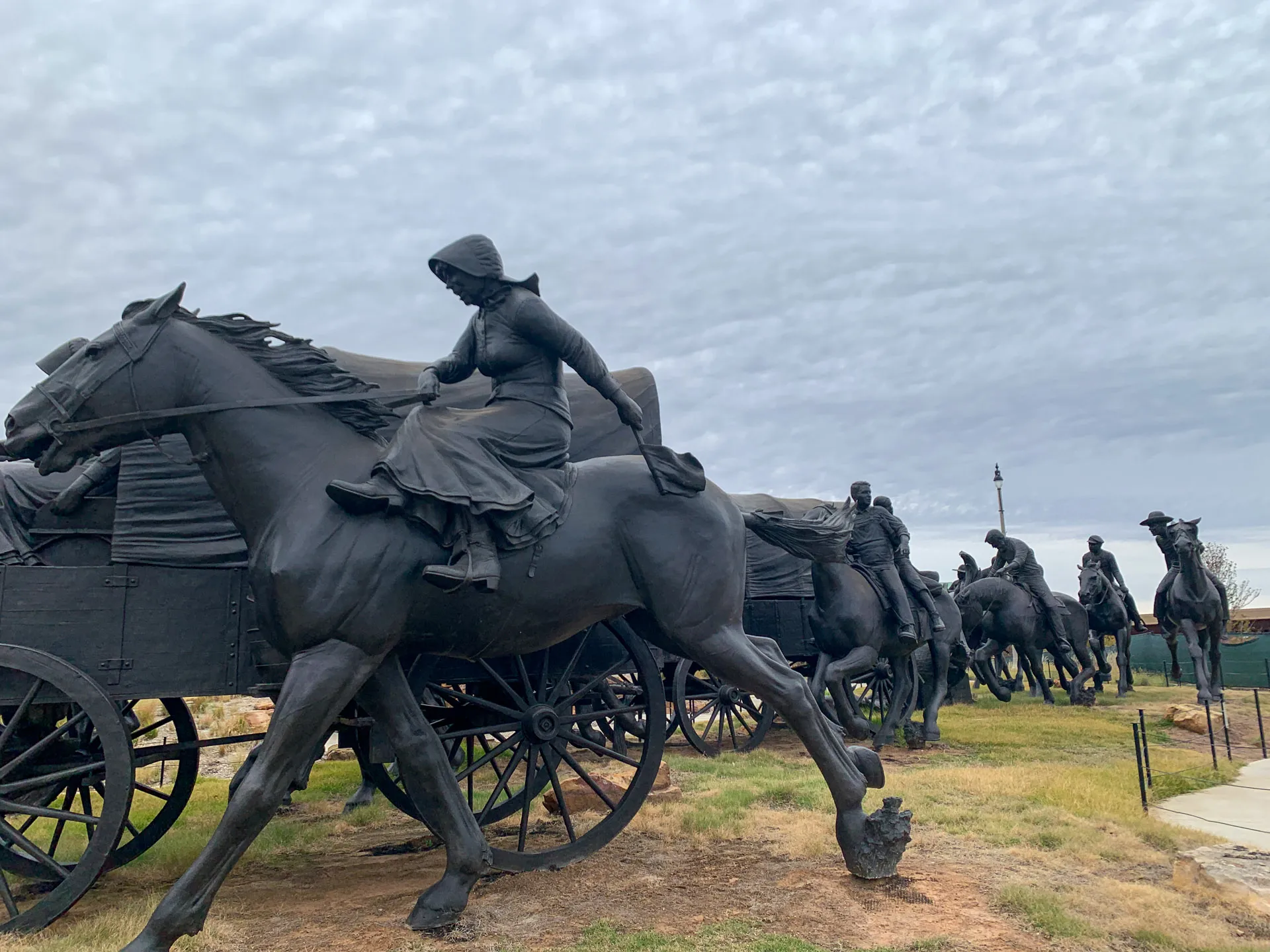
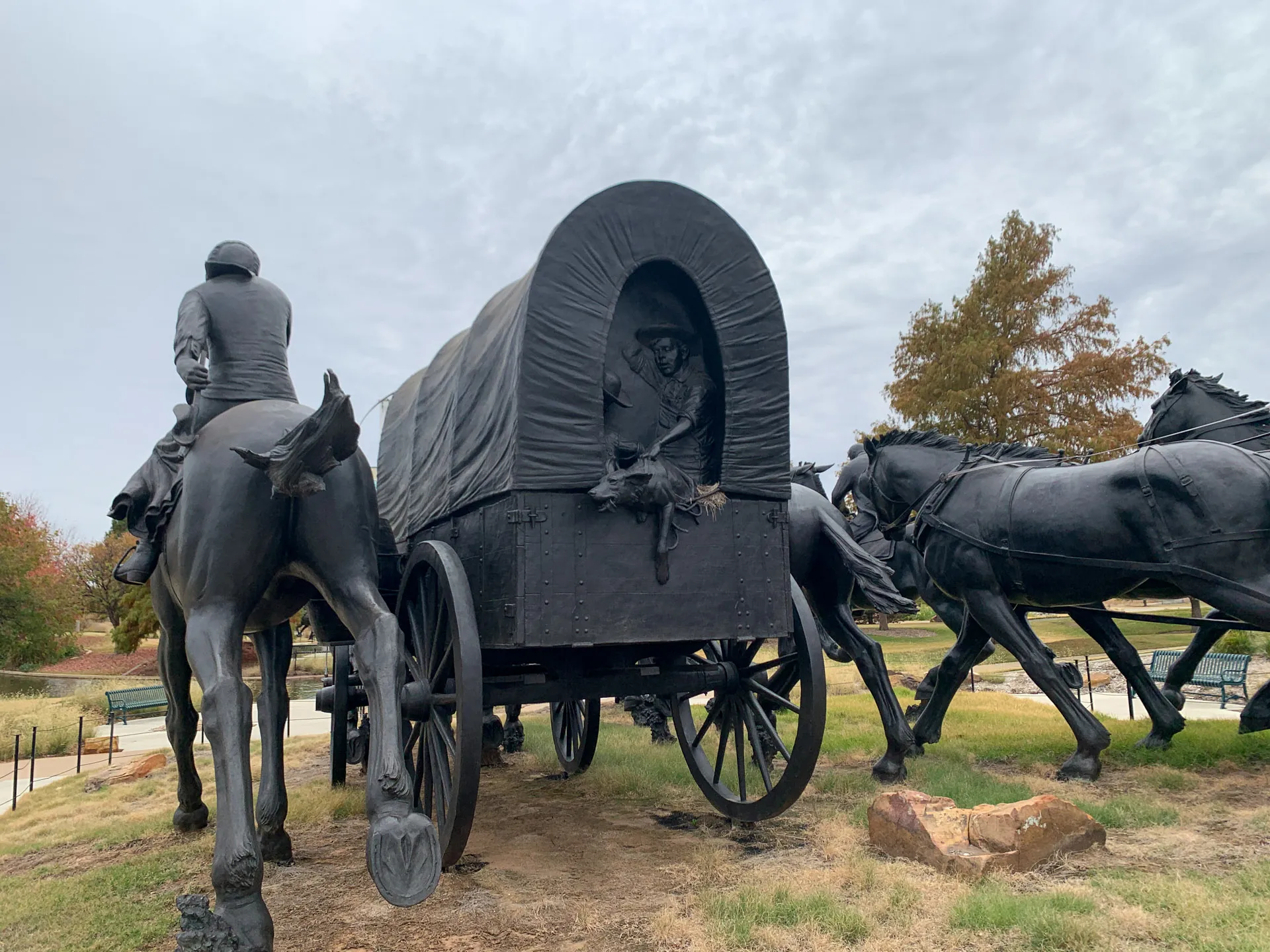
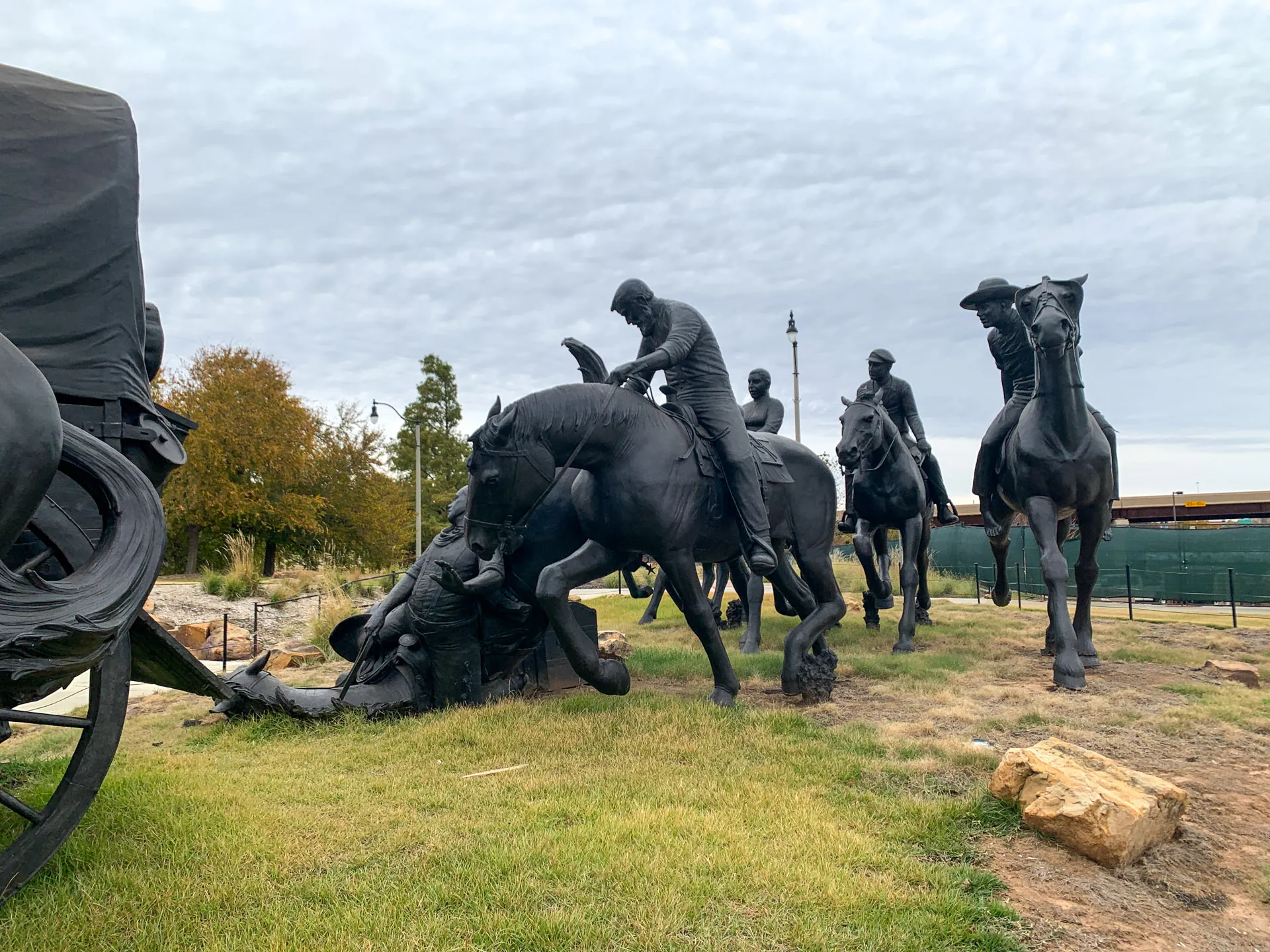
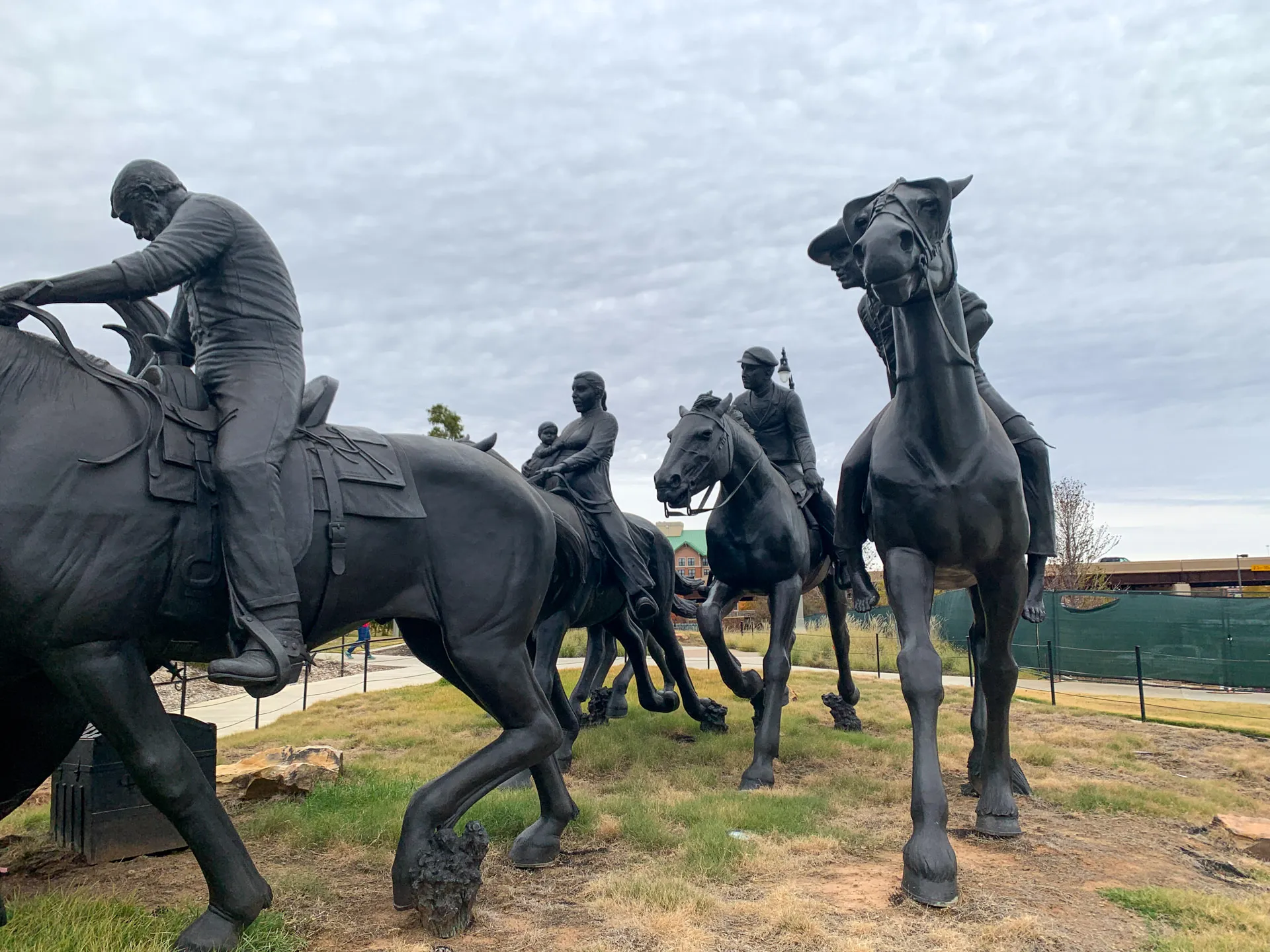
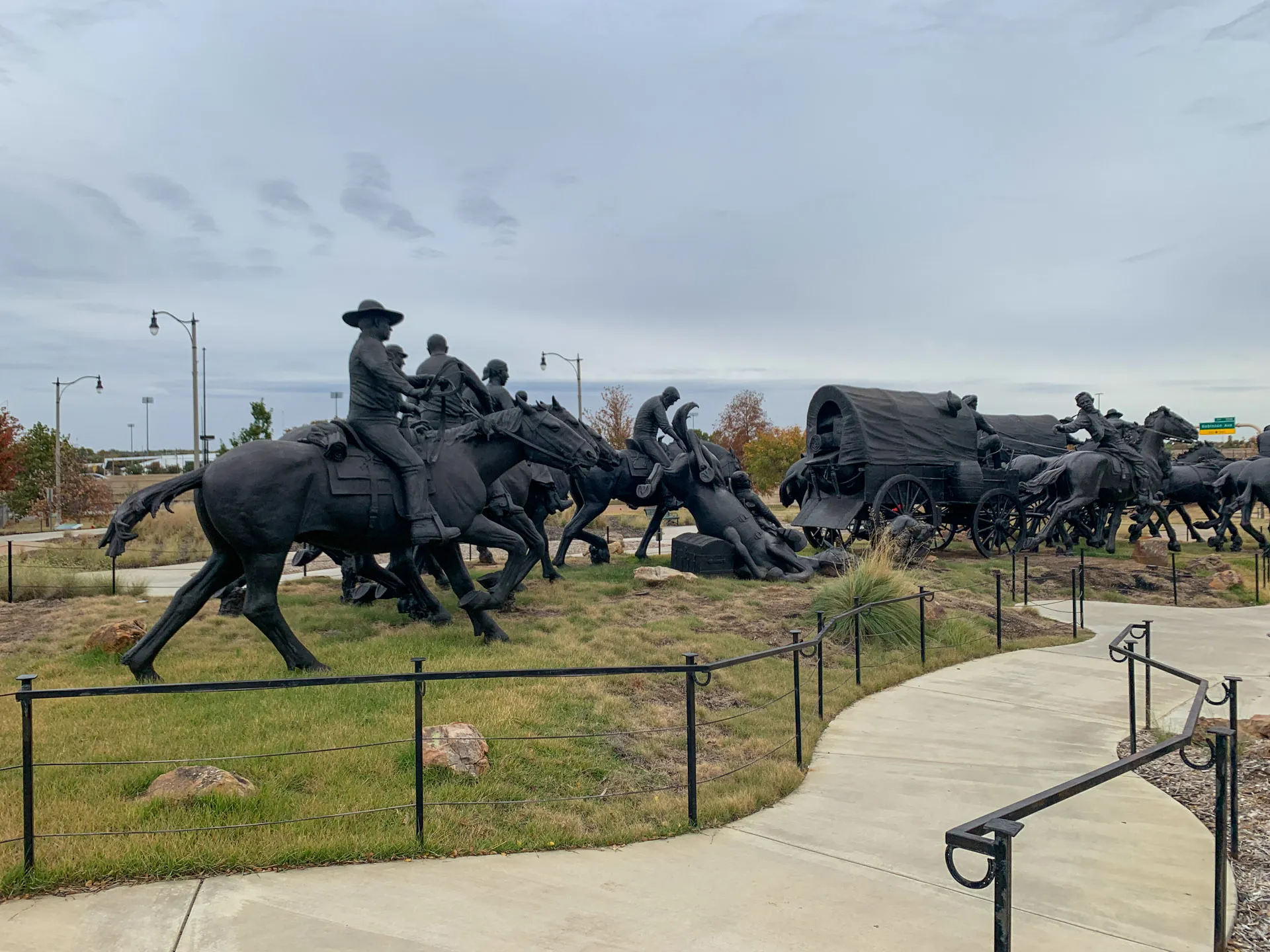
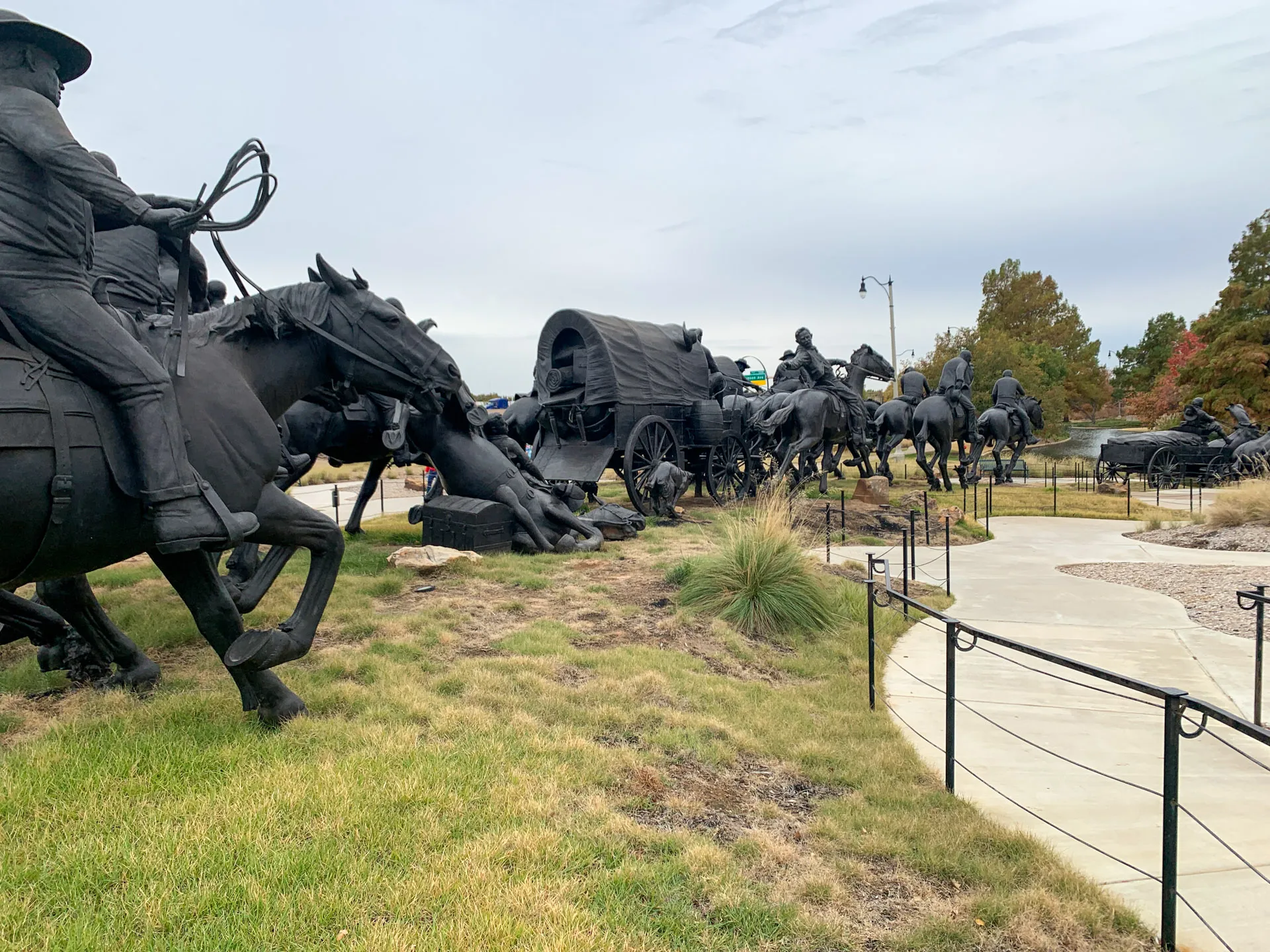
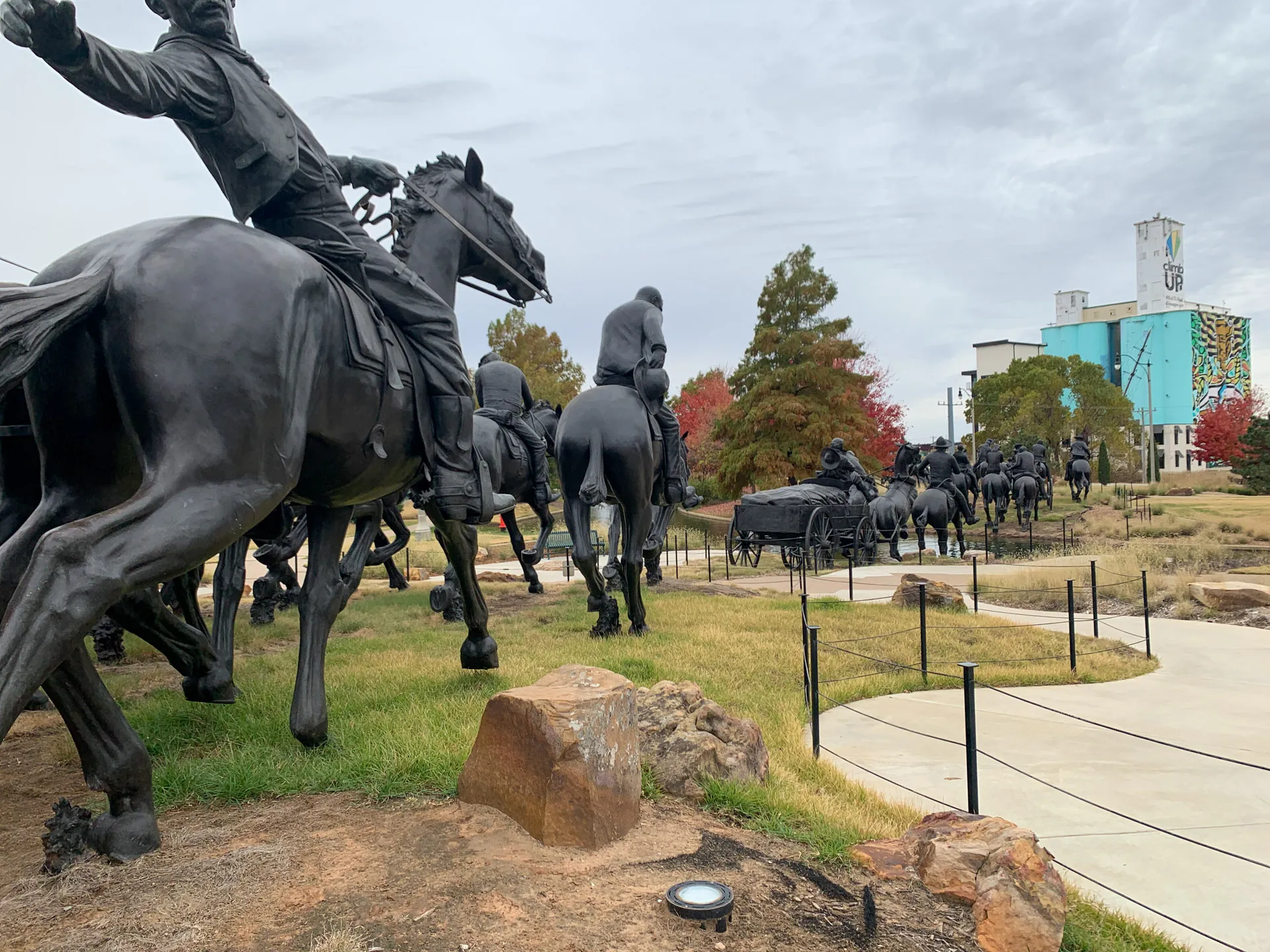
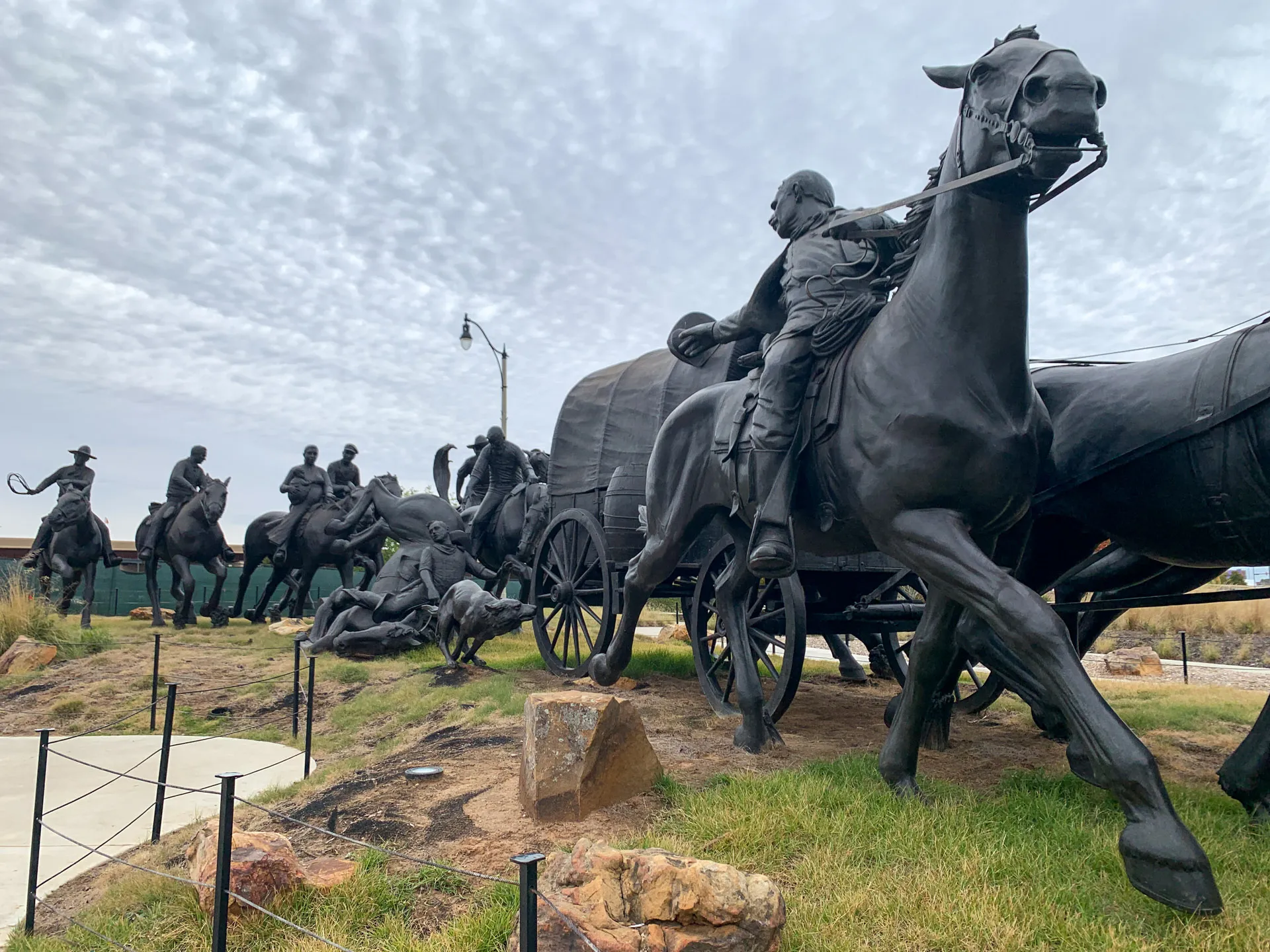
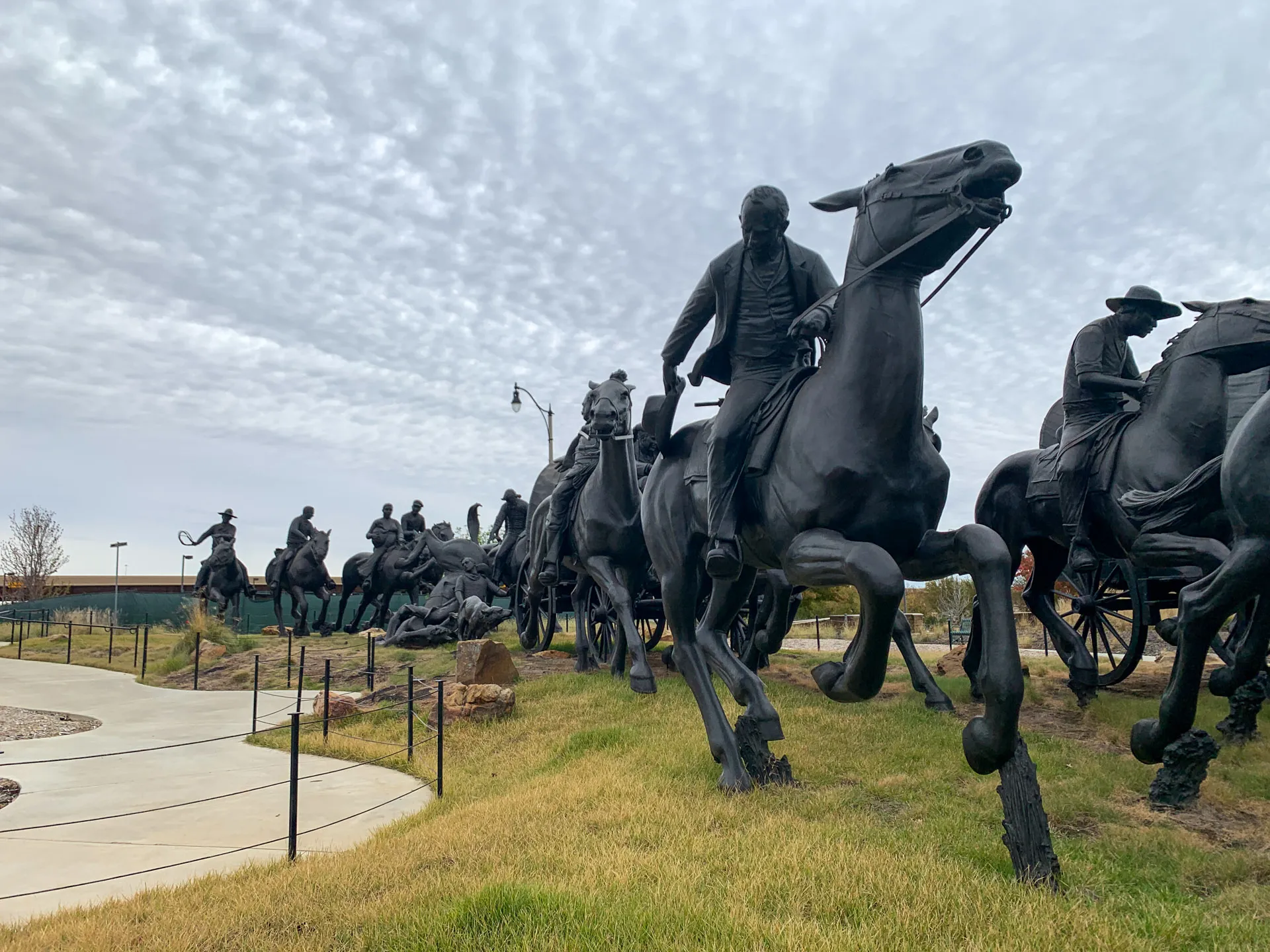
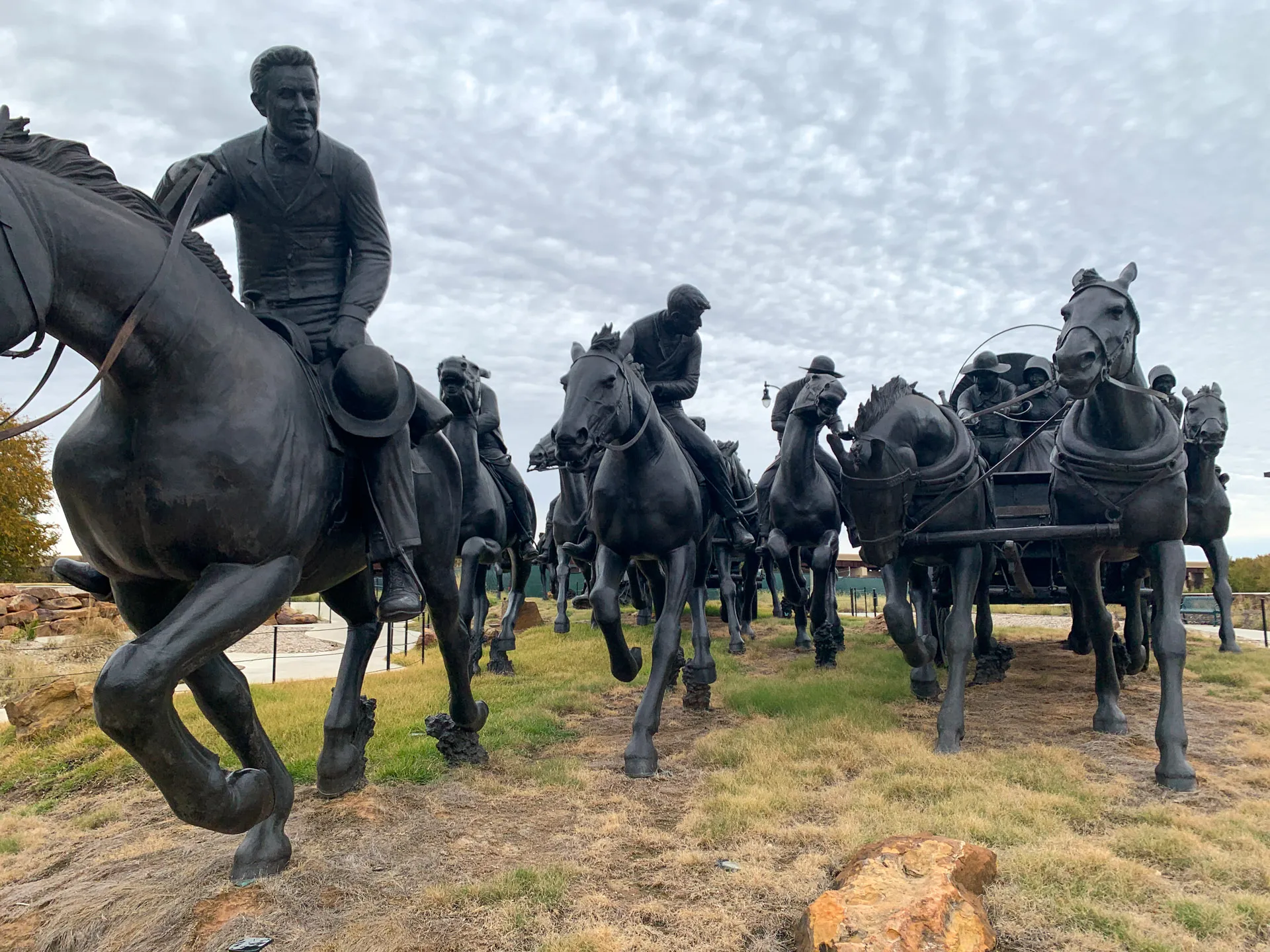
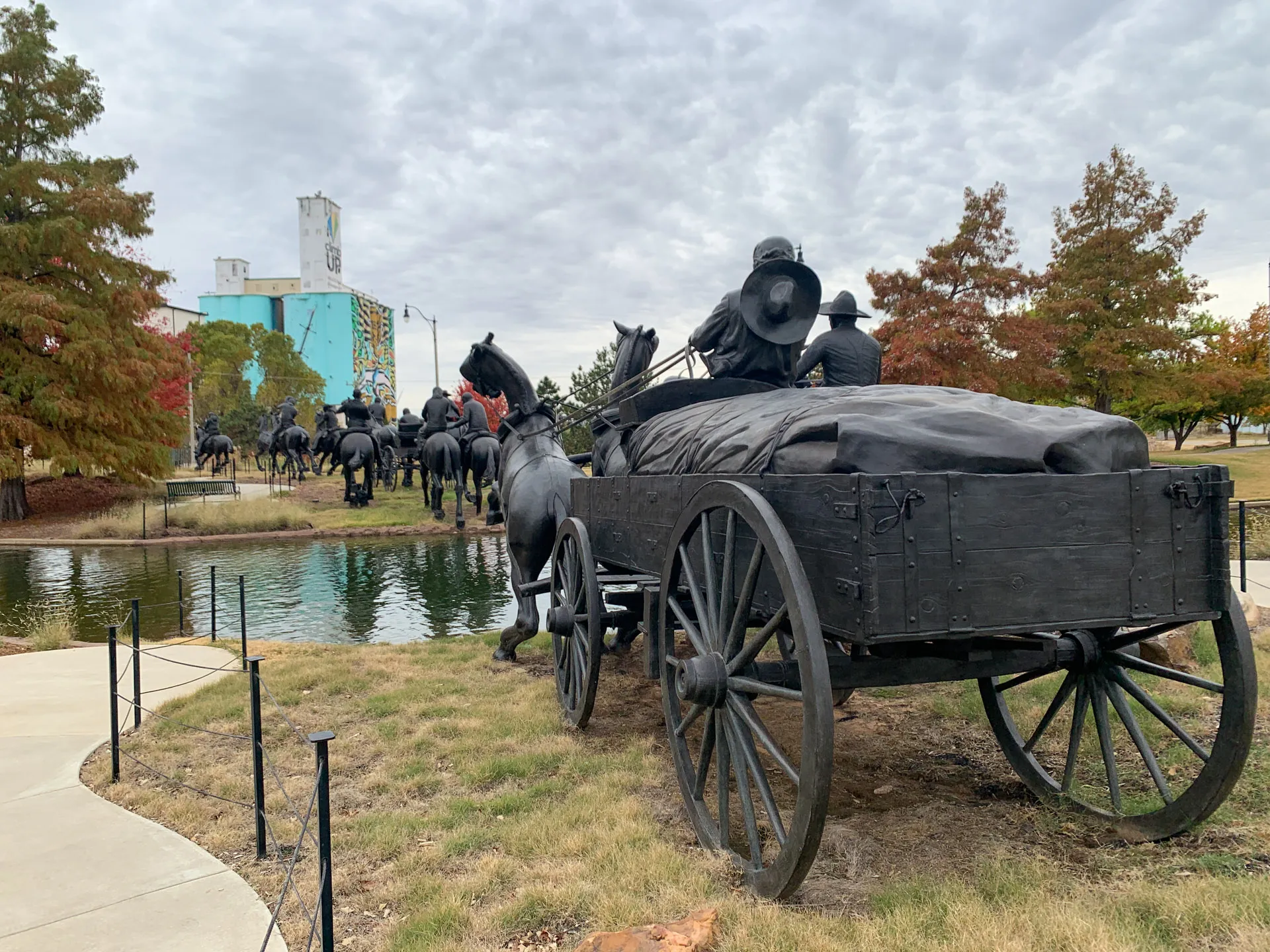
The monument is very interesting because you cannot see it all at once from any vantage point. You have to walk along it to get a sense of the massive scale of this work of art.
As part of the overall Bricktown downtown revitalization, it’s a very pleasant area to wander around.