Falls Park – Sioux Falls, SD

Visited on: Wednesday, July 24, 2024
Cost: Free
Falls Park, located in the heart of Sioux Falls, South Dakota, is a captivating urban oasis that offers both natural beauty and historical significance. The park spans 123 acres and is centered around the stunning Big Sioux River Falls, where the river cascades over a series of quartzite rock formations. These falls, which drop over 100 feet in total, have been a vital part of the city’s identity since its founding. The park is not only a scenic retreat but also a hub of local history, and you can enjoy the panoramic views from the five-story observation tower.
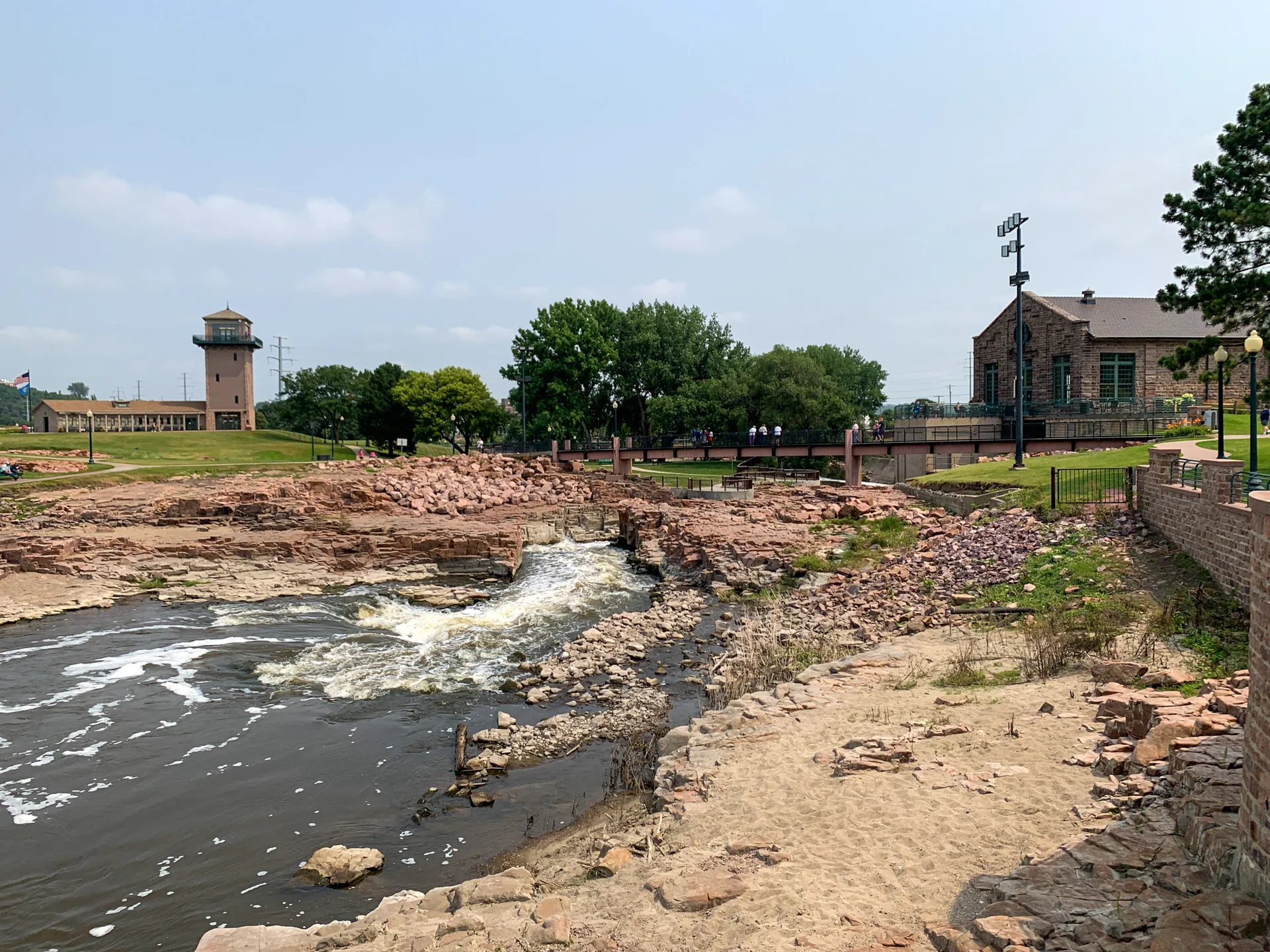
A series of waterfalls cascading over rocky ledges with greenery and a bridge in the background under a lightly clouded sky at Falls Park in Sioux Falls, SD.
Falls Park in Sioux Falls, SD features green lawns, pink rock formations, winding paths, and a cascading waterfall in the background. Several buildings are visible in the distance.
Rocky landscape with flowing waterfalls in Falls Park, Sioux Falls, SD, surrounded by modern buildings and lush vegetation.
Rocky riverbank with flowing water in a park setting, surrounded by trees and buildings in the background under a clear sky at Falls Park, Sioux Falls, SD.
A barred gate at a brick structure adjacent to a walkway with a green metal railing in the scenic Falls Park, SD. The scene overlooks a rocky waterfall and surrounding greenery, capturing the natural beauty of Sioux Falls.
A man wearing glasses and a gray shirt smiles for a selfie at Falls Park with a waterfall and the city buildings of Sioux Falls, SD in the background on a sunny day.

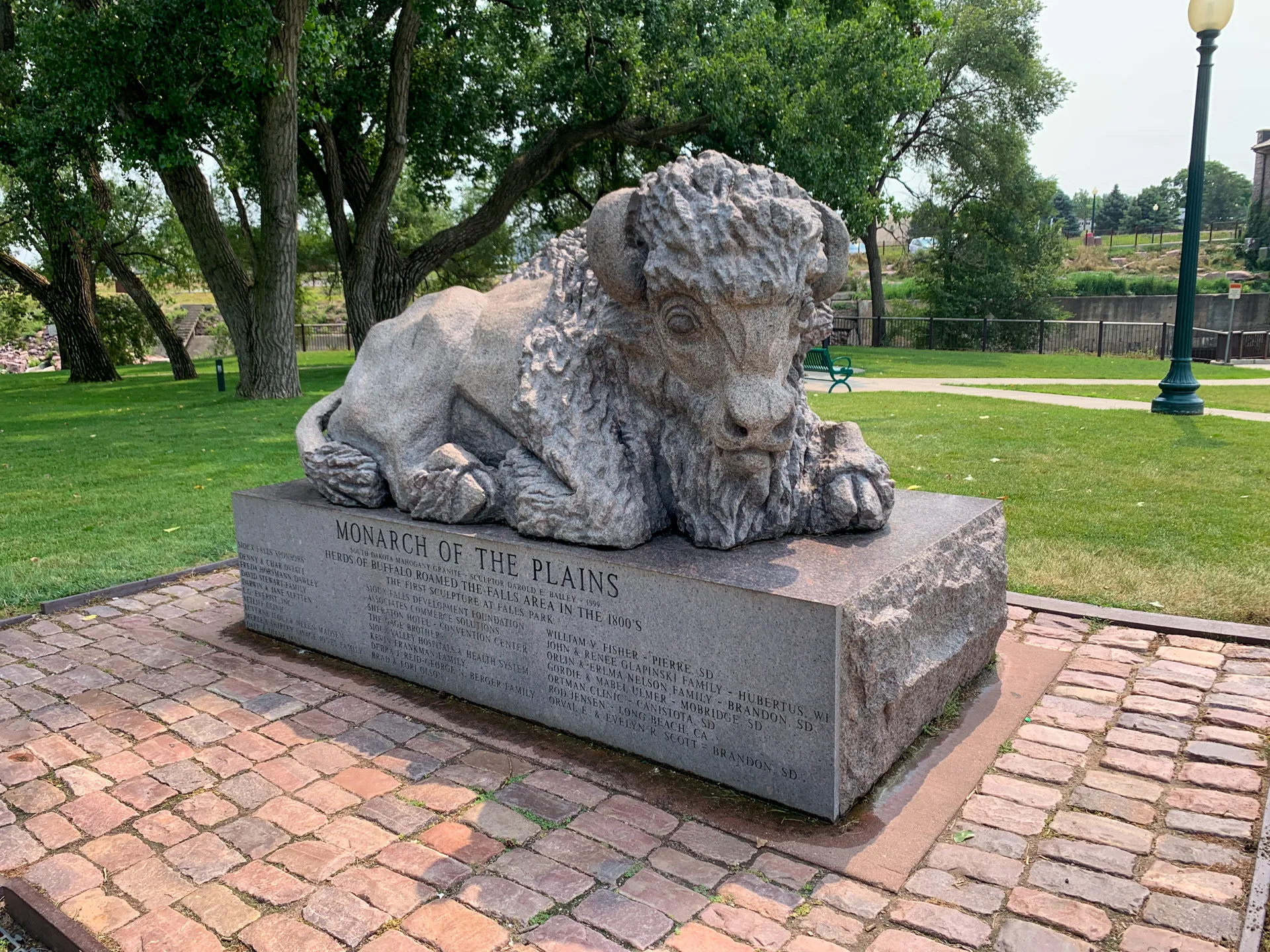
And there’s a cool bison statue in the park.

The "Monarch of the Plains" statue, depicting a majestic bison on a stone pedestal, graces Falls Park in Sioux Falls, SD, with trees and a lamp post enhancing its outdoor setting.

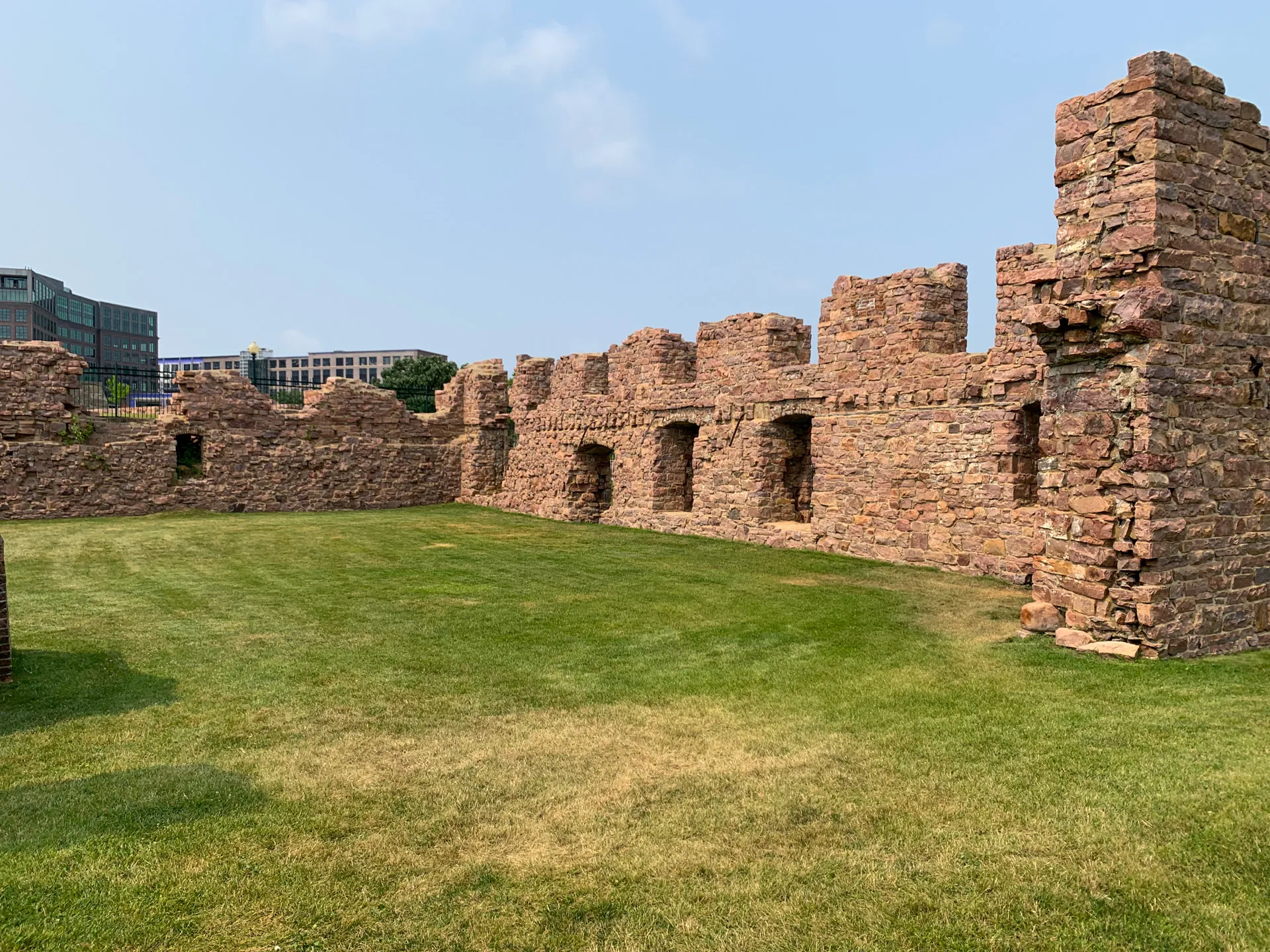
The Queen Bee Mill, completed in 1881, stood as a symbol of ambition and innovation in the young city of Sioux Falls, aptly nicknamed the Queen City. Located at the most powerful point of the Falls, this seven-story marvel boasted cutting-edge machinery and a capacity to produce 1,200 barrels of flour daily—four times the output of a typical Midwest flour mill. Despite its impressive capabilities, the mill struggled with a reliable supply of water and wheat, leading to its closure after just two years. The mill’s imposing structure included a 100,000-bushel grain elevator, a large warehouse, and various specialized areas like the cooper shop and turbine house.

The stone ruins of an old building, with partial walls and turrets, stand in a grassy area at Falls Park in Sioux Falls, SD, with modern buildings rising in the background.
Informational display titled "Hive of the Queen City" with text and images detailing the history and function of the Queen Bee Mill in Sioux Falls, SD. Includes diagrams, photographs, and descriptions located at Falls Park.

Over the years, the Queen Bee Mill saw multiple owners attempt to revive its operations, but none succeeded in making it profitable. The building eventually burned in 1956, leaving only a charred shell and a stark reminder of the once grandiose vision. The milling processes used in the Queen Bee Mill—grinding, cleaning, separating, sifting, and packaging—remain largely unchanged, reflecting the enduring legacy of the technology and methods of the 1880s. Today, the remnants of the mill serve as a historical testament to the early business leaders’ ambitious vision in Sioux Falls.

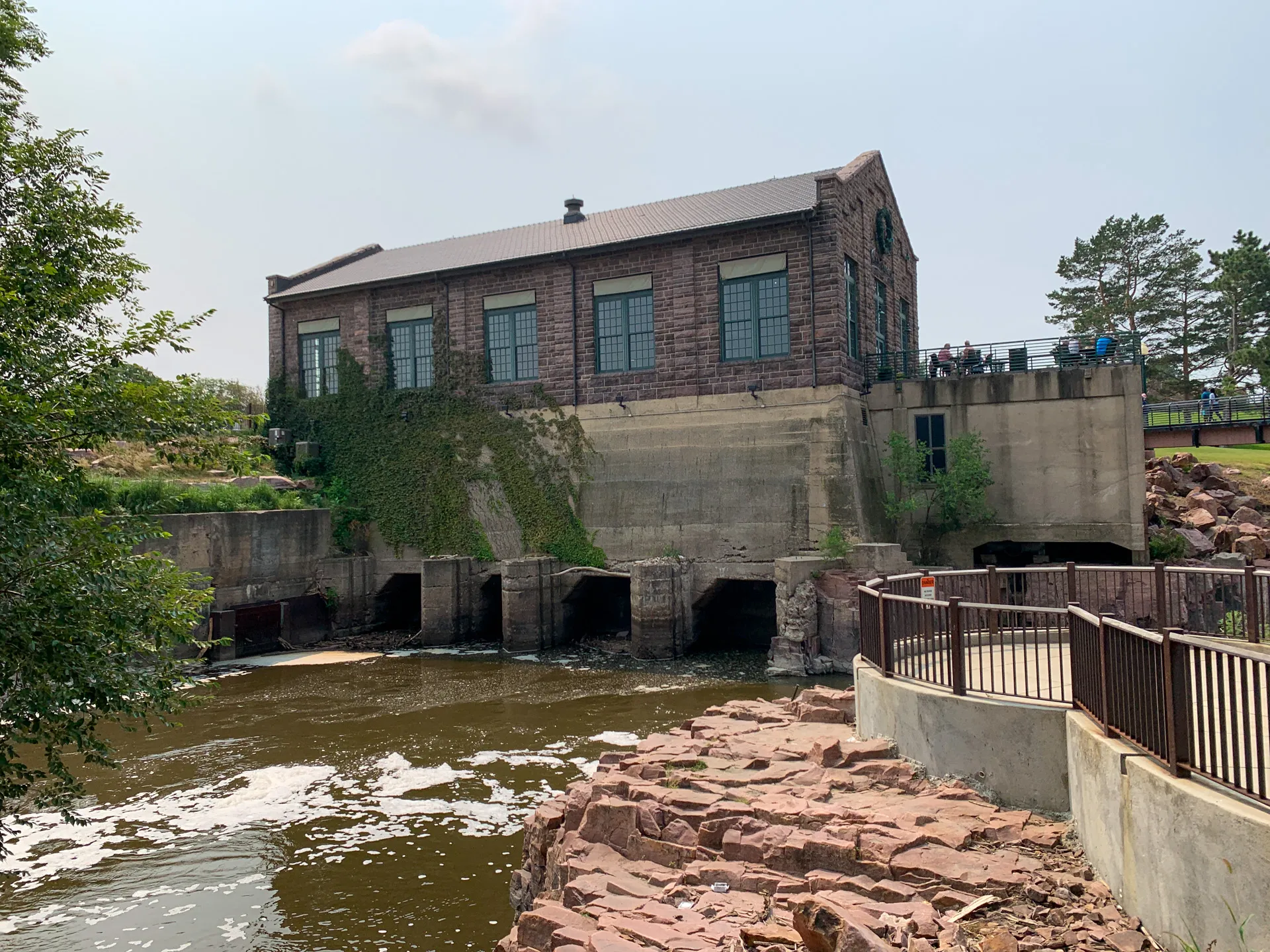
A brick and concrete industrial building is located by a flowing river in Falls Park, with several large openings at the water's edge, surrounded by trees and a stone pathway in Sioux Falls.

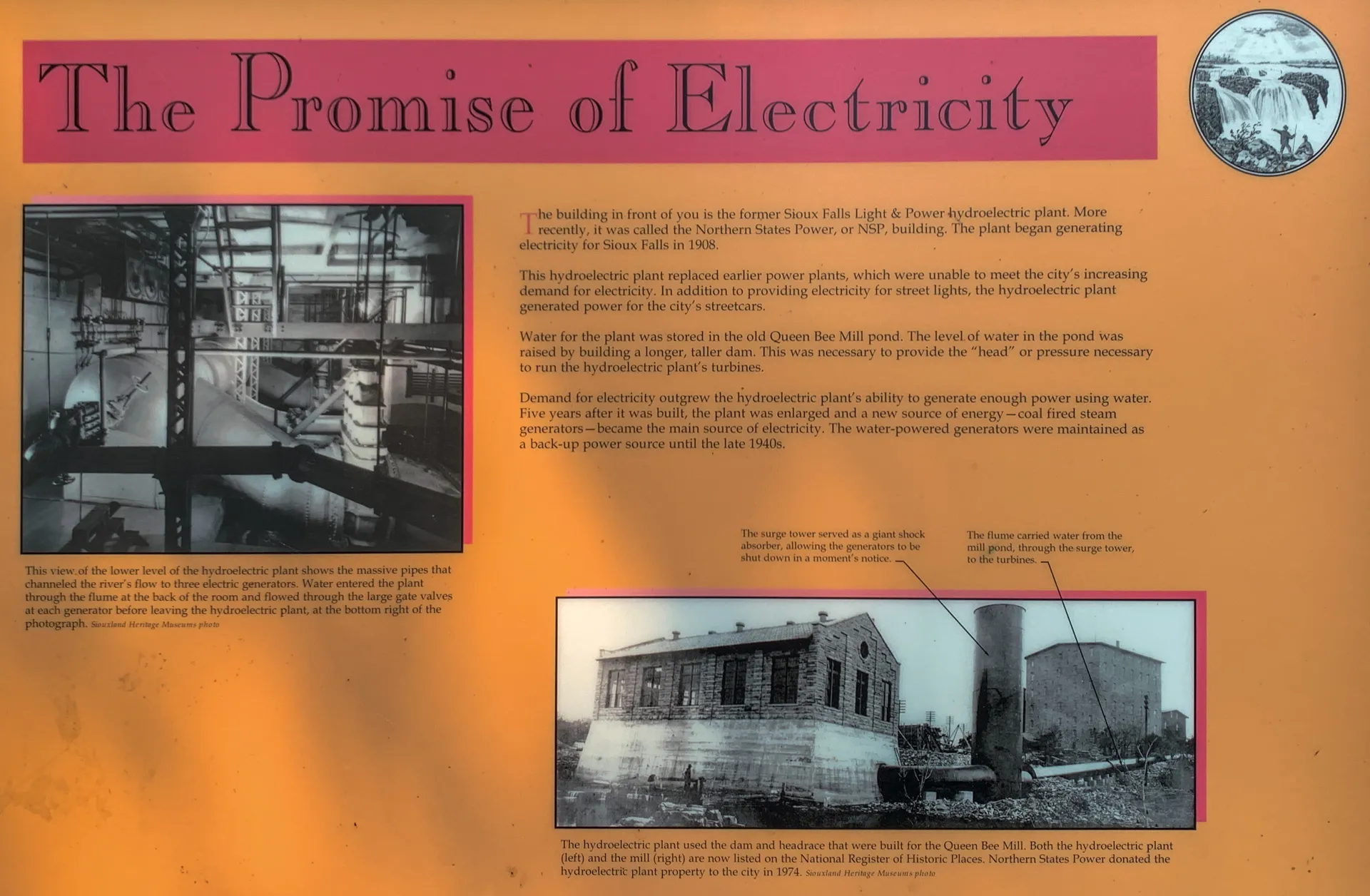
Sioux Falls Light & Power hydroelectric plant, later known as the Northern States Power building, began generating electricity in 1908. This plant replaced earlier power sources to meet the city’s growing demand for electricity, supplying power for streetlights and streetcars. Utilizing water stored in the old Queen Bee Millpond, the plant initially relied on hydroelectric power but expanded to include coal-fired steam generators by 1913 due to increasing demand. The water-powered generators remained as a backup until the late 1940s. The plant and its infrastructure, now on the National Register of Historic Places, highlight the evolution of power generation in Sioux Falls.

Informational sign titled "The Promise of Electricity" with historical photos and text detailing the transition of the former Sioux Falls Light & Power hydroelectric plant to providing power in Falls Park, SD.
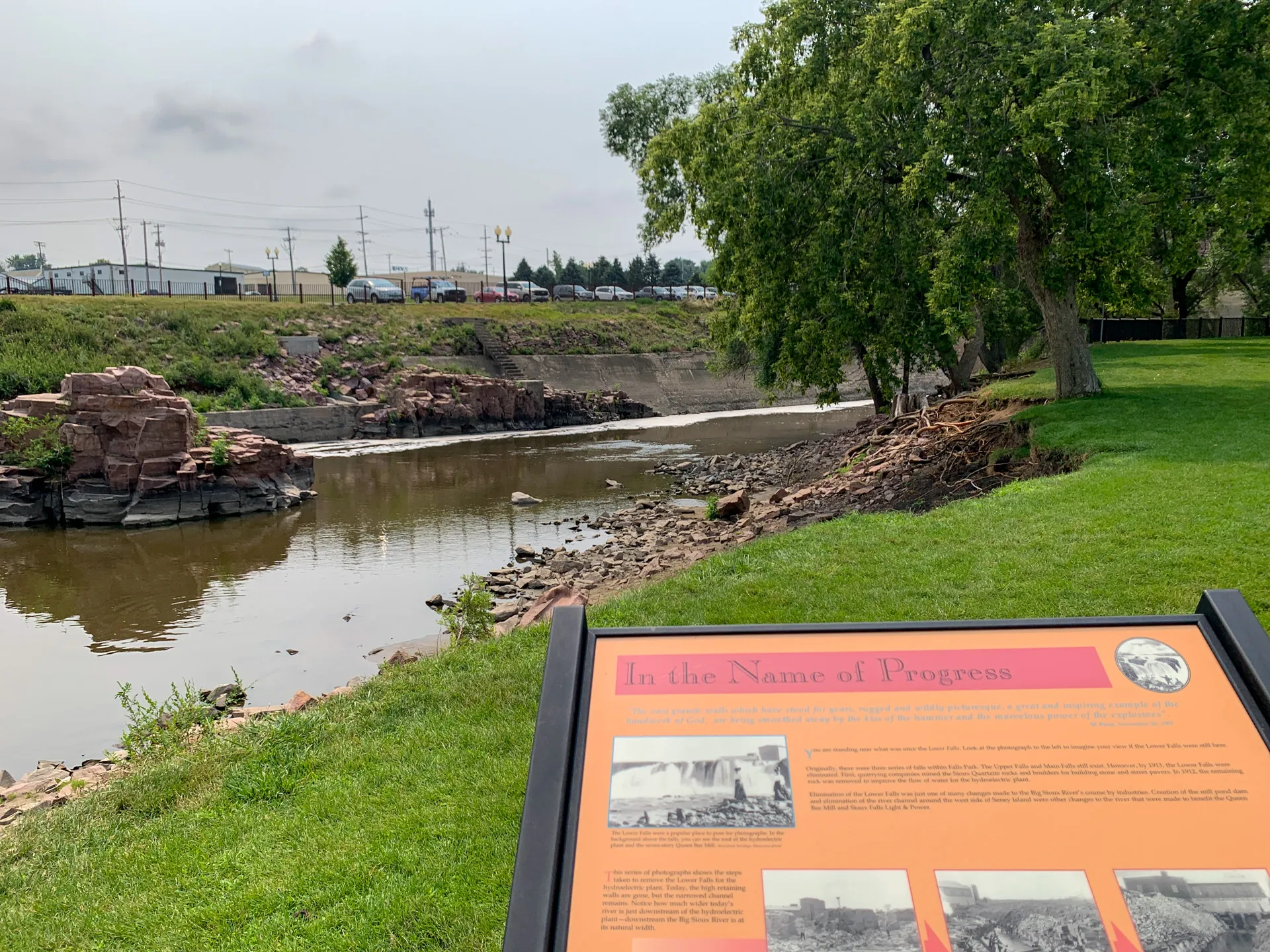
A river bordered by grassy land and trees with an informational plaque in the foreground titled "In the Name of Progress." In the background, vehicles and buildings visible beyond the riverbank hint at the bustling growth of Sioux Falls, SD.

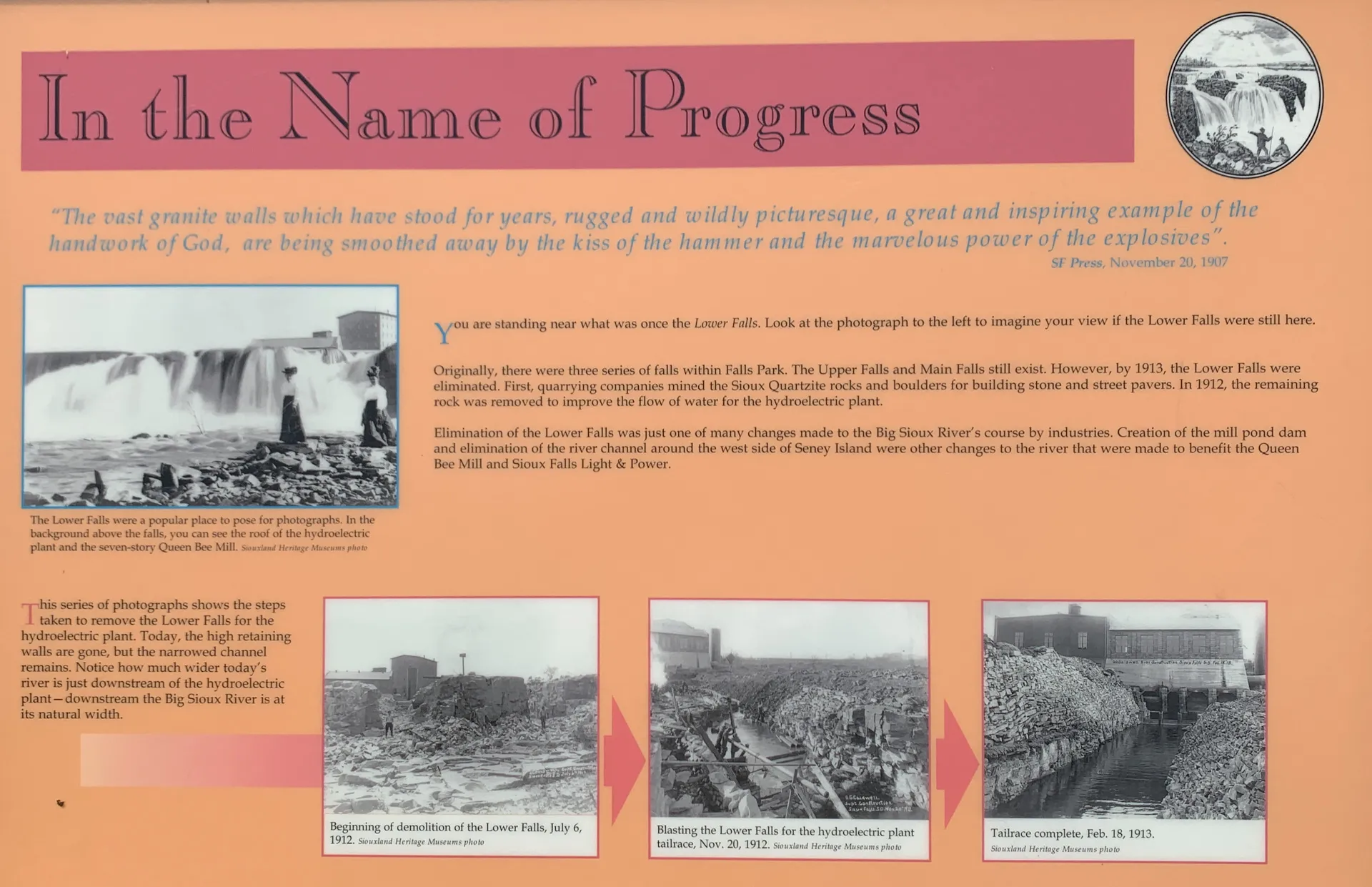
The Lower Falls in Sioux Falls were eliminated by 1913 to improve the flow of water for the hydroelectric plant and benefit local industries. Originally, Falls Park featured three sets of falls, but the Lower Falls were removed through extensive quarrying and demolition, including blasting in 1912, to aid in constructing the hydroelectric plant. This effort was part of broader changes to the Big Sioux River’s course, including the creation of a mill pond dam and channel alterations around Seney Island. The sign features photographs documenting the demolition process and highlights the impact on the river’s width downstream from the plant.

Informational display about the transformation of Niagara Falls, showing historical changes from 1931 to 1950 with images of construction and demolition, reminiscent of the evolution seen in Falls Park, SD.
Dive Into More of Shea's Related Content