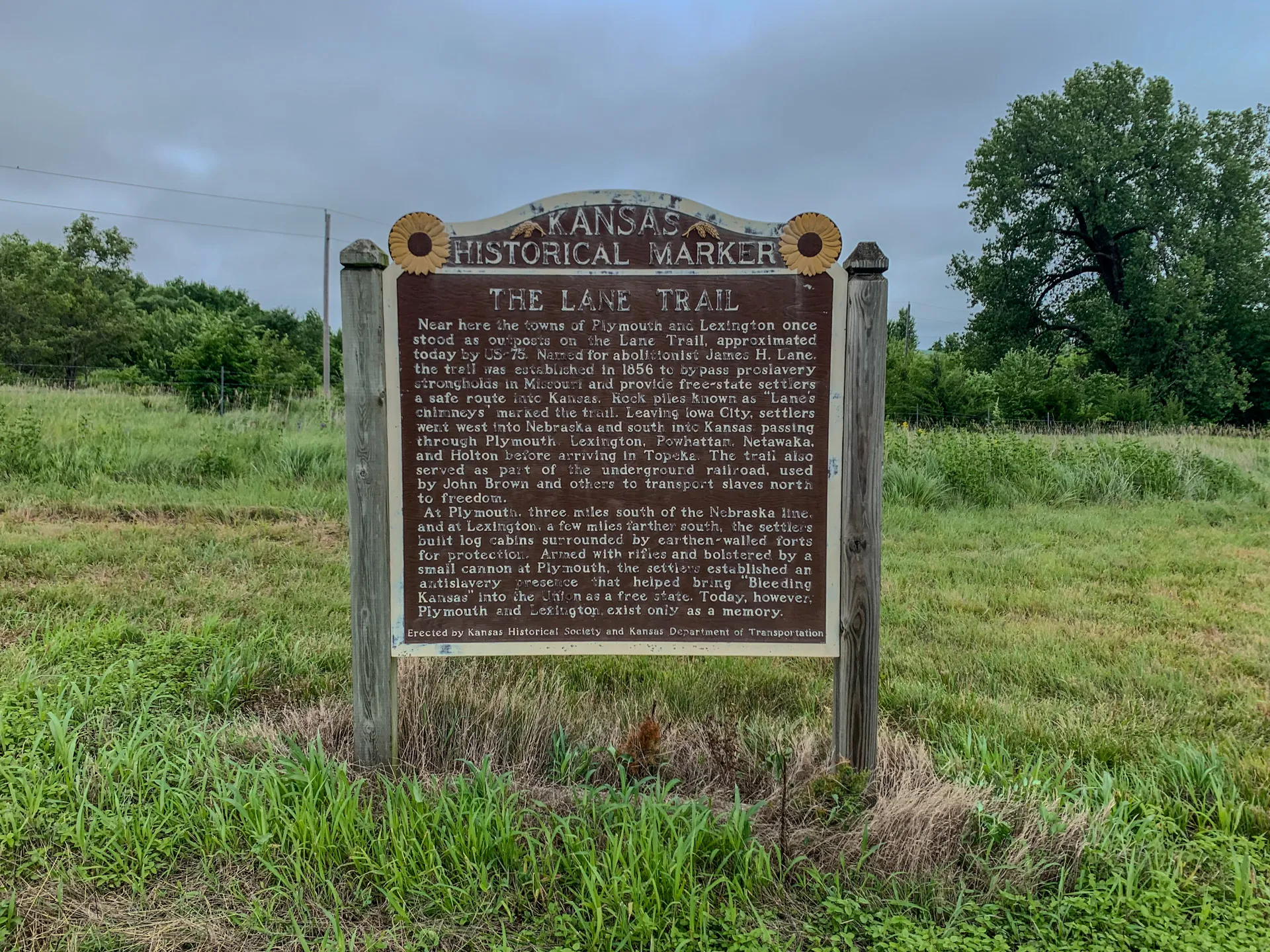
The Lane Trail Historical Marker near Plymouth and Lexington commemorates the path used by Free State settlers to bypass pro-slavery strongholds in Missouri and enter Kansas safely. Named after abolitionist James H. Lane, the trail was established in 1856. Lane’s Chimneys, rock piles along the route, marked the trail. Starting in Iowa City, settlers traveled west into Nebraska and then south into Kansas, passing through towns like Plymouth, Lexington, Netawaka, and Holton before arriving in Topeka. This trail also served as part of the Underground Railroad, aiding John Brown and others in transporting slaves north to freedom.
At Plymouth, three miles south of the Nebraska line, and at Lexington, a few miles further south, settlers built log cabins fortified by earthen walls for protection. Armed with rifles and a small cannon at Plymouth, the settlers established a strong anti-slavery presence. This effort contributed to Kansas’ admission to the Union as a free state during the turbulent “Bleeding Kansas” era. Today, Plymouth and Lexington exist only as historical memories.