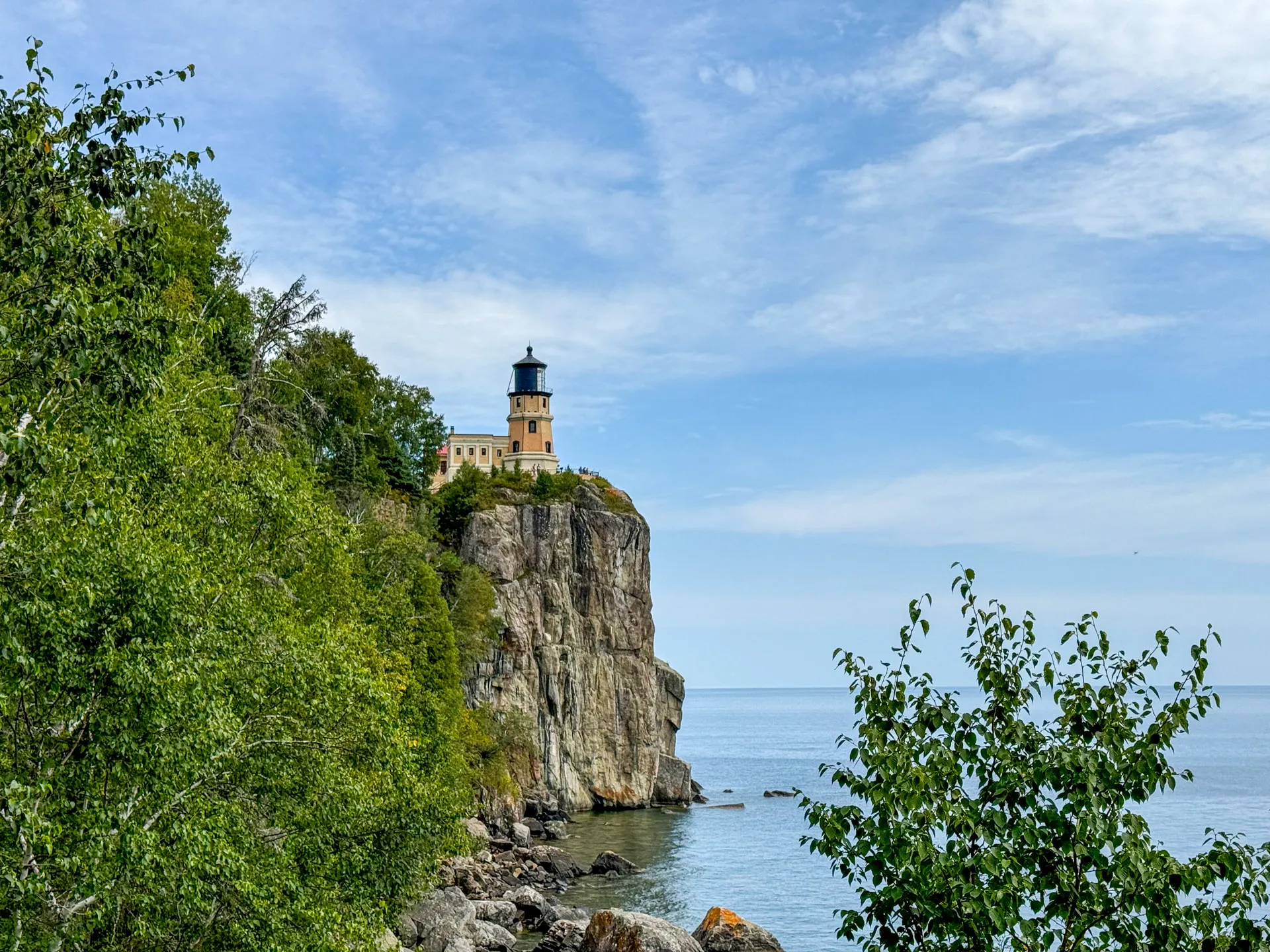
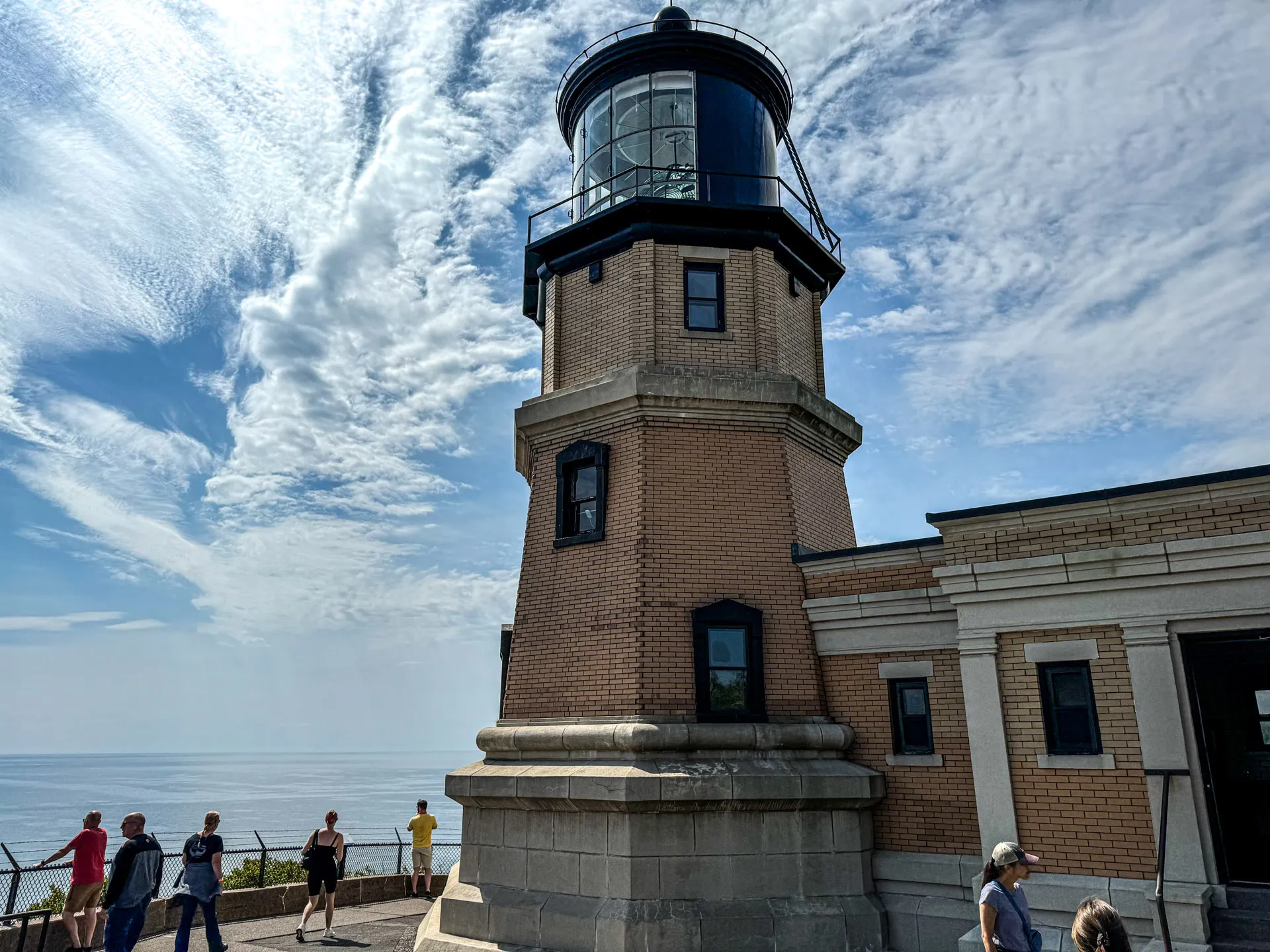
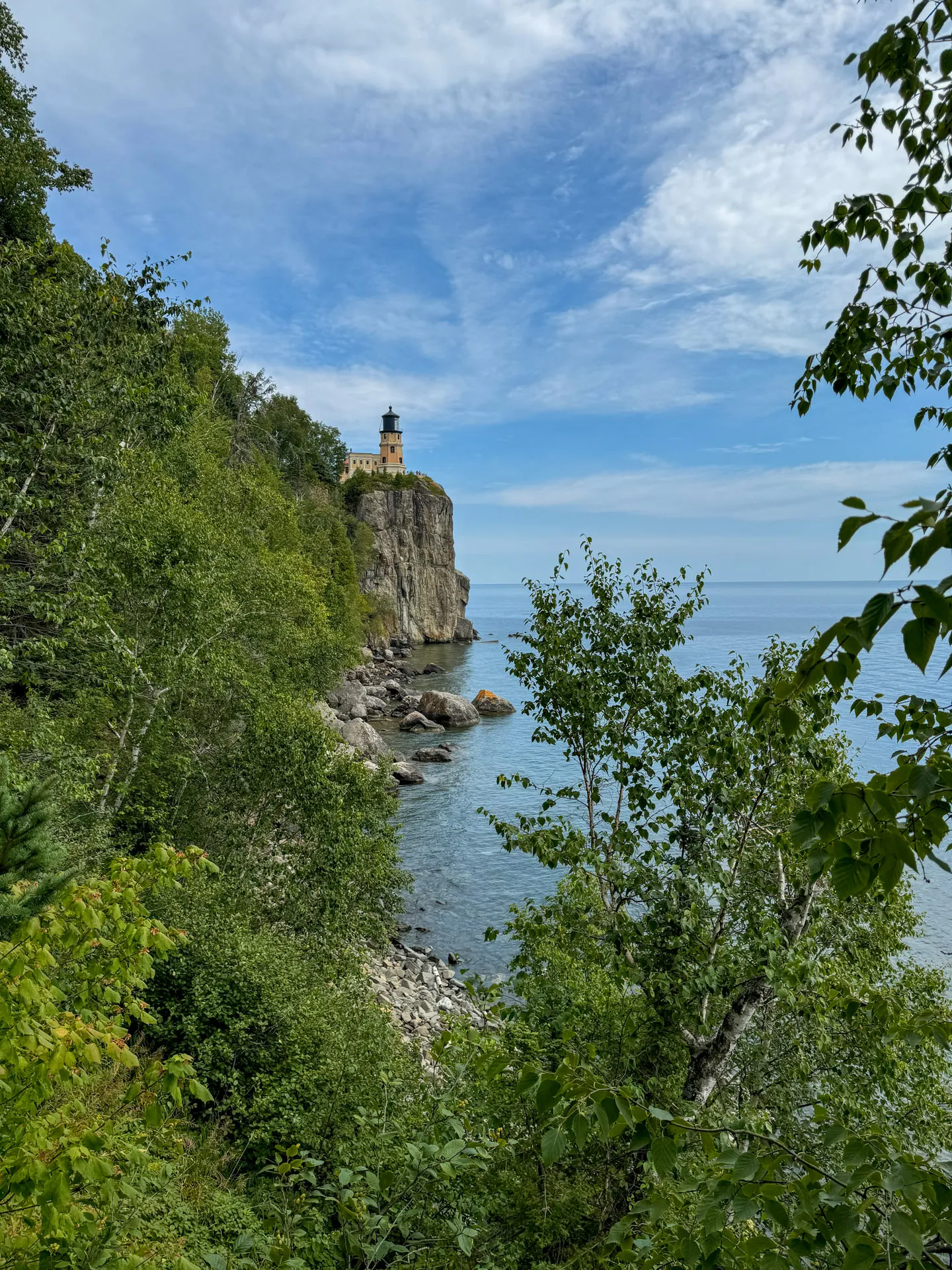
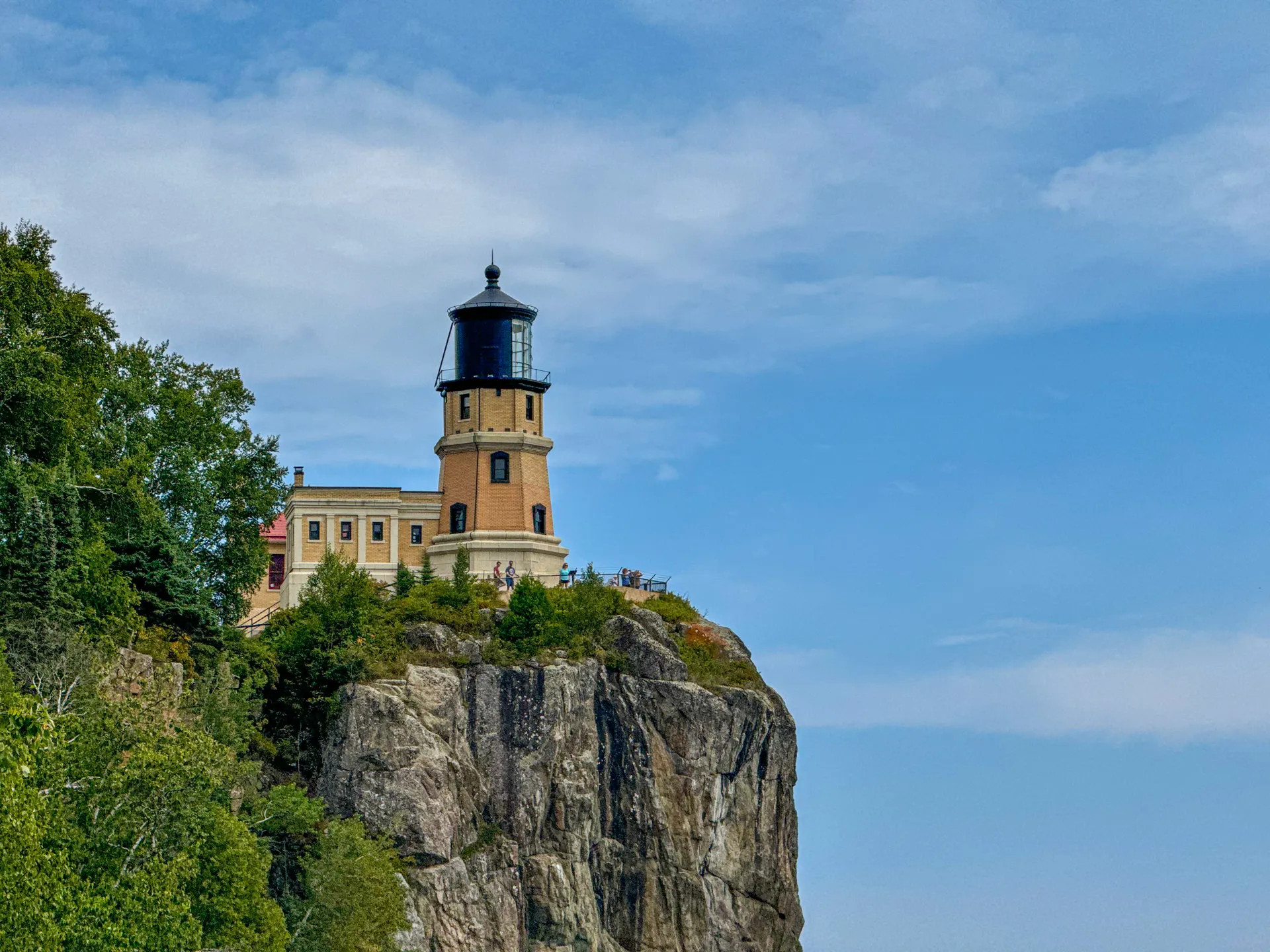
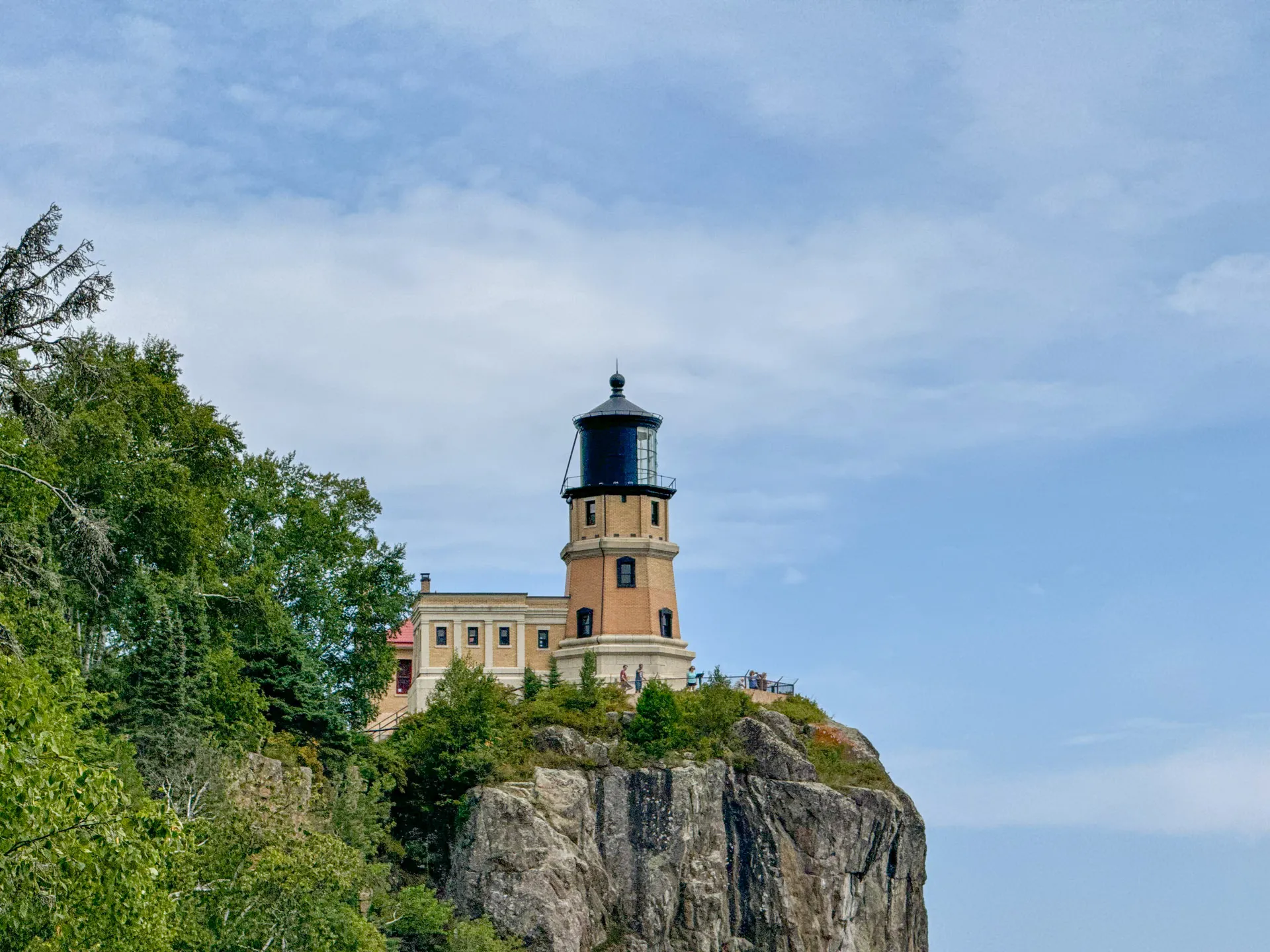
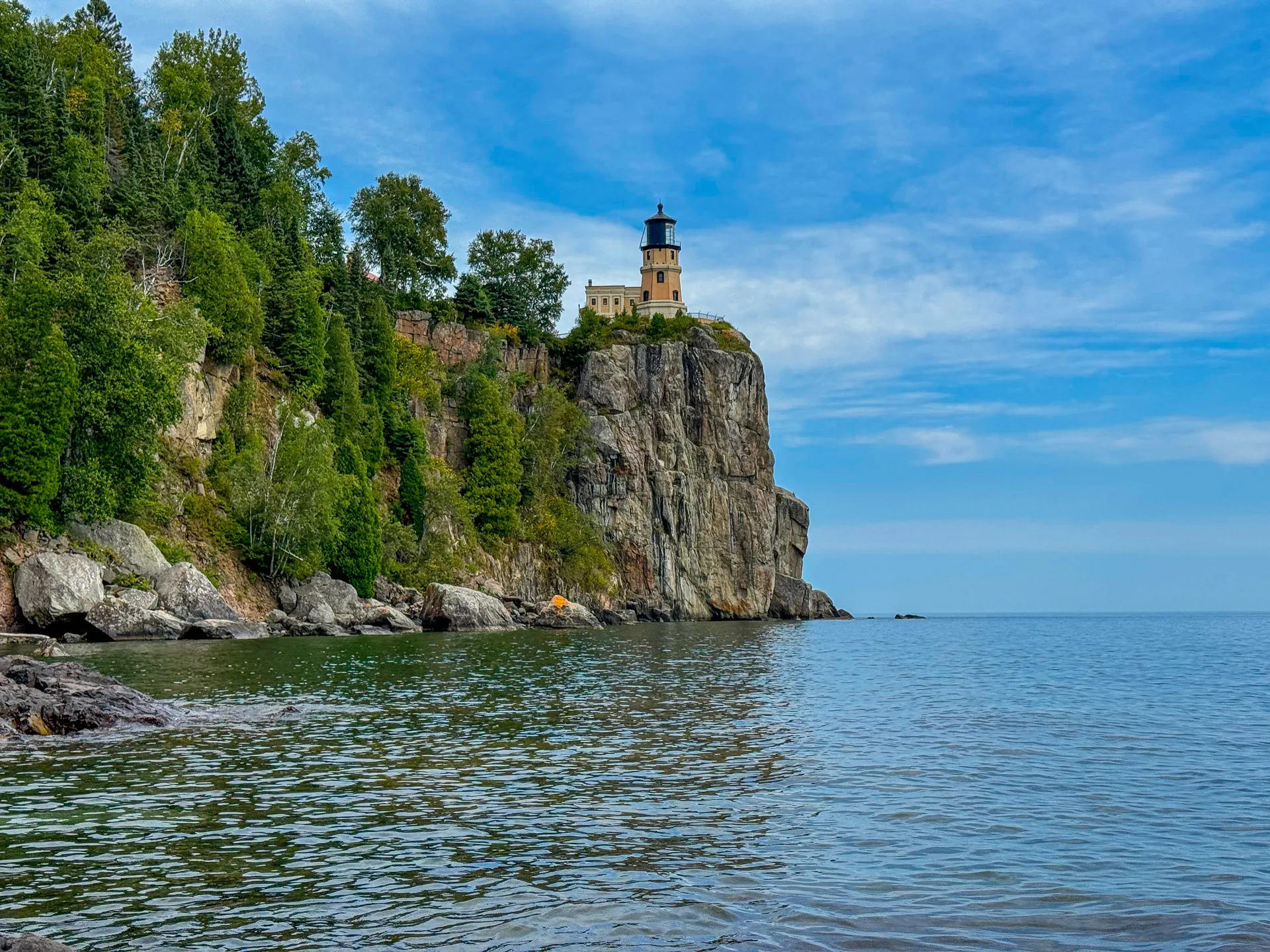
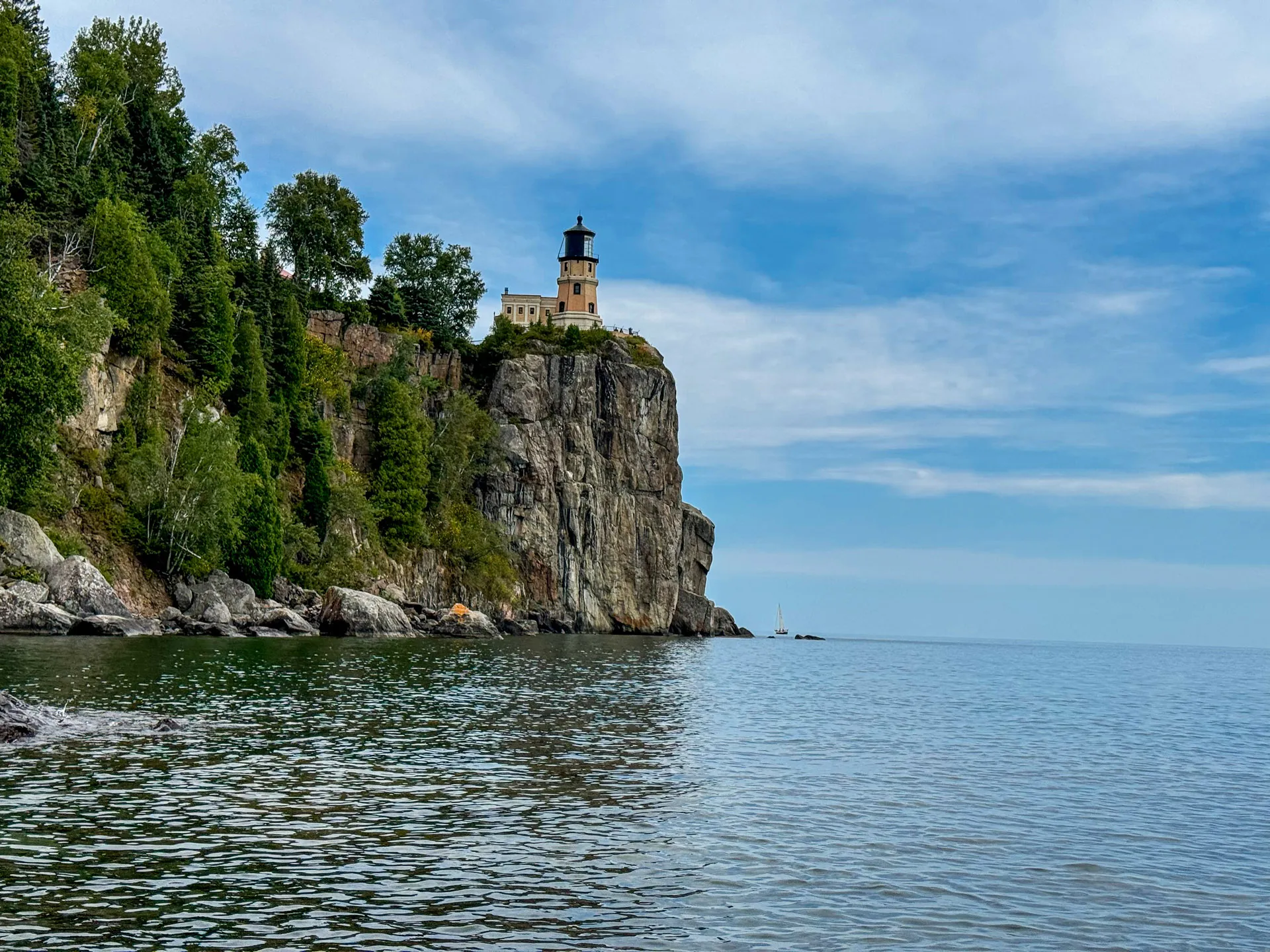
Split Rock Lighthouse, perched atop a 130-foot cliff on the North Shore of Lake Superior in Minnesota, is one of the most picturesque and historically significant lighthouses in the United States. Commissioned in 1910 by the United States Lighthouse Service, it was constructed in response to the infamous “Mataafa Storm” of 1905, which wreaked havoc on Lake Superior, leading to numerous shipwrecks and a significant loss of life and cargo. The lighthouse was designed by Ralph Russell Tinkham and built using local materials, including native Minnesota stone, giving it a distinctive and enduring presence.
I was excited about visiting and learning. I had only been to one lighthouse on Lake Superior in Walker, MN, which was more decorative than functional.
I knew it was gonna be a good day when I rolled into the parking lot and saw this awesome bumper sticker on a truck from Kansas.
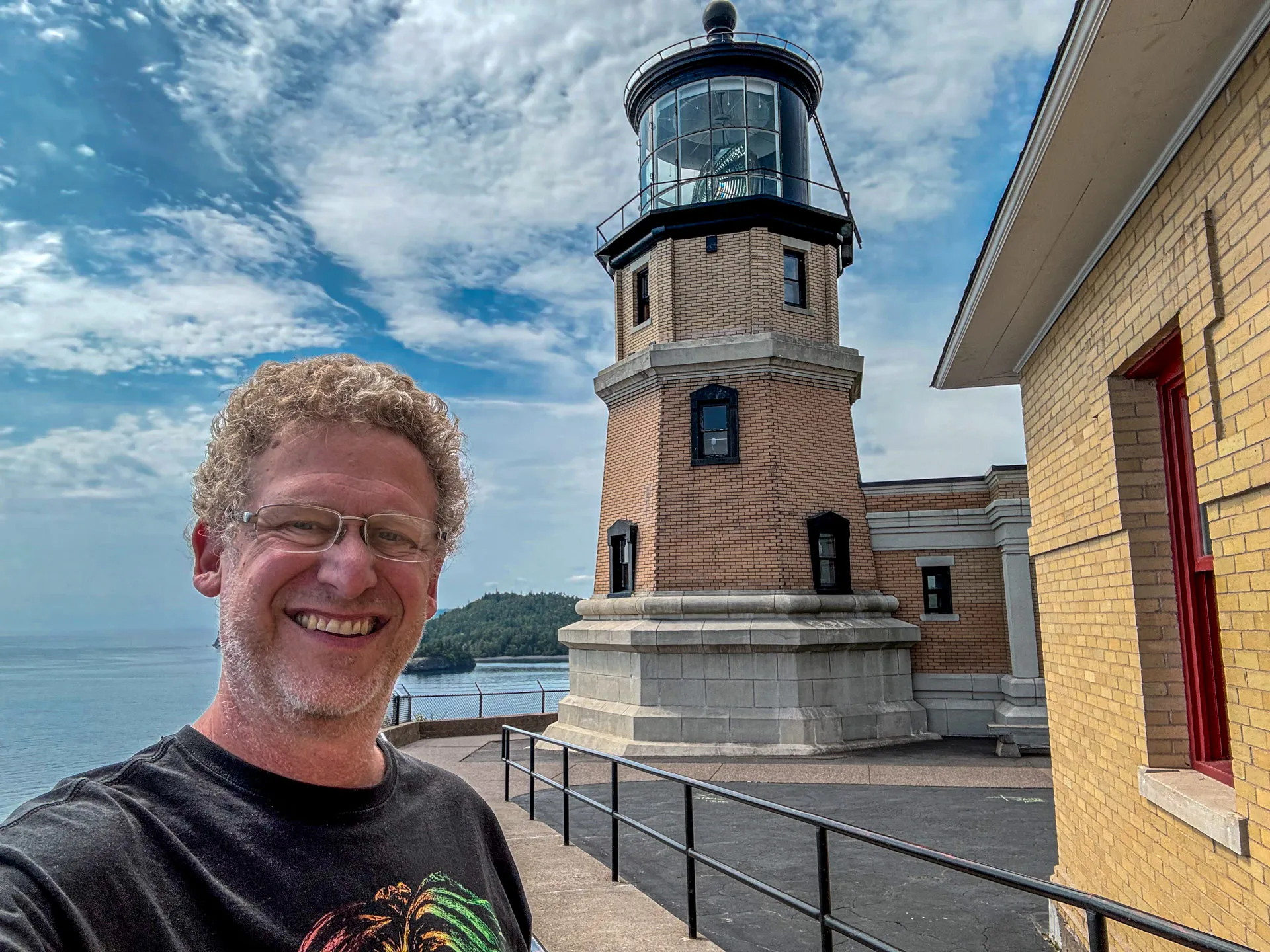
After walking through the museum, which was quite enjoyable, I headed out to the lighthouse itself. It’s an iconic view, even from this perspective as you walk toward the cliff and the lighthouse..
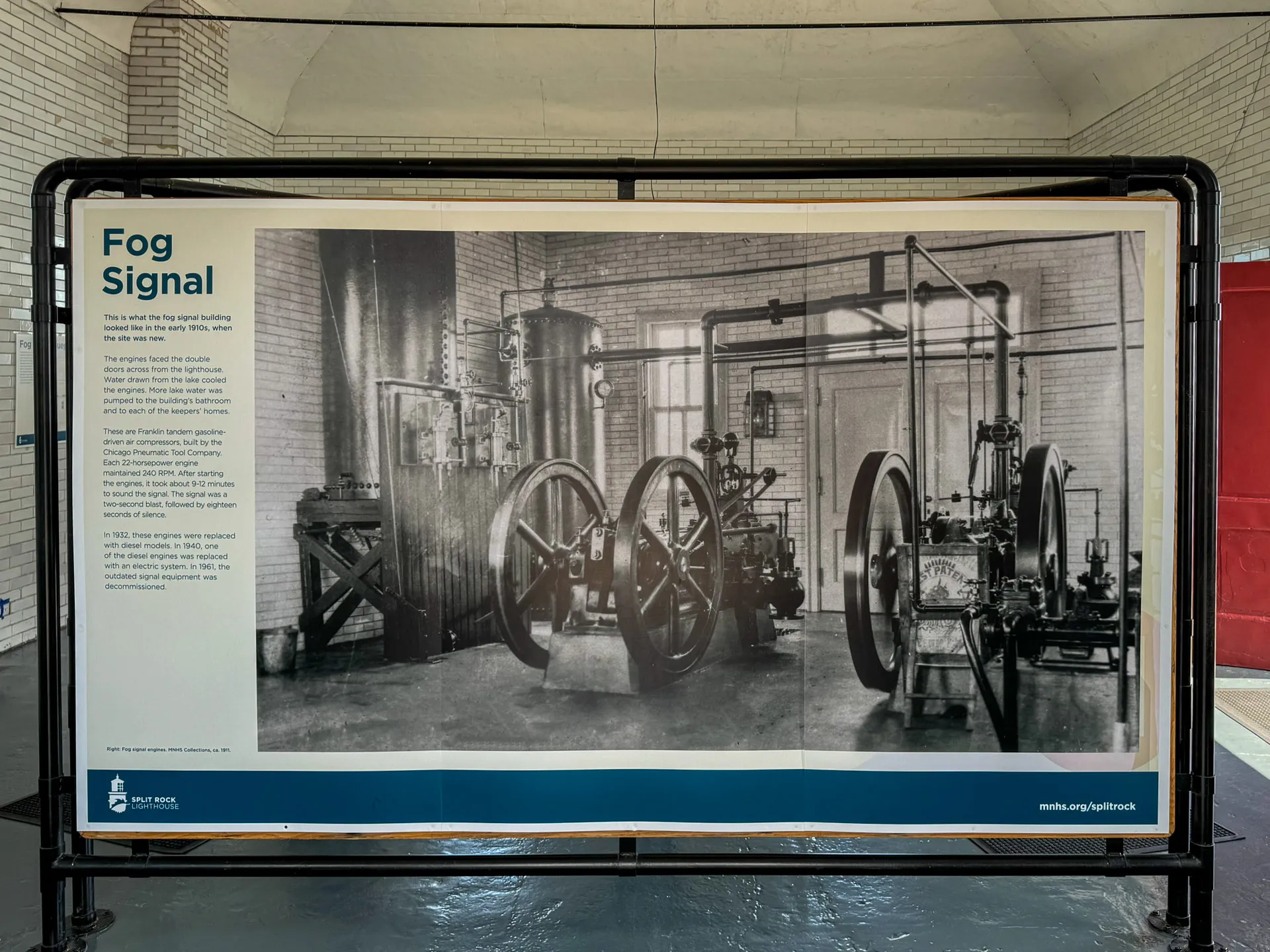
As I walked towards the lighthouse, a second building came into view. While the lighthouse is the main draw, this building housed the critical foghorns that would blast sounds out to see when the fog was too thick for sailors to see the light from the lighthouse.
The foghorns at Split Rock Lighthouse were an essential component of the maritime safety system designed to assist vessels navigating the often fog-enshrouded waters of Lake Superior. Given the lake’s notorious reputation for unpredictable weather and dense fog, these foghorns provided an invaluable auditory signal to mariners who could not rely on visual cues from the lighthouse’s beam alone. Situated strategically to complement the lighthouse, the foghorns emitted powerful, low-frequency blasts that could travel great distances, alerting ships to the perilous rocky shores they might not otherwise see.
The operation of these foghorns involved some fascinating technology of their time. Initially powered by steam and later by more modern means, the foghorns produced sounds that were not only loud but also distinct in pattern. This allowed sailors to differentiate between various navigational aids along the coast, ensuring they could chart their courses safely even under the cover of thick fog.
Although advances in technology have reduced reliance on traditional foghorns, they remain an iconic part of Split Rock Lighthouse’s history. When visiting, one can almost hear the deep, resonant tones echoing across the waters, a reminder of a bygone era when these sounds were a lifeline to sailors braving the vast and often unforgiving lake.
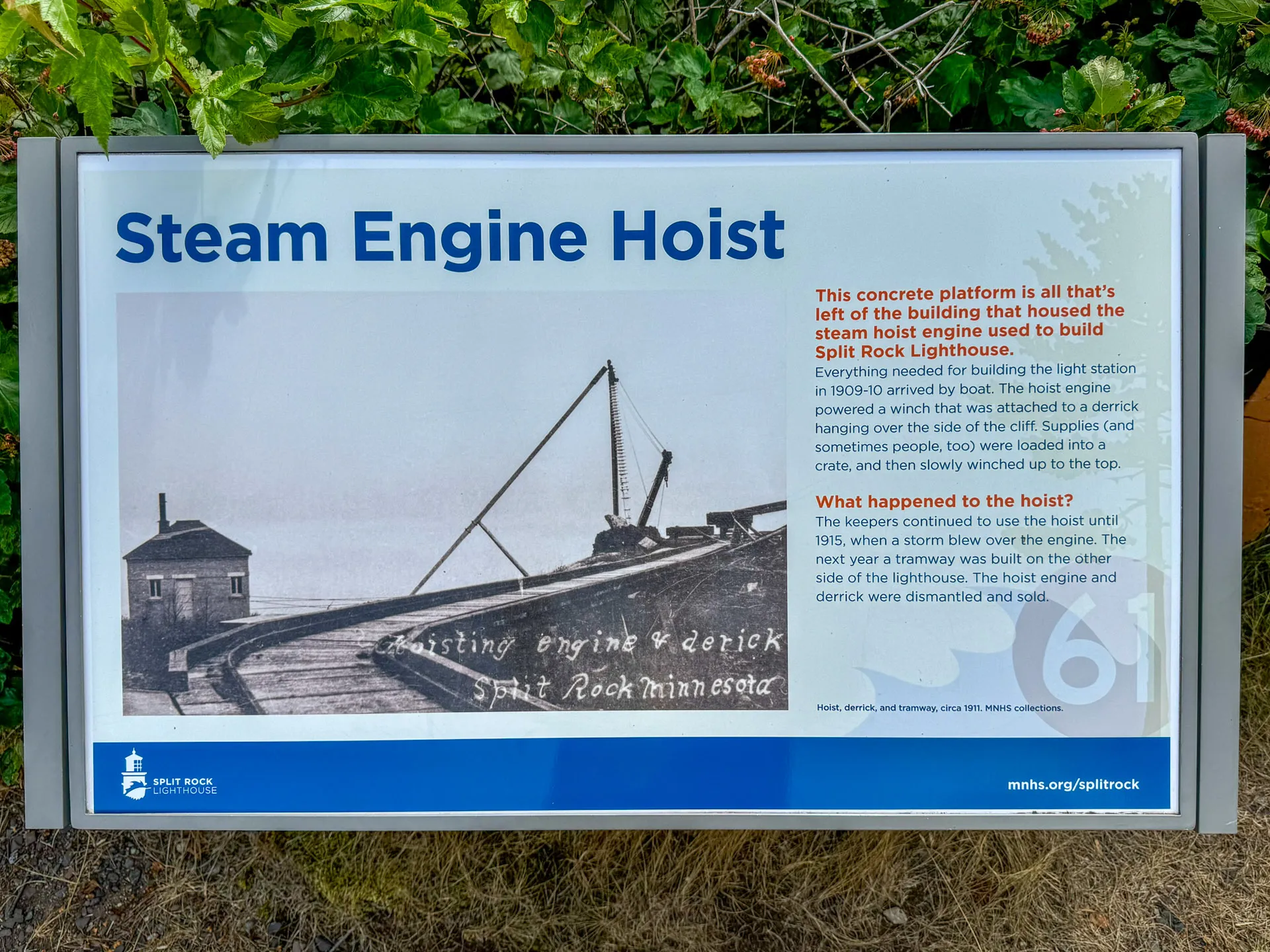
By the walkway near the hoist house, chalk marks a location where an iconic photograph of the Split Rock Lighthouse can be taken.
And yes, I squatted and here’s the result.
That is a cool picture, but I kinda liked the selfies a little bit better.
After visiting the lighthouse, I headed over to the light keepers home to explore the period restoration and artifacts at that location.
The typewriter sitting on the desk was probably one of the best typewriter ever built – of course, the Oliver typewriter.
Walking Around Split Rock Lighthouse Grounds
I spent some time walking around the grounds at the top of the cliff. To say the views were picturesque would be an understatement. It’s easy to get lost in the beauty of this setting, especially when playing with my camera and trying to capture the scene.
Heading to the Beach
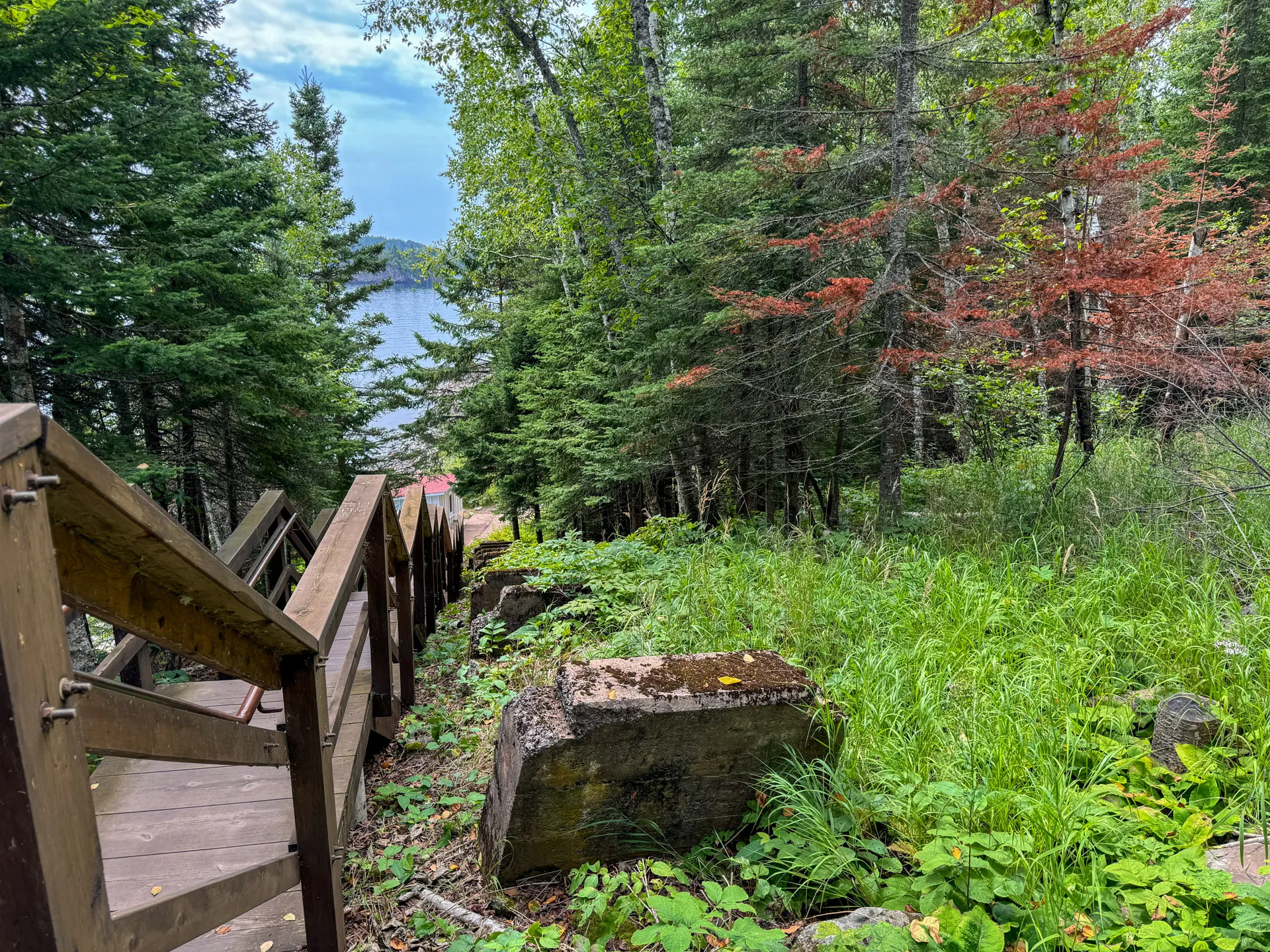
It would’ve been easy to spend a couple more hours snapping pictures and enjoying the setting. But I knew there was so much more to see once I walked down the trail through the forest to the top of the Tramway and took the stairs to the beach.
The tramway at Split Rock Lighthouse was a vital logistical component in the early operations of the lighthouse. Installed during its construction in 1910, the tramway was the primary means of transporting supplies and materials from the shore the lighthouse perched high on the cliff.
Given the remote location and the steep, rugged terrain, traditional transportation methods were impractical, making the tramway an ingenious solution to a challenging problem.
This inclined railway system was powered initially by a hoist engine and later by a gasoline engine. It could haul heavy loads, including fuel, building materials, and provisions needed for the lighthouse keepers and their families.
The tramway consisted of a rail track running from a dock at the water’s edge to the top of the cliff, where a small platform allowed for unloading. It played a crucial role not only during construction but also in the regular resupply missions necessary to keep the lighthouse operational.
The tramway remained in use until 1934, when a new access road was built that allowed trucks to deliver supplies directly to the site. Today, remnants of this tramway can still be seen, offering visitors a glimpse into the ingenuity required to maintain such a remote and essential navigational aid.
About halfway down the staircase, there’s a viewing platform where you can stop and see the lighthouse. There was a family snapping pictures on the platform when I arrived. I waited for a while, and then they headed on down, and I spent some time trying to capture the perfect photo and, of course, a selfie or two.
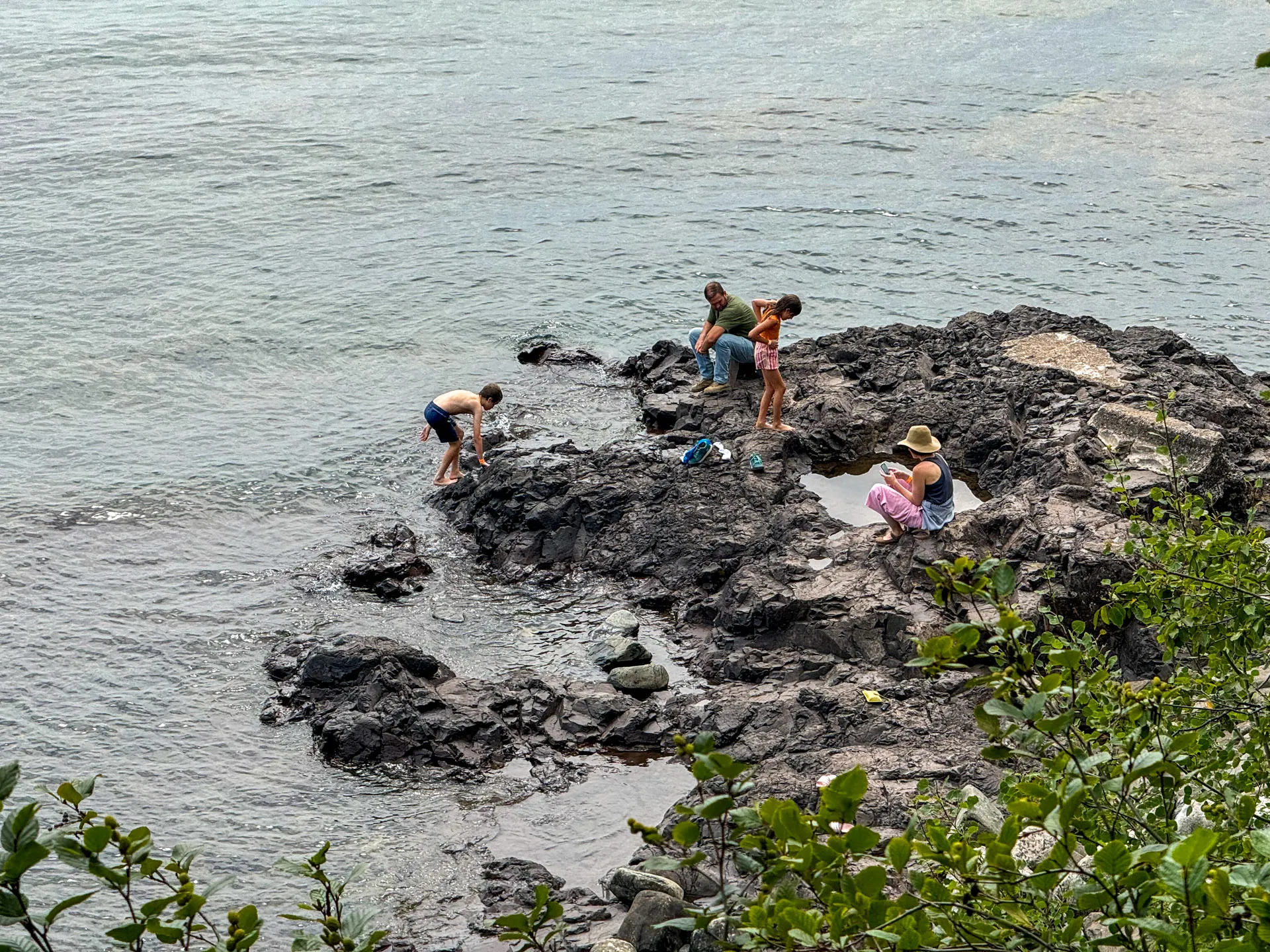
As I neared the bottom of the staircase, I could hear the happy sounds of the family. I had waited for on the platform above. This is a state park, and you can swim in the lake as these kids were happily doing.
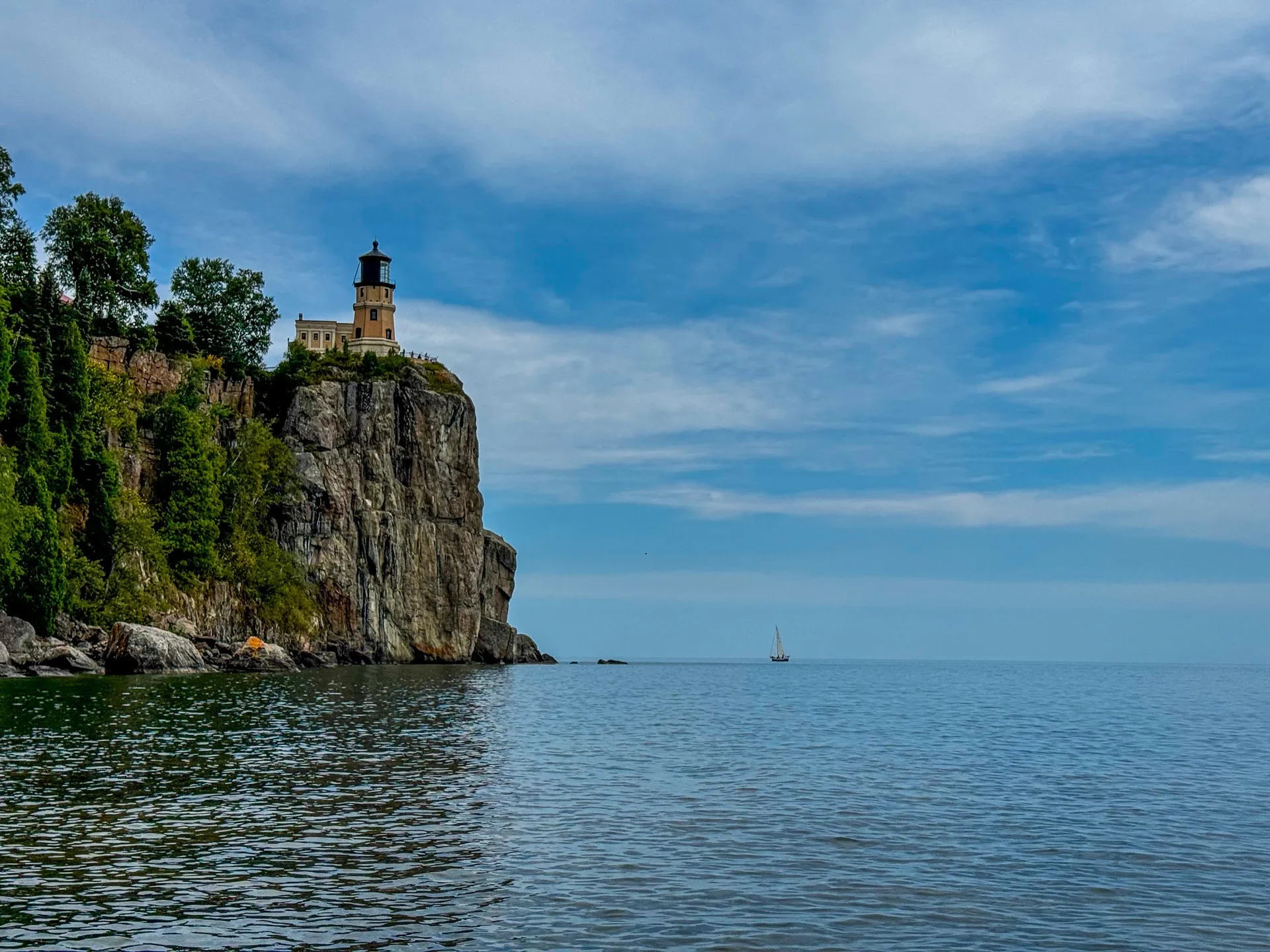
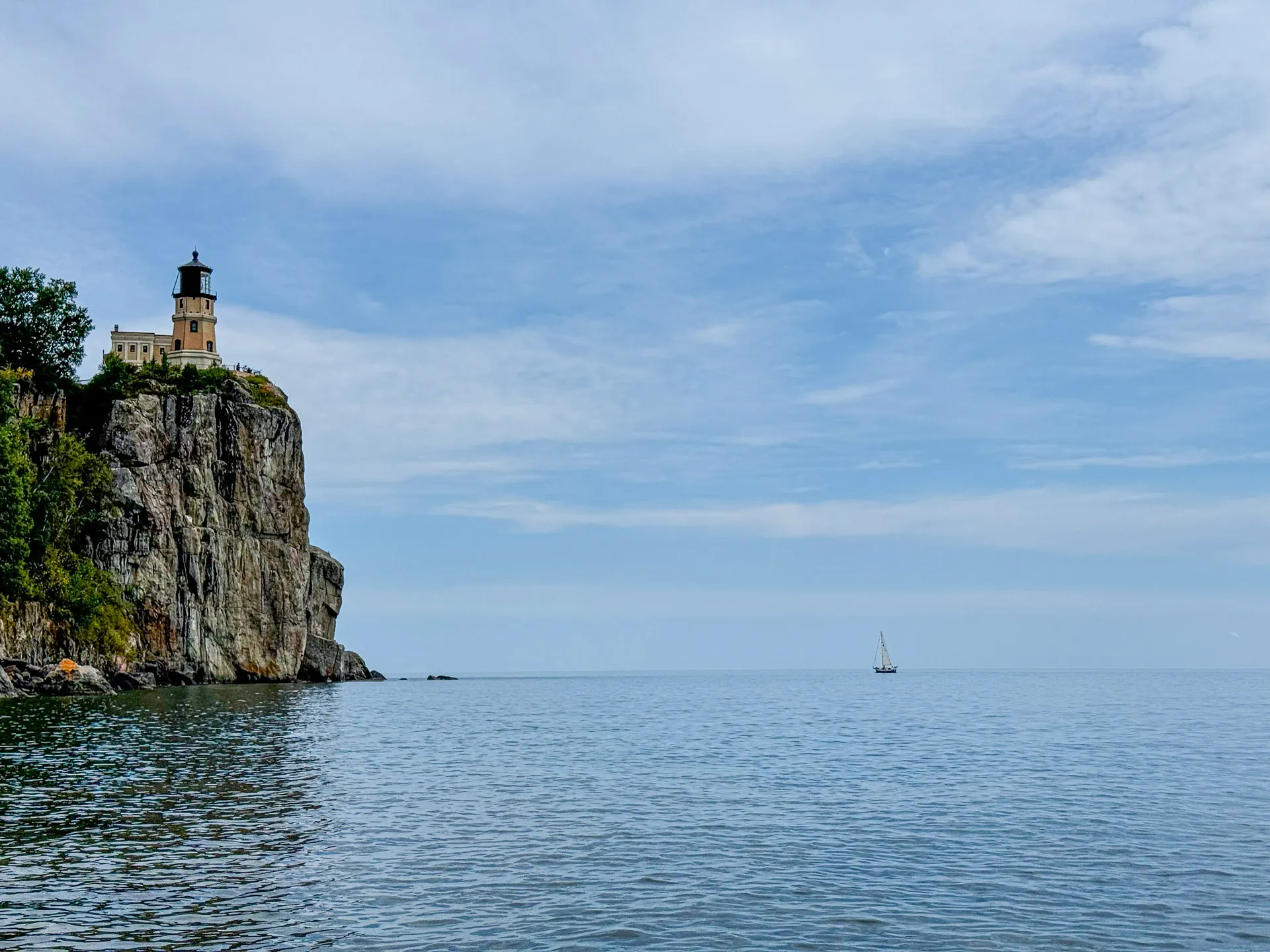
When I reached the shoreline, I did like most people and clicked away, trying to capture the grandeur of this picturesque location.
How amazingly cool is this? I managed to catch a sailboat in a few photos of the lighthouse!
Beyond its practical function, Split Rock Lighthouse is an iconic symbol of the North Shore. Its scenic location, combined with its architectural beauty, attracts tourists from all over the country and the world.
Even after decommissioning in 1969, it remains a popular tourist attraction and is now part of Split Rock Lighthouse State Park. The lighthouse’s legacy is celebrated annually on November 10th when its beacon is lit to commemorate the sinking of the SS Edmund Fitzgerald and all lives lost on the Great Lakes.
Throughout its history, Split Rock Lighthouse has not only illuminated the waters of Lake Superior but also left an indelible mark on the region’s cultural and economic landscape.
Signage From Inside The Foghorn Building
Several informative signs were displayed inside the foghorn building. If you’re using a computer browser, you can write click on the image and open it in a new tab to zoom into the image.
Even More Lighthouse Photos
When you’re snapping away, it’s easy to say I’ll pick the best of these photos later. Well, I said and did that, but I still ended up with so many excellent pictures of this iconic lighthouse. So I’m just tossing them down here at the end of this post.